Category: Uncategorized

  • Structural Steel Grades: Types, Properties & Applications

    Structural Steel Grades: Types, Properties & Applications

    Can you imagine a construction without structural steel? Being a well-known building construction material, it has a differentiating factor as a high strength-to-weight ratio. Its distinctive strength makes it a vital building material, making it suitable for infrastructure projects related to high-rise buildings and bridges.

    Structural steel is known for its strength, flexibility and durability. Be it skyscrapers or factory sheds, structural steel is the foundation of the modern infrastructure industry. The various types of structural steel vary in grades and applications.

    Structural steel, being the foundation of the modern infrastructure industry, comes in various types that vary with grades and applications.

    Common Steel Grades & Their Properties

    The different types of steel have different properties in terms of their tensile strength, ductility and weldability.

    • IS 2062 (Fe410): Ideal for structural frames, warehouses and industrial sheds, it is a common Indian standard structural steel. With a yield strength of 250 MPa. IS 2062 (Fe410) is available in various widely used forms including plates, sheets, angles, channels and beams.

    • ASTM A36: Commonly used in oil rigs, ships and bridges, ASTM A36 has a minimum yield strength of 250 MPa.

    • EN S275 / S355: This type of steel comes under European grades, stronger variants preferred for heavy loads.

    • High-Strength Low-Alloy (HSLA) Steel: HSLA is optimised for strength with weight savings.

    Identifier

    Grade

    Standard

    Yield Strength (MPa)

    Tensile Strength (MPa)

    Common Applications

    IS 2062

    IS 2062 E250 / E350

    Indian Standard (BIS)

    250–350

    410–580

    Structural steel, construction, fabrication

    ASTM A36

    A36

    ASTM (USA)

    ≥ 250

    400–550

    Buildings, bridges, and general structural use

    EN 10025

    S275

    EN (Europe)

    ≥ 275

    410–580

    Construction, pipelines, structural work

    EN 10025

    S355

    EN (Europe)

    ≥ 355

    470–630

    Heavy structures, offshore, transportation

    Structural steel is the foundation of modern infrastructure, and different types and grades of steel are used for various purposes, including infrastructure such as warehouses, bridges and industrial sheds. Headsup B2B is your one-stop solution for all structural steel-related needs. Be it IS 2062 (Fe410) steel for bridges or High-Strength Low-Alloy (HSLA) Steel for optimised strength, contact us for all your structural steel needs.

  • Types of Polymers and Their Uses

    Types of Polymers and Their Uses

    Polymers are everywhere. Just look around. Your plastic water bottle. The silicone rubber tips on your phone’s earbuds. The nylon and polyester in your jacket or sneakers. The rubber in the tires on the family car. Now take a look in the mirror. Many proteins in your body are polymers, too.

    What Are Polymers?

    A polymer is a large molecule composed of repeated subunits, known as monomers. Polymers are an outcome of a process called polymer synthesis. In any industry, manufacturing materials like polymers are key components. These components made of monomers form the building blocks of things like. The choice of polymers is important depending on their usage and applications.

    7 Common Types of Polymers and Their Uses

    1. Polyethene (PE)

    Polyethene are used in a range of applications including plastic bags and toys. In terms of properties, PE is lightweight, durable and water-resistant

    2. Polypropylene (PP)

    Polypropylene (PP) are mainly used in the automobile industry owing to their strong, fatigue resistant.

    3. Polyvinyl Chloride (PVC)

    PVCs are well known in the plumbing industry. They are rigid, flame-resistant and cost-effective.

    4. Polystyrene (PS)

    Polystyrene is used in disposable cups, insulations and packaging. They are Lightweight, insulating, but brittle in nature.

    5. Polyethylene Terephthalate (PET)

    Polyethylene Terephthalate is best known for plastic bottles and food containers. They are transparent, recyclable and has good gas barrier properties

    6. Polytetrafluoroethylene (PTFE / Teflon)

    Polytetrafluoroethylene is used in non-stick cookware, wiring insulations and chemical piping. In terms of properties teflon is non reactive, low in friction and heat resistant.

    7. Nylon (Polyamide)

    Nylon is a popular choice used in textiles, ropes and machine parts. It is strong and flexible. Due to its robust feature, it is abrasion resistant.

    Polymers aren’t just materials—they’re enablers of progress. Whether you’re building homes, developing smart packaging, or engineering medical devices, these synthetic giants have an important role in all kinds of industries. Headsup B2B is your one stop shop for all your polymer related needs. Contact us today to know more.

  • Difference Between Thermoplastic and Thermosetting Polymers

    Difference Between Thermoplastic and Thermosetting Polymers

    In any industry, manufacturing materials like polymers are key components. These components made of monomers form the building blocks of things like. The choice of polymers is important depending on their usage and applications.

    Thermosets or Thermoplast’s, which polymer is suitable for your product line? The answer could impact everything from cost-efficiency to end-use performance. Both of these polymers are vital to material selection in manufacturing and engineering.

    Thermoplastics

    Thermonplastics soften on heating and may be reshaped multiple times. Some common examples of thermoplastics are polyethene, polypropylene and polyvinyl chloride. Due to their features, thermoplastic polymers are ideal for wire insulation, packaging, piping and automotive dashboards.

    Types

    Polyethene (PE) – These types of thermoplastic polymers are used in plastic bags, bottles, and containers.

    Polyvinyl Chloride (PVC) – Due to their softening on heating properties, these are used in pipes, cables, and flooring.

    Acrylonitrile Butadiene Styrene (ABS) – ABS is used in automotive parts, toys like LEGO and electronics.

    Thermosetting Polymers

    Just as the name suggests, thermosetting polymers harden permanently after heating just once, and hence they cannot be reshaped. Thermosetting resins are used as electrical insulations, adhesives and composite materials.

    Types

    • Bakelite – Baekeland was invented in 1907. It is used in electrical switches and radio casings.

    • Melamine – Melamine is widely used in kitchenware, laminates and countertops.

    • Epoxy Resin – Epoxy is used in adhesives, coatings and circuit boards.

    Key Differences between Thermoplastic & Thermosetting Polymers

    Property

    Thermoplastics

    Thermosetting Polymers

    Heat behavior

    Re-moldable

    Permanently set

    Recyclability

    Can be recycled

    Cannot be recycled

    Structure

    Linear/branched chains

    Cross-linked

    Strength

    Lower mechanical strength

    Higher mechanical strength

    Applications

    Flexible use

    Rigid and heat-resistant uses


    Conclusion

    Thermosets and thermoplastics both have distinct uses, and the choice depends on the requirements for flexibility, durability and heat resistance in applications. Both of these are crucial for a range of industrial equipment, from electronics to packaging. Moreover, it is essential to choose polymers carefully depending on the application needs. Headsup B2B is your one-stop solution for all your polymer needs. Contact us to know more about them.
  • Top 10 Polymers Manufacturers in India

    Top 10 Polymers Manufacturers in India

    A polymer is a large molecule composed of repeated subunits, known as monomers. Polymers are an outcome of a process called polymer synthesis. These materials are used in everyday life in the form of plastics, petrochemicals and bio-based feedstocks, making for an industry worth ₹3.65 lakh crore with a CAGR projected at over 6.6%. This growth is responsible for the surge in demand, especially in sectors such as packaging, automotive, infrastructure and FMCG.

    In this blog, we will explore different manufacturers based on production capacity and impact on the polymer industry.

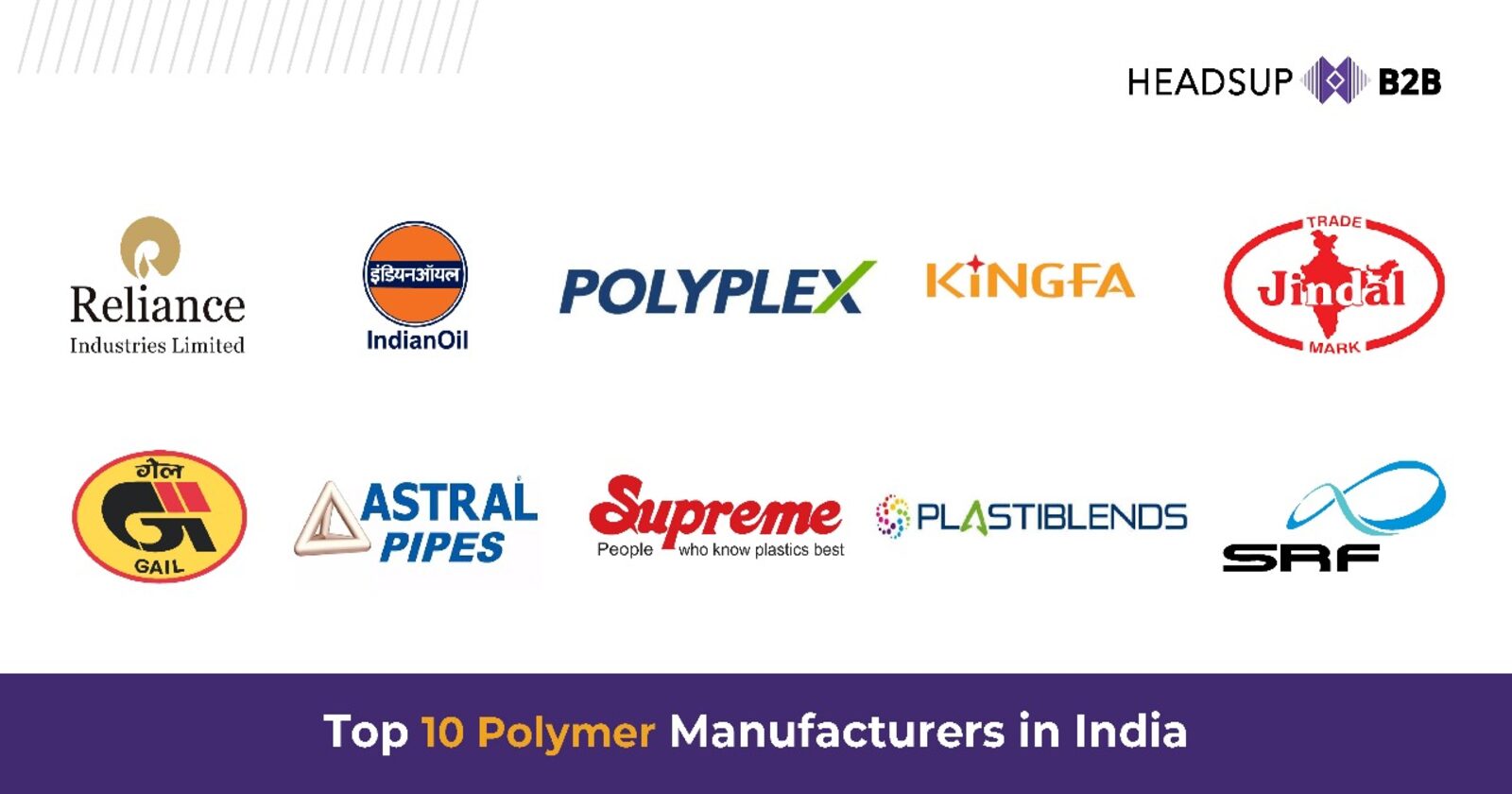
    Reliance Industries Ltd. (RIL)

    Reliance Industries has the world’s largest single-site refinery complex. It has a crude refining capacity of 1.4 million barrels per day. With state-of-the-art petrochemicals and polymers manufacturing units, the company leads the Indian polymer market. The company is headquartered in Mumbai and was founded in 1966. Reliance Industries is headquartered in Mumbai. It is one of India’s largest conglomerates, serving a diverse range of industries, including the polymer and oil and gas industries.

    Indian Oil Corporation Ltd. (IOCL)

    Established in 1959, Indian Oil Corporation is one of the country’s largest government-owned oil producers. The company has a refining capacity of 80.55 MMTPA and a strong polymer sector presence. Spanning the full hydrocarbon value chain—from refining to renewables —it employs over 31,600 people and is ranked 94th in the 2022 Fortune Global 500.

    GAIL (India) Ltd.

    GAIL was established in 1984 and operates around 13,700 km of natural gas pipelines. The company is a leading petrochemical offering company with its main manufacturing unit in Pata, Uttar Pradesh. Its nameplate capacity is 210,000 MT/year. GAIL markets these products under the brand names G-Lex and G-Len.

    Supreme Industries Ltd.

    Supreme Industries was established in 1942 and is headquartered in Mumbai. The company’s offerings include a wide range of industrial commodities and engineering polymers, including Polypropylene (PP), Polyvinyl Chloride (PVC) and Polystyrene (PS). It has EPE and PEX using foam and protective packaging solutions.

    Produces industrial and engineering moulded furniture, packaging films, PVC pipes and fittings, expanded polyethene foam, and disposable EPS containers. Headquartered in Mumbai, with a diversified product portfolio serving multiple sectors.

    Astral Ltd.

    Astral Ltd is a leading pipes and water management company in India, offering a diverse range of polymer products including CPVC, PVC and uPVC. The company’s total installed capacity in pipes and tanks is 334,040 MTPA, with its manufacturing units across the country, including Gujarat, Rajasthan, Tamil Nadu, Maharashtra, Assam and Uttarakhand.

    Jindal Poly Films Ltd.

    Jindal Poly Films’ flagship manufacturing plant in Nashik, recognised as the world’s largest single-location plant for the production of polyester (BOPET) and polypropylene (BOPP/OPP) films. The company has a distribution network of 40 countries, with a 95% market presence. Apart from having a significant market presence, a massive coating capacity and metallising capacity are projected at 14,000 tons per year and 71,610 tonnes per year.

    Polyplex Corporation Ltd.

    Polyplex Corporation Ltd. is a leading polyester film producer with its presence in diverse sectors, including packaging and electrical. It has a global footprint with manufacturing units in several countries. The company prioritizes innovation and sustainability in polyester film production.

    SRF Ltd.

    SRF Ltd is engaged in manufacturing chemicals, technical textiles and packaging films with a diversified business model in place. The company serves the automotive, agricultural and industrial sectors. The company has a strong emphasis on R&D and product innovation. The company has international manufacturing units in Thailand, South Africa and Hungary.

    Plastiblends India Ltd.

    Plastiblends India is a leading manufacturer in the automotive, electrical and consumer goods industries. It focuses on customised polymer solutions and technical expertise. The company has a growing presence in high-performance engineering plastics.

    Kingfa Science & Technology India Ltd.

    Kingfa Science specializes in polymer products and composites. The focus of the company is on advanced materials for automotive and industrial applications. Kingfa emphasises research and development to enhance product performance.

    Headsup B2B is your one-stop solution for your petrochemical needs, including water management and piping needs. For all your polymer products-related needs, reach out to us. Contact us to know more.

  • Different Types of GI Pipes and Their Uses

    Different Types of GI Pipes and Their Uses

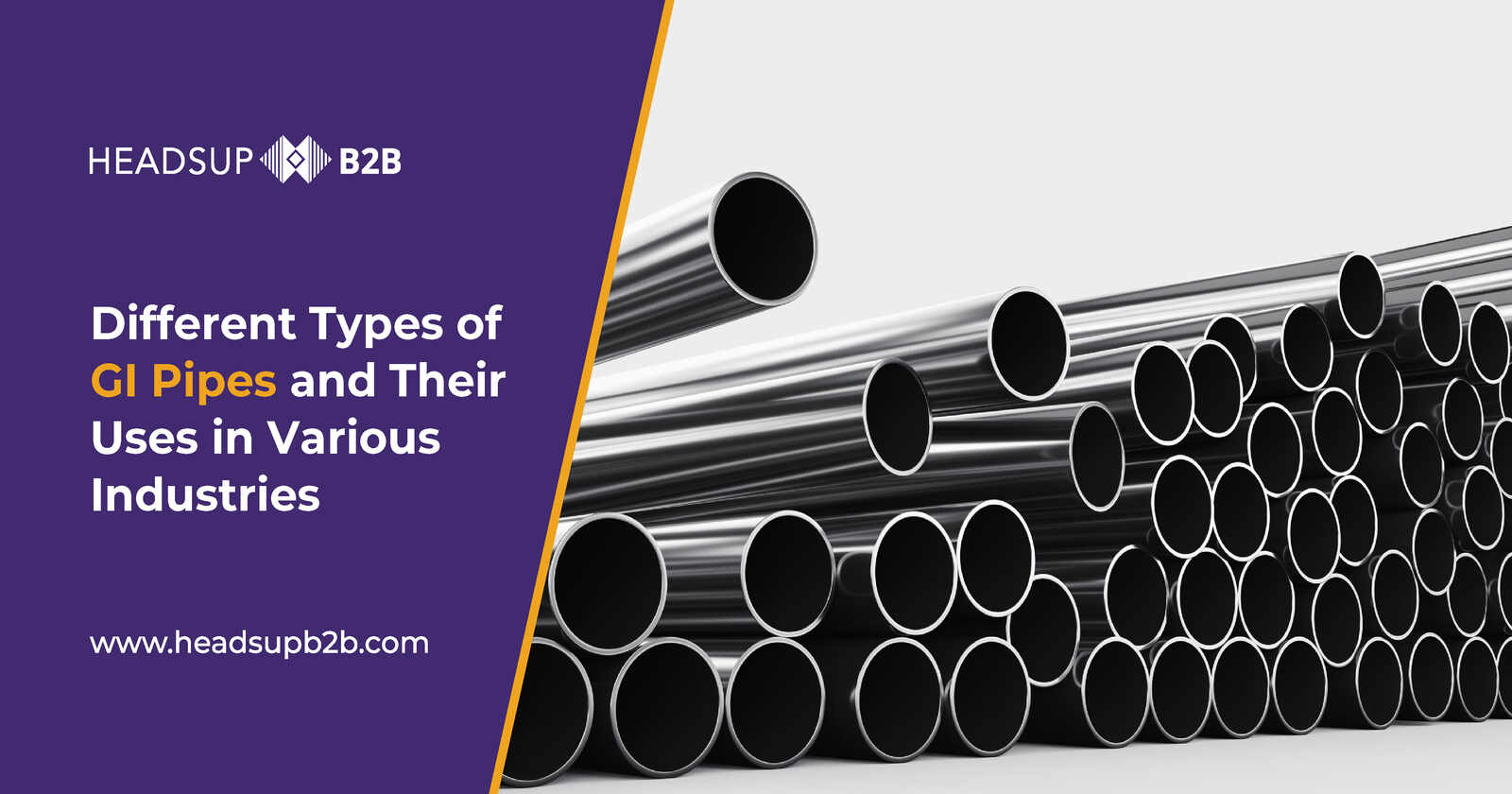
    GI (Galvanised Iron) pipes are popular choices for versatile use, spanning low-pressure applications and heavy-duty applications due to their less corrosive and anti-rusting properties. These pipes are used in diverse industrial applications apart from water supply, construction and irrigation.

    Types of GI Pipes

    Light Grade GI Pipes

    Low-pressure applications require the use of thin-walled galvanised iron pipes. They are often used in homes for plumbing. It is a cost-effective way to get water flowing.

    Medium Grade GI Pipes

    These pipes are well-suited for use in domestic and commercial water supply networks with moderate wall thickness. These are used widely as irrigation systems and light industrial applications due to their balanced strength and durability.

    Heavy Grade GI Pipes

    Heavy-grade GI pipes have thick walls, which add strength to the pipes and prevent bursting under a header of water pressure. These are very popular among industrial systems and buildings that require massive durability.

    Pre-Galvanised vs. Hot-Dip Galvanised Pipes

    Pre-galvanised pipes are prepared before they are made. They have basic corrosion resistance. They are used for a short period for lesser exposure.

    Hot-dip galvanised pipes are made by dipping the pipes in molten zinc, which is a thicker and more durable coating that will last longer in all conditions.

    Applications Across Industries

    Construction Industry

    Used for scaffolding, fencing, and structural frameworks. Preferred for high strength and rust resistance.

    Water Supply & Plumbing

    Commonly used in municipal and residential water lines. Suitable for both underground and overhead installations.

    Agriculture

    GI Pipes are used in sprinkler systems and irrigation pipelines due to being corrosion-resistant and rust-resistant.

    Oil & Gas / Industrial Use

    Ideal for transporting non-corrosive fluids. Used in compressed air lines and fire-fighting networks.

    Telecommunication & Electric Conduits

    Protects underground and overhead cables. Ensures long-term safety and cable management

    Conclusion

    GI Pipes are versatile and low-cost. Their corrosion-resistant and anti-rust properties make them fit for wet applications such as irrigation by using sprinklers to protect underground and overhead cables in telecommunications and electric conduits. Knowledge of the right kind of GI Pipes is crucial. Headsup B2B is your one-stop solution for all your piping needs. Contact us today to know more.

  • Top 5 Benefits of Using GI Pipes in Modern Infrastructure

    Top 5 Benefits of Using GI Pipes in Modern Infrastructure

    Behind every reliable structure, there is a sturdy structure. Here, GI pipes come into play, highlighting their significant role in the entire ecosystem. The presence of GI pipes in the structures leads to reliability expanding globally and nationally.

    Galvanised iron (GI) pipes are a staple in construction and plumbing projects across industries. Known for their zinc-coated durability, these pipes offer lasting performance and value. Here are the top five reasons GI pipes remain a top choice in modern infrastructure.

    Top 5 Benefits of Using GI Pipes

    1. Corrosion Resistance

    GI pipes are made of strong building materials such as steel and iron, with corrosion resistance. The zinc coating protects these pipes from rusting. The anti-corrosion and rusting-resistant properties make them a great choice for applications like water supply systems, making them suitable for both outdoor and indoor systems. These pipes are extensively used in coastal as well as humid areas due to their durability.

    2. Durability and Strength

    Both steel and iron are structurally robust and can withstand heavy-duty applications. GI pipes, due to their strength, help withstand physical stresses from heavy-duty applications, making them suitable not only for irrigation use but also for residential and industrial applications. The stronger the structure, the better the longevity, keeping them intact for a longer duration without the need for replacement and repair.

    3. Cost-Effectiveness

    GI pipes are structurally robust, which leads to a lowered need for maintenance. It leads to a longer lifespan. The longevity of these corrosion-resistant and anti-rust properties is directly proportional to cost effectiveness.

    4. Ease of Installation and Maintenance

    One distinct feature of GI pipes is their ability to be cut on site with the help of standard equipment, which leads to lowered downtime, also reducing the need for specialised equipment.

    5. Versatile Applications

    GI pipes are robust, durable, with features such as anti-corrosive properties, leading to wide-ranging applications. Some of the common uses of GI pipes include plumbing, fencing and scaffolding. The versatility of these pipes makes them go-to materials across industries.

    GI pipes are reliable, versatile, easy to install and cost-effective, and the market for these pipes is growing at a promising rate of 5.5%. At present, the market stands at ₹64,590 crore. These pipes need to be sourced from reliable suppliers and vendors. That’s where Headsup B2B enters the picture as a one-stop solution for all your GI pipe needs. Contact us today for all your plumbing and fitting needs.

  • Everything You Need To Know About GI Pipes

    Everything You Need To Know About GI Pipes

    What Are GI Pipes?

    GI pipes stand for Galvanized Iron pipes are coated steel pipes with a zinc layer through the process of galvanization. This zinc coating protects against rust and corrosion, from damage to the pipe, extending its lifespan significantly.

    Advantages

    • Corrosion Resistance: These pipes have a zinc coating, making them resistant to rust and corrosion. It makes the GI pipes ideal for wet settings.

    • Durability and Longevity: GI pipes are popular for strength, durability, and hence outlast other pipes in similar conditions.

    • Cost-Effectiveness: GI pipes are cost-effective, even after galvanisation, making them apt for large-scale projects.

    Common Applications

    Sector Applications & Uses
    Water Distribution & Plumbing Residential and commercial water supply systems; Sewage and drainage pipelines
    Agriculture Irrigation systems; Borewell and tube well casing; Sprinkler systems
    Construction Scaffolding, Structural support, Handrails, and fencing
    Automotive & Manufacturing Frame and chassis components, Exhaust systems, Industrial air or fluid lines

    Limitations

    • Internal Corrosion Over Time: The zinc layer can eventually wear off, especially in hot water systems, leading to internal corrosion, leaks, and possible water contamination.

    • Restricted Flow and Maintenance: Build-up inside the pipes can restrict water flow, and installation requires specialized tools. They are heavier and less flexible compared to alternatives like PVC.

    Sustainability and Maintenance

    • Recyclable: GI pipes are environmentally friendly as they can be recycled after use.

    • Maintenance Tips: Regular inspection, cleaning, and occasional repainting (for added protection) can further prolong their lifespan. Professional installation is recommended to prevent future issues.

    In summary, GI pipes are a strong, corrosion-resistant, and cost-effective choice for a wide range of infrastructure and industrial applications. Businesses should be aware of their limitations regarding long-term corrosion and maintenance needs, and to understand this, reaching out to professionals and experts is pertinent. Headsup B2B is your one-stop solution for all your pipe needs, including GI pipes. Get in touch with us to know more.

  • How to Identify Different Types of Electrical Wires?

    How to Identify Different Types of Electrical Wires?

    Electrical wires are vital to power systems, and identifying the right wire is the key to successful power distribution. Consideration for factors such as safety, installations and adherence to compliance leads towards successful planning and execution. Identification of wire types during renovation, electrical fixes and new installations. Here is a quick guide to make sense of the colourful world of wires.

    Importance of Identifying Electrical Wires

    • Safety reasons: The use of the right electrical wire during construction, renovation and electrical fixes ensures the safety of a premise. Proper labelling, such as FR, FRLS, shock-proof wires, ensures minimum damage during such hazardous events.

    • Functionality: Electrical wires serve as the main conduits for electric current. Right from preventing overloads to efficient power distribution, choosing the right functionalities of the wires is important.

    • Compliance: Following electrical codes and standards ensures smooth functioning of power distribution systems, compliance and labels such as BIS ensure that the wire is safe for installation and use, while adhering to legal requirements.

    Basic Components of an Electrical Wires

    • Conductor: The conductor is usually made of copper or aluminium, chosen for their excellent electrical conductivity and durability.

    • Insulation: The insulation is typically made of PVC (polyvinyl chloride) or rubber, protecting against electrical shocks and environmental damage.

    • Color Coding: Color coding of wires differs by region. For India-specific standards, the phase wires are generally red, yellow, and blue; the neutral wire is black, and the earth wire is green. Global colour codes may vary accordingly.

    Color Coding of Electrical Wires

    Wire Type Typical Colors Notes
    Live/Hot Wires Red, Brown, Black In India: Red, Yellow, Blue (for 3-phase systems)
    Neutral Wires Blue Consistently used in both India and global standards
    Ground/Earth Wires Green, Green with Yellow Stripe Universally recognised for safety grounding
    Multi-phase / Three-phase Wires Red, Yellow, Blue (India); Brown, Black, Grey (Global) Used in industrial and commercial setups for 3-phase power distribution

    Types of Electrical Wires (Based on Usage)

    Wire Type Use
    Single-Core Wire Domestic wiring
    Multi-Core Wire Appliances, control panels
    Flexible Wire Temporary connections, gadgets
    Armoured Cable Underground or industrial installations
    Coaxial Cable TV and the internet
    Twisted Pair Cable Telephones and data transfer
    Shielded Cable Data cables in EMI-prone environments

    Pro Tips for Safe Wire Handling

    • Always turn off the power before inspecting.

    • Use insulated tools.

    • Follow local regulations or consult an electrician.

    Conclusion

    If you want your wiring solution to be efficient and safe, learn about wire color codes, types, tools and safety. Share this guide by Headsup B2B or send it to your team for easy access, and contact us for all your electrical wiring needs.

  • Top 5 Rolling Shutter Brands in India

    Top 5 Rolling Shutter Brands in India

    The rolling shutter market is witnessing growth globally and in India. The growing demand for rolling shutters is due to multiple market-related factors, such as secure infrastructure, energy efficiency, and automation in industrial, commercial settings has led to a market expansion of rolling shutters.

    1. Magnum Telesystem Pvt. Ltd.

    Established in 2001, Magnum Telesystems is India’s leading high-security and automated rolling shutters brand. The company is headquartered in Paschim Vihar, New Delhi. With a notable reputation across the national capital and India, it specialises in galvanised and aluminium shutters. Ideal for commercial as well as industrial settings, Magnum rolling shutters are highly suited for all types of high-security premises.

    2. Avians Innovations Technology Pvt. Ltd.

    Avians is a well-known brand for automated rolling shutters and high-security systems. Headquartered in Pune, Maharashtra, the company was established in 2007. The company has a proven track record in the automated shutter domain, with a specialization in galvanized, stainless steel and transparent rolling shutters. These shutters have industrial-grade durability.

    3. NIHVA Technologies Pvt. Ltd.

    NIHVA Technologies makes automatic, energy-efficient rolling shutters. The company provides custom-sized and colored products and has remote control and motorized systems for added convenience. NIHVA is a reputed company that manufactures high-quality materials and designs robust doors for different industrial and commercial sectors. The company offers insulated and fire-rated doors that secure your premises, with climate control and noise reduction. The company’s products enhance factory automation that meets global standards, making it a reliable B2B partner for automatic rolling shuttles.

    4. Shutter India Engineering Works

    With over 30 years of experience, Shutter India Engineering Works manufactures standard, customized and motorized rolling shutters for industrial and commercial customers in a cost-effective way. Through a careful selection of raw materials for quality assurance, they are installed quickly to ensure minimum downtime. Their products find use in a variety of applications that are known to be durable and cost-effective. These rolling shutters are manufactured in eastern India.

    5. Vijay Shutter Enterprises

    Vijay Shutter Enterprises makes rolling shutters for homes and factories. They are manual as well as motorized. The company focuses on custom engineering using high-quality raw material for durability, corrosion resistance and weather protection. Aluminum rolling shutters are the company’s specialty, providing custom-made features For more than 20 years, Vijay’s Shutter has had a proven track record with customers, providing practical, efficient and versatile shutter solutions for various settings.

    Headsup B2B offers a trusted repository of credible vendors and thoroughly vetted suppliers for all automatic rolling shutters. For reliable industrial warehousing solutions, connect with Headsup B2B.

    The global and Indian rolling shutter market is growing due to factors like secure infrastructure, energy efficiency, and automation. Notable companies include Magnum Telesystem Pvt. Ltd., Avians Innovations Technology Pvt. Ltd., NIHVA Technologies Pvt. Ltd., Shutter India Engineering Works, and Vijay Shutter Enterprises, each offering specialized and high-quality rolling shutter solutions for industrial and commercial sectors. Headsup B2B serves as a reliable resource for vetted suppliers and warehousing solutions.

  • How to Reduce Supply Chain Risks in Construction Procurement?

    How to Reduce Supply Chain Risks in Construction Procurement?

    Construction projects involve intensive capital planning and streamlined, end-to-end project management for smooth supply chain management. Procurement is an important step in any supply chain management, with sourcing materials, services and labour being important factors in the construction industry. Risks involved in this industry impact timelines, costs and quality in construction projects. This blog aims to identify key supply chain risks and offer practical mitigation strategies to ensure smoother procurement.

    Key Supply Chain Risks

    1. Material Shortage: Material Shortages are a result of volatile commodity prices, adverse environmental events, and pandemics like COVID-19, resulting in supply chain bottlenecks.

    2. Price Volatility: The construction industry’s price fluctuates with changing market conditions. Changes in prices of commodities, raw materials and the value of currency make prices volatile and difficult to budget for.

    3. Supplier Reliability Issues: Supplier credibility is essential for ensuring the quality of products and services supplied. It also ensures adherence to project costs, timelines and qualities.

    4. Logistics Disruptions: Disruptions of logistics occur when transportation delays or failures disrupt the timely delivery of materials.

    5. Compliance & Regulatory Risks: The risks of compliance and regulatory are non-compliance with the regulation may lead to penalties, stopping of the project or damage to reputation.

    Risk Reduction Strategies

    1. Supplier Assessment & Diversification: Regularly evaluate suppliers and diversify sources to avoid dependency on a single vendor. Vetting the vendors and suppliers while keeping diverse alternatives open reduces the dependency on a single vendor.

    2. Use of Technology & Forecasting Tools: Implement predictive analytics and procurement software to anticipate demand and supply issues. Technological enhancements like predictive analytics help assess the demand, and procurement software helps solve supply-related problems by automating the process, which leaves less room for ambiguity and gaps.

    3. Smart Inventory & Logistics Planning: Maintain optimal inventory levels and plan logistics proactively to buffer against delays.

    4. Stronger Contract Management: Negotiate clear contracts with penalties and contingencies to safeguard project interests.

    5. Regulatory Compliance Practices: Stay updated on regulations and integrate compliance checks into procurement processes.

    6. Continuous Monitoring & Communication: Establish ongoing risk monitoring and maintain transparent communication with all stakeholders.

    Industry Case Study

    We are a supplier of renewable materials for high-speed metro and NHAI infrastructures. We face perennial challenges of delayed shipments, raw material price fluctuations, and a working capital cycle that puts pressure on timelines.

    Conclusion

    Proactive supply chain risk management is vital for successful construction projects. Adopting these strategies improves timelines, cost control, and quality. Headsup B2B is a platform that streamlines procurement. Contact Headsup B2B for all your construction-related needs.