Author: suraj

  • Choosing the Right Bearings: Essential Components for Machinery

    Choosing the Right Bearings: Essential Components for Machinery

    You may know that “bearings” are parts of machinery, but what exactly do they perform? They are known as the “bread and butter” of the machine industry because of their role in machinery. As they are essential parts of machines, choosing the right one in this competitive market is quite challenging. So, here comes Headsup B2B, an online platform that connects authentic bearing suppliers with potential buyers. Our user-friendly platform makes the sourcing of bearings easy and reliable. Although they work in the shadows and are a common component of a movement on a wide variety of machines, most non-machine industry people don’t know much about the bearings.

    Thus, In this blog, we will review the fundamentals of bearings and how to choose the right ones.

    What is Bearing?

    The component that holds the shaft in place, bearings, directs the shaft’s rotational movement and supports the load that is passed from the shaft to the frame. It is the vital and supporting component that helps the rotating shaft or moveable portion of different machines function. To rotate the host, the supporting component depends on the rolling body. Another name for it is the joint of machinery.

    Types of Bearing

    There are three main types of bearings:

    Ball bearings

    Rolling element bearings, such as ball bearings, support weights, lower friction, and position moving machine parts while promoting motion.

    They use two distinct “races,” or bearing rings, to lessen surface contact and friction across moving planes. The balls’ spinning motion lowers the coefficient of friction compared to flat surfaces rubbing against one another.

    Roller Bearings

    Rolling bearings distribute loads between machine components and support and steer rotating or oscillating machine parts, including wheels, axles, and shafts. They minimise heat, noise, wear, and energy consumption while enabling high rotating speeds due to their excellent accuracy and low friction.

    Plain Bearings

    Plain bearings are often quieter than anti-friction bearings because they don’t have any moving components. They work based on sliding friction and don’t need rolling elements. Applications involving rotation or linear motion can make use of plain bearings. An example of a linear use is a sliding drawer, whereas a shaft turning in a hole is a simple bearing that limits rotational motion. For heavy loads and low-speed applications, plain bearings are important.

    How to choose the right bearing from Bearing Suppliers

    Determine the Load Capacity & Bearing Load

    Before anything else, ascertain the kind and volume of bearing load your application will impose on the bearing. Ball bearings typically function best with small-to-medium-sized loads. Roller bearings generally perform well in heavy-load situations.

    Ascertain the Rotational Speed

    Find out how fast your application rotates. Ball bearings often perform better at high speeds (RPM), whereas roller bearings typically perform best at lower speeds.

    Contribution to Bearing Rigidity and Runout

    Finding out what type of runout your application will permit is another important step. A ball bearing is perhaps your best option if the application only permits minor variations.

    The Load and Capacity of Bearings

    Ball bearings are perfect for modest or ordinary loads, whereas roller bearings can take severe loads. Choosing amongst these varieties will be easier if you consider the load capacity required for your application.

    How Headsup B2B Makes Choosing the Right Bearings from Bearing Suppliers Easy

    Headsup B2B is the most reliable online platform for simplifying the process of selecting the perfect bearings for industrial applications. Here’s how:

    A Wide Range of Products from Reputable Bearing Suppliers

    Headsup B2B offers a vast catalogue of bearings, including ball bearings, roller bearings, and plain bearings, ensuring you have access to the right options for your specific needs.

    Expert Guidance

    Not sure which bearing is best suited for your machinery? Headsup B2B is here to provide expert guidance and support to help customers choose the right bearing. Whether you want load capacity, speed ratings, or environmental considerations, our team of experts is ready to help you at every stage.

    Most Suitable Product Options

    Every industrial application is unique, and we understand that one size does not fit all. That’s why Headsup B2B offers perfect recommendations tailored to your specific requirements.

    Quality Products from Trustworthy Bearing Suppliers

    At Headsup B2B, we prioritise quality, which is why we partner with reliable bearing suppliers and manufacturers known for their reliability and durability. With Headsup B2B, you can rest assured that you’re getting high-quality bearings that will stand the test of time.

    Seamless Procurement Process

    Once you’ve selected the right bearings for your industrial use, Headsup B2B makes the procurement process seamless and efficient. With easy ordering and fast delivery, you can get your bearings quickly and get your machinery up and running on time.

  • Safety Footwear: Choosing the Right Shoes for Workplace Protection

    Safety Footwear: Choosing the Right Shoes for Workplace Protection

    Did you know that thousands of workplace injuries occur yearly due to inadequate footwear? Protecting your and your worker’s feet isn’t just about comfort; it’s about ensuring your safety on the job.

    Safety footwear is one of the most important pieces of personal protective equipment (PPE) for workers exposed to hazardous surroundings and circumstances, like navigating slippery surfaces, dodging falling objects, or braving electrical hazards.

    Headsup B2B is a reliable platform for providing work boots online procurement services. And we understand that choosing the right work boots is quite challenging. So, Headsup B2B is here to guide you through various aspects of selecting the right work boots online or offline. We’ll discuss safety shoes, their types and benefits, and how to make a credible choice among various options. So, let’s begin!

    What are the Safety Boots?

    Safety boots are made with a robust, protective support up front, which extends their lifespan. These safety shoes support and shield against injuries, including compression and electrical hazards. The steel is also positioned at the sole plate of the main sole to guard against any punctures from below.

    In industries with a significant level of risk, these shoes are regarded as the best defence.

    Types of Safety Shoes

    Steel-toe shoes

    Steel-toe shoes are the best choice for demanding job settings where employees must cope with heavy machinery and falling items. It shields against foot injuries from strikes by the steel plate in the toe cap.

    Composite-toe shoes

    These are more comfortable and lighter than steel-toe shoes while providing the same protection. It is good for those who spend a maximum amount of time standing. The toe cap’s composite material is lightweight and flexible.

    Slip-Resistant Shoes

    These footwear options are for employees operating in wet or slick environments. These shoes are perfect for people who work in damp areas, construction, and the food and hospitality industries.

    Shoes designed to withstand abrasions

    These shoes are best for labourers who frequently encounter sharp things like broken glass and nails. Those who work with sharp things, such as roofers and construction workers, would find these shoes excellent.

    Electrical Hazard Shoes

    Safety shoes for electrical workers and those working near live wires are known as electrical hazard shoes. These shoes have a composition of non-conductive materials and provide the appropriate insulation to prevent electrical current from passing through the wearer’s body.

    Some Common Benefits of Safety Shoes

    • In businesses with dynamic work environments, big things falling are frequent occurrences. When such unfavourable circumstances arise, wearing safety shoes protects your feet from serious injuries.

    • There are different types of sharp tools and objects used in construction. Workers frequently encounter them, so these safety shoes protect them from injuries.

    • Electrical work is dangerous, and maintaining adequate safety is important. So, wearing safety shoes made of non-conductive materials like rubber or leather is strongly advised, as these materials are poor electrical conductors.

    • Safety boots with good protective soles can reduce the chances of unintentional slips, trips, and falls. Additionally, these work boots have unique designs that help you maintain better balance when climbing or descending a ladder.

    How to Choose the Right Work Boots Online

    Assess the Workplace

    Begin the workboot selection process by assessing the condition of the worksite and the worker’s needs.

    Essential Safety Features

    The capacity of safety shoes to offer sufficient defence against dangers is the most important factor to consider when making a purchase. Steel plate soles, safety toe caps, metatarsal guards, etc. are sturdy, trustworthy materials for quality shoes.

    Comfort and Quality

    Comfort is a priority because safety shoes are mostly meant to be worn in challenging environments. Shoes should be comfortable in warm and chilly weather, allow enough space for the toes, and support the arch and heel.

    Ideal performance requires proper fit

    Ergonomics and proper fit are essential to safety shoes’ long-term efficacy. For proper grip, the instep should fit tightly, and the boot’s ball should rest on the foot.

    Robust outsole options

    It’s crucial to take safety precautions with the outsole of safety shoes in addition to the insoles. Strong construction that offers resistance to heat, chemicals, etc.- is ideal for shoes.

    Cost-quality ratio

    Always choose shoes from reputable manufacturers of work boots online. And also make sure that the shoes’ features and capabilities match their cost.

    Headsup B2B: A Reliable Platform for the Best Quality Work Boots Online

    User-friendly Platform

    Are you looking for top-notch work boots online? Look no further than Headsup B2B! As a reliable platform, we offer the best quality safety shoes for the workplace, with a wide range of options from reputable manufacturers and suppliers. Headsup B2B is an easy-to-use platform that makes the online procurement process seamless and stress-free.

    Cost-effective product with expert guidance

    With our competitive prices and fast shipping, you’ll have your new work boots on time. We also provide expert guidance and assistance to our customers. Headsup B2B is your go-to marketplace for best-quality work boots online. We always have the best selection and unbeatable prices. So why wait? Head over to Headsup B2B today and step into safety with the perfect pair of work boots!

  • Adhesives in Construction: Bonding Materials for Durability

    Adhesives in Construction: Bonding Materials for Durability

    In today’s constantly evolving construction industry, adhesives are the most important yet overlooked material. These seemingly humble materials play a pivotal role in ensuring the durability and longevity of structures worldwide.

    Adhesives, with their ability to seamlessly bond materials together, enhance buildings’ structural integrity and contribute to their aesthetic appeal. If you are looking for high-quality adhesives for construction projects,

    Headsup B2B is an online platform that provides a wide range of construction materials and adhesives from the most reliable construction adhesives suppliers.

    We connect construction adhesive suppliers with potential buyers and make the procurement process easy and smooth. In this blog, we will cover some important topics about adhesives like their types, uses, right procurement methods etc.

    What is Adhesive

    Construction adhesive is multipurpose, it helps to attach tile, moulding, and drywall, and also works as fixtures to walls, ceilings, and floors. It is often in tubes and used with caulking guns to join two surfaces together. The substance is as strong and reliable as rivets, screws, or nails.

    Types of Adhesive

    While selecting the appropriate glue for a project or repair, it’s critical to comprehend how various glue types behave with different materials. The types of adhesives you can use are as follows.

    • Epoxy Resin Adhesives

    • Hot Melt Adhesives

    • Acrylic Adhesives

    • Water-Based Adhesives

    • Solvent-Based Adhesives

    • Anaerobic Adhesives

    • Pressure Adhesives

    • Electrically Conductive Adhesives

    • Plastisol Adhesives

    • Thermoset Adhesives

    How to Choose the Right One for Your Project?

    Because every type of adhesive has unique properties, it is essential to consider the following factors when selecting the best adhesive.

    • Examine the surface type and condition because certain adhesives work only on porous surfaces and some suit nonporous ones.

    • The durability of the adhesive refers to its longevity. Even though environmental factors might impact durability, always choose adhesives that can last long.

    • The time taken by the glue to dry and cure is known as the drying and curing period. While there is no specific time for drying or curing, adhesives with quicker drying or curing will be a good choice if you have a certain time limit.

    • Choose the adhesive according to your needs and budget. You can also seek the help of experts like Headsup B2B to make your process easier.

    Applications of Construction Adhesives

    Here are some common uses of construction adhesives:

    • It helps in the adhesion of ceramic tiles

    • Used in carpet layering

    • Top-of counter Lamination and installation of veneers and laminates on interior furniture.

    • When mending a floor, adhesives work as the bonding layer between the substrate and the existing floor.

    • for the plasterboard lamination fastening process.

    • For HVAC, heating, ventilation, and air conditioning.

    • In prefabricated or manufactured houses.

    • Pre-finished panel fixing.

    • Repairing resilient or vinyl flooring.

    • Adhesives are also essential materials for repairing roof tiles and roofing systems.

    • Wall covering or wallpaper application as well as surface preparation.

    • Building materials and construction materials are included in the construction business.

    Headsup B2B: A Trustworthy Online Platform for Construction Adhesive Suppliers and Buyers

    Headsup B2B stands out as the top online platform for procuring adhesives, and here’s why:

    A Wide Range of Products from Prominent Construction Adhesives Suppliers

    Headsup B2B offers a vast range of adhesive products from reliable construction adhesives suppliers. Our platform offers you plenty of options to meet your specific project needs. Furthermore, we provide expert assistance to our customers for successful purchases.

    Easy-to-Use Platform

    The platform is designed with user-friendly navigation, making it simple to search for and find the right adhesives for your project’s needs. So, you can easily search for the product, select the category, and place the order.

    Transparent Pricing

    Headsup B2B provides transparent pricing information. Our platform also allows customers to compare prices from different construction adhesives suppliers and make informed purchasing decisions

    Efficient Procurement Process

    The professionals at Headsup B2B work with dedication and a customer-centric approach to streamline the procurement process. Our platform allows customers to quickly place orders, track shipments, and manage invoices, saving them time and hassle.

    Reliable Customer Support

    The platform offers reliable customer support to assist you with any queries or issues you may encounter during the procurement process.

  • AAC Block: Lightweight Construction Solutions

    AAC Block: Lightweight Construction Solutions

    Welcome to this extensive guide to AAC blocks – a lightweight and advanced construction technology also known as the backbone of the construction industry. AAC stands for Autoclaved Aerated Concrete. AAC blocks are not only bricks; they rather are niche, environmentally friendly products of the future. When it comes to the manufacture of AAC blocks, reliability stands out as a main aspect. Headsup B2B is an online platform that connects potential buyers with authentic AAC blocks manufacturers and suppliers. In this blog, we will discuss the AAC block and tips to find the right AAC blocks manufacturers.

    What is AAC Block?

    Fine aggregates, cement, and an expansion agent are the main ingredients of autoclaved aerated concrete (AAC), which gives the newly mixed material the appearance of bread dough. 8% of this kind of concrete is air. The material is moulded and cut into precisely dimensioned components in the plant where it is manufactured.

    Types of AAC Blocks

    The various AAC block types are as follows:

    Solid AAC Blocks

    Suitable for load-bearing applications, these blocks are dense and solid throughout.

    Aerocon AAC Blocks

    Aerocon AAC Blocks are perfect for non-load-bearing walls and partitions because of their lightweight design and cellular structure.

    AAC Hollow Blocks

    The hollow core design provides improved thermal insulation when used in both load-bearing and non-load-bearing walls.

    AAC Panels

    These are large, easily assembled panels that are used to build roofs and walls.

    AAC Lintels

    Made especially to make lintels and other structural elements.

    U-Blocks

    U-shaped for effective beam and lintel construction.

    Sound Insulation Blocks

    Designed for spaces that need to reduce noise, these blocks offer exceptional sound insulation.

    Thermal Insulation AAC Blocks

    They are designed to improve thermal insulation and support the use of energy-efficient building materials.

    Benefits of Using AAC Blocks in Construction

    Among the benefits of AAC Block are

    • Makes handling simpler and building more quickly.

    • Has superior thermal insulating qualities for increased energy effectiveness.

    • Contributes to the general safety of the structure by offering strong fire resistance.

    • Provides excellent sound absorption, resulting in calmer interiors.

    • Shows tenacity by fending against pests and deterioration.

    Applications of AAC Blocks

    Here are some significant uses of AAC blocks

    • The vital element in the construction of residential and commercial buildings.

    • It is used in warehouses and industrial facilities.

    • AAC blocks are often used in institutional buildings such as schools, hospitals, and other facilities.

    • Because of their remarkable durability and robustness, AAC blocks are the main component of infrastructure projects, such as tunnels and bridges.

    • Perfect for the construction of thin internal walls.

    • AAC clocks are ideal for reducing the structural load while designing high-rise structures.

    • It is also used in a variety of contexts for noise reduction.

    How to Procure AAC Blocks from Right AAC Blocks Manufacturers

    When procuring AAC blocks for your construction project, it’s crucial to follow these essential tips:

    Calculating Required Quantities

    Before placing your order, accurately calculate the quantity of AAC blocks needed for your project. Overestimating or underestimating can lead to delays and extra costs.

    Planning Delivery and Logistics

    Coordinate with your supplier to plan the delivery schedule and logistics efficiently. Consider factors like transportation, site access, and storage space for smooth delivery of the AAC blocks.

    Ensuring Proper Handling and Storage

    AAC blocks are lightweight but require careful handling to prevent damage. Store in a dry and well-ventilated area, away from moisture and direct sunlight, to maintain their quality.

    Seeking Expert Advice

    Don’t hesitate to seek advice from construction professionals or AAC block manufacturers. They can provide valuable insights and recommendations customised to your project requirements, helping you make informed decisions.

    By above tips, you can streamline the procurement process and ensure the successful integration of AAC blocks into your construction project.

    HEADSUP B2B: An Online Platform for Authentic AAC Blocks Manufacturers and Potential Buyers

    Headsup B2B stands out as the top online platform for AAC block manufacturers and buyers for several reasons:

    Extensive Network

    Headsup B2B boasts a vast network of AAC block manufacturers, offering buyers a wide range of options.

    Transparent Transactions

    Headsup B2B facilitates transparent transactions between manufacturers and buyers, providing clear pricing, terms, and conditions to foster trust and Accountability.

    Easy Procurement Process

    With user-friendly features and intuitive navigation, Headsup B2B simplifies the procurement process, allowing buyers to quickly find, compare, and purchase AAC blocks according to their specific requirements.

    Expert Support

    The platform offers expert support and guidance to both AAC blocks manufacturers and buyers, ensuring smooth communication and resolving any issues promptly.

    Quality Assurance

    The platform makes sure that all manufacturer’s records meet stringent quality standards, giving buyers peace of mind regarding the reliability and performance of the AAC blocks.
  • 10 Essential Material Handling Equipment for Your Business

    10 Essential Material Handling Equipment for Your Business

    In today’s competitive business landscape, efficient material handling equipment is crucial for optimizing operations and maintaining a competitive edge. Whether you operate a warehouse, manufacturing facility, or distribution center, choosing the right material handling equipment can significantly enhance productivity, streamline processes, and ensure workplace safety. Here, we outline the ten essential types of material handling equipment that every business should consider integrating into their operations.

    10 Types of Material Handling Equipments

    1. Forklifts

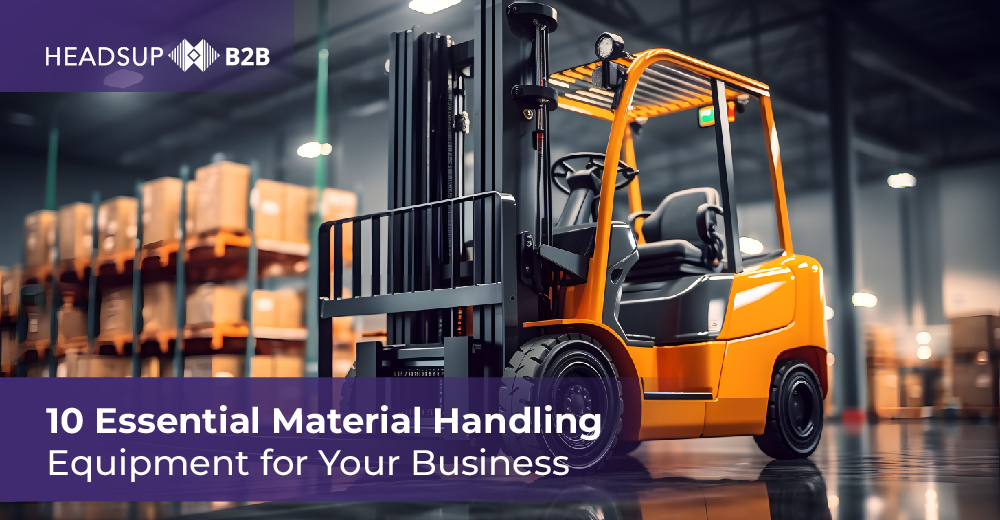
    Forklifts are indispensable in any warehouse or distribution setting where the movement and stacking of heavy materials are routine. They come in various types, including counterbalance forklifts, reach trucks, and pallet jacks, each suited for different operational needs.

    2. Conveyors

    Conveyors automate the movement of materials, reducing manual handling and optimizing throughput. They are versatile and can be customized to fit different layouts and material types, from roller conveyors for carton handling to belt conveyors for bulk materials.

    3. Pallet Racking Systems

    Efficient storage is fundamental to streamlined operations. Pallet racking systems, such as selective racks, drive-in racks, and push-back racks, maximize vertical space utilization and facilitate organized inventory management.

    4. Industrial Shelving

    Industrial shelving systems provide accessible storage for smaller items or goods that do not require pallet storage. Options include boltless shelving, wire shelving, and mobile shelving systems, each offering different benefits in terms of accessibility and space utilization.

    5. Storage Containers and Bins

    For organizing and transporting smaller parts or items within a facility, storage containers and bins are essential. These range from stackable plastic bins to metal storage containers, designed to withstand various environmental conditions.

    6. Pallet Jacks

    Pallet jacks, or pallet trucks, are indispensable for moving palletized goods within a confined space or short distances. They are available in manual, electric, and specialized models, catering to different load capacities and operational requirements.

    7. Dock Equipment

    Efficient loading and unloading operations rely on well-equipped docks. Dock levelers, dock seals, and dock shelters ensure smooth transitions between trucks and warehouse floors, enhancing safety and operational efficiency.

    8. Hoists and Cranes

    Hoists and cranes are critical for lifting and maneuvering heavy loads safely. Options range from overhead cranes for large-scale operations to portable hoists for smaller tasks, ensuring flexibility and precision in material handling.

    9. Automated Guided Vehicles (AGVs)

    AGVs represent the future of material handling, offering autonomous transportation of goods within a facility. They navigate using sensors and predefined routes, reducing labor costs and increasing efficiency in large-scale operations.

    10. Carton and Case Handling Equipment

    For businesses involved in packaging and fulfillment, carton and case handling equipment streamline the packing process. This includes case erectors, carton sealers, and packing stations, optimizing throughput and ensuring product integrity.


    Investing in high-quality material handling equipment is not just about efficiency; it’s about creating a safer and more productive workplace environment. Each of these equipment types plays a crucial role in optimizing workflow, reducing downtime, and minimizing the risk of workplace injuries.

  • Switches and Safety: Choosing the Right Switchgear for Industrial Use

    Switches and Safety: Choosing the Right Switchgear for Industrial Use

    In the heart of every industrial operation lies a network of wires, cables, and switches. To control and distribute electrical power in all these components, switchgear plays a crucial role. It silently ensures the electrical system’s smooth flow of electricity, safety, and efficiency. But within this complicated and competitive market, choosing the right switchgear is the most challenging task.

    Thomas Edison famously said, “The three great essentials to achieving anything worthwhile are, first, hard work; second, stick-to-itiveness; and third, common sense.” In industrial operations, this common sense translates into selecting the optimal switchgear for the project.

    Headsup B2B is an online platform that offers easy and seamless procurement of switchgear and other materials to buyers. We ensure quality and reliable services by connecting potential customers with reputable switch suppliers.

    So, as a leading and reliable procurement platform online, the professionals of Headsup B2B are here to help you with reliable products and the right selection process. In this blog, we’ll discuss some key points for selecting the right switchgear for industrial use.

    What is Switchgear and Its Components?

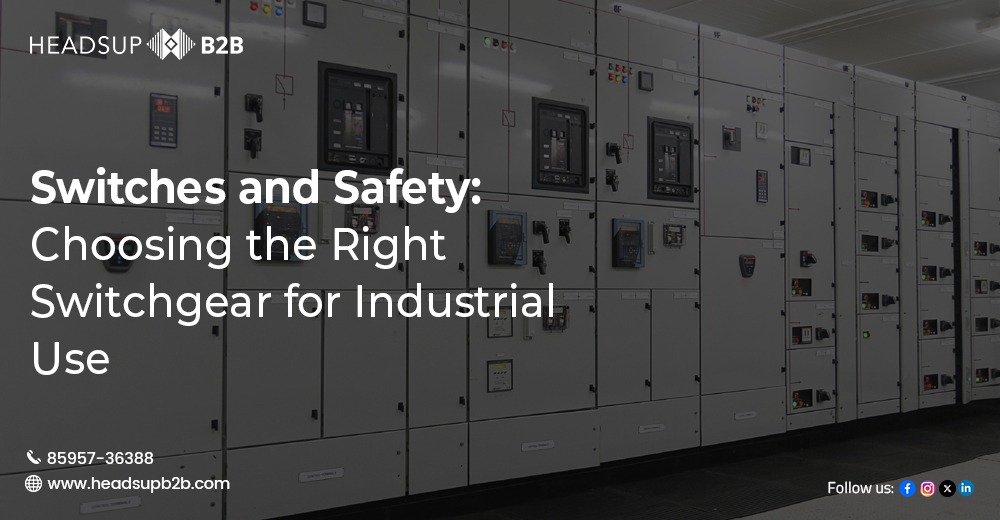
    Electrical equipment that is connected to electric supply systems and protects the circuit by cutting currents during unusual operating situations is known as switchgear.

    Switchgear Components

    It consists of two parts: control systems and power-conducting systems. The primary function of switchgear components is to de-energise the electric setup for routine maintenance and repairs. The most prevalent switchgear components are relays and fuses. It avoids excessive damage to the equipment in the event of a short circuit by limiting the current flow to safe levels.

    Types of Switchgear: (MCBs)

    There are three main types of switchgear:

    Low Voltage Switchgear (LV)

    Low-(MCBs), voltage switchgear, or LV switchgear, is the term for power systems that handle up to 1 KV. Switches, LV circuit breakers, HRC fuses, EL circuit breakers, unloaded electrical isolators, MCBs, and moulded case circuit breakers (MCCBs) are among the devices in this category.

    Medium Voltage Switchgear(MV)

    The power system known as MV (medium voltage switchgear) handles voltages up to 36 kV. These come in several varieties, such as outdoor variants without metal enclosures and indoor and outdoor ones with metal enclosures, among others. Substation devices such as minimum oil CBs, bulk oil CBs, gas-insulated SF6, air magnetic, gas-insulated hoovers, etc. are examples of this type of equipment.

    High-Voltage Switchgear (HV)

    HV (high voltage) switchgear is the term for power systems that handle voltages higher than 36 KV. Because of the highly active switching, arcing will occur as the voltage level increases. Therefore, pay more attention when constructing this equipment. The high-voltage (HV) circuit breaker is the primary part of this apparatus.

    How to Select the Right Switchgear for Industrial Needs

    Know your needs

    Before starting your selection process of switch suppliers, evaluate your system. Check the amount of power it needs, types of load, duty cycle and voltage level. Also consider reduction factors like environment, installation height, ambient air temperature, etc. It will help you shortlist the products that meet your specific needs.

    Safety

    When handling medium-voltage equipment, safety must come first. Search for switchgear suppliers that comply with applicable safety requirements and standards.

    Cost and Lifecycle Consideration

    Although it should not be the only determining factor, cost is a significant concern. Examine the complete life cycle costs and the switchgear’s anticipated service life, maintenance expenses, and initial investment.

    Buy from the Reliable Switch Suppliers

    Since medium-voltage switchgear is an expensive purchase, dependability and durability are essential. So, Headsup B2B connects buyers with reliable switch suppliers. We also ensure the reputation of the equipment’s quality. Seek a track record of success, sturdy construction, and dependable parts.

    Ecological Consideration

    The significance of sustainability and environmental effects is growing. Seek out switch suppliers that encourage energy efficiency and conform to environmental requirements.

    Role of Headsup B2B in Making Selection and Procurement of Switchgear Easy

    Comprehensive Catalogue

    Headsup B2B boasts an extensive catalogue of switchgear options, catering to various industrial needs. From low voltage to high voltage, we will assist you with everything. Our team of experts will ensure that you find the perfect fit for your specific requirements.

    User-friendly Platform

    With Headsup B2B, navigating the platform is as easy as flipping a switch. Our user-friendly interface makes browsing simple. So, easily compare and select the ideal switchgear solution.

    Expert’s Guidance

    Our team will provide the right guidance and assistance. Whether you’re a seasoned professional or new to industrial procurement, Headsup B2B is here to help you make informed decisions every step of the way.

    Reliable and Trusted Switchgear Suppliers

    At Headsup B2B, transparency is key. Our platform has the most authentic and reliable switchgear suppliers. From quality to cost-effectiveness, you can trust Headsup B2B for the best procurement services.

    So, what are you waiting for? Switch to Headsup B2B today and experience the seamless procurement process from the most reliable switchgear suppliers.

  • Choose the Right Wires and Cables for the Industrial Electrical System

    Choose the Right Wires and Cables for the Industrial Electrical System

    Did you know that the right choice of wires and cables can make a significant difference in the industrial electrical system’s performance and safety? From powering heavy machines to transferring important data, industrial environments demand strong and durable solutions that withstand adverse environmental conditions.

    Choosing this significant electrical material demands familiarity with the product or the proper guidance from the experts. So, the professionals of Headsup B2B are here to assist you with the right information and excellent products.

    The Headsup B2B is your go-to online destination for procuring top-notch industrial wires online. So, let us discuss the complications of choosing the right wires and cables for industrial applications and the role of Headsup B2B in making procurement easy.

    Types Of Industrial Wire

    Fibre Optics Cables

    Fibre optic cables are a wonder of modern technology; they transfer data via light signals utilising strands of glass or plastic fibre. Because of their remarkable speed and capacity, they are essential to modern communication networks. Additional categories for fibre-optic cables include:

    Single-mode fibre: Made for high-bandwidth, long-distance communications.

    Multi-Mode Fibre: Suitable for applications requiring less bandwidth and shorter distances.

    Power Cables

    The main purpose of power cables is Long-distance electrical power transmission. They are built to effectively manage high voltage and current levels. Various kinds of power cables consist of high-voltage power cables. These cables help transmit power across long distances in transmission lines. Medium-Voltage Power Cables: Used for power distribution in urban and industrial settings. Low-voltage power cables are often crucial for both business and household electrical installations.

    Twisted Pair Cables

    Twisted-pair cables are used widely in telecommunications and networking. To lessen electromagnetic interference, they are made of pairs of insulated copper wires twisted together. There are two varieties of twisted-pair cables: Unshielded Twisted Pair (UTP) Cable: Typically seen in phone and computer Ethernet connections. Shielded Twisted Pair (STP) Cable: Provides more shielding to improve immunity to interference.

    Control Cables

    • A control cable is an electrical cable that is intended to assist machinery in operating automatically as it should. To make this feasible, it transmits signals to the different lines in electrical equipment.

    • Since it is the most important component of an automation system, it needs to be of the highest calibre. Furthermore, it’s flexible enough to allow for hassle-free installation even in the most challenging places.

    • They are integral parts of power distribution systems, robotics, and manufacturing lines, among other things.

    How to Choose the Right Cables and Wires for Industrial Use

    Physical Parameters

    The most crucial physical factors to consider when choosing a wire or cable are how well it performs in various temperature and fluid environments, during installation, and against abrasion at operating temperature.

    Functional Performance

    The functional dependability of cables and wires is important to ensure the operation of every other component in the aircraft. However, there are some factors to consider when choosing wires: voltage rating, signal deterioration, and current carrying capacity.

    Supportability

    Supportability is important to consider when purchasing industrial wires. Always make sure the wires are:

    • Available easily and for a long time,

    • Replaceable with different components and be maintained with available or easily obtained tools.

    Cost and Budget

    Cost and budget also matter equally. So, select industrial wires online, compare their quality and costs, and choose according to your allowance and needs.

    Headsup B2B: The Perfect Platform for Procuring Industrial Wires Online

    Looking for the best place to buy industrial wire online? Look no further than Headsup B2B! Here’s why:

    Wide Selection

    Headsup B2B offers a wide range of industrial wires online to meet your specific needs. Whether you need power cables, control cables, or instrumentation cables, you’ll find a variety of options to choose from.

    Trusted Suppliers of Industrial Wires Online

    We partner with trusted manufacturers known for their high-quality products. You can shop with confidence, knowing that you’re getting wires and cables that meet industry standards and regulations.

    Expert Guidance

    Not sure which type of wire is best for your application? Our team of professionals is here to assist you. We’ll provide customised guidance to ensure you choose the right wires for your industrial needs.

    Streamlined Procurement of Industrial Wires Online

    With Headsup B2B, the procurement process is quick and easy. Simply browse our selection, place your order, and we’ll take care of the rest. So, say goodbye to long lead times and old, customised, complicated purchasing processes.

    Quality Services

    In addition to our wide selection and expert guidance, we offers value-added services such as bulk ordering and customized electrical solutions. Headsup B2B is here to help you find the right wires for your industrial projects.

    Don’t settle for ordinary wires and cables. Choose Headsup B2B for all your industrial wire procurement needs and experience the difference firsthand!

  • Thermoplastic Paint: Marking Road for Safety and Clarity

    Thermoplastic Paint: Marking Road for Safety and Clarity

    Thermoplastic Road Markings Paint are like silent guardians, guiding us safely through the chaos of traffic. To draw the attention of drivers, thermoplastic paint is used to draw these road marks. Imagine driving down a road without markings; it would be like navigating a maze blindfolded! Thermoplastic paint is the magic potion that makes these markings easily visible and durable. As the saying goes, “Good roads lead to good destinations.” Thermoplastic paints ensure those roads stay safe and clear for all travelers.

    Headsup B2B is an online platform that guarantees the easy procurement of thermoplastic paints. Our platform has the most reputable supplier, who provides the highest quality thermoplastic paint at the most reasonable price.

    Most people don’t have a clear idea of what this thermoplastic paint is. So, we, the team of Headsup B2B, are here with this blog post to make people aware of these road safety essentials. So, let’s start!

    What is Thermoplastic Paint?

    The ingredients for Thermoplastic Paint (TP) include hydrocarbon, pre-mixed glass beads, and synthetic resin. This increases the thermoplastic paint’s dependability and resilience to adverse weather conditions and wear and tear. The reflecting quality of TP paint gives it a glossy, shining appearance. Because of its reflecting qualities, paint is coated and allowed to remain on pavement and roadways for a long time.

    Benefits of Using Thermoplastic Paint?

    Durability

    Because of its exceptional longevity, it is a great option for road marking. It can withstand adverse weather, high traffic, and other environmental elements. It needs low maintenance and is durable.

    Reflectivity

    Thermoplastic paint is visible even in low light because it contains light-reflecting glass particles. This is important for road markings since it increases pedestrian and vehicle safety. In addition, crosswalks, bike lanes, and airport markers are painted with reflective thermoplastic paint.

    Cost-effective

    For road marking, thermoplastic paint is an affordable option. It takes little care and is strong and long-lasting. Furthermore, it is simple and quick to use, which lowers labour costs and lessens traffic interruptions.

    Environment-friendly

    It’s an eco-friendly way to mark and highlight the roads. Recycling thermoplastic paints helps reduce the garbage produced during the construction of roads.

    Easy to maintain

    Road marking with thermoplastic paint is a low-maintenance option since it requires less upkeep. It doesn’t need to be painted as often as other kinds of road markings and is simply washed with water.

    What is the Importance of Road Markings for Safety?

    Road markings might seem like simple lines on the pavement, but they play a crucial role in keeping us safe on the roads. Here’s why they matter:

    Enhance Visibility

    Road markings act like beacons, especially during dim light or bad weather. They draw our attention, guide us along the right path, and help to prevent confusion and potential accidents.

    Guiding Traffic Flow

    In traffic chaos, road markings, like arrows and lanes, keep traffic organised, ensuring everyone moves smoothly and in the right direction.

    Prevents Accident

    Think of road markings as silent guardians, warning us of potential dangers. By clearly indicating where to stop, yield, or merge, it decreases the chances of mishaps.

    Application of Thermoplastic Paint

    The thermoplastic paints are used widely for different purposes, such as:

    Road Marking

    The most common use of thermoplastic paint is for marking roads. Whether it’s drawing lanes, arrows, or crosswalks, thermoplastic paint ensures these markings stay visible and durable, even under heavy traffic and harsh weather conditions.

    Parking Lots

    Thermoplastic paints are also used to draw bright lines and symbols in parking lots. By clearly outlining the parking spaces, pedestrian walkways, and loading zones, they help prevent parking chaos and keep everyone moving smoothly.

    On Airport Runways

    Even airports rely on thermoplastic paint to keep their runways safe and organised. With precise markings for taxiways, runway thresholds, and aircraft parking areas, thermoplastic paint ensures pilots can confidently navigate even in low-visibility conditions.

    Role of Headsup B2B in Making the Procurement Process of Thermoplastic Paint Easy

    Streamlined Procurement Process

    Headsup B2B simplifies the procurement process, allowing you to browse, compare, and purchase thermoplastic paints with just a few clicks. It’s like shopping online, but for industrial-grade paint!

    Wide Selection of Suppliers

    Headsup B2B provides access to a diverse marketplace of authentic suppliers Our team also guides buyers and helps them select the perfect match for their thermoplastic paint needs. ​

    Transparent Pricing

    No more guesswork or hidden costs. Headsup B2B provides transparent pricing and detailed product specifications, so you know exactly what you’re getting and how much it’ll cost.

    Dedicated Team for Customer Support

    Headsup B2B’s dedicated customer support team is here for you. Whether it’s assistance with placing an order or resolving an issue, they’re just a click or call away. It’s like having a personal assistant for all your procurement needs!

    So, visit Headsup B2B and place your order right now!

  • Aggregates: Essential Components for Durable Construction

    Aggregates: Essential Components for Durable Construction

    The rapid growth of cities has led to increased pollution, with large populations concentrated in urban areas. However, amidst this urban sprawl, a surprising resource emerges: high-quality construction aggregates like gravel and sand. These aggregates are produced from the recycling and demolition of buildings, contributing to the strength and durability of structures. As a result, basic construction becomes more manageable and efficient. Today, in this competitive market, finding reliable aggregate suppliers is quite challenging. So, Headsup B2B, a prominent online platform for aggregate procurement, is here. We have the best product options from authentic aggregate suppliers. Additionally, we offer expert selection guidance and support to buyers.

    Despite being the most essential element for construction, aggregates are the most underrated material. So, let’s uncover some basic yet important details about the construction aggregates in this blog post.

    What is Aggregate?

    ​Sand, gravel, crushed stone, and other particles added to concrete, mortar, and asphalt to enhance their qualities are collectively known as aggregates. Aggregate can be artificial or natural and comes in several forms, sizes, and types.

    There are several reasons why aggregates are significant

    1. They strengthen and prolong the life of building materials like asphalt and concrete. Aggregates provide stability and strength to handle large loads and adverse weather by acting as a sturdy foundation and binding agent.

    2. They are an economical choice for various building projects since they are easily accessible and cost-effective.

    3. They are adaptable to the particular requirements of a project. Aggregates may be used to make the perfect mixture for a given application since they are available in several sizes, forms, and varieties.

    4. The aggregates are also used for landscaping, agriculture, and decoration.

    Types of Construction Aggregates

    Aggregates are of two types:

    Natural Aggregates

    Natural resources, including crushed stone, sand, and gravel, are the sources of natural aggregates. They are frequently found in rock quarries, riverbeds, and glacial deposits. They are the result of geological processes.

    Artificial Aggregates

    By combining and processing recycled concrete, slag, fly ash, and other materials, artificial aggregates are made. , also known as man-made or synthetic aggregates. Crushing, screening, and grading processes produce aggregates with the right size, shape, and strength.

    Properties of Construction Aggregates

    • The aggregates have special sizes and shoes that affect their workability, durability, and use.

    • Different aggregates have different porosity levels, which affect their water-absorbing ability. High-absorption-rate aggregates make the final material more susceptible to degeneration, such as cracking.

    • Aggregate strength is based on how resistant it is to impact and crushing. The aggregate’s strength influences the material’s strength and durability.

    • Durability: Aggregates are resilient to weather conditions, including moisture exposure, freezing and thawing cycles, and general wear and tear. The durability of aggregate affects the final material’s durability.

    Application of Construction Aggregates

    Concrete

    A vital component of concrete is aggregates, which provide strength and durability to constructions like roads, bridges, and buildings.

    Building Foundations

    Aggregates are the main component of the base material for building a foundation. It provides stability and support for the weight of the structure.

    Rail Ballast

    Aggregates are also used at the base of railway tracks, providing stability and strength to the tracks.

    Landscaping

    In landscaping, aggregates are the main elements in the decoration of gardens, walkways, and paths. It adds an aesthetic look.

    Water Filtration

    Aggregates also play a vital role in water filtration by removing impurities.

    Asphalt

    Aggregates also provide a robust and long-lasting surface for asphalt for road paving that can tolerate heavy traffic.

    Erosion Control

    In erosion control, aggregates are used to stop soil erosion and guard against landslides.

    Drainage Systems

    In drainage systems, aggregates are a major element in creating a porous material that lets water pass through and reduces floods and water damage.

    Why Choose Headsup B2B for Procuring Construction Aggregates?

    Choosing Headsup B2B for your construction aggregate procurement offers numerous benefits for buyers and suppliers. For buyers, Headsup B2B provides a user-friendly platform where you can easily browse and compare a wide range of aggregate suppliers.

    Quality Product at a Reliable Cost

    Headsup B2B provides the best option, ensuring you find the best quality materials at competitive prices. With transparent pricing and easy ordering processes, you can organise your procurement workflow and save valuable time and resources. Additionally, Headsup B2B offers a secure payment system and reliable delivery options, giving you peace of mind that your aggregates will arrive on time and in top condition.

    Increasing Visibility of Authentic Aggregate Suppliers

    Headsup B2B offers a valuable opportunity to showcase your products to a large network of potential buyers. Our platform also provides tools and resources to help aggregate suppliers manage their product lists, track sales, and optimise their marketing strategies. Headsup B2B also enables suppliers to maximise profits and stay ahead of the competition. With its focus on simplicity, transparency, and efficiency, Headsup B2B is the ideal choice for buyers and suppliers looking to streamline their construction aggregate procurement process.

  • Forklifts: Versatile Handling Equipment for Various Industries

    Forklifts: Versatile Handling Equipment for Various Industries

    Did you know that industrial forklifts are responsible for lifting and moving over 70% of the world’s goods? These complex machines are needed in many industries, from warehouses to manufacturing and retail. Welcome to Headsup B2B, your prime portal linking suppliers and clients for premium material handling solutions. As an online marketplace connecting suppliers and clients, we strive to simplify the procurement process, offering a diverse range of forklift options tailored to meet the unique needs of various industries.

    In today’s blog, we will discuss the importance of forklifts in industries and how Headsup B2B is your go-to place for forklift suppliers.

    Understanding Forklifts: A Closer Look

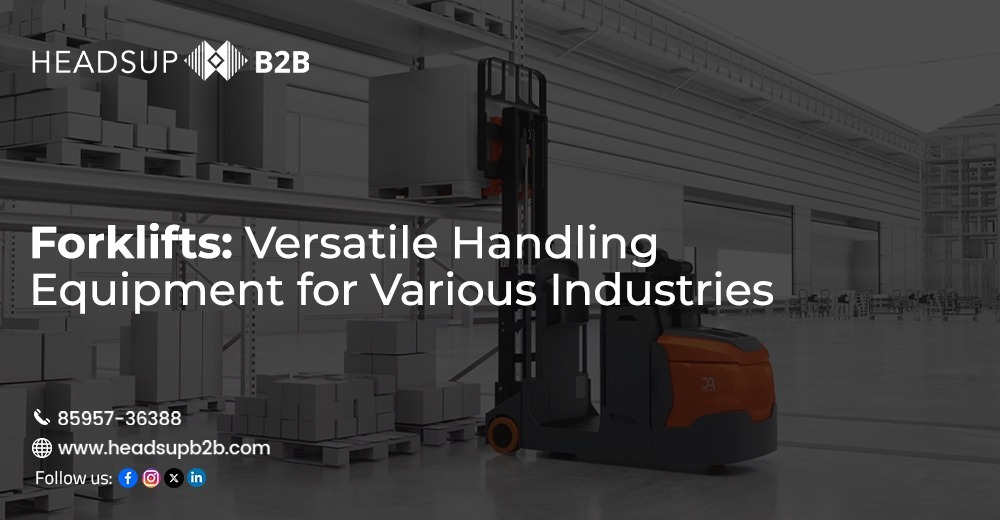
    Forklifts are available in different forms, and each of them is made for a specific purpose. They cover everything from the well-known counterbalance forklifts to advanced order pickers, and these material handling machines take an important role in every industry all over the globe. Whether navigating narrow warehouse aisles or tackling outdoor terrain, industrial forklifts adapt seamlessly. Don’t underestimate their simplicity; these tools hide a layer of complexity that renders them indispensable in modern business operations.

    Industrial Forklifts in the Field: Diverse Industry Applications

    Forklifts aren’t just limited to warehouses; they’re versatile workhorses found across various industries. Here’s a glimpse into their wide-ranging applications:

    • Warehousing and Logistics: Forklifts are the backbone of warehouse operations, effortlessly manoeuvring through aisles to move and stack goods.

    • Construction and Manufacturing: In bustling construction sites and busy manufacturing plants, forklifts handle heavy materials with precision, keeping projects on track.

    • Retail and wholesale: In bustling stores and distribution centers, forklifts ensure efficient stock movement and replenishment.

    • Agriculture and farming: From loading produce onto trucks to arranging hay bales, forklifts simplify agricultural tasks.

    • Automotive industry: Forklifts facilitate the handling of car parts and equipment, supporting smooth production processes.

    The Forklift Advantage: Streamlining Operations

    Forklifts aren’t just heavy machines; they’re productivity powerhouses, offering a plethora of benefits across industries:

    • Increased Efficiency: Forklifts streamline operations, moving heavy loads swiftly and reducing manual labour.

    • Enhanced Safety: With proper training and maintenance, forklifts ensure a safer work environment, minimising the risk of accidents.

    • Versatility: From indoor warehouses to rough outdoor terrains, forklifts adapt to various environments with ease.

    • Cost-Effectiveness: Their efficiency translates to cost savings, optimising resources, and improving the bottom line.

    • Environmental Sustainability: Electric forklifts and eco-friendly practices contribute to a greener footprint, aligning with modern sustainability goals.

    How Headsup B2B Connects Suppliers and Clients for Industrial Forklifts

    Headsup B2B isn’t just another platform; it’s the bridge between suppliers and clients. The forklift suppliers showcase a list of forklifts with technical specifications as well as pricing that clients can view and make comparisons with seamlessly. By providing accessible communication routes, customers can look for answers, make deals, and seal transactions within the shortest time possible. Headsup B2B is a powerful tool that guarantees openness and trust, thus making the order placement process seamless and satisfying for all its customers. Whether it’s for warehousing or any other industry, Headsup B2B makes connecting suppliers and clients a breeze, fostering a dynamic marketplace for handling equipment.