Author: suraj

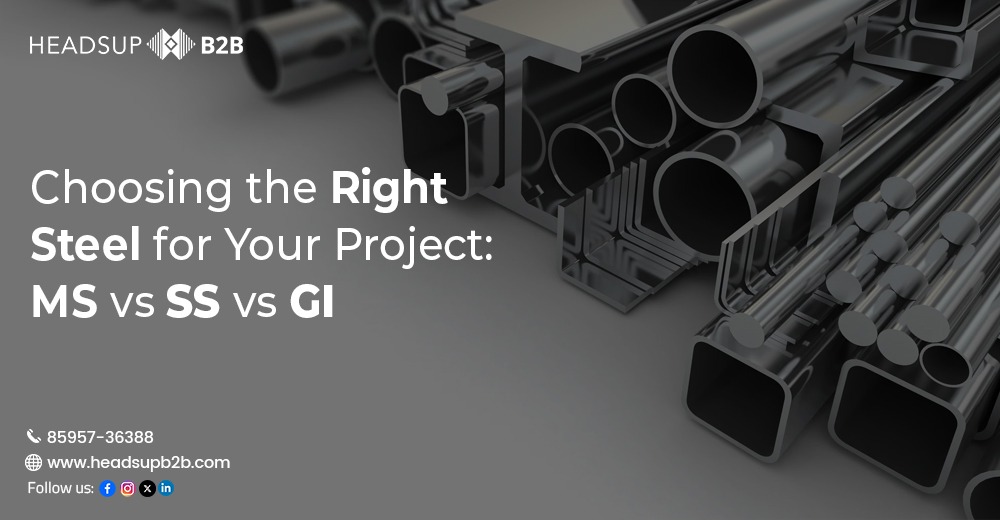
  • Choosing the Right Steel for Your Project: MS vs. SS vs. GI

    Choosing the Right Steel for Your Project: MS vs. SS vs. GI

    Did you know that the type of steel you choose can significantly impact the success of your project? However, with a multitude of choices available and a limited understanding of the topic, steel selection for your project can feel overwhelming.

    Hence, understanding the differences between Mild Steel, Stainless Steel, and Galvanised Iron is paramount, especially when sourcing from a reputable structural steel supplier marketplace like Headsup B2B. Each steel type carries unique properties suitable for different projects due to its nature and scope. As we address the steel selection process, we’ll also explore how the team at Headsup B2B helps its customers find the right steel supplies for their projects.

    Secrets of Structural Steel: About Three Types Steel

    Mild Steel

    In the production of mild steel, manufacturers mix iron and carbon, creating a versatile and affordable metal widely used in numerous engineering tasks. Mild steel typically contains a carbon content ranging between 0.16% and 0.29%, with a relatively high melting point between 1450°C and 1520°C. It melts at a higher temperature compared to steel with more carbon, which makes it good for forging, cutting, drilling, welding, and other things.

    Stainless Steel

    Stainless steel, like other varieties of steel, consists of an alloy of two or more distinct elements. Iron and a small quantity of carbon constitute the primary ingredients for all steel types. However, stainless steel distinguishes itself by containing at least 10.5% chromium. The exact amounts and compositions may vary depending on the grade, specific requirements, and intended applications.

    Galvanised Iron

    Galvanised Iron is one of the most versatile and popular types of steel because it has excellent anti-rust features. GI has a layer of zinc, which acts as a barrier against rust as well as other atmospheric effects. Besides, the coating makes the GI more durable and long-lasting while giving it additional stiffness and structural strength, thereby making it suitable for various construction projects such as roofing, fencing, structural beams, and pipes.

    Variations Among Structural Steel Types: A Guide to Choosing the Right Structural Steel Supplier

    For the right selection of the appropriate steel and structural steel supplier for construction work, it is important to have a clear understanding of the properties and distinctions among Mild Steel (MS), Galvanised Iron (GI), and Stainless Steel (SS). All three steel types have their merits that make them applicable in different conditions.

    Composition

    • Stainless Steel: Contains chromium, nickel, and sometimes molybdenum, providing the steel with the ability to resist corrosion or rusting. The chromium gives the steel a glossy, brilliant shine and increases resistance to corrosion and tarnishing.

    • Mild Steel: Primarily made of iron and carbon, with low carbon content, making it more ductile when heated.

    • Galvanised Iron: Plain iron or steel coated with a layer of zinc to prevent corrosion.

    Corrosion Resistance Ability of Three Steel Types

    • Stainless Steel: Highly resistant to corrosion, making it suitable for various applications with high moisture or chemical exposures.

    • Mild Steel: Prone to corrosion when exposed to moisture and atmospheric conditions, necessitating protective coatings or treatments.

    • Galvanised Iron: Offers good corrosion resistance due to the zinc coating, protecting the underlying iron or steel from rusting.

    Appearance

    • Stainless Steel: Has a shiny, metallic appearance and is often used in applications where aesthetics are important, such as architecture and interior design.

    • Mild Steel: Typically has a dull grey finish, unless it’s polished or coated for decorative purposes.

    • Galvanised Iron: This appears greyish or matte due to the zinc coating, which can vary in appearance based on the thickness of the coating.

    Cost

    • Stainless Steel: Generally more expensive than mild steel and Galvanised iron due to its corrosion-resistant properties and manufacturing process.

    • Mild Steel: Among the most affordable options for structural and industrial applications.

    • Galvanised Iron: Typically more cost-effective than stainless steel but may be slightly more expensive than untreated mild steel due to the galvanisation process.

    Applications

    • Stainless Steel: Because of its strength and resistance to corrosion, stainless steel has extensive applications in the construction, automotive, food processing, medical equipment, and aerospace industries.

    • Mild Steel: Generally used in construction, machinery, automotive manufacturing, and general engineering applications.

    • Galvanised Iron: Suitable for outdoor structures, roofing, fencing, and marine applications where corrosion resistance is required.

    Maintenance

    • Stainless Steel: Requires minimal maintenance due to its corrosion-resistant properties, making it suitable for long-term use without significant degradation.

    • Mild Steel: Requires periodic maintenance such as painting or coating to prevent corrosion, especially in outdoor or high-moisture environments.

    • Galvanised Iron: requires minimal maintenance due to the protective zinc coating, but scratches or damage to the coating may require touch-ups to maintain corrosion resistance.

    How Headsup B2B Helps in the Right Steel Selection for Construction?

    Being the most experienced and reliable structural steel supplier marketplace for construction, the team at Headsup B2B understands that for the best steel selection, you need in-depth knowledge of some factors like the application, environment, budget, and required properties (corrosion resistance and strength). Each steel type has some advantages and also some limitations.

    So, to assist our clients with the best steel for their projects, we have a dedicated team of experts. The team suggests the right product, keeping your budget and project requirements as a priority.
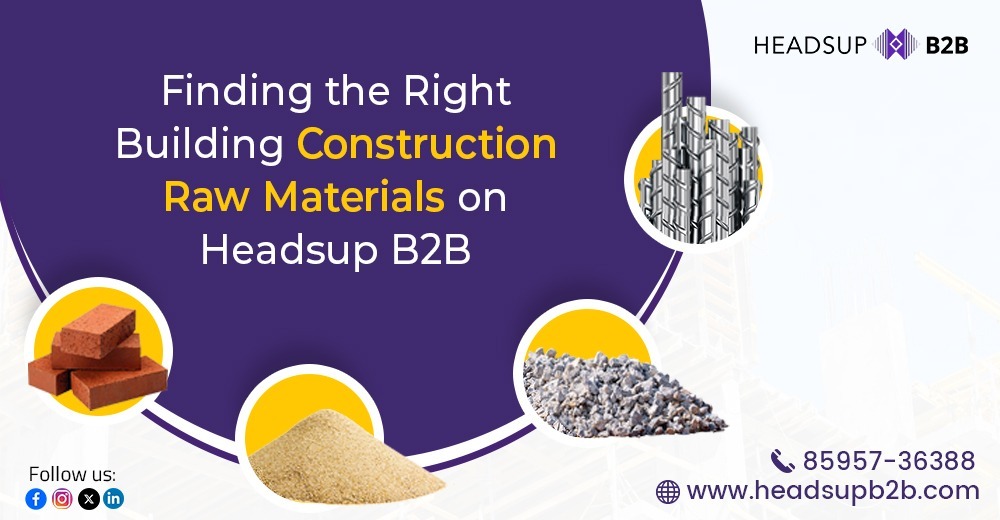
  • Find the Right Building Construction Raw Material

    Find the Right Building Construction Raw Material

    Are you drained from the constant chase for dependable suppliers for your construction projects, only to be met with inferior Building materials and continuous headaches? The search can feel like navigating a maze without a map. Well, fear not!

    Headsup B2B serves as a dynamic online platform, linking businesses and suppliers nationwide for streamlined and stress-free raw material procurement. Take a closer look at construction material procurement with us and learn how Headsup B2B addresses the obstacles businesses face when searching for building materials suppliers.

    Understanding the Importance of Choosing the Right Building Material Suppliers

    Picking the right suppliers for your construction raw materials is absolutely essential. They’re like the foundation of your project, providing you with the materials you need to make it strong and last long. Whether it’s good-quality steel or bricks, every material is super important for the perfect construction of your projects. Selection of reputable suppliers isn’t only about the product; it’s also about planning the project for long-term success.

    Challenges Faced in Sourcing Building Construction Raw Materials

    Starting a building project requires careful planning, especially when it comes to sourcing the materials needed. However, it’s not easy. Right from the beginning, businesses face a lot of problems such as:

    1. Limited Access to Suppliers: It’s hard to find reliable suppliers, which can cause delays and compromise the quality of materials.

    2. Ensuring Quality: Making sure the materials are good and consistent can be tough, especially when using suppliers you don’t know well.

    3. Long Procurement Process: Getting materials takes a lot of time, including negotiations, checks, and paperwork.

    4. Budget Constraints: Finding suppliers who are both affordable and reliable can be a challenge.

    Dealing with these problems needs careful planning. Accurate project estimation is another key factor that can make or break your budget — services like Pro Estimating Services can support this part of the process.

    But with the right approach and help from innovative platforms like Headsup B2B, businesses can overcome these challenges and build confidently.

    Headsup B2B makes it easy to find building materials suppliers in a quick and innovative way. Here’s how:

    1. Large Supplier Network: We have a wide range of trusted suppliers, giving you access to many options for building materials.

    2. Clear Profiles and Reviews: No more guessing! You can see transparent profiles and reviews from other users, helping you make informed decisions based on past experiences.

    3. Simple Procurement Process: Forget about long phone calls and difficult negotiations. With Headsup B2B, you can easily search, compare, and connect with suppliers, saving you time and effort.

    4. Great Prices: Worried about your budget? We offer competitive pricing options, so you can get quality materials without breaking the bank.

    5. Helpful Customer Support: Need assistance? Our customer support team is here to help you every step of the way, making sure you have a smooth experience.

    With Headsup B2B, finding building materials suppliers has never been easier or more efficient.

    Steps to Find the Right Building Raw Materials Suppliers

    Finding the right construction materials suppliers on Headsup B2B is a breeze, thanks to its user-friendly interface and comprehensive features. Here’s a detailed breakdown:

    1. Create an Account and Set Preferences: Start by creating an account on Headsup B2B and set your preferences according to your project requirements and location.

    2. Browse Supplier Directory: Explore the extensive supplier directory, categorized by materials and services, to discover a wide range of options available.

    3. Utilize Search Filters: Narrow down your search by using advanced search filters such as location, material type, and supplier ratings to find the perfect match for your needs.

    4. Review Supplier Profiles and Ratings: Dive into supplier profiles to assess their offerings, certifications, and past projects. Don’t forget to check ratings and reviews from other buyers for added confidence.

    5. Reach Out for Inquiries or Quotes: Once you’ve shortlisted potential suppliers, reach out to them directly through the platform to inquire about their products, services, and pricing. Don’t hesitate to request quotes or samples to ensure the best fit for your project.

    With Headsup B2B’s intuitive platform, finding the right building materials suppliers has never been more straightforward or efficient.

    Say Hello to Seamless Sourcing

    Wrapping up our journey of discovering the perfect construction materials suppliers on Headsup B2B, it’s apparent that this platform is reshaping the construction industry. With access to a vast network of verified suppliers, transparent profiles, and competitive pricing options, Headsup B2B empowers buyers to make informed decisions and streamline their procurement process. With dedicated customer support and a user-friendly interface, finding the right building materials suppliers has never been easier. Stop searching, start sourcing – Headsup B2B has your back!

  • Metal Beam Crash Barrier Supplier Industry

    Metal Beam Crash Barrier Supplier Industry

    In our modern world, which is so globalized and interconnected, road safety is critically important. Through our tireless efforts, we have improved road safety and created more future-oriented solutions.

    One such solution is the metal beam crash barrier. This component is the core element in increasing road safety. beam crash barriers come in two variants: W-beam barrier and Thrie-beam barrier.

    About the Metal Beam Crash Barriers

    Metal beam crash barrier is made with a strong and durable material, such as galvanized steel. It is designed to absorb the impact of vehicle force during the accident to minimize the risk of severe accidents.

    The metal beam crash barriers has a special shape that provides flexibility and strength that allows it to absorb energy efficiently. To enhance visibility, it has a shiny coating. It is supported by posts that are anchored in the ground, maintaining the alignment and stability of the metal beam crash barrier.

    Role of the Metal Beam Barrier in Road Safety

    • The metal beam crash barrier helps redirect the vehicle that has strayed from the road. It also prevents cars from colliding with objects like trees, poles, etc.

    • By absorbing and distributing the collision force of the vehicle, it prevents severe accidents, minimizes injury and fatal risk to the drivers, and improves the overall safety of roadways.

    • Metal beam crash barriers are often installed in the median of divided highways to prevent vehicles from crossing over. And through this, it prevents the possibility of severe accidents and the chances of head-on collisions, which are usually more serious and fatal.

    • The metal beam crash barriers also safeguard other roadside infrastructure and elements like traffic signs, utility poles, and other fixtures. It keeps the vehicles from hitting these things directly by absorbing the impact force.

    • It has a reflective surface that also helps to enhance visibility during low-light conditions, and crash barriers are also helpful in giving drivers another caution to stay on the right route; this helps them to recognize possible risks and road borders.

    • Metal beam crash barriers need low maintenance and are made to last a long time. Because it is resistant to various adverse weather conditions and environmental elements, it is one of the most cost-effective options for long-term road safety.

    • Generally, in the design and installation of crash barriers, the defined safety criteria and recommendations are followed. By adhering to these rules and standards, the barriers are guaranteed to satisfy particular crashworthiness standards, offering a dependable degree of safety for drivers and road users.

    • Metal beam crash barriers are often prefabricated and can be quickly installed along roadways. This significantly helps in the implementation of safety measures without causing any sort of disturbance to the traffic flow.

    Exemplary Clients Who Inspire Us

    The client’s testimonial says a lot about the company. You can go through our client’s testimonials to ensure the quality of our products and services. We have provided metal beam crash barriers, signage poles, street light poles, other road safety products, electrical and raw construction products, and other products to many prominent government and private firms such as Delhi Metro Rail Corporation, Larsen and Turbo, Vedanta, and Shapoorji Pallongi. And HeadsupB2B is still their most preferred and trusted material supplier company in India.

    Explore Now : Top 7 Metal Beam Crash Barrier Manufacturers Companies in India

    Metal Beam Crash Barrier specifications

    Specification W-Beam Barrier Thrie Beam Barrier
    Material High-grade steel (IS 2062 or equivalent) High-grade steel (IS 2062 or equivalent)
    Rail Thickness 3 mm (customizable up to 5 mm) 3 mm (customizable up to 5 mm)
    Rail Width 312 mm 510 mm
    Corrugation Depth Approximately 83 mm Approximately 83 mm
    Total Length 4318 mm (effective length 4000 mm) 4318 mm (effective length 4000 mm)
    Post Dimensions 75 mm x 150 mm, typically 5 mm thick 75 mm x 150 mm, typically 5 mm thick
    Spacer Dimensions Typically around 75 mm x 150 mm Typically around 75 mm x 150 mm
    Protective Coating Hot-dip galvanized, approx. 550 g/m² Hot-dip galvanized, approx. 550 g/m²
    Containment Levels Designed for vehicles up to 10,000 kg at speeds of 70 km/h More durable construction for higher impact endurance
    Impact Severity Index Tested for compliance with safety standards Tested for compliance with safety standards
    Standard Compliance MORTH, AASHTO M180, EN 1317-1 & 2 MORTH, AASHTO M180, EN 1317-1 & 2
    Typical Height Above Ground Approximately 850 mm Approximately 850 mm

    Why Choose Us

    Our team has collaborated with several respectable government and private organizations. We source products directly from the manufacturers and also guarantee that they are delivered to our customers with the utmost care and safety. Our team will inform you of the process and will attend to your questions and problems. For the best products, contact Headsup B2B, a certified supplier of metal beam crash barriers.