Author: suraj

  • Decoding Speed Breakers: Picking the Perfect Solution

    Decoding Speed Breakers: Picking the Perfect Solution

    Lessons from India’s Road Safety Initiatives

    On all types of roadways, speed breakers are a necessary component of traffic-calming strategies. Speed breakers significantly lower collisions and injuries caused by compelling vehicles to slow down. Research indicates that the best speed breaker can cut crashes by as much as 45%. We can increase everyone’s safety on our roadways by using the best speed-breaker solution.

    To assist you in selecting the best speed breaker for your particular set of road safety requirements, this thorough guide from experts at Headsup B2B thoroughly examines all the most significant speed breaker possibilities. Let’s collaborate to make the streets safer and more livable.

    Why are Speed Breakers Essential for Safe Driving?

    One of the main causes of traffic accidents and fatalities globally is speeding. Because of the laws of physics, speeding decreases a driver’s ability to manage traffic conditions safely and raises the possibility of serious injury in an accident. Road speed breakers are essential for maintaining general road safety and preventing accidents because they regulate speeds.

    It is commonly known that speed and collisions are related.

    Speed breakers enable other users of the road, such as bicycles and pedestrians, to more accurately assess gaps in traffic and cross safely by requiring safer driving speeds. Additionally, they offer drivers additional time to respond and avert any crashes. Using speed breakers to regulate speed is one of the most dependable and economical solutions to prevent fatalities on our roadways. Its broad use is essential to fulfilling the objectives of Vision Zero.

    What Kinds of Speed Breakers Are There?

    Speed breakers, often known as traffic-calming devices or speed bumps, are useful measures used to enforce slower speeds on public roads. They have different sizes and forms, and each has pros and cons. The many kinds of speed breakers are as follows:

    Traditional Road Speed Breakers

    Conventional road speed breakers, concrete or asphalt bumps, are permanent, 3–4 inches high, 1-2 feet broad, and compel traffic to slow down to 15-20 km/h. Although effective, they can cause damage and delays.

    Rubber Speed Humps/Breakers

    Rubber speed bumps and breakers, made from recycled rubber, offer a softer, safer, and easier-to-replace option for mixed-car traffic areas. They are less likely to harm vehicles and provide superior emergency access.

    Road Rubber Speed Breakers

    Road rubber speed breakers are moulded rubber strips installed across a road, providing consistent speed control across all lanes. They play a crucial role in highways, urban roads, and multi-lane environments, reducing vehicle damage and noise. Ladwa Solutions, a leading manufacturer, offers expert engineering services for custom-tailored traffic calming to reduce crashes.

    Speed Cushions

    Though smaller and more closely placed, speed cushions resemble speed bumps. While still efficiently slowing down automobiles, this design makes riding a bicycle or motorbike more comfortable. Frequently, reused plastic or rubber is used to make them.

    Speed Tables

    Speed tables are raised, flat-topped portions of a road that take up the whole width of a lane. They are usually used in places like the vicinity of schools or retail malls when a slower speed limit is required for a longer distance.

    Where can speed breakers be placed as per law?

    Factors to Consider While Choosing the Best Speed Breaker

    Examining road conditions, traffic patterns, speed restrictions, and emergency responders’ demands is necessary for selecting the appropriate speed breaker. A few crucial elements are:

    • The optimal speed breaker depends on regular traffic volume and average speeds. Conventional speed bumps are practical for low-volume residential routes, while long rubber breakers offer smoother decreases.

    • Road design, terrain, and temperature all impact speed bump safety. Flat, straight roads with visibility are ideal, while hilly or winding routes require extra precautions.

    • Speed breakers are crucial for emergency response vehicles and public transit, ensuring safety by maintaining space between them and gradually increasing profiles. Communication with emergency services and transportation organisations is essential during the selection and placement process. Road design, surroundings, and material performance should also be considered.

    • When choosing speed breakers, the cost is an important consideration in addition to their influence on road safety. To achieve the best value, agencies must strike a balance between price and quality. The overall investment is determined by both the initial outlay and long-term durability.

    Traffic engineers can calculate expected efficacy and support the best speed breaker selection with data on all these parameters. Selecting best speed breaker wisely improves traffic safety without having unfavourable effects.

    How Headsup B2B Makes Choosing and Sourcing the Best Speed Breaker

    Headsup B2B is your go-to solution for simplifying the process of selecting the perfect breaker. Here’s how:

    Extensive Selection:

    Headsup B2B offers a wide variety of options, ensuring you have access to the right options for your specific needs.

    Expert Guidance:

    Need help determining which is the best speed breaker? No problem! Headsup B2B provides expert guidance and support to help you make informed decisions. Whether you’re considering load capacity, speed ratings, or environmental factors, our team of professionals is here to assist you every step of the way.

    Customised Recommendations:

    Every industrial application is unique, and we understand that one size does not fit all. That’s why Headsup B2B offers customised recommendations tailored to your specific requirements. We consider factors like load capacity, operating conditions, and budget constraints to ensure you get the perfect bearing solution for your needs.

  • The Transformation of Urban Landscapes: The Role of Street Light Poles

    The Transformation of Urban Landscapes: The Role of Street Light Poles

    Street lighting is essential to urban architecture and infrastructure because it shapes the visual attractiveness of cityscapes and improves visibility and safety. Street light poles have silently guided our nighttime travels for generations, from the gas lamps that flared to life in cobblestone streets to the modern, energy-efficient LED lights. To satisfy the needs of modern urban areas, modern street light pole designs have substantially changed from their traditional counterparts. They now incorporate cutting-edge technology and creative concepts. This article delves into the field of contemporary street light pole design, examining the newest developments in terms of trends and technology as well as how they affect metropolitan environments.

    Evolution of Modern Street Light Pole Design:

    Historical Perspective:

    The first street lighting originated in ancient civilisations when torches and crude oil lamps were used to light the streets. Technology progressed over time, resulting in the invention of gas lights and, in the late 19th century, electric lighting systems.

    Traditional Designs:

    Prioritising functionality above looks, the traditional primary goal of traditional street light poles was to provide lighting. These poles, which had straightforward designs and practical finishes, were also frequently composed of concrete or metal.

    Modern Designs’ Emergence:

    Street light pole design saw a dramatic change with the introduction of modern urban planning concepts. And also the increasing emphasis on sustainability and aesthetics. Incorporating aspects of architectural beauty and new materials, advanced designs prioritise visual appeal in addition to practicality.

    Important Aspects of Contemporary Street Light Pole Design:

    Sustainable Materials:

    Recycled steel, aluminium, or composite materials are among the eco-friendly materials frequently used in the construction of contemporary street light poles in response to the growing emphasis on sustainability. These materials are less harmful to the environment, long-lasting, and resistant to corrosion.

    Integrated LED lighting:

    LED technology has completely changed street lighting by providing brilliant, long-lasting, and energy-efficient illumination. Contemporary street light poles include built-in LED lighting fixtures, which offer consistent light distribution and adjustable illumination settings to meet various needs.

    Concepts for Modular Design:

    Designs for modular street light poles make customisation, maintenance, and installation simple. Urban planning can be more flexible and seamless by attaching modular components to the pole, including lighting fixtures, banners, signs, and security cameras.

    Intelligent Lighting Controls:

    By incorporating intelligent lighting controls, functionality and energy economy are improved. These systems optimise energy use and lower operating costs by adjusting light levels based on traffic patterns, weather, and time of day using sensors, wireless connections, and data analytics.

    Aesthetic Considerations:

    Contemporary street light pole designs place a high value on aesthetic attractiveness, coordinating well with the surrounding urban environments and architectural features. Stylish shapes, simple forms, and adaptable finishes are some of the design components that give streetscapes their distinct visual character.

    Types of Street Light Poles Prevailing in India:

    Looking to light up your streets, parks, or stadiums? There’s a pole for every need! From the classic octagonal pole to the sleek and modern smart city pole, here’s a rundown of the different types:

    1. Octagonal Pole: The timeless choice for street lighting, known for its sturdy design and durability.

    2. Swaged Tubular Pole: Sleek and lightweight, perfect for urban environments where aesthetics matter.

    3. Conical Pole: Tapered for added elegance, ideal for residential areas and parks.

    4. High Mast Lighting Tower: Towering structures for illuminating large areas like highways and sports fields.

    5. Mini Mast Lighting Pole: Compact and versatile, great for pathways and smaller public spaces.

    6. Stadium Mast Lighting Pole: Designed to light up sports arenas and stadiums, ensuring optimal visibility for players and spectators alike.

    7. Signage Advertising Mast: Doubles as a support for advertising billboards, maximizing visibility both day and night.

    8. Flag Mast Pole: Proudly displays national or corporate flags, adding a touch of patriotism or branding to public spaces.

    9. Camera Pole: Equipped with mounts for surveillance cameras, enhancing security in urban areas.

    10. Decorative Pole: Combines functionality with aesthetics, adding a touch of style to streetscapes and plazas.

    11. Solar Street Light Pole: Harnesses solar energy for eco-friendly illumination, perfect for off-grid or environmentally conscious projects.

    12. Traffic Signal Light Pole: Essential for regulating traffic flow and ensuring road safety at intersections.

    13. Smart City Pole: Integrates technology for data collection, Wi-Fi connectivity, and other smart city applications.

    14. FRP / GRP Pole: Made from fibreglass or glass-reinforced plastic, offering durability and resistance to corrosion in coastal or industrial environments.

    Each type of pole serves a unique purpose, catering to the diverse needs of urban planners, architects, and city dwellers alike. Whether you’re lighting up a bustling city street or a quiet park in India, there’s a pole that’s just right for the job.

    Benefits of Modern Street Light Pole Design:

    Enhanced Safety and Visibility:

    Modern lighting systems with optimal lighting levels improve visibility and encourage vehicle and pedestrian safety in metropolitan settings, which lowers the likelihood of crimes and accidents.

    Energy Efficiency:

    Compared to traditional lighting systems, LED lighting fixtures with smart controls dramatically reduce energy consumption and running costs, supporting environmental conservation efforts and sustainability goals.

    Enhanced Urban Aesthetics:

    Well-thought-out street light pole designs improve the visual attractiveness of urban environments by constructing eye-catching streetscapes and encouraging a feeling of community and pride.

    Durability and longevity:

    Contemporary street light poles have designs that can tolerate severe weather, using materials that resist corrosion and coatings that last a long time with little upkeep.

    Role of Headsup B2B in Making the Sourcing of Street Light Poles Easy and Quick:

    Headsup B2B is changing the game regarding sourcing street light poles. No more endless searches or complicated processes—Headsup B2B makes it easy and quick. With a few clicks, you can browse a wide selection of street light poles from trusted suppliers. Whether you need traditional designs or cutting-edge smart lighting solutions, Headsup B2B has you covered. Our user-friendly platform streamlines the procurement process, saving you time and hassle. Say goodbye to long lead times and hello to efficient sourcing with Headsup B2B.

  • Industrial Pumps: A Deep Dive into Their Types, Advantages, and Uses

    Industrial Pumps: A Deep Dive into Their Types, Advantages, and Uses

    Industrial pumps are a major component of the production and distribution chain. You will require an industrial pump if your firm involves the movement, processing, or management of fluids. Choosing the right pump type for a certain task can be difficult for many business owners due to the abundance of possibilities. So, we, the team at Headsup B2B, are here to help you with the best product options from reputable manufacturers. Headsup B2B is an online platform that connects trustworthy manufacturers and suppliers with potential customers. We have made the sourcing of industrial pumps and other things very convenient and smooth. In this blog, we are providing an overview of industrial pumps and guidance on choosing the right one.

    What is an Industrial Pump?

    An industrial pump is a mechanical apparatus that transports fluid by converting mechanical energy from its motor to hydraulic energy. The machine is able to transmit fluid from one location to another because to this energy transfer. An intake tube, a motor and impeller, and an output comprise an industrial pump. However, the kind of pump you’re using will determine how it works.

    There are two major types of industrial pumps:

    Centrifugal Pumps

    The centrifugal pump is the most common type of industrial pumps. By transferring rotational energy from one or more driven rotors, sometimes referred to as impellers, these pumps move fluid.

    Centrifugal force propels fluid towards the pump’s output as it enters the revolving impeller along its axis. Centrifugal pumps can handle suspended solid-containing liquids. They come in a variety of sizes and kinds to suit a range of industrial requirements.

    Submersible pumps

    Although other sectors also employ submersible pumps, their main applications are in the transportation of rainwater and sewage. These pumps are perfect for moving garbage, chemicals, grey water, subsurface water, and food items since they are made to withstand harsh environments.

    Hydrant pumps

    The firefighting sector is the primary user of fire hydrant pumps since they are made to feed fluid at high pressure and high force. These pumps may be put in at street level and immediately connected to a municipal water supply, or they can be placed in industrial settings.

    There are several benefits to using industrial pumps in production.

    • Industrial pumps can contribute to greater efficiency by speeding up production and decreasing downtime.

    • Their ability to lower energy usage and do away with the need for physical labour can also contribute to cost savings.

    • Additionally, by lowering the possibility of spills or other mishaps, industrial pumps can contribute to increased safety.

    • Lastly, contemporary industrial pumps are more dependable and require less maintenance than older ones. This can lower the need for costly maintenance and save manufacturers time and money.

    Application of Industrial Pumps:

    • Farming. Agriculture-related pumps can be used for a variety of tasks, including moving slurries, facilitating irrigation, hydrating animals, pressure washing animal housing, and much more.

    • Building. Numerous pumps are used in construction activities to maintain construction sites, reduce the risk of floods, and supply pressurised water for cleaning.

    • motors. Internal pumps are necessary for the transportation of fuel for combustion in gasoline engines.

    • suppression of fire. In order to keep pressurised water in emergency fire suppression systems, pumps are essential. In addition, fire vehicles employ pumps to draw water from hydrants in the municipal system.

    • prevention of flooding. In order to keep commercial and industrial facilities from flooding, submersible pumps, such as industrial sump pumps, are essential.

    • industrial. Pumps find extensive applications in the industrial sector, including the transportation of process chemicals, assistance with manufacturing processes, boiler feed, pressure enhancement, filtration, and several other jobs.

    Important Factors to Consider When Choosing a Pump:

    • Fluid Properties: Knowing the type of liquid (water, oil, or chemical solutions) can help you choose the right materials and pump, whether you’re looking for industrial sump pumps or industrial water pumps.
    • Requirements for Flow Rate: In order to guarantee effective functioning, the pump’s capacity must be matched with the needs of the system.
    • Environmental Conditions: The robustness and design standards of the pump are determined by factors like temperature, pressure, and potentially corrosive conditions.

    • System compatibility and design are crucial. For optimum performance, it is imperative that the pump interface smoothly with the current system. Increased wear and tear and inefficient functioning can result from incompatibility.

    • Local. For intricate municipal water systems to keep water pressure constant throughout the water network, a similarly intricate pump system is essential.

    • Sewage and. Pumps make it easier to transfer a range of liquid and solid waste products.

    Role of Headsup B2B in Revolutionising the Sourcing of Industrial Pumps:

    • Headsup B2B is an online platform that has most prominent and trustworthy manufacturers and suppliers who offer quality products at the most reliable cost.

    • Headsup B2B offers an extensive range of special pumps for industrial applications.

    • Our first goal is to serve our customers with the best, and our team of professionals is here to assist you in choosing the best pump for the requirements of your system.

    Reach out to us right now to find out more about our stock of pumps.

  • MCB and MCCB: A Closer Look at the 8 Defining Features

    MCB and MCCB: A Closer Look at the 8 Defining Features

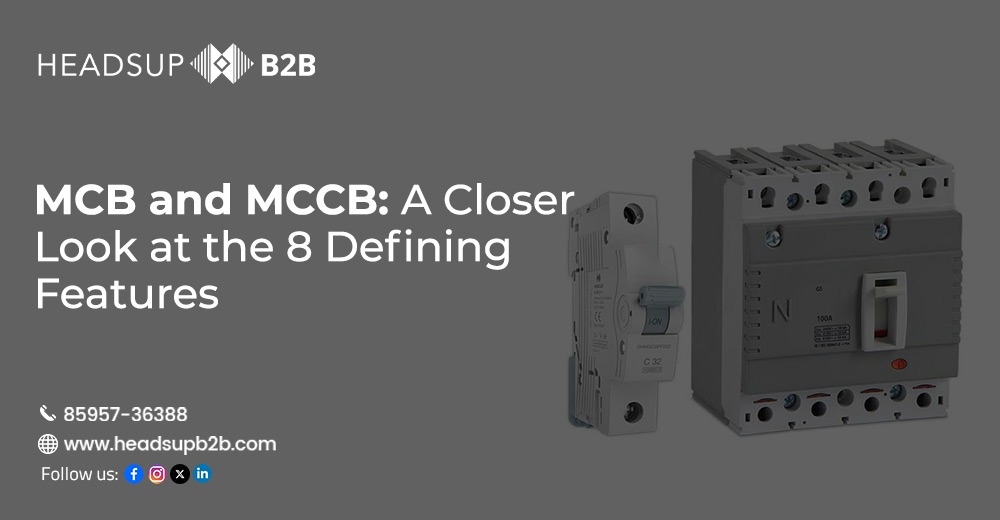
    Welcome to our guide on MCB and MCCBs! If you’re navigating the maze of electrical circuit protection, you’ve landed in the right place. This blog post from Headsup B2B will address Moulded Case Circuit Breakers (MCCBs) and Miniature Circuit Breakers (MCBs), emphasising their respective qualities. Understanding these features is like having a map to help you navigate the complexities of circuit protection. Miniature Circuit Breakers (MCBs) and Moulded Case Circuit Breakers (MCCBs) will be covered in this article, with an emphasis on their respective characteristics.

    Headsup B2B is an online platform that connects customers with reputable manufacturers.

    So, buckle up as we embark on a journey to unravel the defining features of MCBs and MCCBs, exclusively on Headsup B2B!

    The Defining Feature of MCB and MCCBs

    Here are the eight defining features of MCBs and MCCBs:

    • Trip Curve

    • Breaking Capacity

    • Current Rating

    • Pole Configuration

    • Tripping Mechanism

    • Operating Voltage

    • Mounting Types

    • Auxiliary Contact

    Trip Curve:

    Based on a specified current level, trip curves plot the interrupting time of overcurrent devices. To help customers choose circuit protection devices that offer appropriate equipment protection and performance while preventing annoying tripping, the producers of these devices supply them.

    That’s when the trip curve comes into play, detecting abnormal currents and signalling the circuit breaker to shut off the power. Now, let’s zoom in on MCB and MCCBs. These heroes of electrical safety boast different trip curves tailored to specific needs. From fast-acting to slow-burn, each curve responds differently to current fluctuations. So, whether you’re guarding a delicate circuit or a powerhouse, there’s a trip curve suited just for you.

    Breaking capacity

    Breaking capacity is the muscle behind circuit breakers—it determines how much electrical force they can handle before calling it quits. When there’s a surge in current, the breaking capacity kicks in to handle the load, preventing damage and keeping your circuits safe.

    Now, breaking capacity isn’t a one-size-fits-all deal. Different applications demand different levels of strength. From small-scale circuits to heavy-duty machinery, there’s a breaking capacity tailored to suit every electrical need. So, whether you’re protecting a humble household circuit or a bustling industrial setup, breaking capacity has your back.

    Current Rating

    Current rating is like the traffic cop of electrical flow, directing how much current can safely pass through a circuit. Its role? Preventing overload and keeping everything running smoothly. Here’s the catch: to ensure peak performance, you need to match the current rating to the load. It’s like pairing the right tool with the job at hand. So, whether you’re dealing with a heavy-duty appliance or a lightbulb, pay attention to the current rating—it’s the key to keeping your circuits happy and healthy.

    Pole Configuration

    Poles are the total number of independent circuits that a circuit breaker may protect at the same time. You’ve got single-pole, double-pole, and triple-pole configurations to choose from. Each option comes with its own set of applications and considerations. Single-pole is your go-to for basic setups, like lighting circuits. Double-pole steps it up a notch, ideal for appliances and larger loads. And if you’re dealing with industrial machinery or hefty equipment, triple-pole is your best bet. So, whether you’re setting up a cosy home or a bustling factory, understanding pole configuration ensures you’re wired for success.

    Tripping Mechanism

    There are three main types to wrap your head around: thermal, magnetic, and electronic. Thermal works like a detective, sensing heat buildup and shutting down the circuit before things get too hot to handle.

    • Magnetic is more like a superhero, detecting sudden surges in current and swooping in to save the day.

    • On the other hand, electronics is the brainiac of the bunch, using smart technology to monitor and control the flow of electricity.

    • Thermal is reliable but slow to react, magnetic is quick but can be tripped by harmless spikes, and electronics offer precision but may be vulnerable to glitches.

    So, whether you’re safeguarding your home or your business, understanding these tripping mechanisms is key to keeping your circuits in check.

    Operating Voltage

    When it comes to MCBs and MCCBs, they have their own sweet spot for operating voltage. Typically, MCBs lie in the low to medium voltage range, catering to everyday circuits in homes and offices. Meanwhile, MCCBs frame their stuff in the medium to high voltage domain, tackling the heavy-duty demands of industrial machinery and large-scale systems. So, whether you’re powering up your laptop or running a factory, keeping an eye on operating voltage ensures your circuits stay happy and healthy.

    Mounting Type

    The mounting type is a fancy term for how circuit breakers attach to your electrical setup. Each mounting type has its own style and function.

    There are three main types: DIN rail, panel mount, and plug-in.

    • DIN rail is like the sturdy work boot, perfect for industrial settings where durability is key.

    • Panel mount is more like the sleek dress shoe, ideal for neat installations in control panels.

    • Plug-in is the casual slip-on, great for quick and easy setups where flexibility is key.

    Now, when it comes to picking the right mounting type, there are a few things to consider your space and accessibility.

    Auxiliary Contact:

    Auxiliary contacts are like the sidekicks of your circuit breaker, allowing you to monitor and control the status of your circuits remotely. Shunt trips are emergency exits, allowing you to manually trip the breaker in an emergency. Undervoltage releases are the safety nets, preventing the breaker from closing if the voltage drops too low

    It has a customisation option.

    Technology and Innovation in the Field of Construction:

    • Advancements in this field may lead to MCDs with enhanced electrical defences, including quicker and more accurate defect detection systems, thereby improving safety and dependability.

    • IoT and smart technologies can enhance MCDs by enabling remote diagnostics, control, and monitoring, enabling real-time data collection, predictive maintenance, and improved energy management in electrical systems.

    • Increased MCD efficiency can save energy and reduce electrical losses by optimizing design and materials to reduce heat production and power dissipation.

    • MCDs with dual-pole designs, despite their compact form factor, can be beneficial in limited-space applications, facilitating easier installation and integration within electrical panels.

    • MCDs made from eco-friendly materials and manufacturing processes can contribute to environmental sustainability by reducing hazardous substance usage and simplifying recycling.

    Why Headsup B2B is the Best Platform to Buy MCB and MCCBs:

    Why should you pick Headsup B2B for buying MCBs and MCCBs? Well, let me break it down for you in simple terms. First off, Headsup B2B is like your one-stop shop for all things electrical.

    • ​We offer a wide range of MCB and MCCBs from reputable manufacturers.

    • Headsup B2B is a super easy platform to use. No confusing jargon or complicated processes—just simple, straightforward browsing and purchasing.

    • Headsup B2B also offers great deals and discounts, so you can save some money. And don’t forget about our top-notch customer service.
  • The Warehouse Manager’s Handbook: Choosing the Right Material Handling Equipment

    The Warehouse Manager’s Handbook: Choosing the Right Material Handling Equipment

    In the modern day, material handling is critical as it improves the efficiency and productivity of industrial facilities and warehouses. Good material handling procedures lower operating expenses and increase worker safety by lowering mishaps and injuries brought on by incorrect material handling. Effective material handling is now even more essential to meeting consumer expectations in light of the growth of e-commerce and the growing need for quicker delivery times. Warehouse material handling equipment is essential in the modern day for maximising warehouse operations and realising company success. It is also very difficult to choose the right products, so, the team at Headsup B2B is here to help you with the right product and easy procurement methods.

    Headsup B2B is one of the well-known and trustworthy online material handling equipment sourcing platforms that provides a wide range of options from various reputable manufacturers and suppliers. So, without wasting your precious time, let’s discuss material handling equipment, its importance, and the process of choosing the right products.

    What is Material Handling?

    The moving, storing, safeguarding, and management of goods and materials during the production, distribution, consumption, and disposal processes is referred to as material handling. It covers a broad variety of tasks, including moving, storing, lifting, and retrieving goods and materials while making use of different tools, processes, and systems.

    Importance of Warehouse Material Handling Equipment:

    Material handling plays a critical role in warehouse operations to ensure the smooth and productive flow of items throughout the facility. The following succinctly describes the significance of material handling in warehouse operations:

    • Safety: Worker safety and the prevention of harm to commodities are the two main goals of material handling equipment and processes.

    • Efficiency: Meeting customer needs and reducing inventory costs depends on the efficient and timely flow of items through the warehouse.

    • Productivity: The productivity of employees and the general operations of the warehouse may be enhanced by the adoption of effective material handling tools and practices.

    • Customer Satisfaction: Sustaining client happiness and loyalty requires accurate and prompt delivery of goods.

    • Space utilisation: By optimising the use of warehouse space, material handling methods and tools may help store more items.

    Types of Material Handling Equipment:

    Forklift:

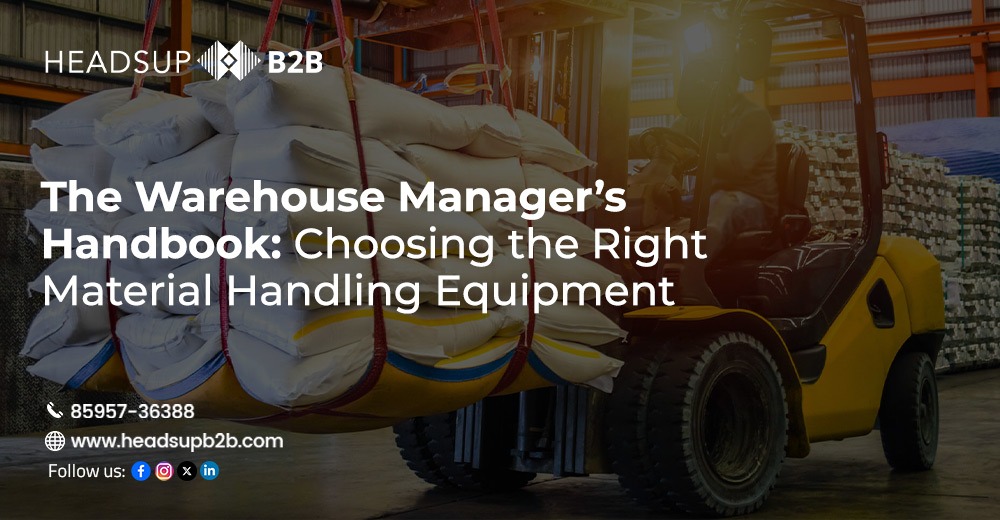
    A forklift is a compact industrial vehicle with a front-mounted, power-operated forked platform that can be lifted and lowered to lift or carry items. Numerous sectors, like warehouses and other big storage facilities, depend on forklifts to meet their demands. Combustion engines or electric batteries power forklifts. It plays a crucial role in the sector of the transportation of products and resources.

    Conveyors:

    A conveyor system is a mechanical handling device that moves loads and materials automatically across a space quickly and effectively. Among its many advantages, this technology lessens human error, lowers workplace dangers, and lowers labour expenses. They are handy for transferring large or heavy objects from one location to another. A conveyor system can move things using a chain, wheels, rollers, or a belt.

    Pallet Racking Systems

    Pallet racking is a material organisation method on metal shelves that involves rowing pallets of goods. Forklifts can reach the various levels of shelves in the system. By using vertical space, these systems are used to boost storage density. The idea is the same as considering the advantages of constructing skyscrapers in a city with limited space.

    Automated Guided Vehicles (AGVs)

    Often known as self-guided or autonomous guided vehicles, automated guided vehicles (AGVs) are load carriers or material handling systems that operate independently inside warehouses, distribution centres, or production facilities without the need for a driver or operator.

    Factors to Consider While Selecting the Warehouse Material Handling Equipment:

    Budget constraints and total cost of ownership:

    • Start by setting a clear budget to work within.

    • Consider the upfront and maintenance expenses, such as repairs, and operational costs.

    • Choose equipment that offers a good balance between initial investment and long-term affordability.

    Maintenance Requirements and Availability of Spare Parts:

    • Check the maintenance requirements of each piece of equipment.

    • Also, ensure that spare parts are readily available and will only cause short downtimes if they need replacements.

    • Opt for equipment with straightforward maintenance procedures to minimise disruptions to operations.

    Operator Training and Safety Regulations compliance:

    • Prioritise equipment that is user-friendly and easy to train operators on.

    • Check to make sure that the equipment complies with all safety regulations and standards.

    • Moreover, invest in the proper training programmes to ensure operators are proficient in using the equipment safely.

    Scalability and Future Expansion Needs:

    • Consider your warehouse’s growth potential and future needs.

    • Choose equipment that can adapt to changes in demand and warehouse layout.

    • Look for modular designs and add-on feature options to accommodate expansion.

    Environmental Considerations (e.g., energy efficiency, emissions):

    • Evaluate the environmental impact of each piece of equipment, including energy consumption and emissions.

    • Choose energy-efficient models to reduce operating costs and environmental footprints.

    • Select equipment that meets or exceeds environmental regulations and standards.

    How Headsup B2B Helps in the Procurement of the Right Warehouse Material Handling Equipment.

    Headsup B2B simplifies the process of getting the right material handling equipment for your warehouse. Here’s how:

    1. Wide Selection: Headsup B2B offers a wide range of equipment options, ensuring you find exactly what you need.

    2. Expert Guidance: Headup B2B is a platform that provides expert advice and guidance to help you navigate through various options and make the right decisions.

    3. Transparent Pricing: With clear pricing and cost breakdowns, you can easily compare options and stay within your budget.

    4. Efficient Procurement: Headsup B2B offers a streamlined procurement process that saves time and hassle, allowing you to focus on running your warehouse smoothly.

    5. Quality Products: We partner with reputable suppliers, ensuring that equipment meets high-quality standards and is built to last.

    With Headsup B2B, procuring the right warehouse material handling equipment has become easier and more stress-free.

  • 9 Extraordinary Steel Innovations Driving Modern Construction Trends

    9 Extraordinary Steel Innovations Driving Modern Construction Trends

    Did you know that steel is one of the most widely used materials in construction, accounting for nearly half of all structural materials in modern buildings? It should not come as a surprise that steel inventions are the reason behind the current construction trends, and they influence the shape of the skyscrapers of our cities as well as the infrastructure that we depend on in our daily lives. Join us in the interactive session across the next nine case studies, which introduce the latest technologies in construction steel and how Headsup B2B helps companies embrace them.

    The Evolution of Construction Steel in Construction

    Steel, a cornerstone of modern construction, has undergone significant evolution since its inception. From the discovery of iron alloys to the invention of contemporary high-stress steel, it has been an interesting and ever-evolving path. The arrival of Bessemer’s process in the nineteenth century marked the beginning of a new age in steel production, making the manufacturing process cost-effective and efficient. The steel of the present age is not only a substance; it’s a sign of reliability, longevity, and sustainability. Technological developments and environmental concerns greatly motivated innovations in steel, changing the construction arena. They offer new opportunities to businesses via B2B business platforms such as Headsup B2B.

    9 Extraordinary Steel Innovations

    1. Advanced Steel Alloys: These alloys redefine strength and durability, pushing the boundaries of what is possible in construction.

    2. Light gauge steel frames: They are transforming the building sector through increased productivity, decreased waste, improved structural integrity, and sustainability. Because of these advantages, the construction sector has substantially contributed to lessening its environmental impact.

    3. High-Strength Low-Alloy (HSLA) Steel: Offering sustainability alongside strength, HSLA steel reduces environmental impact while delivering exceptional performance.

    4. Nanotechnology in Steel Coatings: Microscopic coatings enhance steel’s resistance to corrosion, prolonging the lifespan of structures in harsh environments.

    5. Prefabricated Steel Components: Prefabrication accelerates construction timelines, minimising disruption and maximising efficiency on-site.

    6. Shape Memory Alloys (SMAs): SMAs enable adaptive structures that respond dynamically to changing conditions, ushering in a new era of architectural innovation.

    7. Recycled Steel: Recycling technologies transform steel waste into a valuable resource, promoting sustainability and circularity in construction practices.

    8. 3D Printed Steel Structures: Revolutionary 3D printing techniques unleash unprecedented levels of customisation and efficiency in steel construction.

    9. Self-Healing Steel: Micro-cracks and corrosion are no match for self-healing steel, paving the way for maintenance-free structures that stand the test of time.

    Steel advancements have had major impacts on the modern construction industry. The introduction of high-grade, low-weight steel has opened up architectural possibilities by creating numerous wider, more modern structures and reshaping the skyline. Moreover, the creation of sustainable iron and steel production methods fits well with the prevailing push for environment-conscious construction countries.

    These developments like steel is the base of the construction of green energy projects, commercial and residential buildings, disaster management, international mergere and acquisitions, it is one of the major components contribution to the modernisation of the construction Industry.

    The steel helps in maintaining the durability and beauty of buildings. It also aids in saving costs and sustaining environmental safety.

    Forging the Future: Construction Steel Innovations in Modern Construction with Headsup B2B

    Reflecting on the extraordinary steel innovations driving modern construction trends, one thing becomes clear. The future of construction is defined by innovation, collaboration, and a steadfast commitment to excellence. With Headsup B2B leading the charge, businesses have the opportunity to embrace these innovations. We are shaping a future where “construction steel” continues to stand as a symbol of progress in the construction environment.

  • Stocking Up: Materials Checklist for Constructing a Storage Warehouse

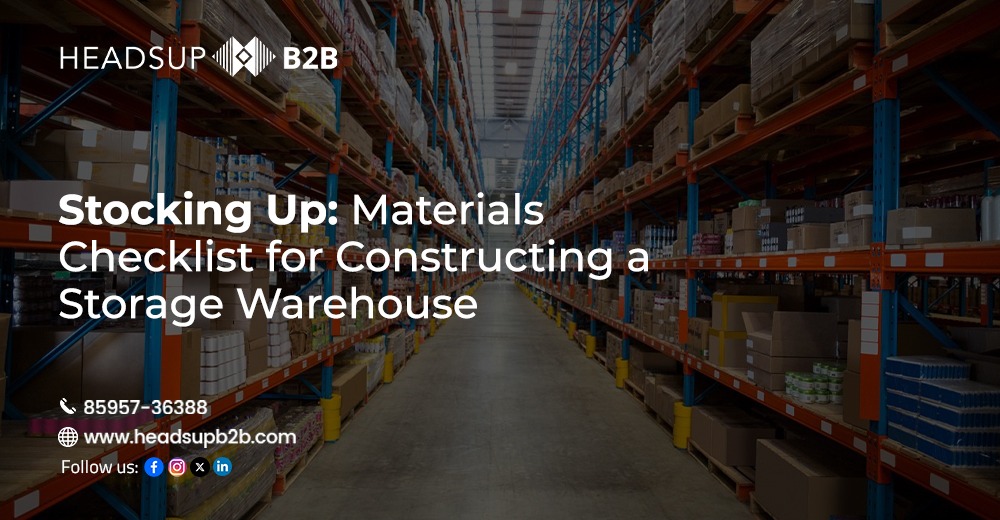
    Stocking Up: Materials Checklist for Constructing a Storage Warehouse

    Did you know that the global warehousing and storage market is projected to reach a staggering $5 billion by 2027? In the backdrop of demand spikes and emerging trends that customers desire, there is an urgency for scalable solutions. With unconfined space for goods, agile distribution, and streamlined storage, warehouses become the most efficient in an ever-expanding global market. Global businesses are adding new sites for operating and meeting the constantly changing consumer needs.

    As a result, the importance of efficient storage solutions can hardly be overrated. However, the key to constructing a warehouse that stands the test of time lies not just in the bricks and mortar, but in the meticulous selection of materials that form its foundation. From construction materials like bricks and mortar to safety equipment like signage and barriers each plays their own individual and unique role in the construction of an efficient yet functional warehouse. Get ready for our complete guide on the material checklist for warehouse construction, highlighted in this guide devoted to the needs of diverse warehouse construction.

    Understanding Warehouse Construction

    Yet, before talking about material decision-making in detail, there is a need to understand the construction process. It’s not only about the walls and the ceilings; it is a close-knit mixture of monitoring, execution, and accuracy. Each material selection and every design decision adds to the level of efficiency and effectiveness of the warehouse, which in turn determines the success of the business operation.

    Size and Supply Dynamics: Accepted Industry Norms Across Segments

    Before moving to construction, it is wise to have an idea of current industry standards and dimensions for different types of warehouses. From the laggard to the leader, and even the moderate/high niche segments, understanding the dimensions is pivotal for investors and service providers alike, influencing asset obsolescence risks, competition levels, and the attractiveness of investment opportunities.

    • Laggard Segment:

      • Business Characteristics: Low volume, low SKU complexity.

      • Storage Systems: Floor storage.

      • Height: 5 – 6 meters.

      • Size: 1,000 – 2,000 square meters.

      • Current Supply: High.

    • Moderate Segment:

      • Business Characteristics: Moderate volume, moderate SKU complexity.

      • Storage Systems: Stacks or floor storage.

      • Height: 5 – 6 meters.

      • Size: 1,000 – 2,000 square meters.

      • Current Supply: High to moderate.

    • Leader Segment:

      • Business Characteristics: Moderate/high volume, high SKU complexity.

      • Storage Systems: Block storage racks or hybrid systems.

      • Height: 5 – 9 meters.

      • Size: 8,000 – 10,000 square meters.

      • Current Supply: SMART warehouse, preferred by many companies.

    • Moderate/High Niche Segment:

      • Business Characteristics: High volumes, high SKU complexity.

      • Storage Systems: Automated storage, dense racks, hybrid.

      • Height: 10 – 12 meters.

      • Size: 10,000 – 30,000 square meters.

      • Current Supply: Very low, not readily available.

    Essential Materials for Warehouse Construction

    1. Steel: The backbone of any warehouse, steel provides the structural integrity necessary to withstand the test of time. Materials like beams, columns, reinforcing bars, and decks must be carefully selected to meet the demands of the environment and the loads it will bear.

    2. Electricals: Behind every well-lit warehouse and humming machinery lies a network of quality electricals. Good quality wiring, lighting fixtures, electrical panels, and circuit breakers ensure uninterrupted operations and safety for all.

    3. Road Safety Equipment: In the hustle and bustle of warehouse activities, safety should always be a top priority. Road safety equipment such as barriers, bollards, traffic cones, and signage play a crucial role in preventing accidents and ensuring smooth traffic flow within the facility.

    4. Construction Material: The very foundation of the warehouse is built upon the selection of construction materials. Cement, aggregates, sand, and bricks form the building blocks, laying the groundwork for a sturdy and reliable structure.

    5. Plumbing and Fitting: While often overlooked, plumbing and fitting are the unsung heroes of warehouse construction. From drainage systems to restroom facilities, attention to detail in plumbing ensures a hygienic and functional workspace.

    Tools and Accessories for Warehouse Construction

    No construction project is complete without the right tools and accessories to get the job done efficiently.

    • Different hand tools, such as power tools and specialised equipment, are always needed for a variety of construction tasks.

    • Tool room machines are essential in manufacturing and shaping materials to a high standard of precision.

    Safety Considerations in Warehouse Construction

    Safety should always be a top priority in warehouse construction to protect workers and assets alike.

    • Above all, in warehouse construction, safety should always be given first priority to ensure workers and assets are well-protected.

    • Security products such as stickers, individual protective equipment, and signage are considered of primary importance in setting up a safe working environment.

    Material Handling Equipment in Warehouse Construction

    Efficient material handling is the lifeline of warehouse operations, streamlining the movement of goods from arrival to storage and distribution.

    • Pallets, overhead cranes, forklifts, and conveyors are absolutely those items that are worth keeping in mind in order to cut operations costs in warehouses.

    • Choosing the right material handling equipment is crucial for optimising space utilisation and minimising downtime.

    Build with Confidence: Your Blueprint to Warehouse Construction Success Starts Here!

    As we conclude our exploration of warehouse construction essentials, it’s evident that a well-stocked material checklist is the cornerstone of success. At Headsup B2B, we take pride in facilitating seamless connections between suppliers and businesses, empowering you to procure the right materials for your warehouse construction needs. Remember, success in warehouse construction begins with the right materials, and with Headsup B2B by your side, the journey becomes smoother and more efficient than ever before. Reach out to us today and embark on your journey towards constructing a storage warehouse that sets the benchmark for excellence.

  • Understanding the Importance of Structured Steel in Industrial Applications

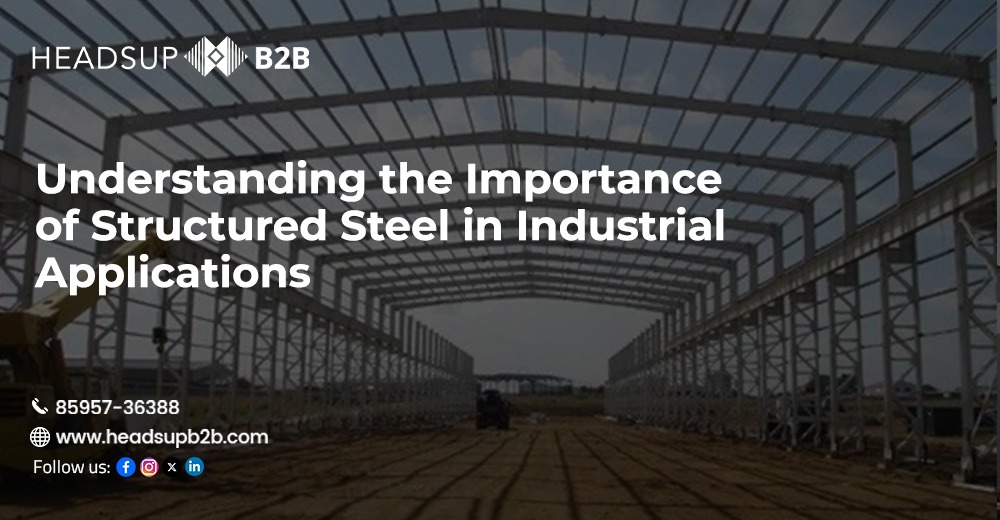
    Understanding the Importance of Structured Steel in Industrial Applications

    Steel is a fundamental component that acts as a backbone for the development of modern industries. It is everywhere in the urban world, from the skyscrapers that constitute our city skylines to the man-made machines working in factories In today’s blog, we will dive deep into the world of steel structures, considering their meaning, application, and benefits in industrial surroundings. By the end of this article, you will understand why structured steel is the material of choice for a wide range of projects and how HeadsUp B2B, a leading B2B platform, simplifies the process of buying steel online.

    What is Steel and its Types?

    Steel that is utilised in a variety of forms as a building material is called structural steel. These forms frequently have particular cross-sectional profiles that resemble beams that are extended.

    Structural steel is designed with specific shapes and sizes for various projects including buildings, roads, bridges, and other structures. This kind of material may be fabricated using a variety of techniques, including sophisticated welding, bending, hot and cold rolling, etc.

    Types of Steel:

    There are four major types of structural steel:

    • Carbon Steel

    • High steel Low-Alloy Steel

    • Forged Steel

    • Quenched and Tempered Alloy steel

    Understanding Applications of Steel:

    • Construction: Steel is the backbone of the construction industry. It is used for constructing frames, pillars, and girders that form strong, enduring monuments. Structured steel of various sizes, ranging from office buildings to large-scale warehouses, is one of the key elements that can support these.

    • Bridges and Highways: Steel is also essential for building robust bridges that can withstand heavy traffic and extreme loads. It is also used in highway construction for guardrails, signposts, and overpasses, ensuring safety and longevity.

    • Automotive and Transportation: The strength and durability of structured steel make it ideal for automotive frames, ensuring vehicle safety. Furthermore, it is commonly used in railroad tracks, which supply a stable and prolonged base for transport systems.

    • Energy Infrastructure: Structured steel is an essential element of all power transmission towers, wind turbine support structures, and platforms for oil and gas production. It can function in extreme conditions like extreme cold or extreme heat without losing its efficiency. This makes it an ideal source of energy to reduce unreliability in energy distribution and production.

    • Manufacturing: In the manufacturing sector, steel is used for machinery frames, production equipment, and conveyor systems. Its strength and precision enable efficient and reliable production processes.

    Importance of Steel in Industrial Applications

    Metallic steel isn’t just a material; it is a game changer for all industries. Here’s why it’s so crucial:

    • Enhanced Structural Integrity: From strength from its ability to support machinery to its robust nature, steel delivers unrivalled reliability and safety.

    • Boosted Efficiency: With structured steel, manufacturing processes become smoother and more efficient, minimising downtime and maximising productivity.

    • Longevity and Sustainability: Steel isn’t just firm; it’s built to last. Its resistance to environmental factors and corrosion ensures longevity, making it a sustainable choice for businesses looking to reduce their ecological footprint.

    • Cost-effectiveness: Although it has premium qualities, steel is still the most cost-effective alternative for businesses. Such a solution brings them long-term values that overshadow the initial investment costs.

    • Testimonials Speak Volumes: Don’t just take our word for it; industry leaders across various sectors swear by the transformative power of structured steel. From automotive giants to aerospace innovators, steel has left an indelible mark on industrial landscapes worldwide.

    Strength of Steel:

    Yield Strength:

    Since yield strength serves as the foundation for the majority of the guidelines provided in design codes, it is the most frequently required attribute for designers. The yield strength is the principal identifier used in European Standards for structural carbon steels (including weathering steel). For example, S355 steel is a structural steel that has a minimum yield strength of 355 N/mm².

    The allowed range of values for the ultimate tensile strength (UTS) is also specified in the product standards. There are design factors that are pertinent to the minimum UTS.

    Tensile Strength:

    The steel’s tensile strength indicates the maximum tensile stress that the material can bear before failing in either a brittle or ductile manner.

    Consider ductile failure to be the initial phase of failure, occurring when the material is forced past the yield point and into irreversible deformation.

    The last step at which the tensile strength is measured is brittle failure.

    Tensile strength is essentially determined by the highest stress that steel can bear before breaking when it is stretched or pulled.

    Buy Steel Online: Convenience and Efficiency

    When it comes to procurement, HeadsUp B2B offers a seamless and reliable platform to buy steel online. Here’s why it’s advantageous:

    • Supplier Network: HeadsUp B2B connects you with a vast network of reputable steel suppliers and manufacturers. This ensures competitive pricing, high-quality products, and access to specialised steel grades.

    • Streamlined Procurement: When you buy steel online, it simplifies the procurement process. With just a few clicks, you can source structured steel from trusted suppliers, saving time and resources.

    Quality Assurance: HeadsUp B2B prioritises quality. Our platform ensures that suppliers provide detailed product specifications, allowing buyers to make informed decisions. We also facilitate direct communication between buyers and suppliers, ensuring your structured steel meets your exact requirements.

  • Finding Steel Suppliers Near Me: City-centric Strategies and Benefits Unveiled

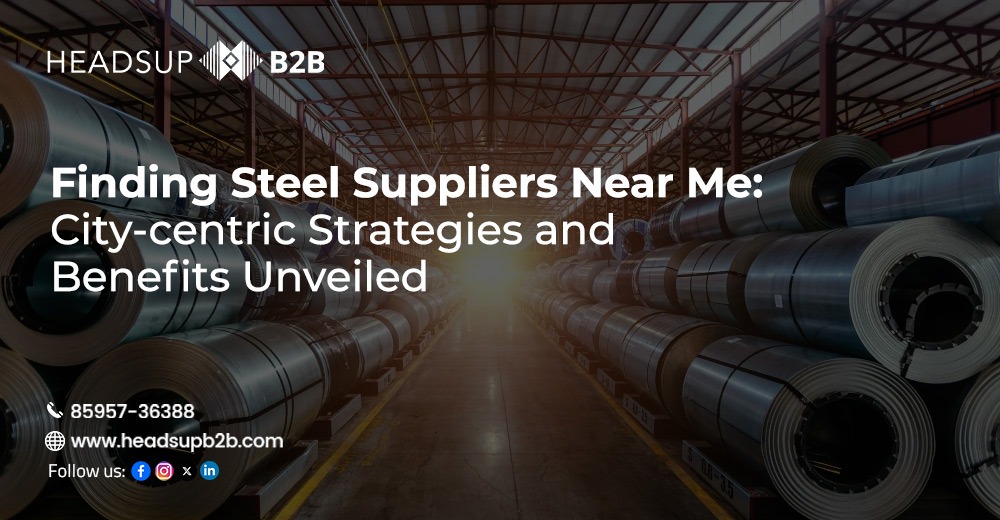
    Finding Steel Suppliers Near Me: City-centric Strategies and Benefits Unveiled

    With unending construction projects all over the world, businesses require reliable steel suppliers nearby. The search for great-quality steel materials at low prices can be simplified by the use of local suppliers if you are working on a building or manufacturing project.

    However, the quest for the right steel suppliers near me can often feel like searching for a needle in a haystack, especially when considering factors like transportation costs, logistics, and project timelines. But fear not, because, in this guide, we will discuss how to identify the types of steel products required and research suitable suppliers locally.

    Understanding the Need for Local Steel Suppliers

    • Challenges of Distance: Sourcing steel from distant suppliers introduces a myriad of challenges, from inflated transportation costs to prolonged lead times. Such challenges can affect project timelines, thereby imposing fiscal strains on contracted foreign suppliers; hence, local suppliers become an attractive alternative.

    • Impact of Transportation Costs: Every mile adds to the cost of transporting steel, impacting your bottom line. Through local sourcing, you can cut your transportation costs significantly; hence, the saved capital can be used for other imperative aspects of your project.

    • Timely Deliveries: In the world of construction and manufacturing, time is of the essence. The steel delivery delays can sequentially turn into project miscalculations, which might disrupt time schedules and budgets. Partnering with local suppliers ensures timely deliveries, keeping your projects on track.

    • Risk Mitigation: Local supplier partnerships offer a level of risk mitigation that is unparalleled. Being in proximity serves to address issues quickly, help avert supply chain hazards, and produce a feeling of safety and trust.

    City-centric Strategies for Finding Steel Suppliers Near Me

    • Utilising Local Resources: Tap into local business directories, trade associations, and chambers of commerce to discover a wealth of steel suppliers in your vicinity. These resources are priceless, and they go a long way in forging economic links in your industrial space.

    • Harnessing Online Platforms: Leverage the power of online search engines and B2B platforms like Headsup B2B to streamline your supplier search. Modern platforms have advanced search and filter features. These portals make it simple for individuals to spot genuine steel suppliers.

    • Networking within Industrial Clusters: Engage with industry peers and participate in trade events and networking sessions within your city’s industrial clusters. These meetings provide networks for partnerships as well as know-how for local procurement vendors.

    • Seeking Referrals: Don’t underestimate the power of word-of-mouth recommendations. Reach out to colleagues, suppliers, and contractors for referrals to trusted steel suppliers in your area. The credibility of personal endorsements is crucial to the choice of supplier.

    Benefits of Partnering with Steel Suppliers Near Me

    • Reduced Transportation Costs: By sourcing steel locally, you can slash transportation costs and optimise your procurement budget. This cost-saving measure directly contributes to the overall profitability of your projects.

    • Enhanced Communication: Proximity fosters better communication and collaboration between you and your steel suppliers. Visiting the sites, starting real-life dialogues, and understanding all possible demands from the clients is the best way to gain a broader insight into the project. This helps to achieve better results.

    • Improved Flexibility: Local suppliers offer greater flexibility and responsiveness to your project’s evolving needs. Whether it’s adjusting order quantities or accommodating last-minute changes, local suppliers can adapt quickly to keep your project moving forward.

    • Community Engagement: Partnering with local suppliers not only benefits your business but also contributes to the growth and prosperity of your community. Buying goods and services from local industries significantly strengthens the local economy. It also improves the lives of people in the community.

    How Headsup B2B Facilitates Finding Steel Suppliers Near Me

    • Advanced Search Functionality: Headsup B2B’s intuitive search and filter features help businesses find steel suppliers that meet their specific needs.The platform ensures precise matches based on location, product specifications, or industry certifications.

    • Testimonials and Case Studies: Hear firsthand accounts from businesses that have successfully found local steel suppliers through Headsup B2B. Real-life testimonials and case studies highlight the platform’s effectiveness in creating meaningful supplier partnerships.

  • Belts: Essential Components of Conveyor Systems

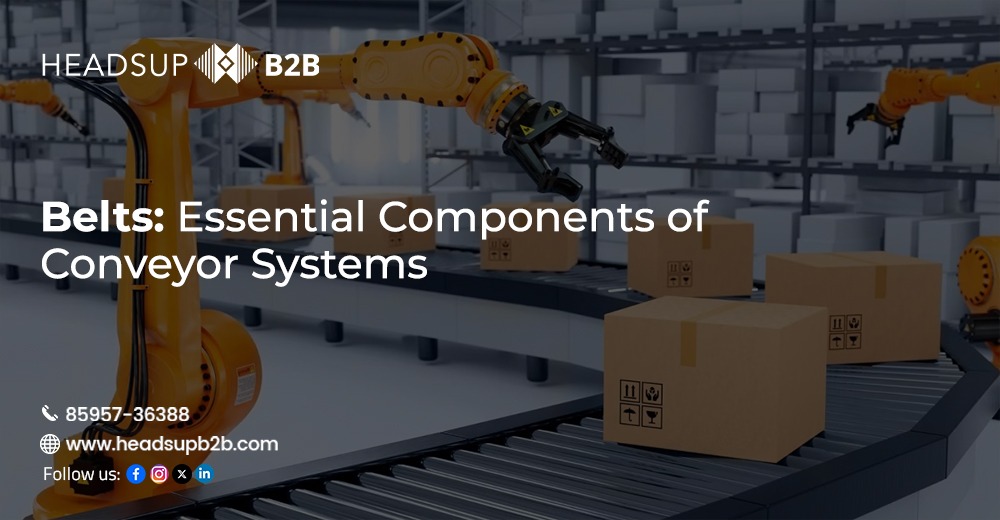
    Belts: Essential Components of Conveyor Systems

    Every day, millions of tonnes of raw materials and finished goods flow from one point to another inside manufacturing facilities worldwide. While these goods may be transported over short or long distances, there’s no denying that they all rely on one common piece of equipment – industrial conveyor belts. But what makes them so critical? And why should manufacturers invest their time and resources into upgrading their existing systems or purchasing new ones? This blog post is going to answer these questions and it gives information about industrial conveyor belts, their use in modern manufacturing operations, and so on.

    Understanding Industrial Conveyor Belts

    Industrial conveyor belts are diverse, and tailored for specific applications and environments. Here’s a breakdown:

    1. Flat belts (tension belts): These handle horizontal movement well, commonly used in mining and quarrying for transporting heavy materials.

    2. Chain belts: Featuring metal chains on rubber surfaces, they excel at carrying heavier loads at higher speeds without wearing out quickly.

    3. Flexible conveyor belts: These adapt to uneven surfaces and different widths, frequently found in the packaging, food processing, and pharmaceutical industries.

    4. Polyurethane conveyor belts: Offering excellent abrasion resistance and flexibility, they’re preferred in the chemical and sanitary conveyance industries.

    Understanding these distinctions helps manufacturers choose the most suitable belt for their needs.

    Benefits of Using Industrial Conveyor Belts

    When designing and implementing conveyor systems, several variables must be considered:

    • Operating Speed: This varies based on the product and its destination.

    • Capacity: Refers to the maximum volume of goods a conveyor can handle at once. Selecting appropriately sized belts ensures smooth integration with existing operations.

    • Material Type and Weight: Knowing the exact materials being carried allows engineers to choose the right combination of belt thickness, strength, and loading capacity.

    • Environmental Conditions: Factors such as temperature changes, moisture exposure, and dust accumulation must be considered during the design phase.

    • Safety Standards: Compliance requires protective features like covers and guardrails to prevent accidents caused by foreign objects entering the conveyor or employees interacting with moving parts.

    Investing in thorough research upfront leads to increased productivity, reduced downtime, and lower maintenance costs in the long run.

    Importance of Quality Control and Maintenance Practices

    Quality control is an important factor in preserving industrial conveyor belts’ durability and dependability. Routinely checking and testing equipment allows operators to identify flaws early on. This prevents delays and unnecessary costs caused by repairs. The cleaning and maintenance schedule is an integral part of mitigating wear and tear from soiling, dust, and dirt, as well as buildup from the trash. Proper alignment means that the belt travels along a straight line, which reduces friction, consumes less energy, and extends the belt’s life.

    Select suppliers with rigorous quality controls to guarantee superior performance and exceptional customer service throughout your system’s lifespan. Continuous monitoring aids in identifying potential issues in advance, ensuring timely resolution, and ultimately enhancing productivity.

    Staying Ahead: The Strategic Importance of Investing in Advanced Industrial Conveyor Belts Technology

    Manufacturing units striving for a competitive edge cannot afford to ignore developments in conveyor belt innovation. Thus, they must invest strategically in this technology as it continues to evolve. Working with dependable vendors proficient in delivering state-of-the-art industrial conveyor belts brings numerous benefits to companies. It enables them to remain successful even during times of constant economic adjustment. Headsup B2B is your reliable partner for connecting with suppliers who understand the importance of reliable belts and accessories. Contact us now to explore the benefits of our extensive partner network and exceptional customer service.