Author: suraj

  • Lifting Efficiency: The Role of Pallets Overhead Cranes in Warehousing

    Lifting Efficiency: The Role of Pallets Overhead Cranes in Warehousing

    Preface

    In today’s fast-paced world of warehousing and logistics, efficiency is key. Every second counts when it comes to moving goods in and out of storage. At Headsup B2B, we understand the critical role that warehouse equipment plays in boosting productivity and ensuring smooth operations. Through this blog post, we’ll explore how pallets and overhead cranes work together to change the efficiency of warehouses significantly. ​Whether you’re a warehouse manager, logistics coordinator, or business owner, this guide will provide valuable insights to help you make informed decisions.

    Introduction

    It is feasible to handle large, bulky items that are challenging to move using manual handling equipment, such coils, pipes, profiles, and other things, by installing a warehouse equipment like overhead crane .

    These lifting devices improve operator safety and ergonomics by enabling the physical transfer of heavy goods across the facility with only a single remote control.

    What is Pallet and its Types?

    Pallets are a crucial piece of logistical gear in packing. A pallet is a flat, transportable, sturdy platform that can support a load.

    Pallets come in several varieties and are used for stacking, storing, assembling, and moving products. By facilitating the simple transportation of stacked items using equipment or machines like pallet jacks and forklifts, they increase the operational efficiency of warehouses.

    Warehouse Cranes: What Are They?

    For raising palletised or packed goods to high storage levels warehouses uses the warehouse cranes. High-bay warehouse cranes are needed to load and unload the unusually high system in warehouses with high-bay racking. Crane warehouses are semi-automated; however, cranes operated manually or remotely may still need human intervention.

    At the end of a manufacturing line, smaller robotic cranes can lift, pack, and palletise goods. Visit our robotics website to learn more about our work cell and robotic crane options.

    The 6 Types of Overhead Cranes

    Overhead cranes come in six primary varieties that are ideal for usage in warehouse environments. Let’s examine each of them to assist you in choosing the one that best suits your structure.

    Gantry Crane

    Gantry cranes are free-standing, moveable cranes with limited scope, suitable for hobbyists or mechanics. Larger models are available for warehouses to hold and transport loads. While small models are affordable, most warehouses require larger models for loading and transporting loads. Gantry cranes come in various shapes and sizes, with larger models being more expensive.

    Jib Cranes

    Jib cranes, stationary, floor-mounted cranes with a chain host, are ideal for short-distance lifting of objects or materials. They offer ease of use, lifting capacity, and affordability. However, they have limited lifting power and lack flexibility compared to other crane types.

    Bridge Cranes

    Bridge cranes are popular warehouse options with custom-designed runways and support columns. They can encompass the entire warehouse or part of it, with a hoist moving along the runway and the entire bridge moving forward or backwards. Ideal for moving heavy objects, they are reliable and efficient. Despite being expensive, they can carry objects throughout a warehouse, unlike other overhead cranes.

    Workstation Cranes

    Workstation cranes, similar to bridge cranes, are floor-mounted and work over fixed spaces, suitable for warehouses requiring overhead cranes but not for entire spaces, requiring floor-mounted supports.

    Monorail Cranes

    Monorail cranes, named after their fixed track, transport objects and materials in warehouses like elevated conveyor lines. They can run around curves, making them ideal for assembly lines and certain warehouse transport processes.

    Top and Under-Running Cranes

    Top and under-running cranes are popular warehouse options, mounted on runway beams or vice versa. Top-running cranes have increased lifting ability and can traverse a significant distance due to their design and makeup.

    What are the benefits of an overhead crane?

    The following benefits come from moving big goods using a warehouse overhead crane:

    • Control over the load: warehouse overhead cranes frequently have precision controls that enable the operator to position the load in the precise spot using a remote control device. This is in contrast to forklifts, which might cause stacking mistakes.

    • The facility’s ergonomics: warehouse overhead cranes relieve operators of physical strain by enabling them to transport products between two or more spots in the centre with a single button push. The many varieties of warehouse overhead cranes can have clamps or lifts for rolls, coils, sheets, or pallets, among other accessories, to facilitate the movement of cargo.

    • Increased safety: To prevent impediments and potential accidents with personnel and material handling equipment, the crane lifts large, heavy objects to a specific height above the ground. Safety features guarantee dependable and efficient functioning.

    How does a warehouse overhead crane work?

    A warehouse overhead crane system safely lifts and moves the loads from one location to another in a facility. It consists of a bridge-like overhead structure with girders for stability. The main girder moves goods horizontally, while side girders facilitate transverse movement. Different configurations are available for different facilities. Loads are lifted using a hoist integrated into the trolley, which uses a hook, pulleys, rope, cable, or chain to minimise effort. The load is usually fitted with a hitch system for easy picking up.

    A warehouse overhead crane is a safe solution for moving heavy loads, with components like an emergency stop button and pushbutton panels that ensure proper operation. These cranes can be adapted to logistics centre requirements and have safety features like limit stops for trolleys and overhead sections, lifting mechanisms, and safety latches on hooks to secure the load during movement.

    Application of a warehouse overhead crane:

    Warehousing

    When assessing the necessity for an overhead crane, the first industry that springs to mind is warehousing, where commodities, supplies, and equipment are frequently transported, positioned, and prepared. An overhead crane is a great help in warehousing since it can quickly lift big products from storage to the shipping dock.

    Assembly

    Large equipment assembly industries need a way to lift and move partially assembled assemblies from one place to another so they may be finished. Because forklifts, automatic goods vehicles, and other methods of material handling are insufficient or unsafe, using an overhead crane is essential. Moving assemblies is a normal element of the production process.

    Transportation

    When large, bulky goods need to be loaded onto trucks, trains, and aeroplanes, the same guidelines that apply to storage also apply to transportation. Large goods are conveniently positioned for transportation by overhead cranes. This may be particularly true for international transportation when large items and containers must be lowered into ship holds.

    Equipment Maintenance

    Overhead cranes help facilitate repairs of punch presses and other production equipment by progressively moving and placing parts for convenient access. Heavy machinery may be moved with gantry and bridge cranes from their permanent site to a repair facility and back again. Lifting machinery up and over other equipment to put at a repair station is made easier with the use of overhead cranes.

    Choosing the Right Warehouse Equipment

    When it comes to selecting the perfect overhead crane for your warehouse, several key factors need to be considered to ensure you make the right choice. Here’s a quick guide to help you navigate through the process.

    Factors to Consider

    1. Load Capacity: The maximum weight the crane can lift is crucial. Always consider the heaviest load you need to move and add a safety margin. Choosing a crane and othe warehouse equipment with the right load capacity prevents overloading and potential accidents.

    2. Span: This is the distance between the crane’s runway rails. It determines how far the crane can move horizontally. Measure your workspace carefully to ensure the crane covers the required area.

    3. Lift Height: This refers to how high the crane can lift a load. Consider the height of your warehouse and the maximum height at which you need to store or retrieve items.

    4. Usage Frequency: How often you’ll use the crane affects its durability and performance. For frequent use, opt for a crane designed for high cycles. For occasional use, a lighter-duty crane may suffice.

    Tips for Selecting the Best Warehouse Equipment

    1. Assess Your Needs: Make a list of your specific requirements, including load types, workspace dimensions, and operational frequency.

    2. Consult Experts: Don’t hesitate to seek advice from crane manufacturers or suppliers. They can provide valuable insights and recommend the best options based on your needs.

    3. Consider Future Growth: Think about your future needs. Investing in a slightly more capable crane now can save you from needing an upgrade soon.

    4. Safety Features: Ensure the crane has essential safety features like overload protection, emergency stops, and reliable braking systems.

    5. Budget Wisely: While it’s important to consider cost, don’t compromise on quality and safety. Balance your budget with the crane’s capabilities and lifespan.

    Importance of Regular Maintenance and Inspections

    Regular maintenance and inspections are vital for the longevity and safety of your overhead crane. Here’s why:

    1. Prevent Accidents: Routine checks can identify potential issues before they lead to accidents, ensuring the safety of your employees and equipment.

    2. Maximise Efficiency: Well-maintained cranes operate smoothly, reducing downtime and increasing productivity.

    3. Extend Lifespan: Regular servicing extends the life of your crane, providing better returns on your investment.

    How Headsup B2B Can Be Your Reliable Partner in Sourcing Warehouse Equipment

    Choosing the right warehouse equipment is crucial for efficiency and safety. Headsup B2B is here to help you make the best choices. Here’s why we can be your reliable partner in sourcing warehouse equipment:

    Wide Range of Products

    Headsup B2B offers a vast selection of warehouse equipment, including overhead cranes, forklifts, shelving systems, and more. No matter your needs, we have the right tools to keep your operations running smoothly.

    Expert Guidance

    Our team of experienced professionals is ready to provide you with expert advice. Whether you’re setting up a new warehouse or upgrading your current one, we can help you find the most suitable equipment. We understand that every warehouse is unique, and so we tailor our recommendations to meet your specific requirements.

    Quality Assurance

    Headsup B2B partner with trustworthy manufacturers to ensure that all the warehouse equipment we offer is of the highest quality. This means you can rely on our products to be durable, efficient, and safe. Our commitment to quality ensures that you get the best value for your investment.

  • Maintaining Your Conveyor for Optimal Performance: Best Practices

    Maintaining Your Conveyor for Optimal Performance: Best Practices

    Maintaining equipment is the most important thing for smooth and efficient processes. For businesses that rely on conveyor system, regular maintenance is not just a best practice—it’s essential. At Headsup B2B, we understand the importance of well-maintained conveyor systems and are here to guide you through the best practices to ensure your conveyor operates at its best. This blog will provide you with practical insights to help you attain peak performance, regardless of whether you’re new to conveyor maintenance or searching for sophisticated advice to improve your current procedures.

    Introduction

    Any manufacturing or processing facility’s overall performance, productivity, and efficiency depend on having a well-maintained conveyor belt system. Frequent maintenance keeps your conveyor belt system operating properly and saves costly downtime by extending its lifespan and assisting in the prevention of unplanned malfunctions. Maximising the return on your investment requires effective conveyor belt maintenance since it minimises wear and tear, lowers the chance of a system failure, and keeps everything operating at peak efficiency. We’ll go over important maintenance advice in this educational tutorial to keep your conveyor belt system operating consistently and long.

    Understanding Conveyor System

    A conveyor system is a mechanical handling device that moves loads and materials automatically across a space quickly and effectively. Among its many advantages, this technology lessens human error, lowers workplace dangers, and lowers labour expenses. They are be handy for transferring large or heavy objects from one location to another. A conveyor system can move things using a chain, wheels, rollers, or a belt.

    How do Conveyor Systems Work

    Conveyor systems are made up of a belt stretched across multiple pulleys, forming a closed loop for rotation. The drive pulley drives the belt, moving items. Most designs use a rotor to power the drive pulley and belt, ensuring they run in the same direction. Conveyors can turn, using unique cone-shaped wheels or rotors to allow the belt to follow bends or twists without getting tangled.

    Benefits of conveyor systems

    A conveyor system’s primary function is to transfer items from one place to another. Things that are too big or heavy for people to lift by hand can be moved thanks to the design.

    Time is saved while moving goods from one place to another with conveyor systems. They facilitate the easier process of moving objects up and down floors, which can be inclined to span numerous levels. Manually performing this activity by hand can be physically taxing for humans. Material can be automatically unloaded by inclined belts, removing the requirement for someone to be at the other end to accept the pieces.

    Types and examples of conveyor systems

    Although this is just one sort of conveyor system, you can easily picture a big warehouse full of conveyors moving boxes and other heavy equipment with the help of belts and rollers. Conveyor systems are also utilised for luggage transportation in airports. Lifts for skiing and escalators are two other examples. These devices still transfer heavy objects from one location to another using a belt, chain, and pulleys.

    Conveyor systems come in a variety of forms, including:

    • Belt

    • Roller

    • Slat/apron

    • Ball transfer

    • Overhead

    • Pneumatic

    • Bucket

    • Chute

    • Magnetic

    • Vertical

    • Wheel

    • Walking beam

    • Vibrating

    • Screw/auger

    • Chain

    Essential parts of a conveyor system

    A conveyor system consists of three main parts: the belt support, the pulley, and the drive unit. The belt support ensures smooth belt movement, while the pulley system controls belt movement with at least two pulleys. The drive unit, with a counter bearing, keeps the system moving efficiently and allows the belt to move in reverse. Some conveyor systems are manually operated, but they still use a drive unit, which is not motorised. The construction materials and location of each component vary, but all components play a crucial role in the system’s operation.

    How to choose the right conveyor system

    A conveyor serves as a central nervous system for operations, handling, storing, distributing, manufacturing, or shipping products. Selecting the right conveyor system can be challenging due to various types and configurations. Factors to consider include product and process requirements when purchasing an ideal conveyor system for warehousing or distribution facilities.

    Initially, the perfect conveyor system has to be:

    • Safe to operate and energy-efficient

    • dependable (long-lasting materials and components)

    • ability to change to meet evolving demands

    • economical (measured by total cost of ownership, or TCO)

    What are the Steps to a Well-maintained Conveyor Systems

    Maintenance Technician

    Underappreciated maintenance technicians are often overlooked in facilities. Companies often overlook or underpay them, focusing on small issues rather than addressing larger ones. A good technician can prevent problems from becoming major issues. The choice lies in how to spend money, with less on lost sales and unhappy customers, and more on a great maintenance technician. Therefore, investing in these professionals is crucial for maintaining a successful facility.

    Spare Parts

    Mechanical parts are inevitable and can cause significant damage to the system. Despite the manufacturer’s promises, it is rare to find a part that never needs replacement. A breakdown can halt production for a long time, and prolonged periods without replacing a failed part can cause serious damage to other system parts. It is recommended to keep a safety stock of critical and long lead time conveyor parts on hand or work with a supplier to ensure critical parts are always in stock.

    Preventive Maintenance

    Maintaining mechanical equipment, including conveyors, is crucial for long-term system up-time. Different parts of the system require different levels of preventive care, similar to a car. Following the recommended service schedule ensures long-term performance, while not performing service on the car can result in constant roadside assistance. A competent supplier can help develop a comprehensive preventive maintenance plan, ensuring maximum system up-time.

    System Audit & Documentation

    Continuously inspecting your conveyor system is crucial for its smooth operation. Small problems can be detected before they escalate. Regular inspections can help identify slow failures. A supplier can perform a complete system audit, ensuring the entire system, from infeed to discharge, is checked by competent personnel. This prevents the conveyor from causing catastrophic failure.

    Obsolete Equipment & Parts

    Maintaining a current inventory of obsolete conveyors and parts within your system can help you and your company make wise business decisions. For instance, if a conveyor type is no longer being manufactured, it may be more financially prudent to stock additional spare parts rather than replace them entirely.

    Repair Wisely

    Maintaining a large material handling system can be overwhelming, so it’s crucial to think of repairs in terms of time. For instance, if a bearing fails in a critical drive, replacing only the bearing may be cost-effective. However, replacing both bearings and possibly the pulley is more intelligent, as dismantling the drive section takes more time than changing out components.

    How Headsup B2B Can Be Your Reliable Partner in Conveyor Maintenance

    Maintaining your conveyor system is crucial for keeping your operations running smoothly. At Headsup B2B, we are committed to being your trusted partner in this essential task. Here’s how we can help you achieve optimal conveyor performance:

    Expert Guidance

    Our team of experienced professionals provides expert advice tailored to your specific conveyor system. Whether you need help with routine inspections or troubleshooting complex issues, we’re here to support you every step of the way.

    Comprehensive Resources

    We offer a wealth of resources to help you maintain your conveyor. We provide detailed maintenance guides, you’ll find everything you need to keep your system in its best condition. Our online platform, checklists, and best practices guarantee the long-lasting life of your conveyor.

    Quality Products

    At Headsup B2B, we understand the importance of using high-quality parts and lubricants for your conveyor. We offers superior-quality products to enhance the performance and life span of your system. Our catalogue includes everything from replacement parts to advanced conveyor technologies.

    Preventive Maintenance Plans

    We help you develop and implement effective preventive maintenance plans. Headsup B2B provides customised checklists and tracking tools to make it easy to stay on top of routine tasks and avoid costly downtime. By following our preventive maintenance advice, you can extend the life of your conveyor and boost productivity.

    Training and Support

    Ensuring your team is well-trained is key to successful conveyor maintenance. Headsup B2B also offer training programs and workshops to train your staff with the knowledge and skills they need. Additionally, our customer support team is always ready to answer your questions and provide assistance whenever you need it.

    With Headsup B2B as your reliable partner, you can trust that your conveyor system will be well-maintained and perform at its best.

  • The Science Behind Lubricating Oils: How They Protect Your Machinery

    The Science Behind Lubricating Oils: How They Protect Your Machinery

    Imagine this: a critical piece of machinery in your factory suddenly grinds to a halt, causing unexpected downtime and costly repairs. Often, such failures stem from one simple yet crucial factor—improper lubrication. When you know about the science behind lubricating oils, it can save your machinery from irrelevant damage, ensuring smoother operations and a longer lifespan. As we know it’s important for machine health, the professionals of Headsup B2B, an online platform for sourcing lubricating oils, are here to make our visitors and clients aware of all the aspects of lubricating oils through this blog post.

    What are lubricants made of?

    Oil is used to make lubricants. This is usually mineral oil (made from crude oil) or synthetic oil (formulations made in a lab) when it comes to manufacturing and industrial equipment. One of the lubrication fallacies—that lubrication is only the simple application of a lubricant—takes root in this particular region.

    There are a lot of alternatives and choices available for lubrication, including the type of formulation to use in addition to the decision of whether to use mineral or synthetic oil. Numerous formulation choices exist based on several factors, such as the type of equipment, usage, application, and operating environment.

    What types of lubricating oils are ideal for your equipment?

    One of the most crucial elements of the industrial maintenance procedure is lubrication. The lubricating oil works to minimise wear and extend the life of each piece of machinery by lowering the friction between the components.

    Lubricating oils, however, come in a variety of qualities and uses. While some oils are more versatile and of higher quality, the best oils depend on specific needs and industries. As a result, it’s critical to get to know them well to choose which is best for your company.

    Varieties of Lubricants

    Among other things, lubricating oils can be categorised based on their physical condition, the kind of engine they will be used in, density, viscosity, and provenance.

    Some of this information is available in the Machinery Manual, which suggests the best lubricant based on factors like performance and viscosity, as well as on the label of the lubricating oil packaging, where its kind is mentioned. See below for further information on the many kinds of lubricating oils.

    • Mineral lubricating oil

    • Paraffinic mineral oil

    • Naphthenic-based mineral oil

    • Mixed base mineral oil

    • Synthetic lubricating oil

    • Synthetic hydrocarbons

    • Polyesters

    • Diesters

    • Silicone Oils

    • Perfluorinated polyesters

    When should lubrication occur?

    An entire maintenance strategy should include frequent planned and scheduled lubrication. Lubricant inspections should generally be included in a routine preventive maintenance checklist so that a part may be changed before it wears out. The schedule might be based on usage and wear trends. In addition, lubrication has to happen after significant maintenance and repairs, as well as when any new parts or equipment are introduced.

    The benefits of lubrication

    There are several advantages to lubricating equipment, including:

    Extended component and equipment service life

    Lubrication keeps equipment and components in optimal operating condition for longer by lowering friction and heat, which in turn lessens wear and tear. The longer the interval between breakdown and replacement requirements, the higher the overall efficiency and lower the cost, the more intact and near-original components will be.

    Fewer maintenance requirements

    Less wear and tear means a lower risk of malfunction. Regardless of the age of the component, high friction and high heat-producing parts might unexpectedly fail and disintegrate at almost any moment. Proper lubrication significantly lowers the likelihood of unplanned repair needs by maintaining equipment at a suitable temperature and friction level.

    Higher part quality

    Lubrication helps to keep equipment operating as intended by absorbing stress and vibration. This enables more consistent performance. This results in fewer rejections and a greater productivity yield in component manufacturing due to improved repeatability and quality.

    Safer operations

    There is a risk of catastrophic failure if the equipment is working at high temperatures. And with increased vibrations, as would be the case with unlubricated or inadequately oiled equipment. This can put equipment operators and other staff members in danger. A setting that is safe to operate in requires proper lubrication.

    How Headsup B2B helps buyers with the best quality Lubricating Oils

    Best team to Assist the Customers

    At Headsup B2B, we understand how crucial it is to use the best quality lubricating oils for your machinery. Our team of experts helps buyers by offering a wide range of lubricating oils from prominent and trustworthy manufacturers and suppliers.

    User friendly Platform

    Headsup B2B is an online platform that connects buyers and trustworthy suppliers. And makes it easy to compare products and find the right oil for your specific needs.

    From providing detailed product descriptions to expert customer service to make sure our clients get the best product for their needs,.

    With Headsup B2B, you can trust that you’re getting high-quality lubricating oils to keep your machinery running smoothly and efficiently.

  • The Science Behind Lubricating Oils: How They Protect Your Machinery

    The Science Behind Lubricating Oils: How They Protect Your Machinery

    Imagine this: a critical piece of machinery in your factory suddenly grinds to a halt, causing unexpected downtime and costly repairs. Often, such failures stem from one simple yet crucial factor—improper lubrication. When you know about the science behind lubricating oils, it can save your machinery from irrelevant damage, ensuring smoother operations and a longer lifespan. As we know it’s important for machine health, the professionals of Headsup B2B, an online platform for sourcing lubricating oils, are here to make our visitors and clients aware of all the aspects of lubricating oils through this blog post.

    What are lubricants made of?

    Oil is used to make lubricants. This is usually mineral oil (made from crude oil) or synthetic oil (formulations made in a lab) when it comes to manufacturing and industrial equipment. One of the lubrication fallacies—that lubrication is only the simple application of a lubricant—takes root in this particular region.

    There are a lot of alternatives and choices available for lubrication, including the type of formulation to use in addition to the decision of whether to use mineral or synthetic oil. Numerous formulation choices exist based on several factors, such as the type of equipment, usage, application, and operating environment.

    What types of lubricating oils are ideal for your equipment?

    One of the most crucial elements of the industrial maintenance procedure is lubrication. The lubricating oil works to minimise wear and extend the life of each piece of machinery by lowering the friction between the components.

    Lubricating oils, however, come in a variety of qualities and uses. While some oils are more versatile and of higher quality, the best oils depend on specific needs and industries. As a result, it’s critical to get to know them well to choose which is best for your company.

    Varieties of Lubricants

    Among other things, lubricating oils can be categorised based on their physical condition, the kind of engine they will be used in, density, viscosity, and provenance.

    Some of this information is available in the Machinery Manual, which suggests the best lubricant based on factors like performance and viscosity, as well as on the label of the lubricating oil packaging, where its kind is mentioned. See below for further information on the many kinds of lubricating oils.

    • Mineral lubricating oil

    • Paraffinic mineral oil

    • Naphthenic-based mineral oil

    • Mixed base mineral oil

    • Synthetic lubricating oil

    • Synthetic hydrocarbons

    • Polyesters

    • Diesters

    • Silicone Oils

    • Perfluorinated polyesters

    When should lubrication occur?

    An entire maintenance strategy should include frequent planned and scheduled lubrication. Lubricant inspections should generally be included in a routine preventive maintenance checklist so that a part may be changed before it wears out. The schedule might be based on usage and wear trends. In addition, lubrication has to happen after significant maintenance and repairs, as well as when any new parts or equipment are introduced.

    The benefits of lubrication

    There are several advantages to lubricating equipment, including:

    Extended component and equipment service life

    Lubrication keeps equipment and components in optimal operating condition for longer by lowering friction and heat, which in turn lessens wear and tear. The longer the interval between breakdown and replacement requirements, the higher the overall efficiency and lower the cost, the more intact and near-original components will be.

    Fewer maintenance requirements

    Less wear and tear means a lower risk of malfunction. Regardless of the age of the component, high friction and high heat-producing parts might unexpectedly fail and disintegrate at almost any moment. Proper lubrication significantly lowers the likelihood of unplanned repair needs by maintaining equipment at a suitable temperature and friction level.

    Higher part quality

    Lubrication helps to keep equipment operating as intended by absorbing stress and vibration. This enables more consistent performance. This results in fewer rejections and a greater productivity yield in component manufacturing due to improved repeatability and quality.

    Safer operations

    There is a risk of catastrophic failure if the equipment is working at high temperatures. And with increased vibrations, as would be the case with unlubricated or inadequately oiled equipment. This can put equipment operators and other staff members in danger. A setting that is safe to operate in requires proper lubrication.

    How Headsup B2B helps buyers with the best quality Lubricating Oils

    Best team to Assist the Customers

    At Headsup B2B, we understand how crucial it is to use the best quality lubricating oils for your machinery. Our team of experts helps buyers by offering a wide range of lubricating oils from prominent and trustworthy manufacturers and suppliers.

    User friendly Platform

    Headsup B2B is an online platform that connects buyers and trustworthy suppliers. And makes it easy to compare products and find the right oil for your specific needs.

    From providing detailed product descriptions to expert customer service to make sure our clients get the best product for their needs,.

    With Headsup B2B, you can trust that you’re getting high-quality lubricating oils to keep your machinery running smoothly and efficiently.

  • Choosing the Right Radial Drilling Machine for Your Workshop

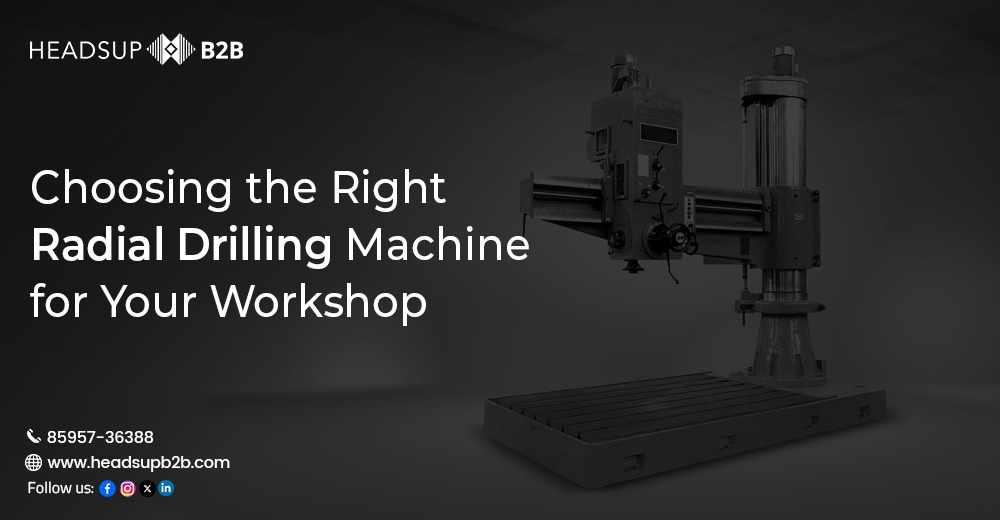
    Choosing the Right Radial Drilling Machine for Your Workshop

    Selecting appropriate equipment for your workshop is the key step for productivity and safety. At Headsup B2B, we understand the complexities of choosing the ideal radial drilling machine for your needs. Through this blog, we will guide you through a comprehensive approach to workshop safety including selecting the appropriate equipment,

    that fits into the safety standards and operational requirements.

    Introduction

    The quality and type of radial drilling can greatly enhance your efficiency and productivity. So, Choosing the perfect radial drilling machine for your workshop is an important decision. but we know it also feels like a daunting task. Radial drilling machines are versatile, powerful, and essential for a variety of drilling tasks in both small and large workshops. Did you know that the first radial drilling machine was invented in the late 19th century, revolutionising the way holes were drilled in metal and other materials? With the advancement in technology, these machines have also evolved with advanced features that make them indispensable in modern manufacturing. At Headsup B2B, we specialise in connecting businesses with the perfect manufacturers to meet their needs. In this blog, we will discuss the basics of considering advanced features and future trends while choosing the right radial drilling machine.

    Definition and basic components

    A machine tool called a radial drilling machine is mostly used to drill round holes into massive workpieces.

    Drilling medium large-sized and heavy workpieces is the special purpose of radial drilling machines. These devices are perfect for components with significant height since they may be used to drill holes at a specific radial distance. They are mostly used for handling huge, heavy workpieces in situations where mobility is restricted.

    Why Is Radial Drilling Machine Important?

    You see, JCB bucket manufacturers are not the only ones who deal with large-size parts. There are countless other manufacturers such as crane manufacturers, tractor manufacturers, truck manufacturers, lathe machine manufacturers, and many more.

    They all deal with large-size parts. And when it comes to making large-diameter holes in these parts Radial Drilling Machine is the handiest tool out there in the machining industry. No wonder why they love using the Radial Drill as their primary drilling machine.

    Factors to Consider When Choosing a Radial Drilling Machine

    Workpiece Size and Material

    When selecting a radial drilling machine, it’s crucial to consider the size and type of materials you’ll be working with. Ensure the machine can handle the largest workpieces in your operations. Compatibility with different materials, such as metal, plastic, or wood, is also important to avoid machine damage and guarantee efficient performance.

    Drilling Depth and Precision

    Evaluate the depth and precision requirements for your drilling tasks. To achieve accurate and consistent results, especially for complicated projects a machine with adjustable depth settings and high precision capabilities is significant.

    Power and Speed

    The motor power and spindle speed of the radial drilling machine are key factors that influence its performance. Higher power and adjustable speed settings allow the machine to handle tougher materials and more complex tasks, providing versatility for various applications.

    Table Size and Adjustability

    Consider the dimensions of the machine’s table and its ability to adjust to different positions. You can work on a variety of tasks and easily accommodate various sizes of workpieces with larger, adjustable tables.

    Ease of Operation and Maintenance

    Choose a machine that is user-friendly and easy to operate, even for those with less experience. Additionally, consider the maintenance needs. Always choose machines that are easy to maintain and come with accessible parts as they can save time and reduce downtime, providing smooth and efficient operations in your workshop.

    How Headsup B2B Makes the Procurement of Radial Drilling Machines Easy

    At Headsup B2B, we simplify buying radial drilling machines for your workshop. Our platform offers a wide range of high-quality machines from reputable and trustworthy manufacturers, to provide our customers with the perfect fit for their needs. Here’s how we make procurement easy:

    Extensive Selection

    We provide a comprehensive range of radial drilling machines, from manual to fully automatic models, catering to various requirements and budgets.

    Detailed Product Information

    Each listing includes detailed specifications, user reviews, and also high-resolution images, allowing you to make informed decisions without needing to visit multiple sites.

    Expert Assistance

    Our team of experts is available to offer guidance and answer any questions, helping you choose the right machine based on your specific needs and operational goals.

    Competitive Pricing

    Moreover, we offer competitive prices and regular discounts, ensuring you get the best value for your investment.

    Streamlined Ordering Process

    The procurement process is straightforward and user-friendly. You can easily compare models, place orders, and track shipments all in one place.

    After-Sales Support

    Our commitment doesn’t end with your purchase. We also provide excellent after-sales support, including installation assistance and maintenance tips, to ensure your machine operates smoothly.

    By choosing Headsup B2B, you streamline the procurement process, save time, and gain access to the best radial drilling machines in the market.

  • How to Properly Install PVC Pipes: A Step-by-Step Guide

    How to Properly Install PVC Pipes: A Step-by-Step Guide

    Installing PVC pipe correctly is essential, whether you’re replacing a broken part or repairing a leak. At Headsup B2B, we understand the importance of PVC pipes and the installation process. We will look at the step by step for installing PVC pipes in this blog article. We will also go over the significance of PVC pipe quality and offer installation tips for PVC pipe. Now let’s get started and learn the best ways to install PVC pipes.

    Understand PVC Pipes

    Polyvinyl chloride is the plastic used to make PVC pipes. It manages waste in buildings and is used in vents and drains. It is robust, light, and stiff. PVC pipe is perfect for drain applications beneath bathroom vanities and kitchen sinks since it is simple to install.

    PVC can be attached to almost anything, except extremely hot environments, thanks to the wide variety of available fittings. Due to its ease of installation, resistance to nearly all alkaline and hazardous substances, and lack of need for hot soldering, it performs plumbing far better than the old standard cast iron pipe. There are two varieties, type 40 for residential dwellings and type 80 for industrial environments, which are specified in standards.

    Importance of PVC Pipe Quality

    The quality of the PVC pipe is crucial when installing a PVC repair coupling. Choosing a reliable brand that complies with industry norms guarantees robustness and longevity, which are essential. Superior PVC pipes are perfect for a range of plumbing applications since they are immune to corrosion, chemicals, and environmental conditions.

    Types of PVC Pipes

    Preparation and safety measures

    To make sure that the repair connection and the plumbing system as a whole are compatible, take into account variables like pipe diameter, wall thickness, and pressure ratings.

    Tools and Materials Required

    To install a PVC repair coupling effectively, you’ll need the following tools and materials:

    • Hacksaw or PVC pipe cutter: essential for cutting the damaged section of the PVC pipe.

    • Emery cloth or sandpaper: used to smooth the cut edges of the pipe, ensuring a clean surface for a strong bond.

    • PVC primer prepares the pipe and coupling surfaces for cementing by cleaning and softening the PVC.

    • PVC Cement creates a strong, permanent bond between the pipe and the coupling.

    • Measuring tape: helps to accurately measure the section of pipe to be removed and the coupling to be installed.

    • Marker or pencil: useful for marking the cutting points and alignment of the coupling.

    • Rags or paper towels: are necessary for cleaning up any excess primer or cement during the installation process.

    Cutting

    PVC is easily cuttable. It can be cut using a hacksaw, but for a straight edge, mitre saw abrasive discs are a preferable option. The entire line of the pipe may get distorted at a junction that is skewed as a result of the pipe not being cut straight.

    Deburr and Fit

    After cutting, remove any shavings from the pipe and smooth the inner edges, or deburr. After the pipe has been cut to the exact length, arrange it on the floor with the fittings in position to check that the length is accurate.

    Cleaning and Priming

    Selecting the right primer and cleaner: Choosing the right primer and cleaner is crucial for a strong bond. Use a primer that is compatible with PVC, often labelled as PVC primer, which cleans and softens the pipe surface to ensure the cement adheres properly.

    Steps to properly clean and prime the pipe ends

    1. Clean the pipe ends with a rag to remove dirt and grease.

    2. Apply the PVC primer to the outside of the pipe and the inside of the fitting using the applicator provided. Make sure to cover the entire surface area that will be joined.

    3. Allow the primer to dry for a few seconds before proceeding to the cementing step.

    Applying PVC Solvent Cement

    Choosing the right type of cement: Select a PVC Solvent Cement that matches your pipe type and application. Regular PVC cement works for most applications, but if you’re working with high-pressure systems, consider using heavy-duty cement.

    Application tips for a strong bond

    1. Apply a generous layer of PVC Solvent Cement to the primed areas on both the pipe and the fitting. Work quickly, as the PVC Solvent Cement dries fast.

    2. Twist the pipe a quarter turn as you push it into the fitting. This action spreads the cement evenly and ensures a good seal.

    Fitting the Pipes Together

    Ensuring proper alignment: Immediately after applying the cement, push the pipe fully into the fitting while making sure it’s aligned correctly. Misaligned pipes can lead to weak joints and potential leaks.

    Holding the joint in place for proper curing: Hold the joint together for about 30 seconds to allow the cement to set. After this, the joint should be stable enough to hold itself, but avoid putting any pressure on it for at least 15 minutes. Full curing typically takes 24 hours, after which the joint will be ready for use.

    Cleaning and Priming

    Steps to properly clean and prime the pipe ends:

    1. Clean the Pipe Ends: Start by wiping the pipe ends with a rag to remove any dirt, grease, or debris. This ensures a clean surface for the primer and cement to adhere to.

    2. Apply Primer: Use a PVC primer to clean and soften the pipe surface. Apply it to the outside of the pipe and the inside of the fitting. Make sure to cover the entire area that will be joined. Allow the primer to dry for a few seconds before moving on to the cementing process.

    Common Mistakes to Avoid

    • Common mistakes in PVC pipe cutting include uneven cuts, weak joints, and potential leaks. Always use a sharp hacksaw or PVC pipe cutter for a clean, straight cut.

    • Inadequate primer and cement application is a common mistake, as they clean and soften PVC, promoting strong bonding and reducing the risk of joint failure.

    • PVC pipes’ expansion and contraction with temperature changes are crucial for maintaining system integrity. Ensuring proper fitting and using expansion joints in temperature-variable areas is essential.

    Why Choose Headsup B2B for PVC Pipe Online Sourcing

    Wide Selection: Headsup B2B offers a vast range of PVC pipes and fittings. Whether you need Schedule 40, Schedule 80, or CPVC, you’ll find exactly what you’re looking for.

    High Quality: We ensure that all our PVC products meet the highest quality standards. You can trust that our pipes are durable, reliable, and stable.

    Competitive Pricing: We provide our customers with the best prices on the market. By sourcing directly from top manufacturers, we pass the savings on to you.

    Expert Support: Our team of experts is always ready to help. Whether you need advice on the right products or guidance on installation, we’re here to support you every step of the way.

    Easy Ordering: Our online platform is user-friendly and easy to navigate. You can quickly find what you need, place your order, and have it delivered to your doorstep.

    Customer Satisfaction: At Headsup B2B, we prioritise customer satisfaction. We strive to provide excellent service and ensure that you’re happy with your purchase.

    Choosing Headsup B2B for your PVC pipe sourcing means getting top-quality products, great prices, and exceptional support, all from the comfort of your home or office.

  • Carbon Steel vs. Stainless Steel: A Comprehensive Guide

    Carbon Steel vs. Stainless Steel: A Comprehensive Guide

    When it comes to choosing the right material for your next project, the debate between carbon steel and stainless steel is a common one.

    Both materials have unique properties that make them suitable for different applications, but understanding their differences can help you make a more informed decision. In this guide, we’ll explore the key differences between carbon steel and stainless steel, their advantages, disadvantages, and ideal uses to help you determine which material is best for your needs.

    Difference Between Carbon Steel vs Stainless Steel

    What is Carbon Steel?

    Carbon steel is a type of steel that contains a higher percentage of carbon compared to other types of steel. It is primarily composed of iron and carbon, with the carbon content typically ranging from 0.05% to 2.0%. Carbon steel is known for its strength and durability, making it a popular choice in various industries.

    Types of Carbon Steel

    1. Low Carbon Steel: Also known as mild steel, this type of carbon steel contains up to 0.3% carbon. It is relatively easy to form and weld, making it suitable for applications like automotive components, structural beams, and pipelines.

    2. Medium Carbon Steel: With a carbon content ranging from 0.3% to 0.6%, medium carbon steel offers a balance of strength and ductility. It is commonly used in manufacturing machinery parts, gears, and axles.

    3. High Carbon Steel: This type of steel contains more than 0.6% carbon, providing superior hardness and wear resistance. High carbon steel is often used in applications requiring sharp edges or high strength, such as cutting tools and springs.

    Advantages of Carbon Steel

    • Cost-Effective: Carbon steel is generally less expensive than stainless steel, making it a budget-friendly option for many applications.

    • High Strength: The higher carbon content enhances the strength and hardness of the steel, making it suitable for heavy-duty applications.

    • Good Machinability: Carbon steel is easier to machine compared to some other materials, which can reduce manufacturing costs.

    Disadvantages of Carbon Steel

    • Susceptible to Corrosion: Carbon steel is prone to rust and corrosion when exposed to moisture and chemicals, which can limit its use in certain environments.

    • Limited Corrosion Resistance: Unlike stainless steel, carbon steel does not offer inherent resistance to corrosion, which can affect its longevity in harsh conditions.

    What is Stainless Steel?

    Stainless steel is a type of steel alloy that contains a minimum of 10.5% chromium, which provides its signature resistance to corrosion. The addition of chromium forms a protective layer of chromium oxide on the surface of the steel, preventing rust and staining. Stainless steel is available in various grades and types, each offering different properties and benefits.

    Types of Stainless Steel

    1. Austenitic Stainless Steel: This type of stainless steel is non-magnetic and known for its excellent corrosion resistance and formability. It is commonly used in applications like kitchen appliances, medical instruments, and chemical processing.

    2. Ferritic Stainless Steel: Ferritic stainless steel is magnetic and offers good resistance to stress corrosion cracking. It is used in applications like automotive exhaust systems and industrial equipment.

    3. Martensitic Stainless Steel: This type of stainless steel is known for its high strength and hardness, making it suitable for applications like cutting tools and turbine blades.

    4. Duplex Stainless Steel: Duplex stainless steel combines the properties of both austenitic and ferritic stainless steels, offering high strength and excellent resistance to corrosion. It is used in applications like oil and gas equipment and chemical processing.

    Advantages of Stainless Steel

    • Exceptional Corrosion Resistance: The high chromium content provides excellent resistance to corrosion, making stainless steel ideal for use in harsh environments.

    • Durability: Stainless steel is highly durable and resistant to wear and tear, which contributes to its long service life.

    • Aesthetic Appeal: Stainless steel has a sleek, shiny appearance that is often desired in architectural and design applications.

    Disadvantages of Stainless Steel

    • Higher Cost: Stainless steel is generally more expensive than carbon steel due to its alloying elements and manufacturing processes.

    • Less Machinability: Stainless steel can be more challenging to machine compared to carbon steel, which may increase manufacturing costs.

    Key Differences of Carbon Steel vs. Stainless Steel

    Corrosion Resistance

    One of the most significant differences between carbon steel and stainless steel is their resistance to corrosion. Carbon steel is susceptible to rust and corrosion, particularly in moist or acidic environments. In contrast, stainless steel’s chromium content provides a protective layer that prevents rust and staining, making it suitable for applications where exposure to moisture or chemicals is a concern.

    Strength and Hardness

    Carbon steel generally offers higher strength and hardness compared to stainless steel, especially in high carbon grades. This makes carbon steel an excellent choice for applications requiring superior strength, such as structural components and heavy machinery.

    Stainless steel, while not as hard as high carbon steel, still offers good strength and durability. Its strength-to-weight ratio and resistance to deformation make it suitable for applications where both strength and corrosion resistance are required.

    Machinability

    Carbon steel is known for its good machinability, which makes it easier to cut, drill, and shape. This can result in lower manufacturing costs and greater flexibility in production.

    Stainless steel, on the other hand, can be more challenging to machine due to its toughness and work-hardening properties. Special tools and techniques may be required, which can increase production costs.

    Cost

    Carbon steel is generally more affordable than stainless steel, making it a cost-effective choice for many applications. The lower cost is due to the simpler composition and manufacturing processes involved.

    Stainless steel, with its alloying elements and corrosion-resistant properties, tends to be more expensive. However, its long-term benefits in terms of durability and maintenance can justify the higher initial cost.

    Applications of Carbon Steel and Stainless Steel

    Carbon Steel Applications

    • Construction: Carbon steel is widely used in the construction industry for structural beams, columns, and reinforcements due to its strength and cost-effectiveness.

    • Automotive: Carbon steel is used in automotive parts like chassis components and engine parts because of its high strength and machinability.

    • Pipelines: The durability and strength of carbon steel make it a suitable choice for pipelines and infrastructure projects.

    Stainless Steel Applications

    • Medical Instruments: Stainless steel’s corrosion resistance and biocompatibility make it ideal for medical instruments and surgical tools.

    • Kitchen Appliances: The aesthetic appeal and resistance to corrosion make stainless steel a popular choice for kitchen appliances, sinks, and cookware.

    • Chemical Processing: Stainless steel’s resistance to chemicals and high temperatures makes it suitable for chemical processing equipment and tanks.

    Choosing the Right Material for Your Project

    When deciding between carbon steel and stainless steel, consider the following factors:

    1. Environment: If your project involves exposure to moisture, chemicals, or harsh conditions, stainless steel’s corrosion resistance may be the better choice.

    2. Strength Requirements: For applications requiring high strength and hardness, carbon steel may offer better performance.

    3. Cost Considerations: If budget constraints are a primary concern, carbon steel’s lower cost may be advantageous.

    4. Machinability: Consider the complexity of machining required for your project and whether carbon steel’s machinability benefits align with your needs.

    Conclusion

    Both carbon steel and stainless steel have their distinct advantages and applications. Carbon steel offers strength, affordability, and good machinability, making it suitable for various structural and industrial uses. Stainless steel, with its exceptional corrosion resistance, durability, and aesthetic appeal, is ideal for applications where exposure to harsh environments or a sleek appearance is required.

    Understanding the key differences between these materials will help you make an informed decision based on your project’s specific needs. Whether you choose carbon steel or stainless steel, both materials have proven their worth across a range of industries and applications.

    For further assistance or to explore material options for your next project, feel free to contact our experts or browse our comprehensive catalog of raw materials.

    Frequently Asked Questions

    1. What is the difference between carbon steel and stainless steel?

    The main difference between carbon steel and stainless steel is their corrosion resistance. Carbon steel is prone to rust and corrosion, whereas stainless steel contains chromium, which forms a protective layer to prevent corrosion. This makes stainless steel ideal for environments exposed to moisture or chemicals.

    2. Which steel is more cost-effective: carbon steel or stainless steel?

    Carbon steel is generally more cost-effective than stainless steel. Its simpler composition and manufacturing processes contribute to its lower price. However, stainless steel’s durability and corrosion resistance can offer long-term cost savings in applications where maintenance and replacement are frequent.

    3. Can carbon steel be used in outdoor applications?

    Yes, carbon steel can be used in outdoor applications, but it is more susceptible to rust and corrosion when exposed to the elements. To improve its durability, carbon steel can be coated or treated to enhance its resistance to corrosion.

    4. Is stainless steel stronger than carbon steel?

    Stainless steel and carbon steel can vary in strength depending on their specific grades and compositions. Generally, high-carbon steel is stronger and harder than stainless steel. However, stainless steel offers good strength along with superior corrosion resistance.

    5. What are the best applications for stainless steel?

    Stainless steel is best suited for applications requiring resistance to corrosion and high temperatures. Common applications include medical instruments, kitchen appliances, chemical processing equipment, and architectural elements where both durability and aesthetic appeal are important.

  • The Influence of River Sand on the Cost and Quality of Construction

    The Influence of River Sand on the Cost and Quality of Construction

    Today’s engineers emphasise building a sustainable project using this vital raw material in the construction sector. Made primarily of small fragments of broken-down rocks, corals, or shells, river sand is a loose, fractured natural substance. A typical ingredient in concrete mixes is river sand. River sand has less clay and silt, which gives producers better control over the workability and calibre of the concrete and mortar. In this blog, the experts at Headsup B2B will explain its properties, and the effect it has on the cost and quality of building materials.

    What is River Sand?

    Sand from rivers occurs naturally. River sand forms naturally due to overmining, weathering, or erosion processes, in contrast to other forms of sand made by crushing rock. It often has a coarse gradation; however, this can vary. It may be used for many landscaping and construction projects, including filling drainage basins, concrete sand, and arena foundations. Usually, silica sand from quartz is the main component since it is composed of the same substance as the nearby rock that it was eroded from.

    Properties of River Sand

    Workability

    The smooth, rounded grains contribute to its workability. Using construction materials in mortar and concrete mixes facilitates easier mixing, placing, and finishing.

    Gradation

    The term “gradation” refers to the distribution of particle sizes in sand. With well-graded sand and a balanced particle size distribution, concrete mixes can pack better and have a reduced chance of segregation.

    Cohesive and load-bearing capacity

    Because river sand frequently possesses excellent cohesiveness and bearing ability, it may be used in a range of construction applications, including road construction and foundation layers.

    Angular

    Compared to crushed or manufactured sand, it is more rounded. The concrete’s spherical form may have an impact on its strength and ability to tolerate specific stresses.

    Low Permeability

    Because river sand is not very porous, it has poor permeability. This feature might be helpful in gardening and building projects where drainage is an important consideration.

    Cost Implications of Using River Sand

    It has excellent quality, which makes it the most popular choice of builders in the construction industry, but it tends to be more expensive than other types of sand. With varying regions and availability, river sand prices vary, making it an important consideration in construction budgets.

    Factors Influencing the Price

    Several factors affect the cost of river sand:

    • Transportation: Transporting it from its source to the construction site can be costly, especially if the site is far from the river.

    • Sourcing: The method and location of extraction impact the price. Sand sourced from areas with strict regulations or limited supply tends to be more expensive

    • Demand and Supply: High demand for this sand, coupled with limited availability, often drives up prices.

    Comparison of River Sand with Alternative Materials

    River sand is generally more expensive than manufactured sand or crushed stone, while artificial sand is cheaper but may offer different quality, and crushed stone may require more processing.

    Long-Term Cost Benefits

    Investing in high-quality sand offers long-term benefits due to its superior binding properties, cleanliness, and durability, reducing maintenance and repair costs and enhancing construction project efficiency, offsetting its initial higher cost.

    Quality Impact of River Sand on Construction

    How it Enhances Concrete Strength:

    River sand is known for its ability to enhance the strength of concrete. Its fine particles provide a smooth texture, ensuring better mixing and binding with cement. As a result, concrete constructions become stronger and more resilient and can tolerate large loads and inclement weather.

    Benefits of the Fine Texture and Clean Composition

    The smooth texture of river sand gives a better finish on surfaces, and this property makes it ideal for plastering and other finishing works. Additionally, river sand is typically free from impurities like clay and silt, which can weaken the concrete. This purity guarantees integrity and strength.

    Comparison Between River Sand vs M-Sand

    Why Headsup B2B is the Go-to Platform for Sourcing River Sand

    Headsup B2B is a prominent online platform for sourcing construction products, offering several key advantages that make it your go-to choice.

    • Quality Assurance

    Headsup B2B ensures that all the river sand on its platform meets high-quality standards.

    • Easy Sourcing Process

    The user-friendly interface of Headsup B2B makes the sourcing process straightforward and efficient. You can easily browse, compare, and select from the options to meet your specific project needs, all from the comfort of your home.

    • Excellent Customer Support

    Headsup B2B provides exceptional customer support to assist you throughout the sourcing process.

    • Competitive Pricing

    Headsup B2B offers competitive pricing for, helping you manage your construction costs effectively.

    Choosing Headsup B2B for sourcing river sand means opting for quality, reliability, and efficiency, making it the smart choice for all your construction needs.

  • The Ups and Downs of Aggregate Sourcing: A Focus on Quality Control

    The Ups and Downs of Aggregate Sourcing: A Focus on Quality Control

    In many different industries, including construction, infrastructure development, and road building, aggregate manufacturing is essential. Aggregates are the cornerstone of these industries, and as such, they must adhere to exacting quality requirements to guarantee the longevity and security of the buildings they support. At this point, quality monitoring in the manufacture of aggregates becomes crucial. We, the team at Headsup B2B, will examine the value of quality control in the collective in the sourcing of construction aggregates, its role in construction, etc. in this blog article.

    The Features of Aggregate: Size, Shape, and Gradation

    Aggregate is the primary component in concrete, affecting its appearance and workability. Its size and gradation, ranging from small sand to large rocks, affect the surface’s appearance. Aggregates are blended with finer ones to fill spaces and have angular particles, which can reduce workability and require more cement paste. There are three types of aggregate grades.

    • Gap Graded. The coarse aggregate particles in this kind of aggregate differ in size from the fine aggregate particles, but their size is comparable. The fine and big aggregates are put together by it.

    • Poorly graded aggregate: Variations in size in poorly graded aggregate pack the particles together and create big gaps in the concrete.

    • Well-Graded: Aggregate that has been graded properly spans even sizes, from fine to coarse. Quantity-wise, these aggregates might be complicated. especially considering that the main objective is always to maximise capacity while maintaining stability, design, strength, and workability.

    The Role of Construction Aggregates:

    The main application for construction aggregates is as a vital component in the creation of concrete. Aggregates, when mixed with cement and water, make a robust and long-lasting substance that serves as the basis for most building projects. These aggregates perform a number of vital tasks, such as:

    Strength and stability:

    Aggregates provide structures with the structural integrity needed to bear the loads and pressures on infrastructure and buildings. The kind and grade of the particles directly impact the durability and compressive strength of the concrete.

    Workability:

    The right amount of aggregates gives concrete the appropriate workability, facilitating pouring, placing, and finishing. The best workability is ensured by well-graded aggregates that have a balanced ratio of fine to coarse particles.

    Volume Stability:

    By lowering the quantity of cement paste needed, aggregates reduce the shrinkage and cracking of concrete. This enhances the structure’s overall performance and volume stability.

    How to select an Aggregate

    Importance of Quality Control in Construction Aggregates Sourcing:

    Consistency in Material Properties

    Quality control in aggregate manufacturing aims to maintain consistent material qualities like strength, durability, and particle size distribution. Producers can achieve consistency and predictable performance by implementing strong quality control procedures.

    Adherence to Industry Standards and Requirements

    Aggregates in construction require industry norms and quality control procedures to ensure performance. Compliance with grading, particle shape, and abrasion resistance criteria is crucial for ensuring quality.

    Improved Structural Integrity

    Quality control in aggregate manufacturing significantly impacts infrastructure projects’ durability and structural integrity. By using well-graded, consistent materials, producers avoid harmful materials, resulting in increased safety maintenance costs throughout the project.

    Cost Savings

    Regular quality control in bulk manufacturing can save money, reduce delays, rework, and repairs, minimise material usage, and prevent legal obligations or conflicts resulting from subpar products, ultimately benefiting the customer.

    Customer Satisfaction:

    Quality control in aggregate production is crucial for customer satisfaction in the construction industry, as it builds trust, establishes long-term relationships, encourages repeat business, and boosts market competitiveness.

    Moisture Content:

    The amount of moisture in the aggregates can have an impact on the concrete’s workability and mix ratios. The government guidelines set maximums for aggregate moisture content to guarantee. To precisely ascertain the moisture content, techniques like oven-drying metres are utilised.

    Crushing Value and Impact Value:

    Aggregate strength and toughness are evaluated using impact and crushing values. The purpose of these tests is to assess the aggregates’ resistance to impact and crushing loads.

    Specific Gravity and Water Absorption:

    Two essential indicators for evaluating the quality of aggregates are their specific gravity and water absorption. The maximum limitations for specific gravity and water absorption are specified in the quality standards.

    How Headsup B2B Ensures High Quality of Construction Aggregates.

    Headsup B2B ensures the high quality of construction aggregates by implementing several key measures.

    • The team at Headsup B2B carefully assesses all suppliers, ensuring they meet strict quality standards and comply with industry regulations. This guarantees that only reliable and reputable suppliers are listed on the platform.

    • Headsup B2B conducts regular quality checks and inspections of the aggregates. Our dedicated team checks the physical properties of aggregates, such as particle size, shape, and strength, to ensure they meet the specifications for various construction projects.

    • Our platform features reviews and ratings. This feature also allows buyers to share their experiences with purchasing and the quality standard of the product.

    • We believe in transparency, so we provide products at fair prices without compromising on quality.

    • Headsup B2B provides construction professionals with confidence in the quality and reliability of the aggregates they procure.

  • 10 Interesting Facts About Steel and Stainless Steel

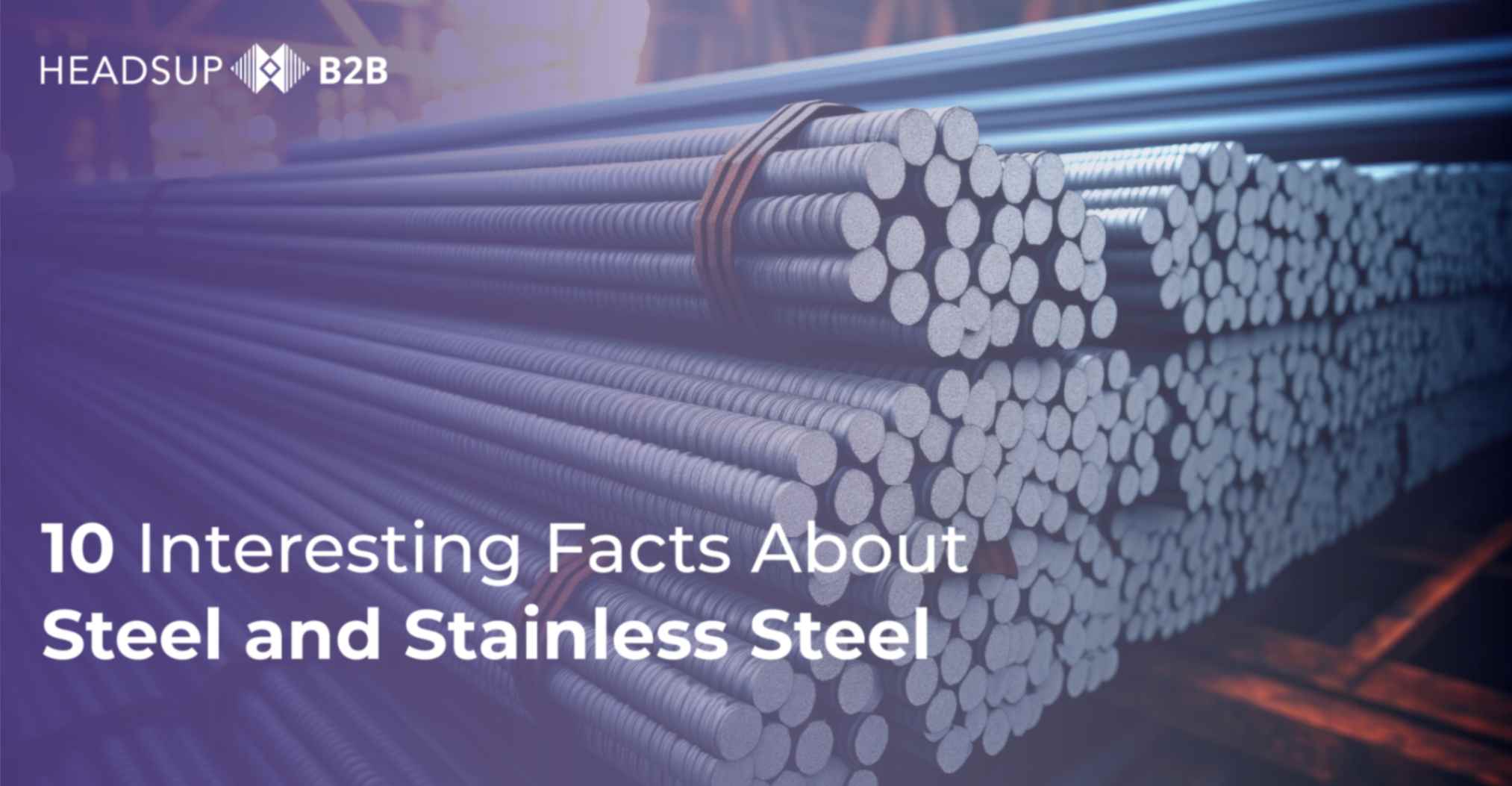
    10 Interesting Facts About Steel and Stainless Steel

    Steel and stainless steel are not just materials; they are pillars of modern industry and innovation. Understanding their properties, history, and applications unveils a world of fascinating facts. In this article, we delve into 10 intriguing aspects of structural steel and stainless steel that showcase their importance and versatility.

    The Origin and Evolution of Steel

    Steel, a fundamental alloy composed primarily of iron and carbon, has a rich history dating back thousands of years. Its discovery revolutionized human civilization by enabling the production of stronger and more durable tools and weapons. Over time, advancements in metallurgy led to the development of various steel grades tailored for specific applications, from construction to transportation.

    Properties That Define Steel

    Steel is renowned for its exceptional strength, durability, and versatility. Unlike iron, steel can be alloyed with various elements such as manganese, chromium, and nickel to enhance specific properties like corrosion resistance and hardness. This versatility allows for the creation of alloys that serve critical roles in infrastructure, automotive manufacturing, aerospace engineering, and everyday consumer products.

    The Birth of Stainless Steel

    Stainless steel, a type of steel alloy with added chromium and often nickel, was developed in the early 20th century. Its resistance to corrosion and staining quickly made it a preferred material in applications where hygiene, aesthetics, and durability are paramount. Today, stainless steel is ubiquitous in kitchens, medical environments, architecture, and even art installations due to its timeless appeal and functional benefits.

    Applications Across Industries

    The applications of steel and stainless steel span virtually every industry imaginable. In construction, steel is the backbone of skyscrapers, bridges, and infrastructure projects due to its high strength-to-weight ratio and durability against environmental elements. In automotive manufacturing, advanced high-strength steels contribute to lighter, safer vehicles. Meanwhile, stainless steel finds use in surgical instruments, food processing equipment, and chemical processing plants where hygiene and corrosion resistance are critical.

    Environmental Impact and Sustainability

    Contrary to popular belief, steel and stainless steel are highly sustainable materials. Steel is among the most recycled materials globally, with a recycling rate exceeding 85%. Recycling steel not only conserves natural resources but also reduces energy consumption and greenhouse gas emissions associated with primary steel production. Additionally, stainless steel’s longevity and recyclability contribute to its eco-friendly credentials, making it a preferred choice for green building certifications and sustainable design projects.

    Innovation continues to drive the evolution of steel and stainless steel. Advanced manufacturing techniques, such as additive manufacturing (3D printing), enable the creation of complex steel structures previously unimaginable. Moreover, ongoing research focuses on developing new alloys with enhanced properties, from ultra-high-strength steels for lightweighting applications to super-austenitic stainless steels for extreme environments. These innovations promise to further expand the applications and sustainability of steel in the coming decades.

    Iconic Examples in History

    Throughout history, steel has played pivotal roles in shaping iconic structures and landmarks. The Eiffel Tower, a marvel of 19th-century engineering, stands as a testament to the strength and versatility of wrought iron, a precursor to modern steel alloys. Similarly, stainless steel’s use in architectural landmarks like the Chrysler Building in New York City exemplifies its enduring appeal and ability to withstand the test of time and environmental challenges.

    Challenges and Solutions in Steel Production

    Despite its advantages, steel production faces challenges related to energy consumption and carbon emissions. However, ongoing efforts within the industry focus on reducing environmental impacts through technological advancements such as electric arc furnaces powered by renewable energy sources and carbon capture and storage initiatives. These innovations aim to mitigate steel’s carbon footprint while maintaining its essential role in global infrastructure and economic development.

    Cultural Significance and Symbolism

    Steel and stainless steel have transcended their practical applications to become symbols of strength, resilience, and progress in various cultures worldwide. From the skyscrapers that define modern city skylines to the ceremonial swords that embody honor and tradition, these materials evoke a sense of endurance and innovation ingrained in human history and societal advancement.

    The Role of Steel in Modern Society

    In contemporary society, steel and stainless steel continue to underpin technological advancements and everyday conveniences. From the smartphones we use to communicate globally to the renewable energy infrastructure powering sustainable development, steel’s contributions are integral to shaping a more connected and resilient world. As industries evolve and consumer demands grow, steel remains essential in driving innovation and supporting economic growth on a global scale.

    Frequently Asked Questions

    1. What is the difference between steel and stainless steel?

      Steel is primarily composed of iron and carbon, while stainless steel contains chromium and often nickel. Stainless steel is resistant to corrosion, making it ideal for environments where rust prevention is crucial.

    2. How is steel recycled?

      Steel is one of the most recycled materials globally. It is collected, sorted, and processed in recycling facilities where it is melted down in electric arc furnaces. Recycled steel is then used to make new products, reducing the need for raw materials and energy consumption.

    3. What are some common applications of stainless steel?

      Stainless steel is widely used in kitchen appliances, medical instruments, automotive parts, construction materials, and architectural structures. Its durability, corrosion resistance, and aesthetic appeal make it suitable for a variety of industries.

    4. Why is steel important in construction?

      Steel’s high strength-to-weight ratio and durability make it indispensable in construction. It is used to build skyscrapers, bridges, stadiums, and residential buildings. Steel structures can withstand harsh weather conditions and provide long-term stability.

    5. What are the environmental benefits of using steel?

      Steel is highly sustainable due to its recyclability. Recycling steel reduces energy consumption, greenhouse gas emissions, and the demand for raw materials. Additionally, steel’s durability contributes to sustainable building practices and infrastructure development.