Author: suraj

  • Legal Aspects of Road Signage: Compliance and Regulations

    Legal Aspects of Road Signage: Compliance and Regulations

    Greetings from Headsup B2B, Your one-stop solution for all Road Signage requirements. Traffic accidents have become a public health concern, and hence, road safety programs in India are always under pressure to meet the demand because of the country’s large population and increasing number of vehicles. To lower accident rates and save lives, pedestrian traffic signs and regulations are crucial. This article examines India’s traffic laws and their relevance.

    Introduction

    However, for the roads of India to become safer and continue to run effectively, it is paramount that there should be laws and regulations to be followed on roads. These are signs that are fixed beside roads with information about automobiles to inform drivers of something important, they are commonly referred to as Traffic Signs. Pictorial signs are employed as symbols instead of words. These are traffic control devices that call for conscious thought, attention to detail, and sensible driving practices. Pedestrian Traffic signs are meant to inform and advise vehicles, pedestrians, and other drivers about the road ahead via visual clues. Hence, these signs are critical given that they control traffic, maintain road safety, and are even compliant with global standards.

    In this post, we have placed all kinds of traffic signs and have also provided guidelines on road safety.

    What are Traffic Signs?

    Traffic signs serve as warning devices, alerting drivers and pedestrians to possible dangers on the road. There are over 400 deadly car crashes on Indian highways every day. The primary functions of traffic signs in India are to notify drivers of pertinent information and prevent needless delays in traffic. Since all significant crossings and roads in India require direction and information on the condition of the roadways, traffic signals and Pedestrian Traffic signs are crucial.

    Types of Traffic Signs

    Traffic signs fall into three main categories:

    Mandatory Signs

    In India, one must heed all Pedestrian Traffic signs. Nonetheless, it is imperative to adhere to and obey the required signs. Drivers who disobey traffic laws and signage risk fines, according to India’s Roadways and Traffic Department. While preserving a smooth traffic flow, it ensures that pedestrians are aware of speed limits, no-parking zones, and other traffic-related information.

    Cautionary Signs

    As with other traffic signs in India, cautionary signs warn drivers of potential risks or safety concerns up ahead on the road. When cautionary signs are placed on the road, motorists are required to heed the warnings and either reduce their speed or take the necessary action. India has forty traffic indicators that are classified as warning signs. For optimal understanding, a description of each indication is provided below, even if the pictorial symbols are self-explanatory.

    Informatory Signs

    Even if a driver is unfamiliar with maps, important traffic indications known as “informatory signs” provide them with information regarding facility areas. It gives details like the nearby hospital, petrol station, public lavatory and so on.

    Pedestrian Traffic Sign Functions in India

    The numerous traffic signs that are utilised in India have multiple purposes.

    • Gives motorists information about the road, the local amenities, the safe lanes to drive in, etc.

    • Upholds traffic laws and provides driving instructions

    • Provides information about intersections, bends, potholes, etc.

    • Shows the locations of the entrance and exit

    • Explains how to prevent accidents by adhering to the designated speed limit when passing any institution and offers information on parking lots.

    Importance of Pedestrian Traffic signs

    The following justifies the significance of traffic signs

    • To avoid traffic congestion, keep the flow of traffic steady.

    • Protect life from potential accidents.

    • Provide the pertinent information regarding the upcoming journey.

    • Stay out of trouble when driving by adhering to a route.

    • To ensure a comfortable driving experience, inexperienced drivers can greatly benefit from these signs.

    • To maintain an enhanced road traffic system, the Roadways and Traffic Department of India updates the traffic sign chart.

    Road Safety: Fundamental Rules and Practices

    When travelling on a road, the two most crucial life-saving strategies that everyone should follow are traffic signals and road safety laws. The purpose of these safety precautions is to lessen the possibility of harm and avoid car accidents.

    Overtaking

    Never attempt to pass another driver while operating a motor vehicle on the road. Never race another car when operating a motor vehicle on the road. Driving not only violates the law, but it also endangers the lives of other motorists.

    Continuous Honking

    Continuously honking your automobile while driving is not advised. Never use it frequently when operating a car, as this will draw the other driver’s attention away from you. In addition to this, you might also advocate for a cause like noise pollution.

    Careful Parking

    When parking, drivers should always remember to use additional caution to protect their cars. You should always park your car carefully to prevent any issues for other people, even if you are just using it for a brief time.

    Regulations for U-Turn Safety

    These features are only meant to assist the driver; it is not their right to make a U-turn at any moment. The driver must exercise extraordinary caution when making a U-turn. After analysing the traffic flow, he must do a U-turn to avoid getting into an accident with oncoming traffic.

    Road Safety Essentials: Rules for Indian Roads

    To safeguard its residents, each state government has passed specific traffic regulations. They have also passed legislation to safeguard pedestrians and animals. Some important road safety precautions are listed below.

    Safety of Animals

    Dogs, cats, and cattle are all free to wander. Therefore, when driving, take care not to injure or run them over.

    Utilise the zebra crossing.

    Those who do not use the zebra crossing as a means of crossing a road fail to understand the significance of road safety! Use the white and black stripes to cross the road; they are there for a reason. It will keep you safe.

    Driving after intoxication

    One of the most crucial road safety laws is never to drink and drive. Drinking alcohol affects cognitive function, making it difficult for a person to operate a vehicle safely.

    Tiredness or Health Problems

    It is required by road safety regulations that you not drive if you have any health difficulties. Furthermore, it is only advisable to drive if you are relaxed.

    Pay attention to traffic signals

    Observe all of the traffic signals. When the signal to walk turns green, do so. When driving, observe traffic signals as well.

    At intersections, proceed with caution.

    As you approach crossroads, bends, crossings, and the main road, slow down.

    Hand gestures and turn signals

    When you are turning, slowing down, or giving way to another vehicle, give the appropriate signals. In the silent zone, don’t use your horn.

    Using Cell Phones

    Driving while using a mobile device might be fatal. Thus, refrain from using your phone while operating a motor vehicle as a matter of road safety.

    These were the most crucial guidelines for safe driving. Others are covered below.

    Using one-way streets

    In India, there are a lot of one-way highways. Driving in the correct direction when operating a vehicle might be risky, thus, exercise caution when doing so. Furthermore, you ought to refrain from parking your car on a road like this in reverse.

    These were the most crucial guidelines for safe driving. Others are covered below.

    Road Safety Rules and Regulations for Cars

    These are the driving regulations for road safety.

    Use seat belts

    The Motor Vehicles Act’s Section 183(3) CMVR 177 MVA specifies the fine for driving without a seatbelt. Therefore, the most crucial recommendation for drivers is to always buckle up.

    Steer clear of distractions

    Refrain from becoming sidetracked when driving. Rather, pay close attention to the road.

    Observe posted speed limits

    Accelerating your vehicle can result in fines or even collisions.

    Keep Your Vehicle Maintained

    An accident can be brought on by a poorly maintained car. Therefore, you should maintain your vehicle to prevent accidents caused by an improperly kept vehicle.

    Bicycle Rules and Regulations for Road Safety

    These are the bike-specific rules for road safety.

    Put on a helmet

    When driving, always wear a helmet with ISI certification. These will shield your head in the event of an accident.

    Avoid swerving in between lanes

    Bike riding is popular among drivers. On the other hand, lane-changing is a common cause of accidents. Thus, one should stay away from this. As a result, stay in your lane and avoid cutting small gaps.

    Why Choose Headsup B2B for Pedestrian Traffic signs and other Road Safety Equipment?

    Headsup B2B is one of the well-known online platforms for the sourcing of Pedestrian Traffic signs and other road safety equipment. We not only provide the best products from trustworthy manufacturers but also we offer experts guidance during the selection process. Headsup B2B is the most user-friendly and reasonable platform for pedestrian traffic signs and equipment. You can rely on us for top-quality road safety equipments and the right guidance.

  • PVC Pipe Solutions: Fixing Common Household Plumbing Issues

    PVC Pipe Solutions: Fixing Common Household Plumbing Issues

    All households frequently experience PVC plumbing issues like leaking toilets, dripping faucets, and leaky pipes. Headsup B2B, an online platform for PVC plumbing materials, helps customers by educating them about common plumbing problems. This guide offers workable fixes for DIY enthusiasts and those who prefer hiring licensed plumbers.

    Introduction

    Polyvinyl chloride, or PVC, plumbing pipes are prominent for being strong and lightweight, which makes them an environmentally friendly choice for plumbing, irrigation, and sewage systems. PVC pipes are typically distinguished by their white or cream colour. To join them, couplings and solvent cement are used, which melt the pipes’ outer coating and bond the materials together.

    PVC is most frequently used as drain piping because of its cost and convenience of usage. The current pipe can be repaired to keep the leak under control for most PVC plumbing problems. On the other hand, the pipe can require a complete replacement if the damage is too great. We’ve provided five different methods for repairing or replacing PVC pipes to make the process easier for you.

    ​Common Reasons for PVC Plumbing Pipe Leaks

    These are a few of the most typical reasons why PVC plumbing pipes need to be replaced or repaired:

    Inadequate installation

    A leak may happen if a PVC fitting is not fitted onto the joining pipe correctly. Usually, a loose-fitting that lets water leak through is the cause of this.

    Incorrect adhesive glue

    To prevent premature deterioration, make sure you choose the right PVC cement. Make sure the glue is made to stick to PVC by reading the label before choosing one. With time, age, and the right glue, it won’t stop it from breaking down and needing to be repaired.

    Freezing temperatures

    Although PVC is resistant to freezing, severe winter conditions can still cause it to become brittle and broken. If you reside in a cold climate, insulate your pipes to keep them from freezing.

    The Most Common PVC Plumbing Issues in Homes

    Leaking Pipes

    Leakage under sink is one of the frequent problems that are considered as a regular part of plumbing systems maintenance, but in the meantime can become the reason for such consequences as water damage or rotting, mould formation and many others. This is another area where leaks in the supply and drain pipes are frequently noted by home inspectors. The survey revealed that a majority of Americans do not inspect their pipes for leaks; this causes water damage and mould formation. Leakage whether big or small can lead to very severe consequences. Annual checkups are important since pipe leaks can be a risk to your investment, and safety of your family members.

    Improperly Pitched Drains

    Pipes must have the right pitch towards the sewer for drainage to be successful. Although 1/3″ per foot is permissible for pipes 3″ in diameter or larger, the usual slope is ¼” per foot. Incorrect pitching can cause leaks and sluggish drainage.

    Water Heater Safety Concerns

    A modern water heater must have a temperature and a pressure relief valve and the pipe needed to discharge it, in order to avoid any explosions or damage due to overheating or overpressure. The valve opens when there is enough pressure build-up or a rise in temperature thus protecting the water heater from exploding or bringing harm to the structure of the home.

    Corrugated Drain PVC Plumbing Pipes

    Although easily found in hardware stores, corrugated drain pipes are not advised because of their propensity to clog and difficulties in maintenance. Because they were installed incorrectly by a homeowner or an untrained plumber, I frequently encounter corrugated drain pipes beneath kitchen or bathroom sinks. These kinds of drain pipes are prohibited by plumbing standards because of their propensity to clog and difficulties in cleaning. Plumbing standards call for smooth interior walled pipes.

    Missing Traps in Plumbing Fixtures

    Plumbing fittings must include drain pipe traps in order to prevent vermin and sewage gases from entering the house. For example, traps in toilets keep rodents and sewage gases out of the house through drain pipes. Yet, untrained plumbers and homeowners often ignore and remove these fixtures. A strong sewage stench at sites of entry, such as laundry and dishwasher drains, indicates a lack of traps. Drain lines should have no more than one trap in order to avoid clogs.

    Overheated water heaters

    Hot water in homes should not exceed 120 degrees Fahrenheit to prevent scalding and energy consumption. Mixing valves in boilers can regulate temperatures to safe levels, adding cold water to prevent heat spikes. Even a 4-6-second splash can cause burns, especially in young children and the elderly.

    Missing Traps in PVC Plumbing Fixtures

    Drain pipes in plumbing fixtures block sewer gases and pests from entering homes. They are often overlooked by unqualified plumbers and homeowners. A lack of traps results in a strong sewage smell at entry points like laundry and dishwasher drains. Limit traps to 1.

    Slow Drains

    Clogged drains, may be due to hair accumulation or foreign mechanisms, point serious issues such as blocked or damaged main sewage, especially in the aged structures. A licenced home inspector can locate drain problems through the line with a small camera being passed through it. WIN Home Inspection provides a sewer scope inspection to confirm that a sewage system is clear of obstructions, leaks and invasions. Regarding unclogging, drain-clearing chemicals are prohibited because they are likely to cause the backsplash. For more details about WIN home inspection kindly contact the local home inspector.

    Loose or Leaky Toilets

    Toilets can loosen over time, causing water leaks and subfloor damage. A moisture metre can detect unseen moisture around the base, indicating a need for repair or resealing with a new wax ring. Discoloured flooring is another indication of moisture buildup. Maintenance of toilets usually entails the process of reseating which mainly involves replacing the wax ring. Consulting a licensed professional evaluation is advised in order to assess toilet-related problems while ensuring that the judgement is made without infringing on the health and safety consideration.

    Dishwasher Drainage Issues

    Most home installations incorporate high loops and air gaps to separate contaminated water from the dishwasher, an aspect that is often disregarded. These loops help to stop dirty water from getting into the dishwasher’s water system on discharge.

    Non-Functional Drain Stoppers

    Bathtubs especially have problems with their drain stoppers whether the bathtub is an old type or a contemporary one. These parts can be fixed and replacing them often helps to enhance the functionality of the tub. However, sometimes, the chains detach and become stuck, requiring a licensed plumber to fix them. Replacing these parts is an easy fix, but a licensed plumber can also help mitigate this issue.

    Learn More:- Pvc Pipe Grades and Uses

    How to Repair Damaged PVC Plumbing Pipes

    Fibreglass Resin Tape or Clothes

    Fibreglass resin tape is a temporary solution for a leaking PVC plumbing pipe. It uses a water-activated resin that hardens around the pipe, slowing the leak. To apply the tape, clean the damaged area with a damp rag and wrap it around the pipe. Allow the resin to harden for 15 minutes. For a permanent repair, use fibreglass resin cloth. Clean the area around the leak, lightly sand the surface, and place the cloth over the damage. To cure the resin, shine UV light or expose the pipe to direct sunlight.

    Rubber and Silicone Repair Tape

    Rubber and silicone repair tape is an easy fix if you’re having little leaks. Rubber and silicone tapes are also rolled and can be wrapped directly around the PVC plumbing pipe, just like fibreglass resin tape. Nevertheless, the repair tape sticks straight to itself rather than the pipe.

    To repair the damage, wrap the leak with tape, leaving a small amount of space to the left and right of the harmed region. Before utilising the pipes again, make sure the tape is tight and secure. The tape uses compression to stop the leak.

    Rubber Tape and Hose Clamps

    Similar to silicone and rubber repair tape, this fix for minor PVC plumbing pipe leaks involves compression. To halt or delay the leak, wrap rubber around the damaged region. Next, take the hose clamps apart and position them around the afflicted area. Tighten them. The rubber tape and hose clamps will lose their effectiveness as the leak gets bigger, therefore, this repair should only be done temporarily.

    Epoxy

    Putty, or a viscous liquid called repair epoxy, can be used to fix leaks in PVC plumbing pipes and joints. Make sure water cannot enter the damaged area by cleaning and drying it before applying epoxy to fix your pipe or joint.

    As directed by the manufacturer, combine the putty or liquid if needed. After that, apply the epoxy and give it 10 minutes to cure. Allow water to flow through the pipe after it has cured, and look for any leaks.

    Replacement

    A PVC pipe may occasionally be too broken for a straightforward fix. If so, you will have to install a new PVC plumbing pipe to replace the damaged portion. Make sure the water supply to the pipe is disconnected before replacing it. You can accomplish this by either turning off the water at the main water supply or by using a local water shutoff valve that is situated close to the pipe.

    • Using a ratchet cutter or hacksaw, cut the pipe about an inch to the left and right of the damaged region.

    • After letting any extra water exit the pipe, wipe it off with a fresh cloth.

    • After removing the damaged pipe, dry-fit the replacement pipe into the opening, making sure that the fitting is securely fastened around the PVC that is already there.

    • Apply PVC priming solvent to the exterior of the old pipe and the inside of the fittings on the replacement pipe.

    • After that, glue the exposed PVC pipe that is currently there as well as the interior of the replacement fitting.

    • After inserting the old pipe into the replacement fittings, twist the pipe to firmly hold it in place with glue. To guarantee a solid connection, hold the pipe firmly for ten seconds.

    Learn More: PVC Pipe Installation Tips

    Why Choose Headsup B2B for PVC Plumbing Solution?

    Your go-to resource for press brake sourcing is Headsup B2B. We are dedicated to supporting your success in your manufacturing endeavours by providing a large selection, professional advice, competitive pricing, dependable service, user-friendly features, quick delivery, and ongoing upgrades. Select Headsup B2B to see the difference right now!

  • The Role of Press Brakes in Large-Scale Manufacturing

    The Role of Press Brakes in Large-Scale Manufacturing

    Welcome! Headsup B2B, your online partner for the finest press brakes as well as other mechanical tools. We are here to discuss these important aspects of the large-scale manufacturing industries. In a large production line, it is sometimes observed, that accuracy and productivity are the real measures. The mechanical press brake is an important member of the vast field named industrial machinery and has been performing the task of shaping and bending metal effectively. We must take our time and explore mechanical press breaks, especially the types of mechanical press breaks, industries using mechanical press breaks, the advantages of using press breaks, and the newly developed features.

    Introduction

    The press brake is essentially a press tool to bend metal plates. The method is ideal for bending thin plates such as steel and aluminum that involve the placement of plate material between two tools referred to as a punch, also known as bend tooling or tip set, along with a die in order to create desired degrees of bends. The hydraulic press brake is a very important tool that is used in modern sectors such as the aerospace and automotive industries and in the most common products such as steel furniture and household utensils, among others.

    What are Press Brakes?

    A press brake is a type of machine specifically designed to bend sheet metal. The total bending length and the machines’ ability to bend metal are two important indicators of their capabilities. The press brake is long and narrow, making it easy to bend sheet metal of any size. A press brake bends sheet metal by lowering a punch into the metal that has been placed on top of a die. The metal can be bent repeatedly using a press brake to achieve the desired shape.

    Types of Press Brakes

    Sheet metal must be bent with a lot of force, which is applied in different ways depending on how the punch is put into the metal. Compared to older models, modern machines require less effort to operate.

    According to the various operations, the following are the primary types of press brakes:

    Mechanical Press Brakes

    Mechanical brakes are popular due to their internal motor and the quick spin of a large flywheel. They are controlled by a clutch and are less complex in electronics to ease their use as well as repair services. Mechanical press brakes, for instance, have the capacity to bend up to three times the inherent rating in tones. But, they need a complete cycle of RAM, and some designs may stall if excessive RAM travel is available.

    Hydraulic Press Brakes

    Rather than using mechanics to push the ram down, hydraulic press brakes use hydraulic pressure. They can have more than one cylinder, which allows the operator to regulate the bend more precisely. This produces a bent that is extremely accurate and customisable. This device has a few drawbacks. They are limited to the rated tonnage. If your project is adaptable, mechanical press brakes would be a wise selection.

    CNC Press Brakes

    These brakes use computer technology to improve efficiency and control accuracy. They are very accurate and customisable. To regulate the brake and handle the rest, a skilled operator can input data into a controller, such as the bending angle, plate thickness, and width.

    Role of Press Brakes in Various Industries:

    Press brakes are employed in a variety of sectors to make automotive panels, airframes, metal furniture, artwork, containers, and other purposes.

    Decoration Industry:

    Press brakes are a vital tool in the decoration industry. Elevators, unique decorating items, and stainless steel doors and windows are produced using CNC press brakes and high-speed CNC plate shearing machines in tandem.

    Electrical and Power Industry

    Press brakes are used in many different ways in the electrical and power sectors. Press brakes are used in the manufacturing of parts for refrigerators, electrical cabinets, and air conditioning shells. The plate is sliced into various sizes using shearing machines, and the metal components are then processed once more using a press brake.

    Automobile and Ship Industry

    Larger materials must be bent and fashioned for the automotive and shipbuilding industries. Because they are enormous objects, ships and road vehicles require greater parts than most other businesses.

    major tonnage press brake machines are necessary for major manufacturing companies. To make components and help achieve the necessary shapes and sizes, massive CNC hydraulic shearing and huge press brakes are utilised.

    The aerospace industry

    The aircraft business requires a high degree of efficiency and precision. Spacecraft and aeroplanes are sophisticated, complex machines that need similarly sophisticated, complex parts and components.

    Parts for the aerospace sector are made using presses, press brakes, milling machines, CNC machines, lasers, forming, and stamping equipment.

    Kitchen and Catering Industry

    Stainless steel is used for a lot of gadgets and tools in the restaurant and home cookware sectors. Press brake bending is used in the construction of smaller equipment such as ladles, spatulas, meat presses, basting covers, metal domes for covering meals on flat-top grills, and more.

    Lamp Pole and Power Pole Industry

    Press brakes are used in the construction of lights, electric, monitoring, traffic signals, traffic lights, and communication tower poles, among many other kinds. In this field, tandem press brake machines are frequently used.

    Container Industry

    A container is a collection of devices that can be used to load, unload, and move mechanical equipment while carrying commodities that are packaged or not.

    Container production and manufacturing are done on an assembly line. The front end, rear end, chassis, top plate, and side plate are the five components that make up a typical container. The four main steps in the container manufacturing process are stamping, welding, spraying, and completion.

    Such sheet metal processing machinery as uncoiling lines, shearing machines, laser cutting machines, bending machines, CNC punching machines, and so on will be used in the production of these containers.

    Architectural Metal Cladding:

    The economy has resulted to the further advancement of large public and high-rise buildings, which incorporate metal curtain walls as a lightweight, thin, and aesthetically appealing material. Various stages that are involved in the processing of metal curtain walls include cutting, punching, grooving, bending, welding, polishing, corner coding, cleaning, air drying, spraying, and colouring. The production of curtain wall components must meet design and specification requirements and comply with national standards for surface rust prevention.

    Fire-Fighting Equipment:

    The term “firefighting equipment” describes a variety of tools used for emergency rescue, fire extinguishing, and fire prevention. There are numerous kinds of firefighting apparatus, encompassing different areas such as sources of firefighting water, apparatus, vehicles, etc. Fire extinguishers, fire hydrant systems, demolition tools, fire detectors, alert buttons, alarms, fire alarm controllers, and other items are examples of firefighting equipment.

    HVAC Equipment:

    The construction business is home to HVAC equipment, which is used to describe the water supply and drainage systems, heating, ventilation, and air conditioning systems found inside structures.

    HVAC equipment can process sheet metal by using a CNC press brake machine. Our clientele is dispersed across numerous industries.

    Medical Equipment Manufacturing:

    Industrial automation technology has long been used in the very accurate and intricate process of making medical equipment. Sheet metal automation for medical equipment is a significant use case for automated production lines. Automation is being used in the production of medical equipment more and more, and this is a significant area for future research and development in the field.

    Another crucial component is the bending procedure used in sheet metal medical equipment. High-precision and high-efficiency bending can be achieved with automated bending equipment, increasing both production efficiency and product quality.

    Advantages Of Press Brakes

    More Flexible: These machines are used to bend small parts into large amounts of metal, in contrast to the other machines. It is appropriate for sheet metal of any size.

    Reduction in material waste

    In contrast to other machinery that requires a variety of resources to produce the desired goods, this machine can produce extremely precise and accurate results. It also translates into less material waste.

    Low price

    The machine’s dies have a very long service life and are reasonably priced.

    Finish Productions “S” and “U”

    The “U” moulding stamping is more intricate in these two varieties. Both mouldings are feasible with the press brake’s assistance.

    Prototype Formation

    The simplicity of setup and tooling for this machine is among its most basic benefits. This makes switching between programmes a breeze and makes developing bedding and shaping applications easier.

    Why Headsup B2B is the Best Platform for Sourcing Press Brakes

    When it comes to sourcing press brakes, you need a platform that offers quality, reliability, and expertise. That’s where Headsup B2B shines. Here’s why we are the best choice for all your press brake needs.

    Wide Selection of Quality Press Brakes

    At Headsup B2B, we offer a broad range of press brakes to suit any manufacturing requirement. Whether you need hydraulic, mechanical, or CNC press brakes, you’ll find top brands and models that meet the highest industry standards.

    Expert Guidance

    Choosing the right press brake can be overwhelming. Our team of experts is here to help. With years of experience in the industry, they provide personalized advice and support, ensuring you get the perfect machine for your specific needs.

    Competitive Pricing

    We understand the importance of cost-efficiency in large-scale manufacturing. That’s why we offer competitive pricing on all our press brakes. You get high-quality machines without breaking the bank.

    Reliable Customer Support

    From the moment you contact us to after-sales support, our customer service team is dedicated to helping you. We believe in building long-term relationships with our customers, ensuring you always have the support you need.

    User-Friendly Platform

    Our platform is designed with you in mind. It’s easy to navigate, with detailed product descriptions, specifications, and user reviews. You can quickly compare different models and make informed decisions with ease.

    Fast and Secure Delivery

    Time is money in manufacturing. We ensure fast and secure delivery of your press brakes, so you can start your projects without delay. Our logistics partners are reliable and efficient, getting your machinery to you safely.

    Continuous Updates and Resources

    Stay ahead with the latest trends and technologies in the press brake industry. Headsup B2B provides continuous updates, resources, and articles to keep you informed about new developments and best practices.

    In summary, Headsup B2B is your go-to platform for sourcing press brakes. With a wide selection, expert guidance, competitive pricing, reliable support, user-friendly features, fast delivery, and continuous updates, we are committed to helping you succeed in your manufacturing endeavours. Choose Headsup B2B and experience the difference today!

  • Spare Parts Lifecycle: Understanding Wear and Tear Over Time

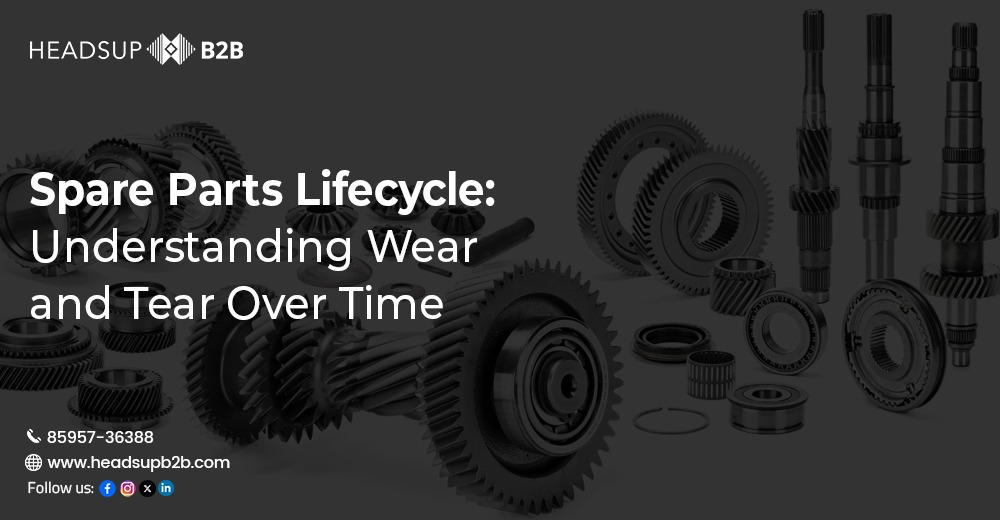
    Spare Parts Lifecycle: Understanding Wear and Tear Over Time

    Spare parts in the domain of industrial machinery and equipment are often unnoticed driving forces that ensure the effective work of machines. At Headsup B2B, we fully appreciate how these genuine parts contribute towards effective business processes. In this blog, “Spare Parts Lifecycle: Understanding Wear and Tear Over Time,” the focus we set ourselves herein is to encompass procedures and operations of spare parts right from the point of installation to the point of replacement. Knowledge of spare parts’ life cycle will enable you to make the right decisions, improve performance, and reduce unnecessary time losses. So, let’s discuss entering the fascinating world of wear and tear and discover how to extend the life of your essential components.

    Introduction

    The lifecycle of spare parts will inevitably include wear and tear, particularly in the supply chain, transportation, storage, and warehousing sectors. As it turns out, comprehending wear and tear involves more than just accepting that products and machinery lose value over time. It also entails realising how this inevitable process affects asset management, operational effectiveness, and the long-term viability of machinery.

    In this article, we’ll discuss the subject of wear and tear of genuine parts and their effect. We’ll outline its effects in areas such as maintenance, capital equipment, and how to properly manage its impacts throughout an organization for different specialists.

    What Does “Wear and Tear” Mean?

    Wear and tear: the slow deterioration of physical assets that occurs over time, affecting industry efficiency by impacting safety or cost-effectiveness in a work process. It is a natural part of the genuine parts lifecycle and has an impact on maintenance schedules, replacement planning, and budgeting for repairs. This is not a sign of abuse or over-use, but instead common from everyday use. However, this can have a big impact on the timeline, which makes it important for all types of businesses to set up regular inspections and maintenance with proactive facility management throughout. Knowing the wear and tear is necessary for a company to be prepared when it comes time to add new or replace existing equipment with more durable goods, as well as technologies that may last longer, making them easier (and less costly) to maintain.

    Engine wear, rust and corrosion, and the slow deterioration of gaskets and seals are examples of wear and tear that impact trucks and shipping containers and raise maintenance expenses.

    The Beginning of a Spare Part’s Journey

    Understanding the journey of a genuine parts from the start can help you appreciate its role in your machinery. Here’s a look at the early stages:

    Manufacturing and Quality Control

    Every spare part is processed starting from a manufacturing plant, a place where accuracy is esteemed highly. Clever engineers, with the help of quality materials and sophisticated tools, produce parts of the required quality. All in all, there is strict quality assurance where every part is inspected for defects and suitability for operation under certain conditions.

    Initial Installation and Setup of Genuine Parts

    When a spare part passes through the quality assurance department, this is when the spare part is most appropriate for installation. This is a critical phase, and any changes made should be carefully planned. Proper installation enables the part to fit and to work in the required manner. The technicians know what measures to take to fit the part properly and the correct instruments to employ, which will ensure that everything meets the right specifications and rotational efficiency.

    Importance of Correct Installation for Longevity of Genuine Parts

    Proper installation is very important for the durability of any spare part. It is important to note that even the most robust part manufactured to match the assembly line can falter before its intended lifespan if the installation process is not done right. Correct fastening and installation of the authentic parts eliminate problems such as misalignment, premature wear, or system failure. Apart from that, it also helps in prolonging the life of that particular part and also the performance and durability of your machines.

    Early Life: The Break-In Period

    Just after installing a new spare part, it experiences what is commonly referred to as the ‘’break-in ‘’ period. At this time, the part fleshes out its position in the larger apparatus. This is rather typical for the parts, where some amount of rubbing occurs after they are placed in the operating conditions. Supervision is very important in this phase. Pay attention to a change in power output or discrete signals of wear and tear, like oscillations or sounds.

    To ensure a smooth break-in period, follow these best practices:

    Conduct Regular inspections of genuine parts

    It is important to inspect the part often in order to make sure there are no abnormalities in the wear patterns.

    Lubricate Appropriately

    Lubricate the right type and quantity to minimize friction and wear of the components in the engine.

    Follow the manufacturer’s guidelines

    Follow the guidelines of the installation and use given in the user manual of the respective manufacturers.

    Mid-Life: Optimal Performance of Genuine Parts

    The second stage of the break-in period is the mid-life stage where the spare part produces optimal performance to power the vehicle. At this time, the part should run without issues, and even the slightest signs of tear and wear should be negligible.

    To maintain peak performance, establish a regular maintenance schedule:

    Routine Checks

    Regularly inspect the part to ensure it’s operating correctly and there are no signs of wear or damage.

    Timely Lubrication

    Keep on applying the oil as instructed on the instruction manual to reduce friction and wear on the part.

    Address common issues

    Familiarize yourself with such issues as heating issues or improper alignment and deal with them. If a part is signaling problems, take measures to rectify it so that it does not worsen the situation.

    Signs of Aging: Recognising Wear and Tear

    As machinery and equipment age, identifying signs of wear and tear becomes crucial for maintaining optimal performance. Here’s how you can spot these signs and take preventive measures to extend the life of your spare parts:

    How to Identify Wear and Tear in Different Types of Parts

    1. Visual Inspection: Look for obvious signs like cracks, corrosion, or fraying in parts. Changes in colour or texture can also indicate wear.

    2. Performance Issues: Notice any decline in efficiency, strange noises, or vibrations. These can be early indicators that a part is wearing out.

    3. Fit and Movement: Check if parts are loose or if there’s excessive play in moving components, which can signify wear.

    Diagnostic Tools and Techniques

    1. Vibration Analysis: This enables the identification of situations where some of the parts of a machine are out of balance or perhaps misaligned.

    2. Thermography: With the help of thermal cameras, visually identify overheating authentic parts, which means a high level of friction or abrasion.

    3. Oil Analysis: It is possible to test the lubricants for the supply of metal particles, which signifies internal wear before it is noticeably seen.

    Case Studies/Examples of Wear Patterns

    1. Bearings: Pitting and ovalization can arise over time, leading to spalling of the bearings, which increases vibration and noise.

    2. Belts: Rubber belts could wear and develop small cracks or look frayed at the edges, as a sign that they must be replaced.

    3. Gears: Some signs that could indicate that the gears are worn are as follows; pitting on the teeth of gears can make the alignment of gears and the performance of the gears go sour.

    Preventive Measures and Maintenance Strategies

    1. Routine Inspections and Proactive Maintenance

      • Regularly scheduled inspections can catch wear and tear early. Create a maintenance calendar to confirm checks are consistent.
    2. Using Technology and Software for Monitoring

      • Implement condition-monitoring software that tracks the health of your equipment in real-time. This helps in predicting failures before they happen.
    3. Training Staff to Recognise Early Signs of Wear

      • Educate your team on the common signs of wear and tear. Regular training sessions can empower them to identify issues early, ensuring timely intervention.

    By understanding and recognising the signs of ageing in spare parts, and implementing proactive maintenance strategies, you can significantly extend the life of your equipment, ensuring smoother operations and reducing unexpected downtimes.

    End of Life: Replacement and Recycling

    Knowing when to replace spare parts is crucial for maintaining your machinery’s performance. Here are some key indicators that a part needs replacing:

    • Visible Wear and Tear: Look for signs like cracks, corrosion, or significant wear.

    • Decreased Performance: If your equipment isn’t running as efficiently, a worn-out part could be the cause.

    • Unusual noises or vibrations: These can be signs that a part is no longer functioning properly.

    The Process of Removing and Replacing Parts

    1. Preparation: Ensure the machinery is turned off and properly secured.

    2. Remove the Old Part: Follow the manufacturer’s instructions to remove the worn part safely.

    3. Install the New Part: Carefully install the replacement, ensuring it’s properly fitted and secured.

    4. Test the equipment: Run a test to make sure the new part is functioning correctly and the machinery is operating smoothly.

    Environmentally Friendly Disposal and Recycling Options

    • Recycle Old Parts: Many components can be recycled. Check with local recycling centres or return the parts to the manufacturer if they offer recycling programs.

    • Proper Disposal: For parts that can’t be recycled, ensure they are disposed of in an environmentally responsible manner according to local regulations.

    Extending the Lifecycle: Tips and Tricks

    Ways to Extend the Life of Your Genuine Parts

    • Regular Maintenance: Routine checks and maintenance can prevent early wear and extend the life of parts.

    • Proper Lubrication: Keeping parts well-lubricated reduces friction and wear.

    The Role of High-Quality Materials and Genuine Parts

    • Choose Quality: Investing in high-quality spare parts can lead to longer-lasting performance and fewer replacements.

    • OEM Parts: Original Equipment Manufacturer (OEM) parts are often more reliable than generic alternatives.

    Importance of Proper Storage and Handling

    • Store Correctly: Keep spare parts in a clean, dry place to prevent damage from moisture and dust.

    • Handle with Care: Avoid dropping or mishandling parts to prevent damage before they are even used.

    By understanding when to replace parts and how to extend their life, you can keep your machinery running efficiently and sustainably.

    Why Choose Headsup B2B For Spare Parts?

    When keeping your machinery and operations running smoothly, choosing the right supplier for spare parts is crucial. At Headsup B2B, we are dedicated to providing top-quality spare parts that ensure your equipment performs at its best. Here’s why Headsup B2B should be your go-to source for all your spare parts needs:

    High-Quality Products

    Our spare parts are sourced from trusted manufacturers known for their reliability and durability. This means you get components that stand the test of time, which also reduces the need for frequent replacements.

    Extensive Catalogue of Genuine Parts

    We offer a wide range of spare parts or genuine parts for various industries and applications. We have you covered, whether you need parts for heavy machinery, electronics, or industrial equipment.

    Expert Support

    Our team of knowledgeable professionals is always ready to assist you. From helping you find the right part to providing maintenance tips, we also ensure you get the support you need.

    Competitive Pricing

    We understand the importance of cost-effectiveness. That’s why we offer competitive prices without compromising on quality, helping you manage your budget effectively.

    Fast and Reliable Delivery

    Time is money in the industrial world. Our efficient logistics ensure receive your spare parts quickly, minimising downtime and also keeping your operations on track.

    Customer-Centric Approach

    At Headsup B2B, customer satisfaction is our priority. We strive to provide a seamless shopping experience, from easy online ordering to hassle-free returns and further exchanges.

    Sustainable Practices

    We are committed to sustainability. Our parts are made using environmentally friendly processes, and we offer to recycle options to help you dispose of old parts responsibly.

    Choosing Headsup B2B for buying genuine parts needs means partnering with a reliable, customer-focused company that understands the importance of quality, efficiency, and sustainability. Trust us to keep your machinery running smoothly and your business thriving.

  • Roadside Assistance: How Signage Structures Aid in Emergency Situations

    Roadside Assistance: How Signage Structures Aid in Emergency Situations

    Welcome to the Headsup B2B blog! In today’s post, we’ll discuss an important subject frequently overlooked until necessary: roadside assistance and how signage structures aid in emergencies. From the business owner to a city planner, or an everyday driver, everyone needs to understand how these road warning signs work and how they can make a big difference in confirming safety and swift responses during roadside emergencies. Let’s explore how these seemingly simple structures are heroes in disguise on our roads.

    Introduction

    Roadside assistance is a lifeline for drivers facing unexpected troubles on the road. Whether it’s a flat tyre, an engine breakdown, or an accident, timely help can make all the difference. This is where signage structures come into play. The unsung hero of public safety is the emergency road warning signs. During emergencies, these green rectangles with the running figure emblem are crucial in helping people find safety. The illuminated emergency exit signs are positioned in strategic locations throughout tunnels to act as guardians, offering a clear route of escape in the event of an emergency. Thus, we will examine the significance and advantages of this technological breakthrough as well as go over some commonly asked questions about it in today’s post.

    What is Roadside Assistance?

    In the event that your car breaks down, roadside assistance—also referred to as breakdown cover—is a service meant to help you get back on the road.

    Your service provider will typically attempt to resolve your issue over the phone when you call for assistance.

    If not, they will send a truck to tow your car to the closest motor repair (within service boundaries) or a roadside contractor to move it.

    Jumpstarts, battery replacements, breakdown tows, tyre changes, emergency gasoline and key recovery are among the most often requested roadside assistance services.

    Key Features of Road Assistance Signage

    Regulatory signs

    These signs alert drivers to laws and rules governing the usage of the road, such as speed limits, parking restrictions, and instructions. Typically, they are seen in striking combinations like red and white or black and white. Stop signs, yield signs, and no-turn signs are a few examples.

    Road Warning Signs:

    These traffic signs, which are orange and yellow, serve as small alarms alerting us to the need for caution. They alert us of potential hazards on the route, such as approaching stop signs or animal crossings. These signs warn cars of possible dangers or hazards, like roadwork, steep hills, and sudden curves, that may be ahead. Signs indicating curves, hills, and construction are a few examples.

    Guide signs

    When driving, these green traffic signs function as a personal GPS. These signs give drivers guidance on how to proceed through highway networks, roundabouts, and intersections. Signs indicating routes, destinations, and lane usage are a few examples.

    Informative Signs

    These are the road-safe traffic signs that go above and beyond the essentials to make your trip more comfortable. Temporary Traffic Control (TTC) signs assist you in navigating work zones; they function similarly to construction manuals. These signs help in times of emergency by listing shelter places, emergency services, and evacuation routes. Signs indicating evacuation routes and emergency services are two examples.

    Importance of Signage Structures in Roadside Assistance

    Visible in Darkness

    In an emergency, smoke and darkness can quickly cause chaos and fear. An obvious path to the closest exit is provided by emergency exit signs that are lit and positioned correctly.

    Sensation of Security

    They offer comfort and security, which lessens anxiety in times of crisis. People search for these indicators right away because they believe they will direct them to a secure escape route.

    Universal symbolism

    Regardless of one’s original tongue, everyone can rapidly recognise the running figure sign, which indicates escape routes.

    The Role of Road Warning Signs in Roadside Assistance

    Signage plays a very significant role in guiding drivers to safety during emergencies. When stranded on the road, clear and visible signs can direct you to the help you need quickly and efficiently. For instance, SOS call boxes are strategically placed along highways, providing a direct line to emergency services. Emergency exit signs point drivers to the nearest safe exit, especially vital in tunnels or complex road systems.

    They can be easily recognised due to their special designs, even under stressful conditions. With bold colours, reflective materials, and clear symbols these signs catch your attention when you need them most. By guiding drivers to safety, signage structures reduce response times and enhance overall roadside safety.

    Types of Road Warning Signs

    When it comes to emergency signage, there are different types designed to meet various needs and situations. By knowing the difference between these types, one can get help in choosing the right signs for effective roadside assistance.

    Permanent vs. Temporary Road Warning Signs

    Permanent signs are fixed installations that provide constant guidance and information. Some of its examples are highway exit signs, emergency call box indicators, and signs marking the locations of hospitals or police stations. These signs are built to withstand weather conditions and are always ready to provide important information.

    Temporary signs, on the other hand, are used for short-term situations. They can be quickly set in a natural disaster, road construction, or accident. Examples of traffic cones with warning signs, portable digital message boards, and temporary detour signs. These signs are significant for managing traffic and guaranteeing safety during unexpected events.

    Digital vs. Static Signs

    Digital signs use electronic displays to show information, which can be updated in real time. Examples of digital signs are LED message boards on highways that display traffic updates, weather warnings, or emergency alerts. These signs are highly visible and can adapt to changing situations, providing drivers with the most current information.

    Static signs are non-electronic and display permanent messages. Examples include traditional road signs like stop signs, yield signs, and the universally recognized blue and white hospital signs. While they don’t offer real-time updates, static signs are reliable and clear, providing essential information at a glance.

    Specific Examples

    • Permanent Static Sign: The familiar blue “H” sign indicates the direction to the nearest hospital.

    • Temporary Static Sign: A bright orange detour sign set up during road construction.

    • Permanent Digital Sign: An overhead LED display in a motorway showing traffic congestion updates.

    • Temporary Digital Sign: A portable digital board displaying messages about a nearby accident and advising alternate routes.

    By understanding the types of emergency signage structures and their specific uses, we can appreciate how these signs play a vital role in keeping roads safe and assisting drivers in emergencies.

    Technological Advancements in Signage

    In today’s world, technological advancements have revolutionised various industries, including road warning signs and signage structures, making them smarter and more effective. Digital and smart signs are now replacing traditional static ones, offering dynamic information that can be updated in real time. These smart road warning signs can display a variety of messages depending on the situation, from traffic updates to emergency alerts.

    One of the most significant improvements in these road warning signs is their integration with GPS and mobile apps. Drivers can receive notifications about upcoming hazards, road conditions, or the nearest emergency services directly on their devices. This innovative step helps confirm that important information reaches drivers promptly, enhancing their ability to respond swiftly to any roadside issues.

    Role of Headsup B2B in Promoting Road Safety

    Best-Quality Products

    At Headsup B2B, we promote road safety through our comprehensive range of road warning signs. We provide these road warning signs from the most trustworthy manufacturers, and we have authentic suppliers on our platform. These signs have the best and clearest designs and quality to alert drivers to potential hazards, ensuring they have the information they need to navigate safely. By providing high-quality, durable signage solutions, we help reduce accidents and improve emergency response times.

    Innovative and User-Friendly Platform

    Headsup B2B also leads the industry by using technological advancements, offering digital and smart road warning signs. We provide real-time updates and use them seamlessly with GPS and mobile apps for a smooth procurement process. This means drivers can receive timely alerts about road conditions, accidents, and other critical information directly on their devices. At Headsup B2B, our commitment to innovation and quality helps keep roads safer for everyone.

  • Understanding PVC Pipe Grades and Their Real-World Uses

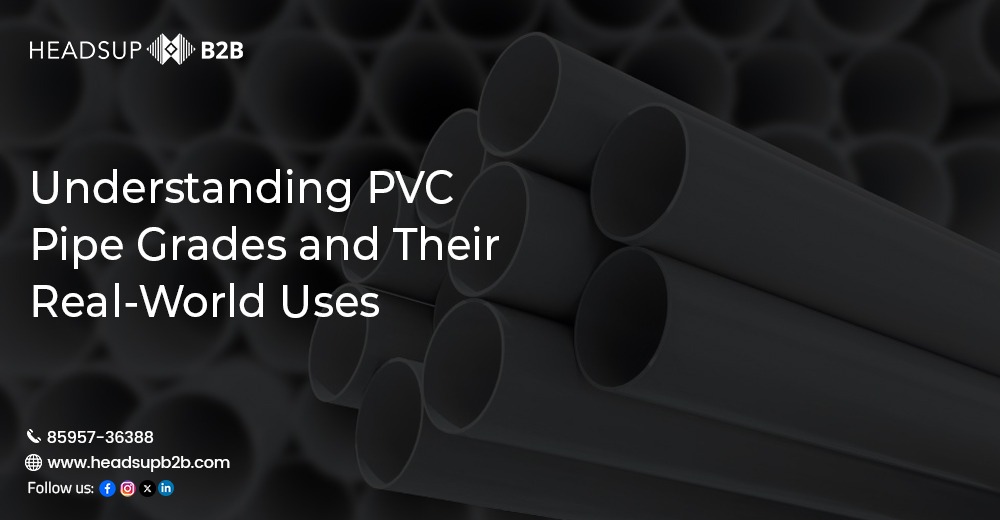
    Understanding PVC Pipe Grades and Their Real-World Uses

    Welcome to Headsup B2B! Our sole objective is to educate our clients and guests about the various PVC pipe grades and their practical uses. Whether you are an experienced professional or a beginner in PVC plastic pipe fittings, understanding the various types and their uses can help you make better decisions for your projects. In this blog, we’ll break down the importance of PVC pipe grades and explore their practical applications in a simple, easy-to-understand way.

    Introduction

    Vinyl, also known as polyvinyl chloride, is a cost-effective and versatile thermoplastic polymer used in various industries, including building and construction, drinking water and wastewater pipes, insulation, and medicine gadgets. It is the third-largest thermoplastic globally, after polyethene and polypropylene. PVC, a solid, white, brittle substance, is replacing conventional building materials like wood, metal, concrete, rubber, and ceramics due to its lightweight, affordable, long-lasting, and easy-to-process properties. Its versatility makes it a popular choice in various applications.

    What is PVC?

    Owing to its superior qualities and adaptability, PVC, or polyvinyl chloride, is a kind of plastic that is extensively used in many different industries. It is a synthetic substance created by polymerising vinyl chloride, which yields a flexible and long-lasting plastic.

    Advantages of Using PVC Plastic Pipe Fittings

    Using PVC pipes comes with several benefits:

    1. Durability: PVC pipes are incredibly durable and can last decades without significant wear or damage. They are resistant to rust and corrosion, a common problem with metal pipes.

    2. Cost-Effectiveness: PVC pipes are cheaper to produce and install compared to other materials like copper or iron. Their long lifespan also means fewer replacements and repairs, saving money in the long run.

    3. Versatility: PVC pipes come in various sizes and thicknesses, making them suitable for a wide range of applications. Whether for residential plumbing, industrial uses, or agricultural irrigation, there’s a PVC pipe to meet the need.

    Key Properties and Advantages of PVC Plastic Pipe Fittings

    PVC pipes are widely used because of several important characteristics and benefits they offer, including:

    Durability

    PVC pipes have a stellar reputation for being incredibly durable. They don’t corrode or deteriorate over time in the face of a broad range of environmental conditions, such as moisture, chemicals, and temperature changes. This durability guarantees a dependable and long-lasting solution for a range of uses.

    Affordability

    PVC pipes are a desirable option for projects on a tight budget since they are less expensive than many other materials. Their durability and cost together offer great value for the money.

    Corrosion Resistance

    The ability of PVC pipes to withstand corrosion is one of their best qualities. PVC plastic pipe fittings preserve the purity and integrity of the materials being conveyed because they are unaffected by the majority of corrosive substances, whether they are used for chemical transport, drainage, or water supply.

    Lightweight

    Handling and installing PVC pipes is made easier by their light weight. This feature is especially helpful in the plumbing and construction industries, where labour costs are low and convenience is an important consideration.

    Versatility

    PVC plastic pipe fittings are available in multiple varieties, each intended for a particular use. They can handle a variety of tasks, from industrial procedures to home plumbing, thanks to their adaptability.

    Low Maintenance

    PVC pipes need little upkeep after installation. They also save money since they don’t rust or corrode, which lessens the need for replacements or repairs.

    Eco-Friendly

    Because PVC pipes can be recycled, they are seen as environmentally friendly. They can be recycled at the end of their useful lives, which lessens their impact on the environment.

    Common Applications of PVC Plastic Pipe Fittings

    Because of its affordability, toughness, and adaptability, PVC pipes come in a variety of forms and are frequently utilised in a wide range of applications. Among the most popular applications are:

    Water delivery

    In residential and business contexts, PVC pipes are widely used in water delivery systems. The provision of pure and secure drinking water is guaranteed by their resistance to corrosion.

    Drainage Systems

    PVC pipes are essential to drainage systems because they efficiently transport sewage and wastewater away from buildings, avert flooding, and preserve sanitary conditions.

    Irrigation

    PVC plastic pipe fittings are useful for efficiently delivering water to plants and crops, which is why they are used in landscaping and agriculture.

    Plumbing

    For hot and cold water supply lines as well as drain pipes in residential, commercial, and industrial structures, PVC pipes are the preferred option for plumbing systems.

    Swimming Pool Plumbing

    Because PVC plastic pipe fittings are resistant to the corrosive effects of pool chemicals and can guarantee enough water circulation and filtration, they are the perfect choice for swimming pool plumbing.

    Electrical Conduits

    Because PVC pipes are non-conductive, they can occasionally act as electrical conduits, shielding cables and wiring from damage.

    Industrial Fluid Transport

    Because PVC pipes are durable and resistant to corrosion, they are used in a variety of industrial processes for the transportation of fluids, including chemicals and wastewater.

    Fire Sprinkler Systems

    They are essential to fire safety systems because they deliver pressurised water to fire sprinklers on time.

    PVC pipes are essential to septic systems because they make it easier for effluent to go from the septic tank to the drain field.

    Rainwater Drainage

    PVC plastic pipe fittings are used in residential applications to manage rainwater, prevent flooding, and guarantee effective drainage.

    Chemical Processing

    PVC plastic pipe fittings are essential in chemical processing facilities for the safe transportation of a wide variety of chemicals because of their resistance to chemicals.

    PVC pipes are used in a variety of industrial plumbing applications because they are dependable in harsh environments.

    Fire Prevention Systems

    PVC plastic pipe fittings are used in fire prevention systems in addition to sprinkler systems to guarantee a quick supply of water in the event of a fire.

    Types of PVC Pipes

    Explanation of PVC Pipe Grades

    PVC, or Polyvinyl Chloride, is a versatile plastic used in various piping applications. Different grades of PVC plastic pipe fittings have different designs that help to meet specific needs, including water supply, sewage, industrial uses, etc. Here are the main types:

    PVC-U (Unplasticized PVC)

    PVC-U, also known as Unplasticized PVC, is the most common type of PVC pipe. It’s rigid and durable, perfect for transporting drinking water and handling sewage. Its resistance to chemicals and corrosion is a major advantage. However, it’s not suitable for high-temperature applications because it can soften and lose shape.

    C-PVC (Chlorinated PVC)

    C-PVC stands for Chlorinated PVC. The chlorination process makes these pipes more resistant to heat compared to PVC-U. This makes C-PVC ideal for hot and cold water distribution in residential and commercial buildings. It’s also used in industrial settings where high temperatures are common. However, C-PVC is more expensive than PVC-U and more challenging to install.

    PVC-O (Oriented PVC)

    PVC-O, or Oriented PVC, is produced by rearranging the PVC molecules through a special manufacturing process. This gives PVC-O pipes increased strength and flexibility. They’re often used in high-pressure water supply systems and irrigation. PVC-O pipes are lightweight and easy to handle, but they can be more expensive than traditional PVC pipes.

    Modified PVC

    Modified PVC includes a range of PVC plastic pipe fittings types that have been altered to enhance specific properties like flexibility, impact resistance, or fire resistance. These pipes are used in some applications, such as electrical conduits, chemical processing, and certain construction scenarios. These pipes may become more adaptable as a result of the alterations, but they might also be more expensive and require specific installation knowledge.

    Key Differences Between Each Grade

    • PVC-U: Best for standard water and sewage systems. Not suitable for high temperatures.

    • C-PVC: handles hot water and higher temperatures. Ideal for residential and industrial hot water systems.

    • PVC-O: strong and flexible. Great for high-pressure water systems and irrigation.

    • Modified PVC: It has customisable properties for specific needs like flexibility and chemical resistance. Used in niche applications.

    Why Choose Headsup B2B for Plastic Pipes and Fittings?

    When it comes to plastic pipe fittings, Headsup B2B is the smart choice. Here’s why:

    Wide Range of Products

    Headsup B2B offers a vast selection of plastic pipe fittings, catering to various needs and applications. Whether you need fittings for residential plumbing, industrial systems, or irrigation, we have the right products.

    High Quality

    Quality matters, and at Headsup B2B, we prioritise it.

    Our plastic pipe fittings are made from top-grade materials, confirming durability and reliability. We trust products will stand the test of time, even in demanding environments.

    Competitive Prices

    We understand the importance of budget-friendly options. That’s why we offer competitive prices without compromising on quality. At Headsup B2B, you get the best value for your money.

    Expert Support

    Our team of experts is here to help. Whether you need advice on choosing the right fittings or assistance with installation, we provide knowledgeable support every step of the way. Your success is our priority.

    Fast and Reliable Shipping

    Time is important, and we confirm fast, reliable shipping to get your products to you when you need them. With Headsup B2B, you can count on timely deliveries to keep your projects on track.

    Customer Satisfaction

    Customer satisfaction is at the heart of what we do. We strive to exceed your expectations with excellent service, high-quality products, and a commitment to your needs. Join our community of satisfied customers who trust Headsup B2B for their plastic pipe fittings.

    Choose Headsup B2B for all your plastic pipes and fitting needs and experience the difference in quality, service, and support.

  • Hand Tools vs. Power Tools: When to Use What

    Hand Tools vs. Power Tools: When to Use What

    Greetings from Headsup B2B! The right equipment choice can transform your DIY projects and construction work. Mastering the use of hand tools and power equipment is essential, regardless of your expertise. For informed decisions on hand tools and power tools, Headsup B2B delivers comprehensive insights into their advantages, limitations, and best practices to ensure project success.

    Introduction

    The choice of tools for your project is critical and can greatly influence its success. Whether you’re constructing a bookcase, repairing a leaky faucet, or undertaking a large-scale renovation, the tools you select significantly impact the outcome and efficiency of your efforts. The decision between hand tools and power tools can be overwhelming, given the variety of choices. This blog explains their uses and recommends the appropriate use of power tools when speed is of essence and the use of hand tools when precision and control are paramount. Stay with us as we assist you in making the right decision for your next investment.

    Understanding Hand Tools

    When discussing hand tools, these are manually operated and do not depend on external power sources. Their lightweight and compact size make them easier to handle and use for extended periods, contrasting with the bulkier nature of power tools.

    Hand tools frequently come in the following forms

    • Hammers : These tools are used for breaking things, driving nails, and molding materials.

    • Screwdriver: With several varieties available for different screw heads, such as flatheads and Phillips, screwdrivers are designed to drive screws into a variety of materials.

    • Wrench: Adjustable and socket wrenches are two examples of the several sizes and designs of wrenches that are used to turn bolts and nuts.

    • Pliers: Pliers are very helpful for holding, shaping, and slicing small objects or wires.

    • Chisels: To carve or cut hard materials like stone, metal, or wood, chisels are a must.

    • Saws: Manual cutting of plastic, metal, or wood is done with tools like a hand saw or hacksaw.

    Read More :- Hand Tools for Every Workshop

    Advantages of Hand Tools

    Control

    Hand tools are generally more precise and easier to control than power tools. Due to their lesser force requirement, they are capable of performing much more delicate tasks. For instance, turning a nut or fastener using a hand tool instead of a power tool will help avoid complications such as; bent or scratched screw head, badly stripped threading, and over-torquing. Mastering the use of a power tool is essential for safe and effective operation. Due to differences in design, adjusting settings or triggering the tool won’t necessarily produce the same force as other tools.

    Accuracy

    More accuracy is provided by hand tools. When using power tools, the force applied can inadvertently move or damage fasteners, introducing potential errors. Utilizing hand tools beforehand verifies the correct alignment of screws, nuts, bolts, or other fasteners before finalizing the task with force. This aids in applying the device precisely so that the threaded rod that needs to have the nut attached doesn’t break or damage the hole into which the fastening device is to be inserted.

    No Electrics

    Electrical power is not needed to operate hand tools. Portable gadgets and hand tools are useful in any setting and at any time of day without requiring an electrical outlet. That means you won’t need to worry about charging your phone every morning before work or using bulky extension power cords. This characteristic makes hand tools easy to mobilize with little preparation and maintenance required. However, power tools may from time to time require electronic servicing to ensure that they work at all times. Relating to the general maintenance for hand tools as compared to power tools, the process is usually less rigorous.

    Lightweight

    Hand tools, less in size and weight, are made for efficient usage without usage of batteries or any electronics. They are composed of high-strength, lightweight materials that allow their usage in confined spaces; thus, they are the go-to tools for persons who would prefer comfort over enormous power tools.

    Versatile

    Hand tools are also portable and cheaper as compared to the power tools for a similar job. An advantage that came with the hand tools is that they can be used where the power tools can be hazardous. This brings diversity to the hand tools that one can buy particular hand tools since they come without presetting or reconfiguring of their settings, and moreover, one can pick up or acquire the hand tools and use them immediately without actually assembling various parts of power tool.

    Limitations of Hand Tools

    While it is not the ideal tool to employ in a hurry, it does take longer to finish the work. If you use a hand tool with all of your effort, it can quickly deplete your energy. Your energy can be quickly depleted when using this.

    Time-consuming for Large Tasks

    Hand tools are unpopular with contractors because they are time-consuming more so on large projects. Lifting and moving heavy components like cutting and drilling in particular usually tend to take more time than when employing power tools. For example, in situations that require the use of a nut or a fastener, using a hand tool rather than a power tool will prevent additional issues like; a bent or marred screw head, overly stressed threading, and over-tightening. It is crucial to smoothly handle a power tool to provide efficient operation without posing any danger. Design differences mean that changing a setting or simply activating the tool will not warrant the same amount of force like other tools would.

    Requires more physical effort

    The use of hand tools demands physical effort, which poses another challenge. Particularly on extensive projects, activities involving repetitive motions like hammering nails or driving screws can swiftly lead to fatigue. Additionally, managing demanding tasks such as cutting through thick materials or tightening bolts with a wrench can be taxing for individuals with lower physical strength or stamina. This increased physical strain may also raise the risk of injuries such as strains and repetitive stress injuries.

    Understanding Power Tools

    For instance, tools that are driven by external power, that includes compressed air and electricity, are categorised as power tools. These tools are crucial in different sectors of production because they offer improved speed, strength, and power than the manual tool which is more dependent on human effort.

    Power tools are crucial for attaining tasks with the required strength, precision, and speed, thus guaranteeing effectiveness and quality of finishes in workshops and construction sites.

    Let’s have a closer look at the several aspects of power tools: definition, types of tools, proper storage, use of maintenance, legal requirements, and brands to consider.

    Advantages of Power Tools

    Better Performance

    Power tools are frequently able to accomplish tasks that hand tools are unable to. For instance, working with hard materials like metal or concrete is made possible with electric power tools. Certain power tools have specialised designs meant to do extremely specific tasks or be compatible with particular materials. A variety of customisable settings are available on many power tools, providing enhanced control over more complex jobs. Lastly, power tools require a great deal less effort and energy to do the same tasks as hand tools, giving you extra energy at the end of the day.

    Speed and Efficiency

    Ultimately, electric power tools might outperform hand tools not only in terms of final product quality but also in terms of time savings. When comparing power drills to hand hammers and nails, keep in mind that a power drill can finish a task in minutes versus hours. In order to provide consistency and efficiency and expedite tasks, several power tools even have capabilities that minimise human mistakes. To help avoid stripping screws and reduce the time needed to replace them, many drills are equipped with a clutch function. More progress can be made in the same amount of time by devoting more of your attention to crucial activities while using tools with faster performance.

    Convenience

    Combining all of an electric tool’s many benefits results in one straightforward good: convenience. Most power tools are lightweight and portable, so you can bring them to any kind of labour site. Because they are portable and effective in confined areas, handheld electric tools greatly ease the workload in small spaces. You can save important time and energy by moving on to the next task and doing more work in less time when you use a tool that completes tasks accurately and fast. With the ability to complete jobs with less clutter and effort than hand tools, electric power tools are a great addition to workspaces such as garages. They provide a speedier, cleaner, and more trouble-free alternative.

    Comparative Analysis Between Hnad tools and Power Tools

    Depending on the job at hand, the workspace, and the user’s preferences, one can choose between hand tools and power tools. Precision work and isolated locations are perfect for hand tools because of their superior control, portability, and affordability. Large-scale tasks and circumstances where minimising physical effort is essential are ideal for power tools because of their effectiveness, speed, and versatility. To achieve optimal outcomes and maximise production, it is recommended to employ both hand tools and power tools of instruments in equal measure.

    Precision and Control in Hand Tools and Power Tools

    In order to do intricate tasks that call for a delicate touch, hand tools excel at offering control and precision. Work that is meticulous is possible while using hand tools since you have direct control over the force and precise movements. One can get extremely accurate cuts and forms, for instance, with a hand saw or chisel. Conversely, power tools can also be precise, but because of their speed and strength, they can also be more difficult to control at times. That’s why they operate better on larger, less complex jobs and less well on activities needing sensitive handling.

    Efficiency and Speed

    In terms of speed and efficiency, power tools are unparalleled. They can finish tasks in a fraction of the time that would take hours with hand tools. For example, a hand drill takes a lot of time and effort to make holes; in contrast, a power drill can make holes in seconds. Because of this, power tools are the best option for complicated work or short timeframes. But this speed sometimes comes at the expense of control and safety, as the quick motions of power tools can cause errors if not used correctly.

    Physical Efforts and Fatigue in Hand Tools and Power Tools

    Hand tools need more physical labour, which might make you tired faster—especially when working on bigger jobs. Manual labour-intensive tasks like screwing, hammering, and sawing can be physically taxing. On the other hand, power tools greatly lessen the physical strain. With a power saw or an electric screwdriver, you can operate for extended periods of time without getting tired. But occasionally, this ease of use can lead to users becoming less careful, which could raise the possibility of mishaps.

    Cost and maintenance of Hand Tools and Power Tools

    Hand tools usually cost less upfront and need less upkeep. They are simple to maintain and sharpen, and they have fewer moving components, which lowers the risk of mechanical failure. Even though they are more costly, power tools are more productive and may be a wise purchase for regular users. Yet, they need additional upkeep, which can raise the total cost of ownership. Examples of this maintenance include routine battery charging, part replacements, and more involved repairs.

    Safety Considerations

    Hand and power tool use is prevalent on construction sites and for do-it-yourself home repair tasks. For many, using these devices is second nature. Regretfully, this is exactly the reason why so many people tend to ignore the risks they may provide.

    Every year, mishaps involving power and hand tools send hundreds of individuals to emergency rooms. Most accidents occur as a result of using a tool improperly. But a lot of individuals get major accidents from relatively simple things, like not wearing safety gear.

    It is easy to prevent these kinds of mistakes by being aware of potential risks and adopting preventative measures. Any novice, or perhaps an experienced pro who’s grown a little too comfortable, should find the following advice helpful in staying safe.

    Safety Tips for Using Hand Tools and Power Tools:

    Use Personal Protective Equipment

    The first line of defence should be to use personal protective equipment (PPE) if you are unable to engineer out the hazard. Get some safety glasses if you haven’t already. These will shield your eyes from shavings, fibreglass, dust, and debris. Earplugs do the same thing by shielding your hearing. Remember that even the best power tools have the potential to be noisy.

    Safeguarding your hands is crucial. Make sure the gloves you’re wearing fit both your hands and the surroundings. They shouldn’t make it harder for you to move and be more dexterous. An appropriate safety helmet is also required if you’re operating in cramped areas or at heights.

    Dress Right

    You must wear appropriate clothing when using hand tools and power tools.

    Steer clear of neckties, jewellery, and clothes that fit too loosely. Before beginning work, take out any hanging items. To avoid it getting in the way, tie your long hair behind your head. Non-slip boots are the suggested choice for footwear.

    Regularly Inspect Your Tools

    Every tool needs to be inspected on a regular basis. Wear & tear is a result of regular use. Even if your instruments are brand-new, don’t take any chances. To stay safe, routine inspections are essential.

    Examine your gadgets for exposed cables, broken or loose plugs, loose cracks, and other issues. Ask your supervisor to swap out the broken tool for a working one if you’re at work. Never forget that using a tool that is damaged can only lead to problems.

    Learn More:- Caring for and Maintaining Your Hand Tools

    Be Extra Cautious With Power Tools

    Among hand tools and power tools, power tools are far more powerful and require electricity. For example, using a good circular saw can make a project go more smoothly and quickly. But these instruments also carry a far higher risk because of their power.

    It’s not appropriate to carry corded tools by their cables. It is necessary to keep these cables away from heat sources and jagged edges. Another risk is an inadvertent beginning. Keep your finger off the trigger when carrying a plugged-in tool.

    Turn the Tools Off After Use

    There is absolutely no reason to leave your tools plugged in and in “stand by” mode. When users are unaware of the tool’s capabilities, it might lead to very dangerous situations. After each use, make sure they are off to avoid any more mishaps or injuries.

    Check to see that your gadget is turned off, disconnected, and stored appropriately. Put the tool back in its original container after unplugging it. Remember to keep it out of the reach of little children if you’re working from home.

    Maintain a Firm Grip and Balance

    Power tools are just as powerful as their name implies. It is crucial to maintain control over them at all times, for that matter. In addition to wearing non-slip shoes, you must plant your feet and have solid balance.

    It is equally crucial to maintain a firm grasp, particularly while using handheld instruments. It’s a given that losing control will result in dangerous circumstances. Do not use a tool if you think it might be too heavy for you.

    Choose Headsup B2B for Exceptional Quality Hand Tools and Power Tools

    Headsup B2B is an online platform that offers best Hand tools and power tools. You can place your order easily by choosing the products from the best manufacturers and suppliers. We also offer expert assistance to guide our customers in making informed decisions. So, visit our Headsup B2B and buy the best quality hand tools and power tools at competitive prices.

  • TMT Bars vs. Traditional Steel: A Comparative Analysis

    TMT Bars vs. Traditional Steel: A Comparative Analysis

    It almost seems impossible to construct anything without steel and steel rebar. Classical rebars, or iron rods, are dependable building components that continue to withstand the test of time in old, robust structures. Headsup B2B – a B2B marketplace providing TMT steel bars and other construction materials knows the value of these materials for your project. In this blog post, the important points that distinguish TMT steel bars from conventional ones will be highlighted with a brief on why TMT is a preferred option for the modern construction.

    Introduction

    Advancements in technology over the course of the twentieth century introduced many changes to construction. Among the most significant is the use of TMT steel bars as the most recommended construction steel bar. These bars are used for reinforcement of concrete structures and are supplementary reinforcements other than steel bars. Interested in why such a difference? The key differences lie in the raw materials and the manufacturing process. Let’s look at how TMT steel bars differ from conventional steel bars and why TMT bars are usually preferred.

    Understanding TMT Steel Bars and Traditional Steel Bars

    TMT Steel Bars?

    TMT bars are reckoned as the modern generation of construction materials that are characterised by high strength and durability. This is made possible by heat treatment followed by rapid cooling, something that reduces the impurities by using virgin iron ore.

    Traditional Steel Bars?

    Conventional bars are the foundation of traditional construction and are usually mild steel. They receive no treatment and can’t brag about any design advantages.

    Learn More:- 10 Steps to Finding the Best TMT Bars in India

    Manufacturing Process

    TMT Steel Bars: Manufacturing Process

    High-strength reinforcement bars are called thermo-mechanically treated, or TMT, bars. TMT bars are manufactured using rolling, water quenching, atmospheric cooling, and self-tempering techniques. These processes are critical to producing high-quality TMT bars. The quality of rolling mills, quenching systems, tempering processes, and raw materials all contribute significantly to the quality assurance of TMT bars. The top producers of TMT bars give careful consideration to these phases and elements to create exceptional, unrivalled goods.

    Traditional Bars: Manufacturing Process

    High Yielding Strength Deformed TMT steel bars. After heat treatment, these conventionally used steels are manufactured via a cold twisting technique. The TMT steel bars acquire physical imperfections as a result of the cold twisting procedure. There are various benefits to these deformations.

    Difference Between TMT Steel Bars and Traditional Bars

    Strength

    TMT steel bars significantly increase strength, which makes them perfect for the structural demands of today. Even though they are dependable, traditional bars might not be as strong. Although steel TMT bars remain the only material used in modern buildings, the newer grades are making it even more practical and aesthetically pleasing.

    Flexibility

    Like a skillfully performed dance, TMT steel bars give flexibility in addition to strength. In the construction of bridges, tunnels, coastal buildings, and marine projects, TMT bars are the preferred choice, meeting all requirements effectively. Available in various sizes and weights, they offer tailored solutions, and their superior concrete adhesion, as seen in VRKP’s dual-ribbed design, instills confidence in engineers.

    More simplistic applications might be better served by traditional bars, which are robust but less agile.

    Ductility

    Any material’s ductility is its capacity to undergo deformation without collapsing, even after it has reached its breaking point. When it comes to preventing structural collapse in construction constructions, TMT steel bars are more ductile than TOR Steel. TMT steel bars also contribute to a building structure’s increased strength because of their exceptional strength.

    Elongation

    Any material’s ability to extend before failing is known as elongation. This component is crucial in determining any bar’s ductility. The more the elongation, the greater the ductility and, consequently, the reduced likelihood of any structural structure being damaged. TMT steel bars improve the safety of your projects because they are longer than traditional bars.

    Fire-Resistance

    Low thermal stability makes traditional steel bars incapable of withstanding high temperatures. However, TMT bars’ greater thermal stability allows them to hold onto almost 80% of the surrounding temperature, assisting in the safety and security of construction projects in the event of a fire.

    Corrosion Resistance

    TMT bars include an edge that is naturally resistant to corrosion. Longevity is ensured by the protective layer formed during the treatment procedure, particularly in demanding situations. When purchasing building materials, one should take into account exposure to dampness, water seepage, and salt water. Because of the unique chemical treatments, steel TMT bars are your best option, but typical bars in construction need a little extra care to prevent rust.

    Which TMT steel or traditional bars are best for your project depends on its particular requirements. TMT steel bars improve green buildings by using environmentally friendly procedures. While classic bars offer unparalleled dependability, they add a contemporary twist with their strength, flexibility, and resistance to corrosion.

    Headsup B2B is an online platform for the best TMT steel bars. We provide TMT bars from trustworthy suppliers and manufacturers. We also offer expert assistance and a wide range of TMT steel bars that can cater for your specific projects. So, visit Headsup B2B and place your order now!

  • Navigating the World of Spare Parts: Tips for the Informed Buyer

    Navigating the World of Spare Parts: Tips for the Informed Buyer

    Sourcing spare parts can be a very challenging task and a cause of a lot of frustrations, most so to those who are new in the industry. To the beginner, or even the old hand, it does help to have the right facts on your side. The content of this blog, therefore, seeks to help you in the following ways to guide you in the process of procuring car spare parts. Whether you need to know the details about the spare parts or how to find the best supplier, our company is ready to help you in achieving your goals. Now, it is time to step it up and explore how to improve your strategy for obtaining spare parts!

    Introduction

    In today’s automotive world, the quest for authentic, premium car parts is essential. Car owners have a plethora of choices, from traditional shops to online retailers, underscoring the need for informed decision-making. These are some tips to help you get genuine, dependable car spares and keep your automobile operating at peak performance.

    Car Spares Classification

    The position and use of car spares can also be used to categorise them. As we shall see, the distinctions are subtle, and occasionally phrases are used interchangeably; thus, these classifications can change based on the terminology and context.

    • Consumable

    These parts are engineered to wear out over time due to regular machine or equipment usage, prompting replacement. Examples include excavator bucket teeth, saw blades, and vehicle brake pads.

    • Service Parts

    These are parts that are changed as part of routine maintenance or servicing, as the name implies. Although they are not designed to be consumed and replaced, they will eventually do so when their lives come to an end. These may consist of components like gearbox belts or oil filters.

    • Interchangeable Parts

    These are pieces that are interchangeable with one another. Since these components are identical in both design and construction, changing them won’t affect how well the machine or device works. Screws and bolts are two examples of this; mass manufacturing and industrial efficiency depend on this idea.

    Parts for servicing would be the most general definition. It falls within the service category, as the name implies; therefore, the parts are changed during the service period.

    Spare Items and Spare Components

    While spare components are specialised elements made for a system, spare things are a more broad phrase. They are fundamental to maintaining the system’s durability and operational efficiency. The quality may vary depending on whether the parts are used, aftermarket, or OEM.

    • Bearings and bushings are classified as spare components and, depending on the situation may also be referred to as service or wear parts.

    • They are indispensable pieces that support the smooth operation of other mechanical elements, meant to be replaced in case of wear or malfunction.

    • Also, bushings are regarded as interchangeable items since they can be replicated to match each other precisely. Nevertheless, their classification may differ based on the circumstances and intended purpose.

    Tips for Choosing the Right Car Spares

    • Search for Trustworthy Manufacturers

    Always have some background information of the part’s maker before you purchase the part. It is also important to pay attention to the specific brands of the products selected as they, too, should be known for their reliability and high quality.

    • Check for Compatibility

    Verify that the part is suitable for your car model. Variations in parts, even from the same brand, can be substantial. Comparing the part number with your vehicle’s model and year is advisable.

    • Seek Advice

    Consulting with knowledgeable mechanics or car enthusiasts can give you reliable guidance. They can help you find trustworthy sellers and genuine part sources.

    • Recognize the Specifications of Your Vehicle

    Before purchasing car spares, familiarise yourself with your vehicle’s specifications. Check details such as the model, manufacturing year, engine type, and any other relevant information. This will assist you in selecting the suitable parts for your vehicle.

    • Examine testimonials and reviews

    Customer feedback is frequently showcased on online platforms. Reviewing these testimonials on sites like Headsup B2B helps in assessing the product’s performance and credibility.

    • Verify Certifications

    Original parts usually come with a manufacturer’s warranty. Understanding the warranty conditions underscores the manufacturer’s trust in their product and can mitigate future concerns.

    • Recognise the Warranty

    It’s common for original parts to carry a manufacturer’s warranty. Understanding the warranty terms reflects the manufacturer’s belief in their product and can prevent future challenges.

    • Examine Prices

    Special attention should be paid to the checking of prices with various suppliers since the cheapest prices are not always the most profitable. This is particularly evident because, through online ordering, one is likely to be offered reasonable prices for parts of equal quality, as offered by Headsup B2B.

    • Purchase Parts from Recognised Sources

    When purchasing spare parts, it’s crucial to choose reputable sources to guarantee their quality and authenticity. Seek out vendors with a proven track record and positive customer feedback. Stable relationships imply that one can obtain authentic parts that conform to the required quality standards, thereby giving confidence in their use.

    • Ask for Expert Assistance When Needed

    If you have questions about particular parts during the purchase process, seeking expert assistance is advisable. Speak with a car spare specialist like Headsup B2B or a skilled mechanic for expert insights and practical advice. Their knowledge can help you make informed choices and prevent potential complications.

    Functions of Car Spares

    Different tasks are carried out by spare components in machinery or equipment. Among the roles are a few of the following:

    • Replacement Car Spares

    In machinery and equipment maintenance, spare parts are essential to replace the worn-out or damaged spare in a machine in order to restore it to its efficiency. Its types include used, remanufactured, or aftermarket, depending on the type of vehicles accepting it and its availability.

    • Upgrade car spares

    In machinery and equipment, upgrade parts are integrated to heighten performance capabilities. This encompasses using superior materials, increasing capacity, or employing components that aim to decrease maintenance expenditures and minimise operational disruptions.

    • Consumable Components

    Because of wear and tear, consumable components must be changed on a regular basis. Belts, lubricants, and filters are examples of consumable car spares.

    • Maintenance of Car Spares

    The parts used in routine machinery or equipment maintenance are known as maintenance parts. Parts for maintenance consist of things like bearings, gaskets, and seals.

    • Emergency Car Spares

    Emergency car spares are ones that are stored in order to swap out essential elements of machinery or equipment in the event of an unplanned breakdown. Pumps, motors, and control boards are a few examples of devices that may require emergency car spares.

    Visit Headsup B2B for the best car spares from trustworthy manufacturers. We offer the best assistance to our customers and the right products at the best prices.

  • The Durability Debate: Caring for and Maintaining Your Hand Tools

    The Durability Debate: Caring for and Maintaining Your Hand Tools

    In the world of hand tools, durability is a hot topic. Whether you’re a professional tradesperson or a DIY enthusiast, knowing how to care for and maintain your tools can significantly extend their lifespan.

    At Headsup B2B, we understand the importance of keeping your tools in the best shape. This blog will guide you through the best practices for tool care and maintenance, ensuring that your investments last for years to come.

    Introduction

    In the wide realm of DIY projects, manufacturing, and building, tools are essential. There is a hand tools list for DIY enthusiasts, that has always been at the core of human progress, from the ancient civilisations that constructed enormous structures to the contemporary companies that produce complex technology. In this progression, hand and power tools each have their special positions and benefits that are suited to different activities and industries. The Hand Tool Safety Programme offers a thorough synopsis of the importance of these instruments in guaranteeing effectiveness and safety.

    The Basics of Hand Tools and Power Tools

    Definition and Differences

    A hand tool’s fundamental power source is human labour alone—it doesn’t require any additional power. This covers tools such as pliers, screwdrivers, and hammers. Power tools, on the other hand, need an external power source, such as compressed air, electricity, or batteries. Saws, grinders, and drills are a few examples. Industrial Supplies provides a thorough analysis of these two groups, emphasising their main distinctions.

    Advantages of Hand Tools

    Hand tools have a number of benefits.

    • Precision: They provide you with greater control, particularly while doing delicate jobs.

    • Portability: They don’t require a power source to be used anywhere.

    • Durability: Their lifespans are longer since they have fewer moving components.

    • Safety: Less chance of harm than with power tools.

    Common Safety Hazards and How to Avoid Them

    The use of tools carries several risks:

    • Electrical shocks: Particularly common while using power tools, make sure the tool is always well grounded and stays out of the rain when working.

    • Cuts and Abrasions: are frequent when using pointed hand instruments. Always wear safety gloves and use the appropriate tools for the job.

    • Flying Debris: Particles can occasionally be propelled by power tools. Wear safety eyewear at all times.

    • Noise: Extended exposure to power tool noise can damage hearing. When required, put on ear protection.

    Basic Care and Maintenance Tips for Your Hand Tool List

    Regular cleaning practices:

    • Removing Dirt and Debris: Keep your tools clean by wiping off dirt and debris after each use.

    • Proper Drying Techniques: Always dry your tools thoroughly to prevent rust. Moreover, use a clean, dry cloth and let them air dry if needed.

    Storage Solutions:

    • Ideal Storage Environments: Store tools in a dry, cool place to avoid rust and damage. Also, try to avoid damp or humid areas.

    • Toolboxes, Racks, and Cases: Use toolboxes for portability, racks for easy access, and cases for maximum protection.

    Lubrication and Oiling

    • Frequency and Types of Lubricants: Regularly oil your tools to keep them moving smoothly. So, use the right type of lubricant for each tool.

    • Steps for Applying Lubricant: Apply a small amount of lubricant to moving parts, then wipe off the excess to avoid attracting dust.

    Specific Tool Maintenance Guidelines

    Hammers and Mallets

    • Checking for Handle Cracks: Inspect handles regularly for cracks and splits.

    • Tightening Loose Heads: Ensure the head is firmly attached to avoid accidents.

    Screwdrivers and wrenches

    • Inspecting Tips and Jaws for Wear: Look for worn tips and jaws to maintain effectiveness.

    • Proper Usage: Use the right size to prevent damage and ensure longevity.

    Saws and blades

    • Sharpening Techniques: Keep blades sharp for clean cuts. Use appropriate sharpening tools.

    • Safe Storage: Store saws in a way that protects the blade, like by using blade guards or hanging them.

    Pliers and Cutters

    • Ensuring Alignment and Sharpness: Check for proper alignment and sharp cutting edges.

    • Avoiding Overuse: Don’t use pliers or cutters for tasks they aren’t designed for to prevent wear and tear.

    Advanced Maintenance Techniques

    Rust Removal Methods

    • Chemical Rust Removers: Use commercial rust removers for tough rust.

    • DIY Solutions: Try vinegar or baking soda for a homemade rust solution.

    Sharpening and Honing

    • Tools Needed for Sharpening: Use files, whetstones, or specialised sharpening tools.

    • Step-by-Step Sharpening Guide: Follow the proper steps to sharpen each type of tool for optimal performance.

    Handle Replacement and Repair for Hand Tools List

    • Identifying When a Handle Needs Replacement: Replace handles when they are cracked, splintered, or loose

    How Headsup B2B Can Be Your Reliable Partner in Making Perfect Hand Tools List and Maintaining them

    At Headsup B2B, we understand the importance of keeping your hand tools in top-notch condition. If you’re a professional or a DIY enthusiast, maintaining your tools is key to making sure that they perform well and last longer. Here’s how we can help you in this crucial task:

    Quality Tools

    We have a wide range of high-quality hand tools list made from durable materials. Investing in top-tier tools from the start means they’ll withstand the test of time and require less frequent replacements.

    Expert Advice

    Our platform is packed with resources to help you care for your tools. From detailed maintenance guides to expert tips, we provide the information you need to keep your tools in great shape.

    Comprehensive Product Range

    We stock everything you need for Hand tools list maintenance, including cleaning supplies, lubricants, and sharpening kits. Having all the right products on hand makes it easier to maintain your tools properly.

    Regular Updates

    We provide our customers with regular updates about tools and other products on social media platforms. Also, during the procurement process, one can check the progress of the process.

    By choosing Headsup B2B, you’re not just buying tools; you’re gaining a partner in maintaining them. So create your hand tool list and visit our platform to place your order.