Author: suraj

  • What Are the Different Types of Electrical Wires?

    What Are the Different Types of Electrical Wires?

    Electrical wires are vital to electrical systems. The different types of wires used for various applications, and the knowledge of these wires help with safety and proper installation.

    Classification by Use

    Different types of wires are categorized based on usage and depend on voltage capacity. Environmental exposure and flexibility. Be it power transmission or control systems, knowing the right classification ensures efficiency and compliance with industry standards.

    Common Types of Electrical Wires

    • THHN/THWN Wires: Standard building wire with heat-resistant insulation.

    • NM (Non-Metallic) Cable / Romex: The Non metallic wirings are common in residential settings. From a design perspective, it contains 2–3 conductors in one sheath.

    • UF (Underground Feeder) Cable: UF cables are waterproofing properties, suited for underground or outdoor use.

    • BX (Armoured Cable): Armoured cables have metal casing and they are used in commercial buildings.

    • Coaxial Cable: Coaxial cables are also known as coax cables, they are commonly used for cable TV and internet signal transmission and not for power transmission. The different ranges of coaxial cables like RG6, RG11 and RG59 are used for different purposes based on need.

    • Low-Voltage Wires: Low voltage wires are used for doorbells, landscape lighting, and thermostats and have low power.

    Check Now :- Best Electric Wire & Cables for Your Needs

    Based on Function & Installation Area

    • Underground Wires: Designed to handle moisture and underground pressure.

    • Building Wires: Used in walls, ceilings, and conduits.

    • Power Cables: Carry high voltage in industrial setups.

    • Communication Cables: For data, TV, and internet.

    Materials Used

    The different materials that are used depends of cost efficiency, conductivity, application and anti-corrosion properties

    • Copper: Copper is highly conductive and is widely used.

    • Aluminium: Alumnium is lightweight and cost-effective in nature.

    • Tinned Copper: Tinned copper has distinct anti corrosion properties, used in marine environments.

    Conclusion

    Selecting the right wire is key to an efficient power distribution system, residential settings and signal transmission infrastructures. Knowing the type of wire used and also the type of materials used for manufacturing and designing those wires needs to be taken into account for the selection of those wires. It is vital to take professional guidance and support to identify the best suited wire for your needs. Headsup B2B provides you with a one stop solution for all types of electrical wires and cables needs. It enables you to source the right types of wires from ensuring right sourcing to on-time delivery and post delivery support, we do it all. Contact us today for all your electrical wires needs.

  • What Do Different Colors of Electrical Wires Mean?

    What Do Different Colors of Electrical Wires Mean?

    The purpose of the color of wires may be connected with aesthetic appeal through a generic frame of reference, but it is not for show. The color wires symbolise different types of applications, and the main purpose is to avoid accidents and confusion during electrical hazards. The colors are the main differentiating factors. In this blog, we will run through different uses linked to the wires’ color.

    Why Wire Colors Matter?

    Electrical wiring uses color codes that are helpful to ensure safety measures in the electrical system. The wire carrying the current is black or brown, or even red. The wire that returns the current is called the neutral wire. It is mostly blue, white or grey. The green wire is the earth wire (or yellow-green). With no errors or non-compliance, easier to maintain, and most importantly, safe.

    Common Electrical Wire Colours & Their Meanings

    Black Wires – Live/Hot Wire

    Typically used for the power supply in all circuits. Carries current from the power source to the device7. Black wires are the primary hot wires in a circuit, delivering electricity to outlets, switches, and appliances

    Red Wires – Secondary Live Wires

    Used in 220-volt circuits or switch legs. Smoke detectors can also be connected to interconnected systems. Red wires serve as secondary hot wires in multi-wire branch circuits, three-way switches, and are often used to connect multiple switches to a single fixture or provide separate control for devices like ceiling fans.

    Read More Blog:- Choose the Right Electric Wires and Cables

    Blue & Yellow Wires – Live Wires in Conduits

    Blue is often used for travelers in three- or four-way switches, and yellow is used in switch legs and fan/light kits. Blue wires may also function as traveler wires in multi-way switch setups, while yellow wires are commonly used as switch legs in lighting circuits or as live conductors in conduit installations.

    White or Grey Wires – Neutral Wires

    Return path for current. Typically grounded at the main electrical panel. These wires complete the circuit by carrying current back to the source and are essential for the safe operation of electrical systems

    Safety Tips and Final Thoughts

    Electrical work should only be carried out by professionals and under professional guidance. Even with colour codes, there is a need for verification of wires using tools. Consistent labelling and following regulations and compliances ensure that there is a decrease in the occurrence of electrical safety hazards. Electrical wires find extensive use in both home as well as commercial applications. Contact Headsup B2B for all your electrical wire needs, it is your one-stop solution for electrical applications.

  • 10 Things Most People Don’t Know About Rolling Shutters

    10 Things Most People Don’t Know About Rolling Shutters

    Although most people think rolling shutters are used for safety and security purposes, rolling shutter installation offers more than safety and security. Whether it’s for commercial properties, residences, or industrial spaces, rolling shutters offer advantages and features that are largely hidden from view. Most people don’t know these 10 things about rolling shutters.

    1. They Offer Insulation Benefits

    Rolling shutters support in regulating temperatures during winters and summers. They block the heat during summer and retain the warmth in cold temperatures during summers. These insulation benefits are in addition to the robust protection that they provide.

    2. Not Just for Security

    While these rolling shutters are an answer to threats of theft, they also safeguard against unfavourable natural events such as dust, strong winds and UV rays.

    3. Fire-Resistant Options Exist

    These rolling shutters are manufactured to contain fire and smoke in the event of fire hazards. This particular functionality adds to the layer of safety.

    4. They Can Be Automated

    Modern rolling shutters come with smart automation—remote controls, mobile apps, and even timers for scheduled operation.

    5. Ideal for Storm Protection

    In cyclone-prone areas or areas with high winds, rolling shutters act as a storm barrier and protect the glass facades and interiors from getting damaged.

    6. Minimal Maintenance Required

    Contrary to popular belief, high-quality rolling shutters require little upkeep. Occasional cleaning and basic checks are often enough.

    7. Available in Stylish Finishes

    Gone are the days of bulky metal-only options. Shutters today come in various finishes—wood grain, powder-coated colours, and sleek aluminium to match modern aesthetics.

    8. Increase Property Value

    Security features like rolling shutters can enhance property appeal for buyers or tenants, especially in commercial real estate.

    9. Customizable for Any Opening

    Rolling shutters aren’t one-size-fits-all. They can be tailored to fit unusually shaped or large windows, doors, and open-air counters.

    10. Soundproofing Benefits

    Many don’t realise rolling shutters can significantly reduce external noise, making them ideal for properties in high-traffic or urban areas.

    Conclusion

    Rolling shutters are an underrated investment that goes far beyond just locking up a space. If you are looking for a suitable rolling shutter for commercial and residential needs, contact Headsup B2B to learn more. Headsup B2B is your one-stop solution for all industrial solutions needs with a credible repository of pre-vetted suppliers. From procurement to fulfilment, we enable you to operate your business seamlessly.

    Rolling shutters offer a wide range of benefits beyond safety and security, including insulation, storm protection, fire resistance, automation, and soundproofing. They require minimal maintenance, come in stylish finishes, and can be customized for any opening, adding value to properties both residential and commercial. For more on rolling shutters and industrial solutions, contact Headsup B2B.

  • The Ultimate Guide to Rolling Shutters: Benefits, Types, and Installation Tips

    The Ultimate Guide to Rolling Shutters: Benefits, Types, and Installation Tips

    Rolling shutters are durable, metal gates that roll up and down to safeguard doors and windows. They are designed to open and close by rolling. People use these items in large numbers for homes and shops to protect establishments from weather conditions like rain, sun and hailstorms.

    Due to these distinct features, homeowners and business owners prefer rolling shutters. These shutters have noise-proofing ability to block out noise, ensuring privacy.

    Energy efficiency is promoted with heat loss prevention and blocking cold air from entering the premises. These doors are customisable and can be designed in different colours and styles, based on requirements.

    Benefits of Rolling Shutters

    • Security: Rolling shutters protect against theft due to their robust design and manufacturing.

    • Weather protection: These shutters protect windows and doors against storms, wind, and flying debris.

    • Insulation: Rolling shutters regulate internal temperature and save power.

    • Noise reduction: They block outside noise, making them ideal for homes located near highways or factories.

    • Privacy and Light Control: Enhanced rolling shutters are designed to regulate natural light while remaining discreetly concealed within your home

    Types of Rolling Shutters

    • Manual: Best for budget-friendly setups and basic use.

    • Motorised: Offers convenience and can be integrated with smart systems.

    • Built-in Shutters: Installed during construction and sit flush with the wall for a clean look.

    • Built-on Shutters: Mounted on the surface, making them ideal for existing buildings.

    • Transparent Polycarbonate Shutters: Great for storefronts where visibility and security are needed.

    • Industrial Metal Shutters: Heavy-duty option, perfect for factories and warehouses.

    Installation Tips

    Accurate measurements are key before purchasing rolling shutters. For motorised or large-scale installations, it’s best to hire professionals. Always check local building codes to ensure compliance. Choose materials that resist corrosion to enhance your shutters’ longevity. Lastly, proper alignment when installing it will help it run smoothly.

    Conclusion

    Rolling shutters offer a smart and reliable solution for both residential and commercial spaces. Due to their strong build, functionality, and numerous advantages ranging from safety to thermal design, and even noise and privacy considerations, these shutters are becoming crucial for structures today. Headsup B2B is your one-stop solution for all your rolling shutters requirements. From selection to installation, we ensure reliable and efficient solutions tailored to your industrial needs. Get in touch with us for customised support and durable, high-performance shutter systems.

    Rolling shutters are robust, customizable solutions ideal for safeguarding doors and windows in homes and businesses. They offer security, weather protection, noise reduction, and energy efficiency. Available in various types, such as manual, motorized, and industrial metal shutters, they cater to diverse needs. Ensuring accurate measurements and proper installation is crucial for optimal performance. Contact Headsup B2B for expert guidance and installation of high-quality rolling shutter systems.

  • Top 5 Rolling Shutter Brands in India

    Top 5 Rolling Shutter Brands in India

    The rolling shutter market is witnessing growth globally and in India. The growing demand for rolling shutters is due to multiple market-related factors, such as secure infrastructure, energy efficiency, and automation in industrial, commercial settings has led to a market expansion of rolling shutters.

    Hear’s Best Rolling Shutter Company in India

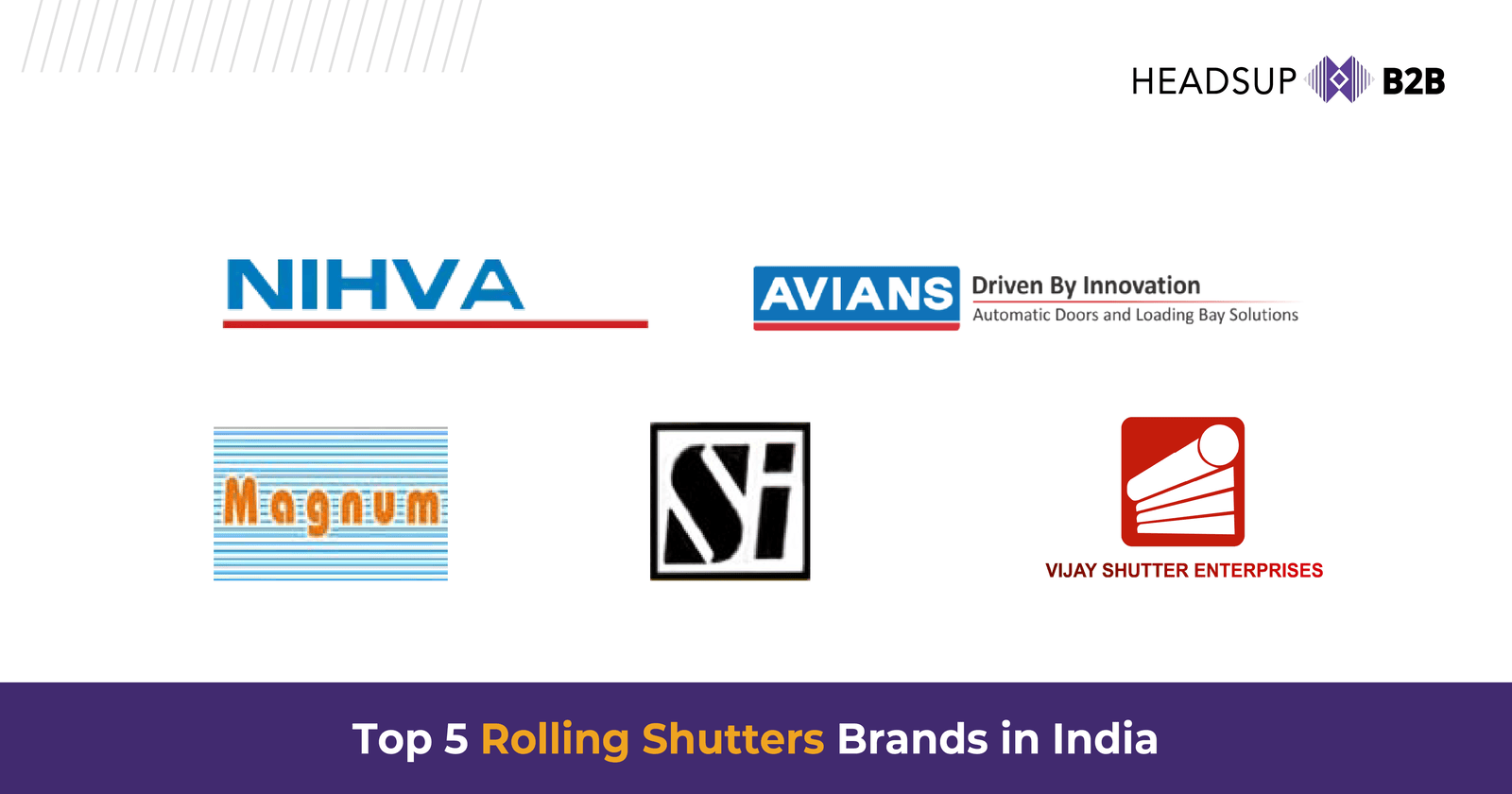
    1. Magnum Telesystem Pvt. Ltd.

    Established in 2001, Magnum Telesystems is India’s leading high-security and automated rolling shutters brand. The company is headquartered in Paschim Vihar, New Delhi. With a notable reputation across the national capital and India, it specialises in galvanised and aluminium shutters. Ideal for commercial as well as industrial settings, Magnum rolling shutters are highly suited for all types of high-security premises.

    2. Avians Innovations Technology Pvt. Ltd.

    Avians is a well-known brand for automated rolling shutters and high-security systems. Headquartered in Pune, Maharashtra, the company was established in 2007. The company has a proven track record in the automated shutter domain, with a specialization in galvanized, stainless steel and transparent rolling shutters. These shutters have industrial-grade durability.

    3. NIHVA Technologies Pvt. Ltd.

    NIHVA Technologies makes automatic, energy-efficient rolling shutters. The company provides custom-sized and colored products and has remote control and motorized systems for added convenience. NIHVA is a reputed company that manufactures high-quality materials and designs robust doors for different industrial and commercial sectors. The company offers insulated and fire-rated doors that secure your premises, with climate control and noise reduction. The company’s products enhance factory automation that meets global standards, making it a reliable B2B partner for automatic rolling shuttles.

    4. Shutter India Engineering Works

    With over 30 years of experience, Shutter India Engineering Works manufactures standard, customized and motorized rolling shutters for industrial and commercial customers in a cost-effective way. Through a careful selection of raw materials for quality assurance, they are installed quickly to ensure minimum downtime. Their products find use in a variety of applications that are known to be durable and cost-effective. These rolling shutters are manufactured in eastern India.

    5. Vijay Shutter Enterprises

    Vijay Shutter Enterprises makes rolling shutters for homes and factories. They are manual as well as motorized. The company focuses on custom engineering using high-quality raw material for durability, corrosion resistance and weather protection. Aluminum rolling shutters are the company’s specialty, providing custom-made features For more than 20 years, Vijay’s Shutter has had a proven track record with customers, providing practical, efficient and versatile shutter solutions for various settings.

    Headsup B2B offers a trusted repository of credible vendors and thoroughly vetted suppliers for all automatic rolling shutters. For reliable industrial warehousing solutions, connect with us.

    The global and Indian rolling shutter market is growing due to factors like secure infrastructure, energy efficiency, and automation. Notable companies include Magnum Telesystem Pvt. Ltd., Avians Innovations Technology Pvt. Ltd., NIHVA Technologies Pvt. Ltd., Shutter India Engineering Works, and Vijay Shutter Enterprises, each offering specialized and high-quality rolling shutter solutions for industrial and commercial sectors. Headsup B2B serves as a reliable resource for vetted suppliers and warehousing solutions.

  • How to Reduce Supply Chain Risks in Construction Procurement?

    How to Reduce Supply Chain Risks in Construction Procurement?

    Construction projects involve intensive capital planning and streamlined, end-to-end project management for smooth supply chain management. Procurement is an important step in any supply chain management, with sourcing materials, services and labour being important factors in the construction industry. Risks involved in this industry impact timelines, costs and quality in construction projects. This blog aims to identify key supply chain risks and offer practical mitigation strategies to ensure smoother procurement.

    Key Supply Chain Risks

    1. Material Shortage: Material Shortages are a result of volatile commodity prices, adverse environmental events, and pandemics like COVID-19, resulting in supply chain bottlenecks.

    2. Price Volatility: The construction industry’s price fluctuates with changing market conditions. Changes in prices of commodities, raw materials and the value of currency make prices volatile and difficult to budget for.

    3. Supplier Reliability Issues: Supplier credibility is essential for ensuring the quality of products and services supplied. It also ensures adherence to project costs, timelines and qualities.

    4. Logistics Disruptions: Disruptions of logistics occur when transportation delays or failures disrupt the timely delivery of materials.

    5. Compliance & Regulatory Risks: The risks of compliance and regulatory are non-compliance with the regulation may lead to penalties, stopping of the project or damage to reputation.

    Risk Reduction Strategies

    1. Supplier Assessment & Diversification: Regularly evaluate suppliers and diversify sources to avoid dependency on a single vendor. Vetting the vendors and suppliers while keeping diverse alternatives open reduces the dependency on a single vendor.

    2. Use of Technology & Forecasting Tools: Implement predictive analytics and procurement software to anticipate demand and supply issues. Technological enhancements like predictive analytics help assess the demand, and procurement software helps solve supply-related problems by automating the process, which leaves less room for ambiguity and gaps.

    3. Smart Inventory & Logistics Planning: Maintain optimal inventory levels and plan logistics proactively to buffer against delays.

    4. Stronger Contract Management: Negotiate clear contracts with penalties and contingencies to safeguard project interests.

    5. Regulatory Compliance Practices: Stay updated on regulations and integrate compliance checks into procurement processes.

    6. Continuous Monitoring & Communication: Establish ongoing risk monitoring and maintain transparent communication with all stakeholders.

    Industry Case Study

    We are a supplier of renewable materials for high-speed metro and NHAI infrastructures. We face perennial challenges of delayed shipments, raw material price fluctuations, and a working capital cycle that puts pressure on timelines.

    Conclusion

    Proactive supply chain risk management is vital for successful construction projects. Adopting these strategies improves timelines, cost control, and quality. Headsup B2B is a platform that streamlines procurement. Contact Headsup B2B for all your construction-related needs.

  • Why Automatic Motorized Sliding Gates Are the Future of Secure and Smart Entry Systems?

    Why Automatic Motorized Sliding Gates Are the Future of Secure and Smart Entry Systems?

    Motorized sliding gates offer a blend of security, convenience, and modern automation, making them suited to a range of applications, including modern homes and buildings. With a fast-paced integration of technology in day-to-day activities and operations, security systems and smart and secure access to residential settings have taken centre stage. Automatic motorized sliding gates are gaining popularity due to their convenience, security, and compatibility with smart technologies.

    Smart Integration with Modern Systems

    These modern systems connect home systems such as Google Home, Alexa and commercial security networks such as CCTV and access control, offering multiple tech-enabled, state-of-the-art features that are user-friendly and sophisticated. The integration provides features such as voice control via voice commands, geofencing and app-based remote operations. App-based remote control and voice control make it convenient to monitor and control from anywhere.

    Use Cases – Residential, Commercial & Industrial

    Motorized sliding gates are used for varied applications, including residential and commercial. These motorized sliding gates can be customized to suit traffic volume, space, and operational needs.

    • Residential: Automatic motorized sliding gates enhance home security, privacy, and convenience for daily access.

    • Commercial: These applications provide controlled access to office complexes, parking areas, and warehouses.

    • Industrial: Heavy-duty variants for secure perimeter management in factories or logistics parks.

    Energy Efficiency, Cost, and Long-term Value

    Motorized sliding gates are engineered for efficacy. Using a low-power consumption motor promotes energy efficiency without compromising safety. The initial installation may be higher, but the investment is justified in the long term. These gates are built for wear and tear and require less maintenance, making them a durable alternative. To know more about Motorized sliding gates,

    Installation and Maintenance Tips

    Proper maintenance and installation of motorized sliding gates are important. Here are some tips for the installation and maintenance of motorized sliding gates.

    1. Choose Professional Installation: Always opt for professional installation to ensure your sliding gate is perfectly aligned and fully integrated with your security or automation systems.

    2. Clean Tracks Regularly: Keep the gate tracks free from dirt, leaves, and debris to ensure smooth movement. Regularly inspect and clean the tracks to prevent blockages or unnecessary strain on the motor.

    3. Inspect Motor and Wiring: Check the motor and all wiring while in operating condition for visible defects. This includes wear, corrosion, and loose connections. Spotting any issues early may prevent greater breakdowns and more expenses.

    4. Use Weather-Resistant Materials: For outdoor gates, select weather-resistant materials and finishes. This protects your gate from rust, corrosion, and damage caused by harsh weather, ensuring long-lasting performance.

    5. Schedule Preventive Maintenance: Arrange for routine maintenance by professionals. Lubricate moving parts, check safety features, and tighten hardware regularly. Preventive maintenance extends the lifespan of your gate and reduces the likelihood of unexpected repairs.

    Conclusion

    Motorized sliding gates combine smart tech, security, and efficiency, making them a future-ready choice for all entry systems. Headsup B2B specialises in all industrial automation solutions, streamlining end-to-end processes from streamlining to fulfilment and post-delivery customer support. Join our esteemed clientele and elevate your industrial warehousing projects by reaching out today.

  • Types of Dock Levelers in India

    Types of Dock Levelers in India

    Dock Levellers are used for loading docks to bridge the height difference and a gap between a warehouse floor and a truck bed.

    The use of warehouse and industrial ramps is widespread. They help improve the efficiency of the operations by moving the materials quickly. The optimal choice of dock leveler is determined by a facility’s specific operational requirements and layout.

    5 Different Types of Dock Levellers

    1. Hydraulic Dock Levellers

    Hydraulic dock levellers use hydraulic power to raise and lower the platform and extend the lip when a user pushes a button. This machine provides a smooth and consistent operation at an accelerated speed. This also saves time and reduces injuries. Hydraulic levellers work best for operations with heavy-duty needs. They have a widespread use including manufacturing plants, distribution centres and e-commerce warehouses. Strength and durability are key features of industrial-strength rollers. They’re also easy to use and have safety features like emergency stops and toe guards. Additionally, they are low maintenance.

    2. Mechanical Dock Levellers

    Mechanical dock levellers operate on a manual spring-loaded system, combined with a pull chain. The operator raises the deck and walks it onto the truck bed. These levellers are ideal for applications where cost is the main consideration, and the application of loading cycles will be less frequent. The basic models are simple, inexpensive designs and require very little maintenance. Although they operate with manual effort and are less efficient at high volume, they may increase wear and operator fatigue over time.

    3. Vertical Dock Levellers

    Air-powered dock levellers make use of airbags or bellows to elevate the platform. They serve as an intermediary between mechanical and hydraulic dock levellers. These are most suited for operations requiring low cost and automation, as they are reliable without hydraulic performance. The benefits lie in its safe operation, low maintenance (due to fewer moving parts and no hydraulic fluid), and better ergonomics than manual-only systems.

    4. Air-Powered Dock Levellers

    Mechanical dock levellers are manual systems with spring activation through a pull chain. The operator raises the deck and walks it down onto the truck bed. These levellers are ideal for low- to medium-traffic facilities where cost is of high importance, and loading cycles are infrequent. Not only are they simple and inexpensive to manufacture, but they also require little maintenance during normal operation.

    Despite their advantages, their manual operation can decrease efficiency when dealing with high volumes. Furthermore, leveraging these devices continuously can cause undue strain on both the devices and the operators.

    5. Telescopic Dock Levellers

    Telescopic Dock Levellers is used to give a smooth surface for loading and unloading between a truck bed and loading dock. The lip extends to help it fit different heights of trucks. Perfect for facilities with heavy traffic, this device ensures the smooth, efficient loading and unloading of goods. Furthermore, it is durable, safe and easy to maintain.

    Dock Levellers are vital to a warehouse for ease of operations. Moreover, they help in the easy and efficient transfer of goods from the level of dock to the level of the truck. Whether a dock leveller is installed on a plant/factory depends on a plant’s operational needs, traffic and cost factors. Hydraulic dock levellers ensure high efficiency during hazardous operations, whereas mechanical levellers provide a cheaper option that doesn’t require much maintenance for less intensive operations. Looking for reliable industrial warehousing solutions? Reach out to us at info@headsupb2b.com. Headsup B2B – your one-stop industrial warehousing solutions partner.

  • High Speed Doors Supplier Companies in India

    High Speed Doors Supplier Companies in India

    In India, several high-speed door manufacturers cater to industrial and commercial needs for different types of applications. High-speed doors are characterised by rapid opening and closing based on energy efficiency, traffic regulation, and environmental control requirements. Here are the top five brands of High-Speed doors in India.

    1. Shakti Hormann

    Shakti Hormonn is a joint venture with Hormann, Germany, with a range of high-speed doors that are primarily designed to regulate traffic, along with maintaining energy efficiency due to a controlled environment. It offers High-speed roll-up doors, fold-up doors and cleanroom doors. The company has strong sales credentials across the country, with its doors suited for industrial, pharmaceutical, food processing and logistics industries.

    2. NIHVA Technologies Pvt. Ltd.

    NIHVA Technologies is an Indian Automation Company based in Pune that provides industrial warehousing solutions. NIHVA specialises in providing high-quality systems that automate speed doors, entrance automation and EOT cranes. These systems are energy-efficient and long lasting.

    3. Toshi Automation Solutions

    Toshi Automation Solutions brings over 28 years of expertise in entrance automation, offering high-speed roll-up, sectional, and fold-up doors. With in-house R&D and global collaborations, they serve airports, logistics hubs, and industrial units with customized solutions.

    4. Headsup B2B

    Headsup B2B offers you industrial-grade high-speed doors that operate safely, efficiently and energy-efficiently. Designed to provide high-speed access and contamination control in challenging industrial situations, these doors can be used in factories, pharmaceuticals, and cold storage.

    5. Cronax Industries

    Cronax Industries is a world-renowned company and now available in India. Their range includes Albany high-speed doors, docking systems and loading bay equipment. Cronax, known for its premium quality and innovation, offers global technology and local service to logistic, industrial, and cleanroom environments.

    For all your High Speed Door needs, Contact Headsup B2B.

  • How Biomass Pellets Help Reduce Environmental Impact

    How Biomass Pellets Help Reduce Environmental Impact

    As climate change combating becomes an important race, sustainable energy alternatives are not an option anymore but a necessity. Biomass pellets made from organic material such as agricultural residues and wood waste are renewable energy alternatives that lessen harm*.*

    Our planet has been witnessing a gradual increase in carbon emissions and, hence, global warming. With the wide use of non-renewable fossil fuel sources such as coal for decades. The same has led to a notable rise in pollution, leading to climate change, causing global warming, which has been recorded. To evade serious implications, it is vital to use cleaner and more eco-friendly ways to produce energy, be it in an industrial setting, residential or agricultural. One answer to the problem statement is the promotion of Biomass pellets as an energy source or fuel alternative.

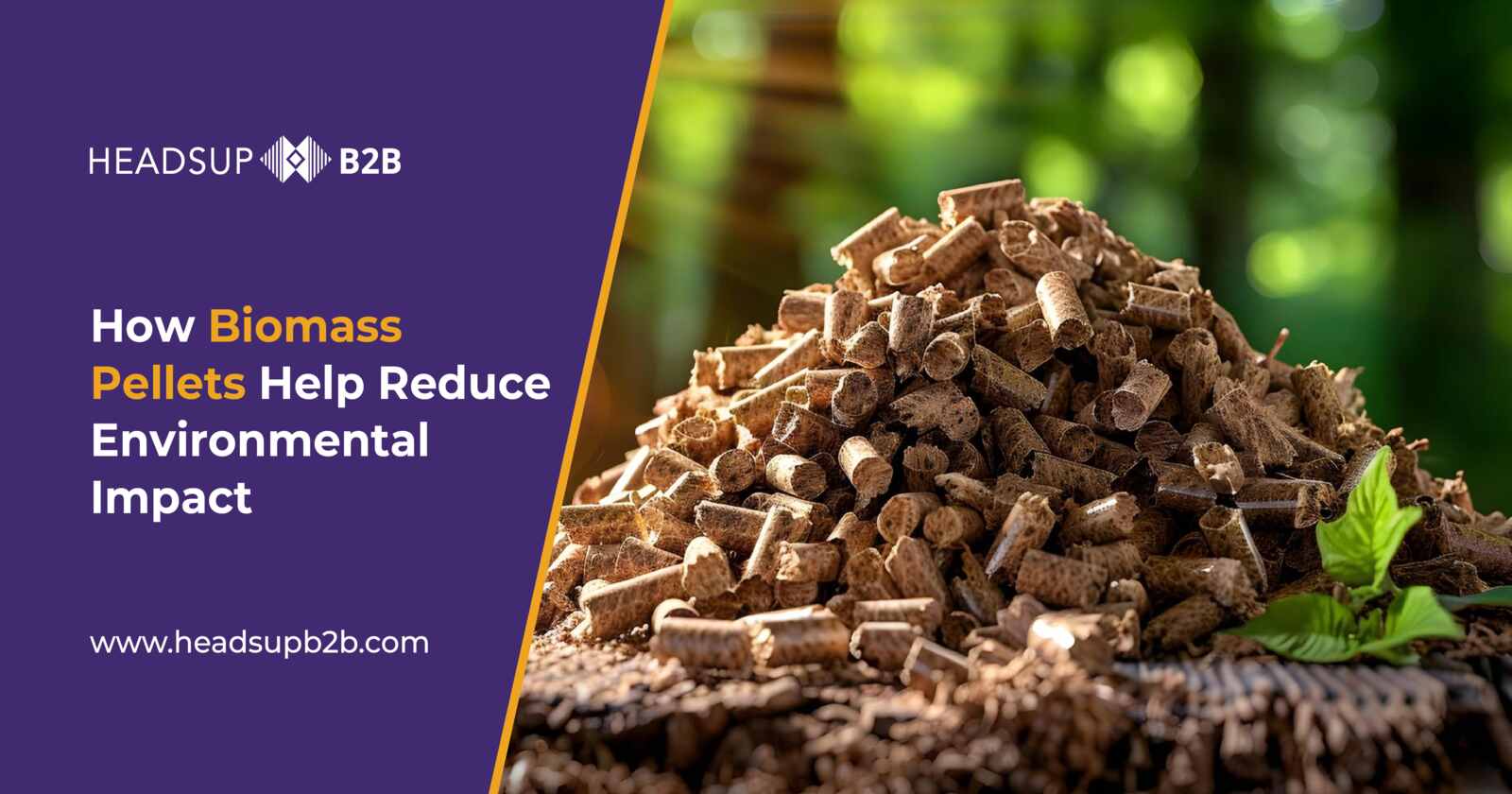
    This alternative is pro-environment with less carbon emission, but also has more energy-producing capability with its optimum calorific value. Biomass Pellets are sourced from natural products such as agricultural residue, forest waste. Biomass pellets are a renewable, economical and energy-efficient substitute for fossil fuels. They are made from the organic fractions of material, which include rice husk, wheat straw, sawdust, wood chips and many others.

    Made using waste from forests and agricultural residues, they give uniform burning and low emissions. Their low moisture content and high density make them easy to store, carry, and transport, making them a scalable fuel alternative.

    Environmental Impact

    Lower Carbon Emissions:

    Biomass is considered carbon-neutral because the CO₂ released during combustion equals the CO₂ absorbed during the plant’s life cycle.

    Waste Reduction:

    Biomass pellets use waste materials that would otherwise decompose and emit methane, a more potent greenhouse gas.

    Renewable and Sustainable:

    Unlike fossil fuels, biomass resources can be regrown and replenished.

    Reduced Dependence on Fossil Fuels:

    By replacing coal and oil in industries and heating systems, biomass pellets support a cleaner energy transition.
    As the world seeks cleaner energy pathways, biomass pellets offer a compelling, sustainable choice. By tapping into natural cycles and reducing waste, they help build a greener, more resilient future. Biomass Pellets are game changers when it comes to clean energy fuel, and for all your renewable energy needs, Connect With Headsup B2B.