Author: suraj

  • Comparison of Different Grades and Types of TMT Bars in India

    Comparison of Different Grades and Types of TMT Bars in India

    In the construction industry, TMT (Thermo-Mechanically Treated) bars play an essential role in providing the strength and flexibility needed for reinforced concrete structures. TMT bars are widely used across the globe, but in India, their importance has grown due to the country’s rapidly expanding infrastructure and construction demands. Whether it’s a high-rise building, a bridge, or even a simple residential house, choosing the right TMT bar grade is critical for ensuring the structural integrity and safety of the project.

    In this article, we will compare the different grades and types of TMT bars available in India, highlighting their key features, applications, and advantages to help you choose the best one for your construction project.

    Understanding TMT Bar Grades in India

    TMT bars in India are classified into different grades based on their yield strength, tensile strength, and ductility. The most common grades used in India are:

    1. Fe415 TMT Bars

    • Strength: The Fe415 grade has a yield strength of 415 N/mm², making it a good choice for standard construction projects that do not require very high strength.

    • Applications: Fe415 is commonly used in small residential buildings, roads, and low-rise structures. It is ideal for projects where load-bearing capacity is moderate.

    • Advantages:

      • Cost-Effective: The Fe415 grade is more affordable compared to higher-grade TMT bars.

      • Suitable for Low to Moderate Load-bearing Structures: Perfect for non-seismic or non-critical applications.

    2. Fe500 TMT Bars

    • Strength: Fe500 TMT bars have a yield strength of 500 N/mm², which offers a stronger and more durable reinforcement for structures that face higher loads.

    • Applications: This grade is widely used in residential buildings, commercial complexes, and infrastructure projects such as bridges and flyovers, where better strength is required.

    • Advantages:

      • High Strength: Fe500 offers better performance and is capable of handling higher stress.

      • Durability: It is suitable for structures exposed to harsh environmental conditions like high humidity or extreme temperatures.

    3. Fe500D TMT Bars

    • Strength: Fe500D TMT bars offer the same yield strength as Fe500 (500 N/mm²) but have better ductility and bendability. The “D” indicates better ductility, which is essential in earthquake-prone areas.

    • Applications: Fe500D bars are ideal for high-rise buildings, multi-storey constructions, bridges, and structures that need enhanced performance in seismic zones.

    • Advantages:

      • Better Ductility: Fe500D TMT bars are designed to be more flexible and can withstand high tension and stress without breaking, making them ideal for earthquake-resistant structures.

      • Seismic Resistance: The flexibility and bending capacity make Fe500D bars suitable for construction in earthquake-prone zones.

    4. Fe550 TMT Bars

    • Strength: Fe550 TMT bars are among the highest-grade bars available in India, with a yield strength of 550 N/mm². These bars provide enhanced strength and are ideal for heavy-duty constructions.

    • Applications: Fe550 bars are used in high-rise buildings, heavy-duty bridges, and other infrastructure projects that require the highest level of reinforcement strength.

    • Advantages:

      • High Strength and Durability: Fe550 bars are built to withstand the heaviest loads, making them ideal for mega-projects like skyscrapers and industrial plants.

      • Long-term Performance: These bars are designed to last for decades, making them a preferred choice for critical infrastructure.

    5. Fe550D TMT Bars

    • Strength: Like Fe550, Fe550D bars also have a yield strength of 550 N/mm² but come with the added advantage of better ductility and flexibility.

    • Applications: Fe550D bars are used in projects that need high strength and seismic resistance, such as mega infrastructure projects, highways, and large-scale urban developments.

    • Advantages:

      • Earthquake Resistance: Fe550D bars combine the strength of Fe550 with improved ductility for better seismic performance.

      • High Performance: These bars are suitable for projects with complex reinforcement needs and are designed to handle extreme stress without failure.

    TMT Bar Grades: A Quick Comparison

    Grade Yield Strength (N/mm²) Tensile Strength (N/mm²) Ductility Applications
    Fe415 415 485 Moderate Small residential, low-rise buildings, roads
    Fe500 500 545 Moderate Residential buildings, commercial complexes, bridges
    Fe500D 500 545 High Seismic zones, high-rise buildings, multi-storey structures
    Fe550 550 600 Low Heavy-duty bridges, industrial projects, mega constructions
    Fe550D 550 600 High Earthquake-resistant structures, high-rise buildings, infrastructure

    Choosing the Right Grade of TMT Bar for Your Project

    The grade of TMT bar you choose depends on various factors such as the type of structure, the environment, and the load-bearing capacity required. Here’s a guide to help you decide:

    • For low-cost, smaller residential projects, Fe415 is usually sufficient.

    • For medium to large-scale buildings, Fe500 or Fe500D are commonly used.

    • If you’re working on high-rise buildings, mega-projects, or critical infrastructure, then Fe550 or Fe550D should be your choice.

    Advantages of Using TMT Bars

    1. Higher Strength and Durability: TMT bars have a hard outer layer and a soft core that provides superior strength and longevity to structures.

    2. Corrosion Resistance: TMT bars are more resistant to rust and corrosion, especially in coastal areas, which extends the life of the construction.

    3. Workability: They are easy to cut, bend, and weld, making them ideal for a variety of construction needs.

    4. Earthquake Resistance: The improved ductility of higher-grade TMT bars ensures flexibility in earthquake-prone zones.

    Conclusion

    Choosing the right TMT bar grade for your construction project is crucial for ensuring the strength, durability, and safety of the structure. Whether you are building residential homes, commercial properties, or large-scale infrastructure projects, understanding the different grades of TMT bars and their applications will help you make an informed decision.

    If you’re looking for high-quality TMT bars, Headsup B2B provides a wide range of TMT bars across India, ensuring you get the best material for your construction needs.

    Contact Headsup B2B today for a reliable source of premium TMT bars at competitive prices, delivered across India.
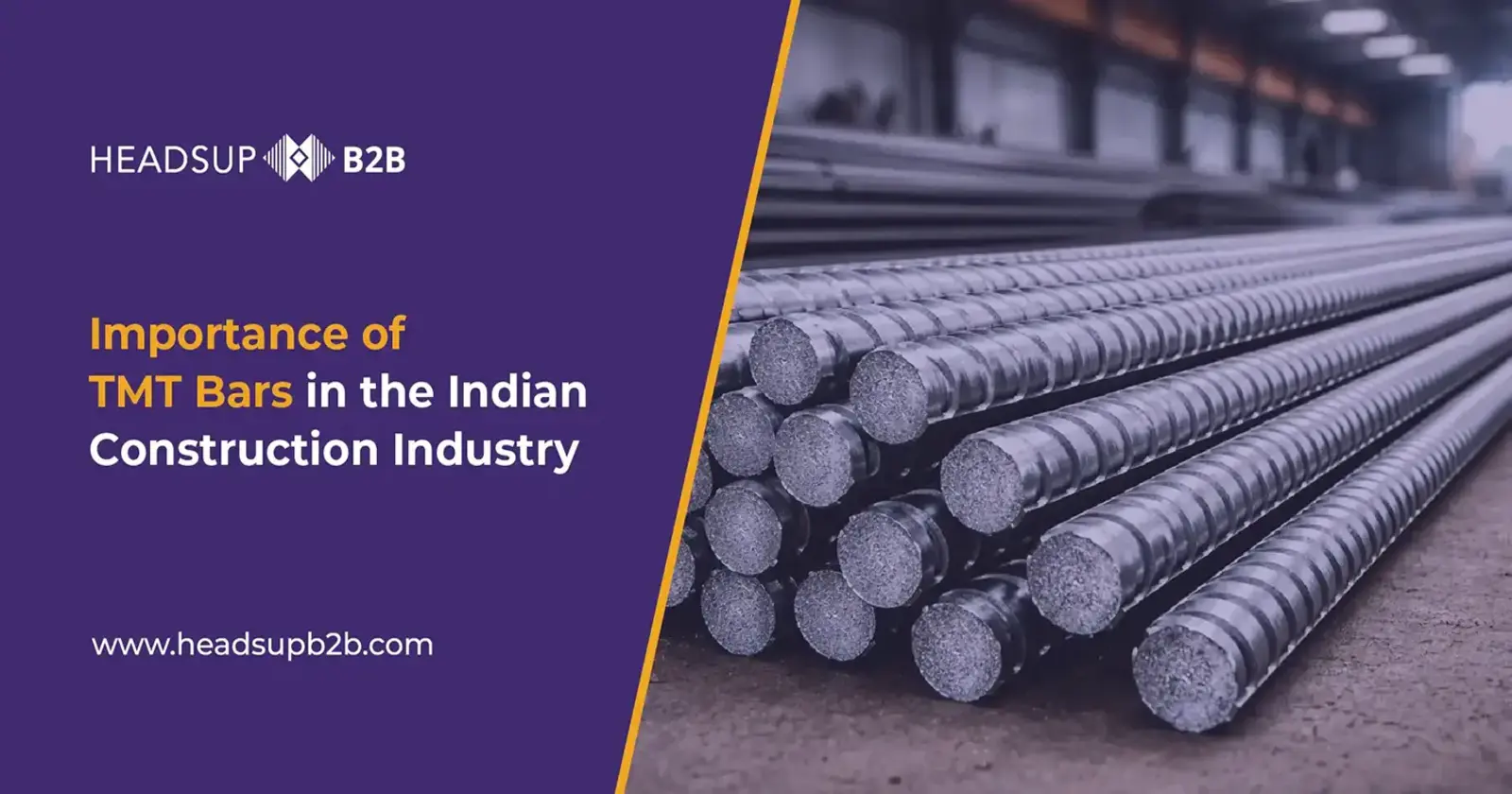
  • Importance of TMT Bars in the Indian Construction Industry

    Importance of TMT Bars in the Indian Construction Industry

    In the rapidly expanding Indian construction industry, the materials used play a pivotal role in determining the safety, durability, and overall performance of structures. Among the most essential materials for reinforcing concrete is TMT bars (Thermo-Mechanically Treated bars), a crucial component that ensures structural integrity and long-term strength. Whether you’re building a skyscraper, bridge, highway, or residential complex, TMT bars form the backbone of any construction project.

    But why are TMT bars so critical, and how do they contribute to the safety and longevity of Indian infrastructure? Let’s take a deeper look.

    What Are TMT Bars?

    TMT bars are reinforcing steel rods used in concrete to handle tension forces. These bars are made through a specialized process where hot steel is rapidly cooled, resulting in a hardened outer surface and a ductile inner core. The outer layer provides high strength, while the inner core offers flexibility, making TMT bars capable of handling high-stress situations without cracking or breaking.

    The manufacturing process behind TMT bars involves two critical stages: Thermo Treatment and Mechanical Treatment. The steel is first heated and then quenched, which hardens the outer layer while keeping the core soft. This unique combination ensures that TMT bars are not only strong but also able to withstand significant tension, making them ideal for reinforcement in concrete structures.

    Why Are TMT Bars Crucial for the Indian Construction Industry?

    1) Earthquake Resistance

    India is a seismically active country, and several regions lie in high seismic zones. In these areas, buildings and infrastructure must be designed to resist earthquake forces. TMT bars offer excellent ductility, meaning they can absorb energy during seismic events without fracturing. This makes them indispensable for buildings, bridges, and other structures in earthquake-prone regions.

    2) High Strength and Durability

    TMT bars, especially grades like Fe500 and Fe550, provide superior strength and durability, which are essential for high-rise buildings, industrial structures, and infrastructure projects. These bars offer higher tensile strength, ensuring that they can carry heavy loads and withstand extreme weather conditions, giving a longer lifespan to the structure.

    3) Corrosion Resistance

    In coastal areas and regions with high humidity, steel reinforcement in concrete is at risk of corrosion. TMT bars are manufactured with higher resistance to corrosion compared to traditional steel bars. The outer layer of the bar, created through thermo-mechanical treatment, forms a protective barrier against rust, making TMT bars an ideal choice for buildings in coastal and humid environments.

    4) Better Workability

    Another critical benefit of TMT bars is their workability. They are easier to cut, bend, and install during construction due to their ductile nature. This reduces construction time and minimizes the chances of error or rework. Moreover, this workability is key for builders to fabricate stirrups, hooks, and reinforcement cages that are integral to the structural framework.

    5) Enhanced Safety

    Structural integrity is paramount in any construction, and TMT bars contribute significantly to the safety of buildings and infrastructure. Thanks to their high strength, flexibility, and corrosion resistance, TMT bars help ensure that structures can withstand the stresses of daily use, as well as extreme conditions such as earthquakes, high winds, and heavy rainfall. This leads to safer living conditions and reduced risk of failure over time.

    6) Cost-Efficiency in the Long Run

    Although the initial cost of TMT bars may be slightly higher than traditional steel bars, the long-term savings they offer are immense. TMT bars require less material for the same load-bearing capacity, thus reducing overall material costs in construction. Moreover, their corrosion resistance and durability lead to lower maintenance costs over time.

    The Role of TMT Bar Grades in Construction

    TMT bars are available in various grades, each suited to different types of construction. The most commonly used grades in India are:

    • Fe415: Typically used in low-cost construction and general-purpose use.

    • Fe500: This is one of the most popular grades used for residential buildings and infrastructure projects due to its balance of strength and ductility.

    • Fe550: Known for its high strength, it is ideal for high-rise buildings, bridges, and heavy-duty applications.

    Choosing the right grade of TMT bars depends on factors like the load-bearing capacity, the design requirements, and the environment in which the structure is being built.

    Why Choose Headsup B2B for TMT Bars in India?

    When it comes to sourcing high-quality TMT bars for your construction needs, Headsup B2B is your trusted partner. We are a leading supplier of TMT bars across India, offering top-grade products to meet the requirements of all types of construction projects. Whether you’re building residential homes, commercial buildings, or large-scale infrastructure projects, we provide Fe500, Fe500D, Fe550, and other high-strength TMT bars that guarantee durability, safety, and performance.

    With a nationwide distribution network, Headsup B2B ensures timely delivery of TMT bars to your project site, no matter where you are located. We prioritize quality, reliability, and affordability, making us the preferred choice for contractors, builders, and developers across India.

    Headsup B2B for Your TMT Bar Needs

    Looking for high-quality TMT bars for your next construction project? Headsup B2B provides TMT bars of all grades delivered to locations across India. Our products meet the highest industry standards, ensuring that your projects stand the test of time. Get in touch with us today to get a quote or learn more about our offerings.

    Call us now at 8595736388 or email us at info@headsupb2b.com to place your order and experience the best in TMT bars.

  • What Are TMT Bars and Why Are They Critical in the Indian Construction Industry?

    What Are TMT Bars and Why Are They Critical in the Indian Construction Industry?

    TMT bars are steel reinforcement rods used inside concrete to make buildings, bridges, flyovers, and other structures strong and safe. TMT stands for Thermo-Mechanically Treated. These bars go through a controlled process of heating and rapid cooling that creates a tough outer layer and a more ductile inner core. That combination is what makes them so widely used in construction across India.

    What TMT Bars Are Made For?

    Concrete is strong in compression but weak in tension. When a structure faces tension from loads, wind, traffic, or ground movement, concrete alone can crack. TMT reinforcement bars handle that tension and help the concrete hold together. In simple terms, concrete carries the weight and pressure, and TMT bars provide the pulling strength that prevents failure.

    How TMT Bars Are Manufactured (Simple View)

    The steel rod is first rolled at high temperature, then quenched with water to cool the surface quickly. After that, the inner heat tempers the core. This creates:

    • a hard outer layer for strength and wear resistance

    • a soft, ductile core for bending and energy absorption

    This structure helps TMT bars perform well under normal loads and sudden forces like earthquakes.

    Why TMT Bars Are Critical in the Indian Construction Industry

    1) Earthquake resistance matters in India

    Many Indian cities fall under seismic zones (Zone III, IV, and V). Structures need reinforcement that can flex without snapping. TMT bars offer high ductility, meaning they can bend and absorb energy during tremors instead of breaking suddenly. This property is essential for multi-storey buildings, bridges, and metro structures.

    2) High strength supports modern design

    Urban construction in India is moving toward high-rises, longer spans, and faster project execution. High-strength TMT bars (like Fe500 and Fe550 grades) allow engineers to use less steel for the same load capacity, which can reduce overall reinforcement weight and help with cost efficiency and structural performance.

    3) Better corrosion resistance for Indian conditions

    India has coastal belts, humid climates, and polluted urban environments where steel can corrode faster. Many manufacturers offer corrosion-resistant TMT variants (often branded as CRS or similar). Lower corrosion risk improves structural life and reduces repair costs, especially in coastal states and high-moisture regions.

    4) Workability helps speed on-site execution

    Construction sites need bars that are easy to cut, bend, and place without cracking. TMT bars have good bendability, which helps with fast fabrication of stirrups, hooks, and complex reinforcement cages. This reduces wastage and rework.

    5) Fire safety and heat performance

    In fire events, steel strength drops as temperature rises. TMT bars generally offer better performance than ordinary mild steel, and many premium grades are designed to meet higher safety expectations. This matters in dense Indian cities where fire risk and evacuation challenges are real.

    6) They support India’s infrastructure push

    India’s infrastructure growth includes highways, expressways, ports, airports, rail corridors, metro projects, and smart cities. These projects demand reinforcement steel with consistent quality, high strength, and dependable mechanical properties. TMT bars meet these requirements at scale, which is why they are the default reinforcement choice across most major projects.

    Common Grades Used in India

    The most common grades you’ll see are:

    • Fe415: used in smaller or conventional projects

    • Fe500 / Fe500D: widely used in residential and commercial buildings

    • Fe550 / Fe550D: used in high-load and infrastructure projects

    The “D” variants generally indicate higher ductility, which is a big plus for seismic performance.

    Key Takeaway

    TMT bars are critical in Indian construction because they combine strength, ductility, corrosion resistance, and on-site workability, which directly impacts safety, durability, and long-term structural performance. For India’s seismic zones, varied climate conditions, and rapid infrastructure growth, TMT reinforcement bars are not optional—they are fundamental.

  • Step-by-Step Guide to Choosing the Right Industrial Automation Solutions

    Step-by-Step Guide to Choosing the Right Industrial Automation Solutions

    Industrial automation decisions shape throughput, quality, safety, and long-term operating cost. When we choose the right industrial automation solutions, we set up our plant for stable performance, easier troubleshooting, and predictable expansion. When we choose poorly, we inherit downtime, integration problems, and a growing pile of workarounds.

    This guide walks through a practical, end-to-end selection process for industrial automation systems, from scope and requirements to vendor evaluation and rollout planning.

    Step 1: Define the Business Outcome and the Automation Scope

    We begin by stating the outcome in operational terms. That means writing targets we can measure on the shop floor: OEE, cycle time, scrap, changeover time, unplanned downtime, energy usage, or audit findings. Then we define scope precisely.

    We document where automation will apply: a single machine, a full line, packaging, utilities, warehouse interfaces, or multi-site standardization. We state boundaries: upstream and downstream handoffs, data that must be shared, and equipment that must stay untouched. Clear scope prevents a common failure mode: buying a strong platform that still misses critical interfaces.

    We also label the automation type. A plant may need one or more of these:

    • Discrete automation (assembly, robotics, packaging, inspection)

    • Process automation (batch, continuous, utilities, dosing, mixing)

    • Hybrid automation (food, pharma, specialty chemicals, consumer goods)

    Step 2: Map the Current Process, Constraints, and Failure Points

    Before we select technology, we map reality. We capture the current process as it runs, not as it was designed. We list constraints that shape system design:

    We record cycle times, takt, product variants, changeover rules, critical quality parameters, and utility limits. We document environmental factors such as dust, washdown needs, temperature ranges, vibration, and electrical noise.

    Most importantly, we write down where problems happen. We list top downtime causes, recurring alarms, sensor failures, jam points, rejects, and manual interventions. This becomes our “must-fix” list. It directly informs choices in PLCs, sensors, robotics, machine vision, and operator interface.

    Step 3: Build a Requirements Pack That Vendors Can Quote Cleanly

    We create a requirements pack that removes ambiguity and forces apples-to-apples proposals. A strong pack includes:

    Functional requirements: sequences, interlocks, recipes, mode control, alarms, data logging, manual override rules, and expected operator actions.

    Performance requirements: throughput, accuracy, repeatability, response times, allowable stops, restart behavior, and quality inspection tolerances.

    Interface requirements: field devices, valve manifolds, drives, robots, printers, scales, analyzers, barcode scanners, and any existing controllers that must remain.

    Data requirements: what must be reported to SCADA, MES, ERP, or a data historian; sampling rates; retention periods; traceability fields; batch records; and audit trails.

    Compliance and safety requirements: safety functions, validation obligations, electronic records, and access control rules.

    This pack keeps us from paying for “assumed scope” later.

    Step 4: Select the Right Control Architecture (PLC, DCS, PAC, or Hybrid)

    Control architecture is the backbone of industrial automation solutions. We select based on process type, required determinism, and integration needs.

    For fast discrete control with tight timing, we typically align around a modern PLC or PAC with integrated motion and safety. For complex process areas with many loops, high availability, and standardized operations, a DCS may fit better. Many facilities use a hybrid design: PLCs for machine control, a supervisory layer for coordination, and a plant-wide system for visualization and data.

    We also define network architecture early: segmentation between IT and OT, industrial Ethernet standards, time synchronization, redundancy, and remote access rules. A solid architecture prevents random point-to-point links and fragile “temporary” switches that become permanent.

    Step 5: Choose the Supervisory Layer (HMI, SCADA, and Historian) With Operator Reality in Mind

    A system can be technically correct and still fail if operators struggle with it. We define the supervisory layer with usability and response speed as priorities.

    For machine-level operation, we specify HMI standards: screen templates, alarm rules, naming conventions, and consistent navigation across assets. For line or plant monitoring, we select SCADA that can handle tag volumes, user permissions, trending, reports, and thin-client access if needed.

    We also define historian needs: compression rules, event capture, and integration connectors. When traceability matters, we make sure the data model supports genealogy, batch context, and time alignment across sources.

    Key deliverables here include alarm rationalization, setpoint management rules, and a consistent tag naming pattern that supports maintenance.

    Step 6: Evaluate Robotics, Motion, and Machine Vision Based on the Real Use Case

    When we consider robotics, we specify the job first: payload, reach, speed, end-effector design, guarding, part presentation, and tolerance stack-up. We determine whether we need collaborative robots, industrial arms, SCARA, or gantry systems. We also confirm cell safety design: light curtains, scanners, gates, safety PLC integration, and lockout.

    For motion control, we validate whether standard VFDs are enough or whether servo control is required. We define axis count, coordination, homing, recovery behavior, and maintenance access.

    For machine vision, we validate lighting, camera placement, lens selection, and reject mechanisms. We define defect types, false reject tolerance, image storage, and inspection speed. We also confirm how vision results feed into quality records and traceability.

    Step 7: Set OT Cybersecurity Requirements Before Vendor Selection

    OT security is now part of procurement. We specify baseline controls aligned with common industrial security expectations such as ISA/IEC 62443 practices.

    We define segmentation, firewall rules, secure remote access, credential management, patch approach, backup rules, and logging. We require secure configuration baselines for controllers, servers, and operator stations. We also define how vendors will handle service access, including approval flows and session recording where appropriate.

    We also confirm ownership: who maintains accounts, who rotates passwords, who manages certificates, and how updates will be tested before production rollout.

    Step 8: Demand Interoperability and Integration Proof (Not Promises)

    Most automation programs fail at interfaces, not at control logic. We therefore validate integration at the protocol and data model level.

    We specify required protocols such as OPC UA, Modbus TCP, PROFINET, EtherNet/IP, or vendor-specific fieldbus needs. We define what must integrate with MES, ERP, LIMS, CMMS, or WMS. We require sample payloads: tag lists, event schemas, and transaction rules.

    If a vendor claims compatibility, we ask for evidence: reference designs, tested connector versions, and a small proof-of-integration plan. Integration proof saves time and reduces the late-stage scramble of ad-hoc scripting.

    Step 9: Define Safety and Compliance Criteria as Acceptance Gates

    Safety is engineered, verified, and documented. We define target safety performance using appropriate standards such as ISO 13849 or IEC 61508, depending on the system. We specify safety functions, required response times, and validation methods.

    We also define compliance needs relevant to the operation. In regulated environments, we state expectations for audit trails, user roles, electronic signatures, and validation documentation. Even outside strict regulation, we define documentation depth: electrical drawings, network diagrams, software backups, FAT/SAT protocols, and maintenance manuals.

    We convert these into acceptance gates that must be met before handover.

    Step 10: Compare Vendors Using a Weighted Scorecard

    We use a scorecard to keep selection objective. We evaluate across technical fit, delivery strength, and lifecycle support.

    Typical scorecard sections include:

    Technical alignment: architecture fit, determinism, scalability, safety design, cybersecurity baseline, and integration readiness.

    Project delivery: delivery plan realism, engineering capacity, commissioning method, test approach, and risk handling.

    Support model: response time SLAs, spare parts strategy, training depth, and post-go-live coverage.

    Total cost of ownership: licensing, support fees, hardware lifecycle, upgrade path, and ease of maintenance.

    We also include “operational friction” measures: clarity of diagnostics, quality of documentation, and ability for our maintenance team to work without constant external help.

    Step 11: Validate With FAT, SAT, and a Real Commissioning Plan

    We treat testing as a design tool, not a final checkbox. We define FAT (Factory Acceptance Test) and SAT (Site Acceptance Test) criteria with pass/fail rules.

    We require:

    • Simulation or staged testing where possible

    • I/O checks, interlock tests, and safety validation

    • Alarm behavior tests and recovery tests

    • Data integrity checks to SCADA/historian/MES

    • Performance checks at target throughput and typical product variants

    We also plan commissioning in phases: dry run, controlled production trial, ramp-up, and stabilization. If downtime windows are tight, we plan parallel work, pre-wiring, pre-staging, and rollback procedures.

    Step 12: Plan Training, Documentation, and Long-Term Support From Day One

    Automation success depends on how well our team can run and maintain the system after go-live.

    We require role-based training: operators, maintenance, engineering, and supervisors. We insist on usable documentation: wiring diagrams, network maps, tag dictionaries, alarm lists, backup and restore procedures, and change control steps.

    We also define spares and lifecycle planning: controller models, firmware baselines, PC images, licenses, and service contracts. A well-defined support plan reduces downtime and prevents knowledge being locked inside a vendor’s team.

    A Practical “Right-Fit” Checklist for Industrial Automation Solutions

    When we finalize selection, we confirm these points are true:

    We have a clear scope and measurable targets tied to operations. The control architecture matches the process type and timing needs. The HMI/SCADA layer supports operator speed and consistent troubleshooting. Integration to MES/ERP is defined with real data rules. OT cybersecurity requirements are written and enforceable. Safety functions are specified and testable. Vendors are scored with a consistent method. FAT/SAT and commissioning are planned with pass/fail gates. Training, documentation, and long-term support are part of the contract, not an afterthought.

  • Where to Find the Best Industrial Automation Solutions?

    Where to Find the Best Industrial Automation Solutions?

    The demand for industrial automation solutions is skyrocketing as industries shift toward smarter, faster, and more efficient production methods. But with hundreds of vendors, system integrators, and platforms available today, one of the biggest questions businesses face is: Where can you find the best industrial automation solutions?

    In this guide, we explore the top sources, platforms, and strategies to find reliable, scalable, and future-ready automation systems for your business.

    Why Choosing the Right Automation Partner Matters

    Industrial automation is not a one-size-fits-all approach. The success of your automation strategy depends largely on choosing the right provider that understands your industry, operational needs, and long-term goals.

    An experienced automation solution provider will offer:

    • Customized system design and integration

    • End-to-end support (from consultation to commissioning)

    • Scalable and upgradeable solutions

    • Compliance with global standards (ISO, CE, etc.)

    • Robust after-sales service and training

    The right partner isn’t just selling hardware or software—they’re delivering a long-term automation strategy that drives real results.

    Top Places to Find the Best Industrial Automation Solutions

    1. Leading Industrial Automation Companies

    Some of the most trusted and globally recognized providers in the automation sector include:

    1.1 Siemens

    • Offers complete automation systems (PLC, SCADA, HMI, motion control)

    • Known for Totally Integrated Automation (TIA) Portal

    • Strong presence in manufacturing, energy, and infrastructure sectors

    1.2 Rockwell Automation

    • Creators of Allen-Bradley controllers and FactoryTalk software

    • Best for North American industrial systems

    • Excellent support for batch processing and discrete manufacturing

    1.3 ABB

    • Swiss company providing automation, robotics, and electrification

    • Strong solutions in power grids, process automation, and motion control

    • Ideal for heavy industries like mining, oil, and marine

    1.4 Schneider Electric

    • Known for EcoStruxure™ architecture

    • Integrated solutions for energy, automation, and sustainability

    • Highly regarded in building management and industrial facilities

    1.5 Mitsubishi Electric

    • Japanese automation giant with a robust portfolio of PLCs, motion systems, and industrial robots

    • Widely used in automotive and electronics manufacturing

    These companies provide reliable, scalable, and widely supported automation ecosystems, with HeadsUp B2B serving as a trusted partner for all automation needs, making them top choices for businesses seeking industrial transformation.

    2. Certified System Integrators and Engineering Firms

    If you require tailored automation or integration with existing systems, working with a certified system integrator is the best route.

    Benefits of System Integrators:

    • Deep understanding of multiple hardware and software platforms

    • Customizable, end-to-end automation systems

    • Project management, testing, and commissioning

    • On-site support and post-deployment training

    Where to find them:

    • Control System Integrators Association (CSIA) directory

    • Vendor partner portals (e.g., Siemens Solution Partners, Rockwell Recognized Integrators)

    • Local engineering firms with industry-specific expertise

    3. Industrial Automation Marketplaces and B2B Platforms

    These online marketplaces offer wide catalogs of automation products from global suppliers.

    Top Platforms:

    • AutomationDirect – Competitive pricing on PLCs, sensors, HMIs

    • Allied Electronics & Automation – Global supplier with fast shipping

    • RS Components – Trusted across Europe and Asia

    • Mouser Electronics – Offers components and industrial control products

    • Alibaba & IndiaMART – Good for sourcing from Asia at lower costs (use caution for quality)

    These platforms are excellent for comparing features, pricing, and brands before making a purchasing decision.

    4. Trade Shows and Industrial Tech Expos

    Attending industry-specific trade shows is an excellent way to see automation solutions in action, meet suppliers face-to-face, and explore the latest innovations.

    Major Automation Events:

    • HANNOVER MESSE (Germany) – World’s largest industrial technology fair

    • PACK EXPO (USA) – Focused on automation in packaging and processing

    • Automate Show (USA) – Largest robotics and automation event in North America

    • SPS – Smart Production Solutions (Germany)

    • India Automation Expo (Mumbai)

    These events help you network with industry experts, see demos, and attend educational sessions.

    5. Industry Forums and Online Communities

    Sometimes, the best source of information is peer recommendations. Online forums, LinkedIn groups, and communities of engineers and plant managers often share real-world reviews, case studies, and experiences with specific automation tools and vendors.

    • PLCTalk.net

    • Reddit: r/PLC

    • Eng-Tips Automation Forum

    • LinkedIn Automation Groups

    Joining these communities can help you avoid mistakes and learn from others’ successes or failures.

    6. Automation as a Service (AaaS) Providers

    Cloud-based automation and Automation-as-a-Service platforms are gaining traction for their low upfront cost and subscription model.

    Key Features:

    • Pay-per-use or monthly subscription

    • Cloud-based data analytics and remote monitoring

    • Easily scalable and upgradable

    Top AaaS Platforms:

    • Ignition by Inductive Automation

    • Tulip

    • Kepware by PTC

    • MachineMetrics

    These platforms are ideal for small to mid-size manufacturers looking to dip their toes into digital transformation without massive capital expenditure.

    What to Look for in an Automation Solution Provider

    When choosing your industrial automation vendor or integrator, consider these factors:

    • Industry Experience: Have they worked in your field (e.g., food, pharma, oil & gas)?

    • End-to-End Capabilities: Can they handle design, implementation, training, and support?

    • Support Services: Are they available 24/7? Do they offer warranties?

    • Certifications: ISO, CSIA, UL, and others show credibility.

    • Customization Flexibility: Can they tailor the system to your exact operational workflow?

    Conclusion

    Finding the best industrial automation solutions requires a mix of research, networking, and knowing your own needs. Whether you’re sourcing directly from global giants like Siemens or working with niche system integrators, the key is to focus on quality, scalability, and support. Don’t just buy a product—invest in a solution that evolves with your operations.

    In the age of Industry 4.0, the right automation partner can help you achieve increased productivity, smarter decision-making, and long-term growth. Take the time to evaluate your options, visit trade shows, read real user reviews, and ask for demos. Your future factory starts with the right first step.

  • 7 Key Benefits of Industrial Automation Solutions

    7 Key Benefits of Industrial Automation Solutions

    Industrial automation has become a critical component for modern manufacturing operations. As industries grow more complex and consumer demands increase, companies are turning to automation solutions to stay competitive and improve their operational efficiency. The transformation brought by automation is undeniable, providing various benefits that help organizations thrive in a highly competitive market.

    In this article, we will explore seven key benefits of industrial automation solutions that can revolutionize operations, reduce costs, enhance safety, and lead to long-term profitability.

    1. Increased Efficiency and Productivity

    Industrial automation significantly boosts productivity by automating repetitive and labor-intensive tasks. With automated systems, businesses can optimize production lines, reduce downtime, and improve throughput. Automated machines work around the clock without the need for breaks, fatigue, or downtime that is common in human workers. As a result, businesses can meet production quotas faster and more efficiently, with fewer human resources required to complete tasks.

    Key advantages include:

    • Faster production cycles: Automated systems can operate faster than manual processes, increasing the overall throughput of a manufacturing plant.

    • Precision and accuracy: Machines can consistently perform tasks with higher precision, leading to fewer errors and less waste.

    • 24/7 operation: Automation systems are designed to work continuously without requiring breaks, ensuring round-the-clock production.

    2. Cost Reduction

    One of the most notable benefits of industrial automation is its ability to reduce costs. While there may be an initial investment in automation technology, the long-term savings far outweigh the upfront costs. Reduced labor costs, fewer errors, less waste, and improved energy efficiency lead to significant savings over time.

    Key savings include:

    • Labor cost reduction: By automating tasks, companies can reduce the number of employees needed for manual work, thus lowering labor-related expenses.

    • Fewer errors: Automation reduces the likelihood of human error, which can result in costly product defects and rework.

    • Lower energy consumption: Advanced automation systems are often designed to operate with optimized energy efficiency, reducing utility bills.

    3. Enhanced Quality Control

    Industrial automation solutions ensure consistent, high-quality production, which is essential in industries such as automotive manufacturing, electronics, and pharmaceuticals. Automated quality control systems can monitor every step of the production process, from raw material inspection to final product testing.

    Quality control benefits include:

    • Consistency: Automated systems maintain a consistent level of quality across production lines, ensuring that every product meets the desired specifications.

    • Real-time monitoring: Automation systems can provide real-time feedback on production processes, enabling immediate adjustments to maintain product quality.

    • Reduced defects: By minimizing human involvement in production, automation reduces the risk of defects caused by fatigue or lack of attention to detail.

    4. Improved Worker Safety

    In industries where hazardous materials, machinery, and extreme conditions are common, worker safety is a top priority. Industrial automation helps protect workers by taking over dangerous tasks such as handling toxic chemicals, lifting heavy objects, or working in unsafe environments.

    Safety improvements include:

    • Hazardous environment management: Robots and automated systems can operate in environments that may be dangerous for human workers, such as high-temperature or high-pressure areas.

    • Risk reduction: Automation minimizes the risk of accidents and injuries caused by human error or fatigue.

    • Better compliance: Automation helps organizations comply with safety regulations, reducing the risk of fines and legal issues.

    5. Greater Flexibility and Scalability

    As demand for products fluctuates, businesses need to be able to scale their operations quickly. Industrial automation solutions offer the flexibility to adjust production volumes, product types, and operational processes with ease.

    Flexible and scalable automation benefits include:

    • Adaptability: Automated systems can be reprogrammed or reconfigured to accommodate changes in production requirements, such as varying product designs or production volumes.

    • Faster response to market demands: With automation, companies can quickly ramp up production in response to increased demand or adapt to changes in consumer preferences.

    • Reduced lead times: The ability to adjust production processes quickly reduces lead times and improves the company’s responsiveness to the market.

    6. Data-Driven Insights and Predictive Maintenance

    Industrial automation systems often come equipped with advanced sensors and data collection capabilities that provide valuable insights into production performance. By collecting and analyzing data in real-time, businesses can monitor equipment health, identify inefficiencies, and predict maintenance needs before a breakdown occurs.

    Data-driven benefits include:

    • Predictive maintenance: Automation systems can predict equipment failure based on data analysis, allowing businesses to perform maintenance only when necessary, thus avoiding unplanned downtime and reducing maintenance costs.

    • Performance optimization: By analyzing data, businesses can identify areas of inefficiency and make data-driven decisions to improve productivity and reduce costs.

    • Real-time decision-making: Automation provides real-time data that allows managers to make informed decisions quickly, improving overall business agility.

    7. Environmental Sustainability

    Sustainability is a growing concern for businesses around the world. Industrial automation plays a crucial role in promoting environmental sustainability by reducing energy consumption, minimizing waste, and improving the overall efficiency of manufacturing processes. Automation systems can be designed to operate with minimal environmental impact, aligning with eco-friendly business practices.

    Environmental benefits include:

    • Reduced waste: Automation ensures that materials are used efficiently, leading to less waste during the production process.

    • Energy-efficient systems: Automated systems are often designed to operate at peak energy efficiency, lowering energy consumption and reducing the company’s carbon footprint.

    • Sustainable manufacturing: Automation facilitates sustainable manufacturing practices by optimizing resource usage and reducing emissions, aligning with global sustainability goals.

    Conclusion

    Industrial automation solutions provide numerous benefits that go beyond just improving operational efficiency. They play a pivotal role in reducing costs, enhancing safety, improving quality control, and enabling businesses to stay agile in a fast-changing marketplace. As companies continue to evolve, investing in automation technology will remain a key factor in maintaining competitiveness, sustainability, and growth.

  • What Are Industrial Automation Solutions and How Do They Work?

    What Are Industrial Automation Solutions and How Do They Work?

    Industrial automation has become the backbone of modern manufacturing, logistics, and production industries. With the rise of smart factories, artificial intelligence, and the Internet of Things (IoT), businesses are increasingly turning to automation to boost productivity, reduce costs, and enhance safety. But what exactly are industrial automation solutions, and how do they work? This comprehensive guide breaks it all down—systems, components, technologies, applications, and the future of automation.

    Understanding Industrial Automation

    Industrial automation refers to the use of advanced technologies, control systems, and machinery to automate industrial processes. Instead of relying on human labor, automation systems manage repetitive tasks, monitor operations, control equipment, and make decisions based on data.

    At its core, automation aims to achieve:

    • Increased efficiency

    • Higher output with consistent quality

    • Improved safety

    • Reduced human error and labor costs

    Automation solutions range from simple mechanical systems to complex AI-driven smart factories.

    Key Components of Industrial Automation Systems

    An industrial automation system is made up of several interdependent parts. Let’s break down the major components:

    1. Sensors and Actuators

    • Sensors detect physical conditions like temperature, pressure, proximity, and motion.

    • Actuators convert electrical signals into physical actions like moving a valve, starting a motor, or opening a gate.

    2. Programmable Logic Controllers (PLCs)

    • PLCs are industrial computers designed to monitor inputs, make logic-based decisions, and control outputs.

    • They are highly reliable, easy to program, and central to almost every automated system.

    3. Human Machine Interface (HMI)

    • An HMI allows humans to interact with the automation system.

    • It provides real-time data, diagnostics, alerts, and manual control options through screens or dashboards.

    4. Supervisory Control and Data Acquisition (SCADA)

    • SCADA systems provide centralized monitoring and control of large-scale operations.

    • They gather data from sensors, provide visualization, issue alarms, and allow remote control of devices.

    5. Robotics

    • Industrial robots perform tasks like welding, painting, assembly, and packing with speed and accuracy.

    • Robots reduce the risk of human error and can operate in hazardous environments.

    6. Communication Networks

    • These allow components to communicate with each other in real time.

    • Protocols like Ethernet/IP, Modbus, and PROFINET ensure seamless data exchange between devices and control units.

    How Do Industrial Automation Solutions Work?

    Industrial automation works by integrating hardware and software systems to perform tasks automatically. Here’s a simplified view of how an automated system functions:

    1. Input Data Collection
      Sensors gather data about the environment or machinery—e.g., temperature, product presence, speed.

    2. Data Processing and Decision Making
      The PLC or controller interprets the data, applies logic, and decides what action to take.

    3. Control Signals Sent
      Based on the logic, control signals are sent to actuators or other machines to perform actions—e.g., turning on a motor, adjusting a conveyor belt, or stopping a process.

    4. Monitoring and Feedback
      SCADA or HMI systems provide feedback to human operators and adjust processes if necessary.

    This loop of monitoring, decision-making, and execution runs continuously, allowing for non-stop production with minimal intervention.

    Types of Industrial Automation

    1. Fixed Automation

    • Also called hard automation.

    • Used in high-volume, repetitive manufacturing tasks.

    • High initial cost, low flexibility.

    2. Programmable Automation

    • Suited for batch production.

    • Can be reprogrammed for different products.

    • Offers moderate flexibility and efficiency.

    3. Flexible Automation

    • Enables rapid changes in product design and process.

    • Common in advanced manufacturing plants with high product variability.

    Benefits of Industrial Automation

    The shift toward automation provides significant value:

    • Improved Production Speed: Machines can operate 24/7 without fatigue.

    • Cost Reduction: Reduces need for manual labor and minimizes human errors.

    • Enhanced Product Quality: Consistent processes result in uniform output.

    • Real-Time Monitoring: Advanced systems provide instant insights and alerts.

    • Worker Safety: Automation reduces the risk of workplace injuries in hazardous environments.

    Technologies Powering Modern Industrial Automation

    1. Internet of Things (IoT)

    • Connects machines, sensors, and systems for seamless data exchange.

    • Enables predictive maintenance and real-time analytics.

    2. Artificial Intelligence (AI)

    • Allows systems to learn from data and improve over time.

    • Used in predictive maintenance, process optimization, and defect detection.

    3. Machine Vision

    • Cameras and image-processing algorithms inspect products and guide machines.

    • Crucial for quality control and precision manufacturing.

    4. Cloud Computing

    • Stores and analyzes vast amounts of data from industrial operations.

    • Enables remote control, historical data analysis, and performance benchmarking.

    Challenges in Implementing Industrial Automation

    While automation has many benefits, it also brings challenges:

    • High Upfront Costs: Systems can be expensive to install.

    • Integration Complexity: Merging new tech with old systems can be tricky.

    • Skilled Labor Shortage: There’s a growing need for workers trained in robotics, AI, and control systems.

    • Cybersecurity Risks: Connected devices are vulnerable to cyberattacks if not properly secured.

    The Future of Industrial Automation

    Industrial automation is evolving rapidly. Here’s what lies ahead:

    • Collaborative Robots (Cobots): Robots that safely work alongside humans.

    • 5G Networks: Faster and more reliable communication between machines.

    • Digital Twins: Virtual replicas of physical systems for simulation and optimization.

    • Edge Computing: Real-time data processing closer to the source for faster decision-making.

    • Sustainable Automation: Energy-efficient systems that reduce environmental impact.

    Conclusion

    Industrial automation solutions are transforming industries by making operations smarter, faster, and safer. As technology advances, automation is no longer just a tool for large manufacturers—it’s a strategic investment for businesses of all sizes. Understanding how these systems work and where they can be applied is the first step to embracing a future defined by efficiency, innovation, and resilience.

    Whether you’re just beginning to explore automation or planning to upgrade your current systems, now is the time to invest in the future.

  • A Comprehensive Guide to Industrial Automation Solutions

    A Comprehensive Guide to Industrial Automation Solutions

    In the fast-paced landscape of modern manufacturing, industrial automation solutions are not just a luxury—they’re a necessity. From increasing operational efficiency to minimizing errors and maximizing safety, the right automation system can redefine how industries function. This guide explores everything you need to know about industrial automation: its technologies, systems, applications, benefits, and future trends. Whether you’re a plant manager, system integrator, or business executive, this article will walk you through the ins and outs of automation, helping you make informed decisions for your business.

    What is Industrial Automation?

    Industrial automation refers to the use of control systems such as computers, PLCs, and robots to handle machinery and processes in an industry, replacing human intervention. Its primary goal is to improve efficiency, accuracy, and productivity while reducing operational costs.

    Core Elements of Automation Include:

    • Control systems (PLC, SCADA, DCS)

    • Sensors and actuators

    • Industrial robots

    • Machine vision

    • Data acquisition and analytics tools

    These components work together to streamline manufacturing, packaging, material handling, and even quality inspection.

    Types of Industrial Automation Systems

    Different industries require different automation solutions. Here’s a breakdown of the primary types:

    1. Fixed Automation

    • High-volume production

    • Used in assembly lines

    • Low flexibility

    2. Programmable Automation

    • Ideal for batch production

    • Easily reprogrammable

    • Common in food processing and chemical industries

    3. Flexible (or Soft) Automation

    • Handles multiple product types

    • High customization capability

    • Perfect for modern manufacturing facilities

    Industrial Robotics and Their Role

    Industrial robots have become central to automation due to their precision, speed, and flexibility.

    Common Types of Robots:

    • Articulated Robots – Mimic human arm motion

    • SCARA Robots – Ideal for pick-and-place tasks

    • Delta Robots – Fast and lightweight

    • Cartesian Robots – Used in 3D printing and CNC machinery

    Robots increase output and perform repetitive or dangerous tasks, improving workplace safety.

    Benefits of Industrial Automation

    Embracing automation offers substantial returns across the board:

    • Increased productivity and output

    • Reduced operational costs

    • Consistent product quality

    • Improved worker safety

    • Real-time monitoring and analytics

    • Faster ROI in competitive industries

    Applications of Industrial Automation by Industry

    Automation isn’t limited to manufacturing. Here’s how various sectors benefit:

    Manufacturing

    • Assembly lines

    • Welding, painting, and packaging

    Automotive

    • Robotic assembly

    • Quality control and inspection

    Food & Beverage

    • Packaging

    • Temperature control

    • Clean-in-place (CIP) systems

    Pharmaceutical

    • Accurate dosing

    • Sterile packaging

    • Regulatory compliance

    Oil & Gas

    • Remote monitoring

    • Pipeline control

    • Hazard detection

    Smart Sensors and IoT Integration

    With the rise of Industry 4.0, IoT and smart sensors play a huge role in modern industrial automation.

    Benefits Include:

    • Predictive maintenance

    • Data-driven decision-making

    • Seamless machine-to-machine (M2M) communication

    Smart sensors can monitor everything from vibration and temperature to humidity and proximity, all feeding into cloud platforms or SCADA systems.

    Machine Vision in Industrial Automation

    Machine vision enables automatic image capture and analysis for quality inspection, measurement, and guidance.

    Applications:

    • Surface defect detection

    • Barcode reading

    • Object recognition

    • Dimension measurement

    It’s widely used in electronics, packaging, pharmaceuticals, and automotive industries.

    Artificial Intelligence and Automation

    AI-driven automation is transforming the way industries operate. With machine learning and computer vision, machines can now:

    • Predict failures

    • Optimize workflows

    • Adapt to changing inputs

    AI combined with robotics opens the door to cognitive automation, allowing machines to “learn” and improve without constant reprogramming.

    Industrial Automation Software Platforms

    You can’t automate without powerful software. Some popular platforms include:

    • Siemens TIA Portal

    • Rockwell Automation Studio 5000

    • Mitsubishi GX Works

    • Schneider EcoStruxure

    • Ignition SCADA by Inductive Automation

    These platforms provide programming, visualization, diagnostics, and data acquisition all in one environment.

    Cybersecurity in Industrial Automation

    With increased connectivity comes increased risk. Cybersecurity is critical in automated industries to protect against:

    • Malware and ransomware

    • Unauthorized access

    • Data theft

    • Equipment sabotage

    Best practices include network segmentation, firewalls, real-time monitoring, and regular software updates.

    Looking ahead, these trends are set to define the next decade:

    • AI & machine learning integration

    • Edge computing and 5G

    • Collaborative robots (cobots)

    • Digital twins

    • Cloud-based control systems

    Adopting these innovations will keep industries resilient, agile, and competitive.

    Challenges of Industrial Automation

    Despite the benefits, automation brings challenges:

    • High initial investment

    • Skilled labor shortage

    • Integration complexity

    • Resistance to change

    • Maintenance of advanced systems

    Proper planning, training, and system evaluation are essential to mitigate these issues.

    How to Choose the Right Automation Solution

    Choosing the right system depends on:

    • Your production volume

    • Industry-specific needs

    • Budget constraints

    • Desired ROI timeframe

    • Scalability and flexibility

    Consulting experienced system integrators ensures you get a tailored solution that aligns with your long-term goals.

    Conclusion

    The industrial world is shifting gears fast. Industrial automation solutions are not just about doing things faster—they’re about doing things smarter. With a wide range of systems, tools, and technologies at our disposal.

  • Top Renewable Energy Products to Power Your Future

    Top Renewable Energy Products to Power Your Future

    As we transition towards a cleaner and more sustainable world, renewable energy products are not just a trend—they’re the future. From residential solar panels to off-grid wind turbines, the market is booming with innovations that reduce carbon footprints and increase energy independence.

    In this comprehensive guide, we’ll explore the top renewable energy products that can effectively power your home, business, or mobile lifestyle while aligning with a sustainable future.

    Why Choose Renewable Energy Products?

    Renewable energy solutions offer long-term cost savings, reduced dependence on fossil fuels, and a proactive step toward climate change mitigation. These technologies harness power from naturally replenishing sources—like the sun, wind, and water—providing clean, efficient, and eco-friendly alternatives to conventional energy systems.

    1. Solar Panels for Home Energy Independence

    Photovoltaic solar panels are by far the most popular renewable energy products. They capture sunlight and convert it into electricity for residential or commercial use.

    Key Benefits:

    • Drastically reduce electricity bills

    • Net metering can generate credits for unused energy

    • Minimal maintenance and long lifespan (25+ years)

    Top Solar Panel Brands:

    • SunPower – Known for high-efficiency modules

    • LG Solar – Excellent warranty and performance

    • Panasonic – Premium build with solid durability

    Investing in rooftop solar systems with high wattage and efficiency ratings is one of the most impactful upgrades for future-proofing your energy needs.

    2. Portable Solar Generators

    Perfect for off-grid adventures, emergencies, or backup power, portable solar generators are compact, silent, and emission-free alternatives to traditional gas generators.

    Recommended Models:

    • Jackery Explorer 1000

    • EcoFlow Delta Series

    • Goal Zero Yeti 1500X

    These units come equipped with multiple charging ports, high battery capacities, and solar input compatibility, making them ideal for RVs, camping, or home backups.

    3. Wind Turbines for Residential Use

    Small-scale wind turbines are becoming more accessible for homeowners, particularly in windy regions. These systems convert kinetic wind energy into electrical power and can be used as a primary or supplemental source of energy.

    Popular Residential Wind Turbines:

    • Primus Wind Power AIR 40

    • Tumo-Int 1000W Wind Generator

    • Pikasola Wind Turbine Generator Kit

    With the right siting and conditions, wind energy systems can drastically reduce electricity dependence and work well in hybrid systems with solar.

    4. Solar Water Heaters

    Heating water accounts for a large portion of household energy consumption. Solar water heaters use thermal energy from the sun to heat water, making them a cost-effective and energy-efficient solution.

    Types of Solar Water Heaters:

    • Active systems: With circulating pumps and controllers

    • Passive systems: Rely on gravity and natural circulation

    These systems are perfect for regions with ample sunlight and can lead to significant utility savings over time.

    5. Solar Roof Shingles

    For those who prefer an aesthetically pleasing alternative to traditional solar panels, solar roof shingles (solar tiles) integrate seamlessly into the roofline while producing clean energy.

    Leading Brands:

    • Tesla Solar Roof

    • CertainTeed Apollo II

    • Luma Solar Roof

    They offer a sleek design with hidden wiring and are a great option during new construction or major roof replacement.

    6. Home Battery Storage Systems

    Paired with solar panels, home battery systems store excess energy for use during peak hours or outages. This increases energy reliability and can support total grid independence.

    Top Home Batteries:

    • Tesla Powerwall 2

    • LG Chem RESU

    • Sonnen Eco

    Batteries enable homeowners to store and optimize solar usage, reducing reliance on utility companies and ensuring uninterrupted power.

    7. Hydroelectric Micro Turbines

    For properties with flowing water, micro-hydro power systems offer a consistent and reliable source of renewable energy, even when the sun isn’t shining or the wind isn’t blowing.

    Benefits:

    • 24/7 energy generation

    • Minimal maintenance once installed

    • Long system life (25-30 years)

    Hydrokinetic systems can be a hidden gem for off-grid living and sustainable agriculture.

    8. Solar-Powered Outdoor Lighting

    From gardens to pathways, solar-powered lights use photovoltaic cells to charge during the day and automatically light up at night—no wiring or electricity required.

    Use Cases:

    • Security floodlights

    • Garden path lights

    • Decorative string lights

    They’re affordable, durable, and easy to install, making them one of the simplest ways to embrace solar technology.

    9. Solar Cookers and Ovens

    For off-grid living or eco-conscious cooking, solar ovens harness sunlight to bake, roast, or boil food without fuel or electricity.

    Notable Options:

    • GoSun Sport Solar Cooker

    • All American Sun Oven

    These products are perfect for camping, survival kits, or sustainable outdoor kitchens.

    10. Smart Energy Monitors

    Knowing how much energy you consume is the first step toward saving it. Smart energy monitors track electricity usage in real-time and help identify where energy is wasted.

    Top Choices:

    • Sense Energy Monitor

    • Emporia Vue

    • Neurio Home Energy Monitor

    These tools integrate with mobile apps and smart homes, allowing you to optimize energy use and get actionable insights.

    11. Solar-Powered Water Pumps

    In agricultural or remote settings, solar-powered pumps provide water access without depending on diesel generators or grid power.

    Used For:

    • Irrigation systems

    • Livestock watering

    • Village water supply

    Solar pumps are low maintenance, cost-effective, and scalable for large and small applications.

    12. EV Charging Stations with Solar Integration

    With the rise of electric vehicles, solar-integrated EV charging stations are a game-changer. Charging your car with sunlight reduces your transportation carbon footprint to near zero.

    Best for:

    • Home garages

    • Office buildings

    • Green public infrastructure

    Pair your EV with a solar system and eliminate fuel costs forever.

    13. Solar Air Conditioners

    Cooling with solar energy is not just a dream anymore. Solar air conditioners reduce peak demand and are great for hot climates.

    Benefits:

    • Offsets high electricity costs

    • Works during blackouts with battery backup

    • Hybrid models available

    They help maintain energy-efficient comfort during the hottest months.

    14. Wind-Solar Hybrid Kits

    Combining wind and solar in one system ensures maximum power generation year-round. These hybrid kits are perfect for remote cabins, boats, or off-grid homes.

    Advantages:

    • More consistent energy supply

    • Balanced load during night and day

    • Easy scalability

    Hybrid energy systems offer greater energy security and are often used in sustainable homesteading.

    15. Solar Chargers for Personal Devices

    Whether you’re hiking, traveling, or commuting, solar phone chargers keep your devices powered without searching for an outlet.

    Top Portable Solar Chargers:

    • Anker Power Port Solar

    • Big Blue 28W Solar Charger

    • Nekteck 21W Portable Solar Panel

    Compact, lightweight, and reliable, these chargers are a must-have for green-conscious tech users.

    Conclusion

    Renewable energy products are no longer niche—they’re essential tools for sustainability and self-reliance. From rooftop solar to portable generators, these innovations give us the freedom to choose how we consume and produce energy. As climate concerns rise and energy costs fluctuate, investing in renewable energy now means future-proofing your lifestyle, reducing environmental impact, and gaining more control over your power needs.

    FAQs

    1. Are renewable energy products worth the investment?
    Yes. Though initial costs can be high, most systems pay for themselves in utility savings within a few years and offer long-term financial and environmental benefits.

    2. Can I go completely off-grid with renewable energy?
    Absolutely. With a combination of solar, wind, and battery storage, many households are already fully energy-independent.

    3. What renewable energy product is best for urban homes?
    Solar panels or solar shingles are ideal for city dwellings, especially when paired with battery storage and energy monitors.

    4. Do renewable energy products need regular maintenance?
    Most products are low-maintenance. Solar panels, for example, only need occasional cleaning and annual checks.

    5. How do I choose the right product for my home?
    Consider your energy needs, budget, location, and available space. Consulting a renewable energy expert can also help you customize the best setup.

  • Top Concrete Solutions for Strong Foundations

    Top Concrete Solutions for Strong Foundations

    Strong foundations define the safety, durability, and lifespan of any structure. Concrete remains the most trusted material for foundation systems due to its strength, adaptability, and performance under load.

    What Are Concrete Solutions for Foundations?

    Concrete foundation solutions refer to engineered concrete mixes, systems, and construction methods used to support buildings and infrastructure. These solutions are designed to distribute loads evenly, resist environmental stress, and maintain structural stability over decades.

    They include ready-mix concrete, reinforced concrete systems, precast elements, and specialized concrete formulations for varying ground conditions.

    Why Is Concrete the Preferred Material for Foundations?

    Concrete is widely used for foundations because it offers:

    • High compressive strength

    • Long service life

    • Resistance to moisture and soil pressure

    • Compatibility with reinforcement systems

    • Stable performance under heavy loads

    When properly designed and cured, concrete foundations maintain integrity even in challenging environments.

    What Are the Main Types of Concrete Foundation Solutions?

    Ready-Mix Concrete Foundations

    Ready-mix concrete provides consistent quality and controlled composition. It is produced in batching plants and delivered to site, ensuring uniform strength and workability.

    Used for residential, commercial, and industrial foundations where reliability and speed matter.

    Reinforced Concrete Foundations

    Reinforced concrete combines concrete with steel reinforcement bars to improve tensile strength. This solution handles heavy loads, lateral forces, and soil movement more effectively.

    Common applications include multi-story buildings, bridges, and industrial facilities.

    Precast Concrete Foundation Systems

    Precast foundations are manufactured in controlled environments and assembled on site. This approach improves dimensional accuracy and reduces construction time.

    Used for modular buildings, infrastructure projects, and repetitive foundation layouts.

    High-Strength Concrete Solutions

    High-strength concrete is designed for projects requiring superior load-bearing capacity. It supports taller structures and heavy industrial equipment while minimizing foundation size.

    Ideal for high-rise construction and dense urban development.

    Water-Resistant and Waterproof Concrete

    Water-resistant concrete solutions protect foundations from groundwater infiltration and moisture damage. These mixes include additives that reduce permeability and improve durability.

    Used in basements, underground structures, and flood-prone areas.

    How Do Concrete Solutions Support Soil and Ground Conditions?

    Concrete foundation design adapts to varying soil types such as clay, sand, rock, and mixed substrates. Engineers adjust mix design, reinforcement layout, and foundation depth based on soil bearing capacity.

    Solutions include spread footings, raft foundations, pile-supported concrete systems, and slab-on-grade construction.

    What Makes a Concrete Foundation Strong and Durable?

    A strong concrete foundation depends on:

    • Proper mix design

    • Correct water-cement ratio

    • Adequate reinforcement placement

    • Controlled curing conditions

    • Accurate formwork and placement

    Quality control during production and placement ensures long-term structural performance.

    How Does Concrete Perform Over Time?

    Concrete foundations improve in strength as they cure and mature. With proper construction and protection, concrete resists cracking, settlement, and degradation.

    Periodic inspection and drainage management further extend foundation lifespan.

    Are Concrete Foundation Solutions Suitable for All Building Types?

    Yes. Concrete solutions are adaptable across:

    • Residential housing

    • Commercial buildings

    • Industrial facilities

    • Infrastructure projects

    • Agricultural and utility structures

    Each application uses tailored concrete systems based on load requirements and environmental exposure.

    How Do Concrete Solutions Improve Construction Efficiency?

    Modern concrete solutions reduce construction delays through faster placement, predictable curing times, and compatibility with mechanized construction methods.

    Precast and ready-mix systems reduce labor demands while improving consistency across projects.

    How Do Concrete Foundations Support Sustainable Construction?

    Concrete supports sustainable building through long lifespan, thermal mass benefits, and compatibility with recycled materials. Optimized mix designs reduce material use without compromising strength.

    Durable foundations reduce repair needs, supporting resource efficiency over time.

    What Should Be Considered When Selecting Concrete Solutions?

    Key considerations include:

    • Load requirements

    • Soil conditions

    • Environmental exposure

    • Construction schedule

    • Structural design standards

    Choosing the right concrete solution ensures safety, durability, and cost control.

    Conclusion

    Top concrete solutions for strong foundations include ready-mix concrete, reinforced concrete systems, precast foundation elements, high-strength concrete, and water-resistant concrete. These solutions provide load-bearing stability, durability, and adaptability across residential, commercial, and industrial construction, ensuring long-lasting and secure foundations.