Category: Uncategorized

  • Bright Choices: The Top 3 Solar Structures for Your Home in 2024

    Bright Choices: The Top 3 Solar Structures for Your Home in 2024

    Preface

    Welcome to Headsup B2B, your go-to online platform for all things solar. Incorporating solar power into our homes has become more accessible and affordable as people become aware of sustainable living. With 2024 shaping up to be a groundbreaking year for solar technology, it’s time to explore the top solar structures that can transform your home into an eco-friendly haven. In this blog, “Bright Choices: The Top 3 Solar Structures for Your Home in 2024,” we will guide you through the best options available, helping you make informed decisions for a greener future.

    Introduction

    Homeowners now see solar panels as a desirable and reasonable investment, despite its initial perception as a technology of the far future. These sleek, energy-producing marvels are transforming the way we power our homes, providing an eco-friendly alternative to traditional energy sources. You’ve come to the correct site if you’re interested in using solar energy to lower your energy costs and also save the environment.

    With a thorough review covering everything from the fundamentals of solar panel operation to the ins and outs of installation, this guide seeks to dispel any confusion regarding solar panels and their many advantages.

    How do Solar Panels Work?

    Fundamentally, solar panels convert sunlight into electrical energy, much like nature’s own power plants. Photovoltaic cells sometimes referred to as solar cells, are a remarkable material that is the foundation of it all. This is how they function:

    Capturing Sunlight

    Think of every solar panel as a collection of microscopic cells collaborating to absorb the daily abundance of sunshine that blesses our planet. Magic occurs in these cells when sunlight, made up of tiny energy packets known as photons, strikes them.

    Often composed of silicon, photovoltaic cells are the main attraction. They have an unusual characteristic in that sunlight causes the electrons inside the cells to get excited. The production of electric current occurs when these energised electrons begin to flow. This is the secret to turning solar radiation into electrical power.

    Generating Electricity

    Direct current (DC) electricity is produced as the electrons go through the cells. On the other hand, alternating current (AC) powers the majority of our appliances and the electrical grid. An inverter within your solar system does its magic, turning DC into AC to make it compatible. This supplies energy to all the lights, appliances, and other fixtures in your house.

    Top 3 Types of Solar Structures

    Learn about the best types of solar structures and their distinct advantages to assist you in choosing a sustainable option for your house, from standard to raised and sloping roof solar structures.

    Regular solar structure

    The regular solar structure is a common method for installing solar panels on residential and commercial buildings. It involves installing panels directly onto the roof using mounting brackets and hardware. Anchor fasteners are used to anchor the structure to the slab, with holes filled with concrete bonding chemicals to prevent water seepage. This structure is cost-effective, efficient, and flexible, making it suitable for most roof types, like flat and also sloping ones. It requires minimal maintenance and can last up to 25 years. The structure is also flexible and functional, making it an ideal choice for residential and commercial buildings.

    Elevated Solar Structures

    You can solve your energy demands creatively with elevated solar structures.

    One kind of solar installation that includes putting solar panels on a structure above a building’s roof is called an elevated solar structure. It produces a shaded space below the solar panels that may be used for storage or outdoor sitting, among other things.

    The fact that an elevated solar structure adds more shaded space to a property, increasing its usable space, is one of its main benefits. This kind of solar construction is artistic as well and may enhance the appearance of your home. For business buildings or residential homes with bigger outside spaces, elevated solar systems are the norm.

    Sloping Roof Solar Structures

    Solar structures with sloping roofs optimise output. Installing solar panels on a sloping roof at an angle is known as sloping roof solar construction. The panels’ angle is changed in accordance with the roof’s angle to guarantee optimal solar exposure and optimum energy generation.

    A sloping roof solar structure’s ability to optimise energy output through position and angle is one of its primary benefits. Since it doesn’t require additional ground or roof area, this kind of solar structure is very effective in terms of space utilisation.

    Important parameters to be considered while installing solar structure

    Advantages and disadvantages of New Solar technologies

    Regular, Elevated, and Sloping Solar Structure: Which is Best?

    • There are a number of crucial factors to take into account when thinking about installing solar panels on your property. Ensuring your property is appropriate for solar installation should be your first priority.

    • It’s also critical to take various solar systems’ sizes into account. Your energy use, the size of your property, and the kind of solar structure you select will all have an impact on the size of your solar system.

    • The rivalry among bidders in the solar area is growing along with the demand for solar energy. Some businesses cut corners on the quality of the mounting structures for solar PV systems in an effort to keep prices down. And hence, an unstable or ineffective system is the end outcome.

    • Whether you go for a raised sun structure, sloping roof solar structure, or normal solar structure, each style offers special benefits to fit various property types and tastes. You may take advantage of clean, renewable energy for many years to come by carefully weighing your alternatives and collaborating with a skilled installer.

    Why Headsup B2B is the Best Online Platform for Sourcing Solar Panels?

    When it comes to sourcing solar panels, Headsup B2B stands out as the top choice. Here’s why:

    1. Wide Range of Options

    Headsup B2B offers a vast selection of solar panels from leading manufacturers. If you’re looking for high-efficiency panels, budget-friendly options, or the latest solar technology, you are at the right place.

    2. Trusted Quality

    Quality is our priority. We only partner with reputable brands known for their durability and performance. This guarantees the long life of the solar panels, providing reliable energy for your home or business.

    3. Competitive Pricing

    We understand that cost is a crucial factor. At Headsup B2B, you’ll find competitive prices on all our solar panels. Additionally, our platform also offers promotions and discounts regularly to help you save even more.

    4. Expert Support

    Not sure which solar panel is right for you? The experts at Headsup B2B are here to help. From product recommendations to installation advice, we provide our clients with the best services and guidance they need to make the right decision.

    5. Easy Navigation and Ordering

    Our user-friendly website makes it simple to browse, compare, and purchase solar panels.

    6. Fast and Reliable Delivery

    We know you want your solar panels installed as soon as possible. So, we have a dedicated team that guarantees on-time and safe delivery.

    For the best solar panels and a seamless shopping experience, choose Headsup B2B

  • Safety Measures to Follow While Handling Welding Electrodes

    Safety Measures to Follow While Handling Welding Electrodes

    Preface

    your go-to online platform for all things related to welding electrodes. Welding is important in many industries like construction, steel, machine manufacturing etc.

    However, handling the welding electrodes is quite challenging and needs proper care to ensure safety and efficiency. This blog will guide you through the safety measures. We’ll provide an insightful information and educate peoples for better handling and safety.

    Introduction

    Welding is one of the major components in construction and other industries. However, working with welding electrodes can be dangerous if not handled properly.

    Safety is the most important part of welding, protecting the worker and the workspace. In this blog, our professionals will discuss the key safety measures you should follow while handling welding electrodes.

    Personal Protective Equipment (PPE)

    Using the right Personal Protective Equipment (PPE) is vital for anyone working with welding electrodes. Here’s a look at the essential PPE items every welder should use:

    Welding Helmet

    A welding helmet protects your face and eyes from the intense light and sparks produced during welding. It also shields you from harmful UV and infrared rays, preventing eye damage and burns.

    Safety Goggles

    Safety goggles are crucial for protecting your eyes from flying debris and particles that can occur while welding. They provide an additional layer of protection under the welding helmet.

    Protective Gloves

    Welding gloves are made from fire-resistant materials and protect your hands from burns, cuts, and electric shocks. They also offer a good grip, making it easier to handle welding tools and materials safely.

    Fire-Resistant Clothing

    Fire-resistant clothing, such as a welding jacket and pants, protects your body from sparks, heat, and molten metal. These clothes are designed to resist catching fire and minimize burns.

    Steel-Toe Boots

    Steel-toe boots safeguard your feet from heavy objects that might fall during welding. They also protect against burns from hot metal and offer a firm grip on potentially slippery surfaces.

    Importance of Each PPE Item

    Each piece of PPE plays a critical role in keeping welders safe. A welding helmet and safety goggles protect your eyes and face, while gloves shield your hands. Fire-resistant clothing covers your body, and steel-toe boots keep your feet safe.

    Together, they ensure comprehensive protection, allowing you to focus on your work without risking injury. Always wear the proper PPE to stay safe and perform your best while welding.

    Work Environment Safety

    Creating a safe work environment is crucial when handling welding electrodes. Here are some key points to ensure your workspace is safe:

    1. Proper Ventilation

    Good ventilation is essential in a welding area. Welding produces fumes and gases that can be harmful if inhaled. Ensure that your workspace has enough ventilation to keep the air clean. Use exhaust fans or ventilation systems to remove toxic fumes and provide a steady supply of fresh air.

    1. Fire Safety Measures

    Welding involves high temperatures and sparks, which can easily start a fire. Always have fire safety equipment, like extinguishers and fire blankets, readily available. Keep flammable materials away from the welding area and make sure there are no loose wires or leaks that could cause a fire hazard.

    1. Adequate Lighting

    Proper lighting is important for precision and safety in welding. Make sure your workspace is well-lit to avoid mistakes and accidents. Use bright, focused lights to clearly see your work area and reduce the risk of injury.

    1. Keeping the Workspace Clean and Organized

    A clean and organized workspace can prevent accidents. Keep your tools and materials neatly arranged and avoid clutter. Regularly clean the area to remove any debris or hazardous materials that could cause slips, trips, or other accidents.

    By following these steps, you can create a safer work environment, reducing risks and improving the quality of your welding projects.

    Handling and Storage of Welding Electrodes

    Proper storage and handling of welding electrodes are crucial for safety and efficiency. Here are some key points to consider:

    1. Proper Storage Conditions (Temperature, Humidity)

      • Store welding electrodes in a dry, cool place to maintain their quality. High humidity and fluctuating temperatures can damage the electrodes, making them less effective.

      • Use sealed containers or electrode ovens to keep them dry and at a consistent temperature.

    1. Importance of Keeping Electrodes Dry

      • Moisture can cause welding defects like porosity, leading to weak welds. Always keep electrodes dry to ensure strong, reliable welds.

      • If electrodes get damp, dry them according to the manufacturer’s instructions before use.

    1. Correct Handling Techniques to Avoid Contamination

      • Handle electrodes with clean, dry hands or gloves to prevent contamination. Oil, grease, and dirt can affect the welding process.

      • Avoid touching the flux coating of the electrode as it is crucial for proper welding.

    1. Safe Disposal of Used and Damaged Electrodes

      • Dispose of used and damaged electrodes properly. They can be sharp and pose a risk if left lying around.

      • Follow local regulations for disposing of welding waste to ensure environmental safety.

    By following these storage and handling tips, you can maintain the quality of your welding electrodes and ensure a safer working environment.

    Chemical Safety

    When welding, it’s important to be aware of the fumes and gases that are produced. These can be harmful if inhaled. To protect yourself, always use the right respiratory protection, such as masks or respirators, to filter out dangerous substances.

    Ensuring proper ventilation in your workspace is crucial. This helps to keep the air clean and reduces the risk of breathing in harmful fumes. Use fans, exhaust systems, or welds in open areas to improve air circulation.

    Handling and storing chemicals safely is another key aspect of chemical safety. Keep all welding-related chemicals in labelled containers and store them in a cool, dry place. Make sure to follow the manufacturer’s instructions for both use and storage to prevent accidents.

    How Headsup B2B is a Reliable Platform for Sourcing Welding Electrodes

    When it comes to sourcing welding electrodes, reliability is key. Headsup B2B stands out as a trusted platform for all your welding needs. Here’s why:

    1. Quality Assurance: Headsup B2B partners with reputable manufacturers to ensure you get top-quality welding electrodes. Every product goes through rigorous testing to meet industry standards.

    2. Wide Selection: Whether you need electrodes for stainless steel, aluminum, or any other material, Headsup B2B offers a wide variety to choose from. This makes it easy to find exactly what you need for any project.

    3. Competitive Pricing: We understand the importance of cost-effectiveness. Headsup B2B provides competitive prices without compromising on quality, ensuring you get the best value for your money.

    4. User-Friendly Platform: Our website is designed for easy navigation, making it simple to find and order the products you need. Detailed product descriptions and customer reviews help you make informed decisions.

    5. Reliable Delivery: Timely delivery is crucial for any business. Headsup B2B ensures fast and reliable shipping, so you get your welding electrodes when you need them.

    6. Excellent Customer Support: Our dedicated customer support team is always ready to assist you with any questions or concerns. We are committed to providing a seamless shopping experience.

    By choosing Headsup B2B, you can trust that you are getting high-quality welding electrodes from a reliable and customer-focused platform.

  • Lifting Efficiency: The Role of Pallets Overhead Cranes in Warehousing

    Lifting Efficiency: The Role of Pallets Overhead Cranes in Warehousing

    Preface

    In today’s fast-paced world of warehousing and logistics, efficiency is key. Every second counts when it comes to moving goods in and out of storage. At Headsup B2B, we understand the critical role that warehouse equipment plays in boosting productivity and ensuring smooth operations. Through this blog post, we’ll explore how pallets and overhead cranes work together to change the efficiency of warehouses significantly. ​Whether you’re a warehouse manager, logistics coordinator, or business owner, this guide will provide valuable insights to help you make informed decisions.

    Introduction

    It is feasible to handle large, bulky items that are challenging to move using manual handling equipment, such coils, pipes, profiles, and other things, by installing a warehouse equipment like overhead crane .

    These lifting devices improve operator safety and ergonomics by enabling the physical transfer of heavy goods across the facility with only a single remote control.

    What is Pallet and its Types?

    Pallets are a crucial piece of logistical gear in packing. A pallet is a flat, transportable, sturdy platform that can support a load.

    Pallets come in several varieties and are used for stacking, storing, assembling, and moving products. By facilitating the simple transportation of stacked items using equipment or machines like pallet jacks and forklifts, they increase the operational efficiency of warehouses.

    Warehouse Cranes: What Are They?

    For raising palletised or packed goods to high storage levels warehouses uses the warehouse cranes. High-bay warehouse cranes are needed to load and unload the unusually high system in warehouses with high-bay racking. Crane warehouses are semi-automated; however, cranes operated manually or remotely may still need human intervention.

    At the end of a manufacturing line, smaller robotic cranes can lift, pack, and palletise goods. Visit our robotics website to learn more about our work cell and robotic crane options.

    The 6 Types of Overhead Cranes

    Overhead cranes come in six primary varieties that are ideal for usage in warehouse environments. Let’s examine each of them to assist you in choosing the one that best suits your structure.

    Gantry Crane

    Gantry cranes are free-standing, moveable cranes with limited scope, suitable for hobbyists or mechanics. Larger models are available for warehouses to hold and transport loads. While small models are affordable, most warehouses require larger models for loading and transporting loads. Gantry cranes come in various shapes and sizes, with larger models being more expensive.

    Jib Cranes

    Jib cranes, stationary, floor-mounted cranes with a chain host, are ideal for short-distance lifting of objects or materials. They offer ease of use, lifting capacity, and affordability. However, they have limited lifting power and lack flexibility compared to other crane types.

    Bridge Cranes

    Bridge cranes are popular warehouse options with custom-designed runways and support columns. They can encompass the entire warehouse or part of it, with a hoist moving along the runway and the entire bridge moving forward or backwards. Ideal for moving heavy objects, they are reliable and efficient. Despite being expensive, they can carry objects throughout a warehouse, unlike other overhead cranes.

    Workstation Cranes

    Workstation cranes, similar to bridge cranes, are floor-mounted and work over fixed spaces, suitable for warehouses requiring overhead cranes but not for entire spaces, requiring floor-mounted supports.

    Monorail Cranes

    Monorail cranes, named after their fixed track, transport objects and materials in warehouses like elevated conveyor lines. They can run around curves, making them ideal for assembly lines and certain warehouse transport processes.

    Top and Under-Running Cranes

    Top and under-running cranes are popular warehouse options, mounted on runway beams or vice versa. Top-running cranes have increased lifting ability and can traverse a significant distance due to their design and makeup.

    What are the benefits of an overhead crane?

    The following benefits come from moving big goods using a warehouse overhead crane:

    • Control over the load: warehouse overhead cranes frequently have precision controls that enable the operator to position the load in the precise spot using a remote control device. This is in contrast to forklifts, which might cause stacking mistakes.

    • The facility’s ergonomics: warehouse overhead cranes relieve operators of physical strain by enabling them to transport products between two or more spots in the centre with a single button push. The many varieties of warehouse overhead cranes can have clamps or lifts for rolls, coils, sheets, or pallets, among other accessories, to facilitate the movement of cargo.

    • Increased safety: To prevent impediments and potential accidents with personnel and material handling equipment, the crane lifts large, heavy objects to a specific height above the ground. Safety features guarantee dependable and efficient functioning.

    How does a warehouse overhead crane work?

    A warehouse overhead crane system safely lifts and moves the loads from one location to another in a facility. It consists of a bridge-like overhead structure with girders for stability. The main girder moves goods horizontally, while side girders facilitate transverse movement. Different configurations are available for different facilities. Loads are lifted using a hoist integrated into the trolley, which uses a hook, pulleys, rope, cable, or chain to minimise effort. The load is usually fitted with a hitch system for easy picking up.

    A warehouse overhead crane is a safe solution for moving heavy loads, with components like an emergency stop button and pushbutton panels that ensure proper operation. These cranes can be adapted to logistics centre requirements and have safety features like limit stops for trolleys and overhead sections, lifting mechanisms, and safety latches on hooks to secure the load during movement.

    Application of a warehouse overhead crane:

    Warehousing

    When assessing the necessity for an overhead crane, the first industry that springs to mind is warehousing, where commodities, supplies, and equipment are frequently transported, positioned, and prepared. An overhead crane is a great help in warehousing since it can quickly lift big products from storage to the shipping dock.

    Assembly

    Large equipment assembly industries need a way to lift and move partially assembled assemblies from one place to another so they may be finished. Because forklifts, automatic goods vehicles, and other methods of material handling are insufficient or unsafe, using an overhead crane is essential. Moving assemblies is a normal element of the production process.

    Transportation

    When large, bulky goods need to be loaded onto trucks, trains, and aeroplanes, the same guidelines that apply to storage also apply to transportation. Large goods are conveniently positioned for transportation by overhead cranes. This may be particularly true for international transportation when large items and containers must be lowered into ship holds.

    Equipment Maintenance

    Overhead cranes help facilitate repairs of punch presses and other production equipment by progressively moving and placing parts for convenient access. Heavy machinery may be moved with gantry and bridge cranes from their permanent site to a repair facility and back again. Lifting machinery up and over other equipment to put at a repair station is made easier with the use of overhead cranes.

    Choosing the Right Warehouse Equipment

    When it comes to selecting the perfect overhead crane for your warehouse, several key factors need to be considered to ensure you make the right choice. Here’s a quick guide to help you navigate through the process.

    Factors to Consider

    1. Load Capacity: The maximum weight the crane can lift is crucial. Always consider the heaviest load you need to move and add a safety margin. Choosing a crane and othe warehouse equipment with the right load capacity prevents overloading and potential accidents.

    2. Span: This is the distance between the crane’s runway rails. It determines how far the crane can move horizontally. Measure your workspace carefully to ensure the crane covers the required area.

    3. Lift Height: This refers to how high the crane can lift a load. Consider the height of your warehouse and the maximum height at which you need to store or retrieve items.

    4. Usage Frequency: How often you’ll use the crane affects its durability and performance. For frequent use, opt for a crane designed for high cycles. For occasional use, a lighter-duty crane may suffice.

    Tips for Selecting the Best Warehouse Equipment

    1. Assess Your Needs: Make a list of your specific requirements, including load types, workspace dimensions, and operational frequency.

    2. Consult Experts: Don’t hesitate to seek advice from crane manufacturers or suppliers. They can provide valuable insights and recommend the best options based on your needs.

    3. Consider Future Growth: Think about your future needs. Investing in a slightly more capable crane now can save you from needing an upgrade soon.

    4. Safety Features: Ensure the crane has essential safety features like overload protection, emergency stops, and reliable braking systems.

    5. Budget Wisely: While it’s important to consider cost, don’t compromise on quality and safety. Balance your budget with the crane’s capabilities and lifespan.

    Importance of Regular Maintenance and Inspections

    Regular maintenance and inspections are vital for the longevity and safety of your overhead crane. Here’s why:

    1. Prevent Accidents: Routine checks can identify potential issues before they lead to accidents, ensuring the safety of your employees and equipment.

    2. Maximise Efficiency: Well-maintained cranes operate smoothly, reducing downtime and increasing productivity.

    3. Extend Lifespan: Regular servicing extends the life of your crane, providing better returns on your investment.

    How Headsup B2B Can Be Your Reliable Partner in Sourcing Warehouse Equipment

    Choosing the right warehouse equipment is crucial for efficiency and safety. Headsup B2B is here to help you make the best choices. Here’s why we can be your reliable partner in sourcing warehouse equipment:

    Wide Range of Products

    Headsup B2B offers a vast selection of warehouse equipment, including overhead cranes, forklifts, shelving systems, and more. No matter your needs, we have the right tools to keep your operations running smoothly.

    Expert Guidance

    Our team of experienced professionals is ready to provide you with expert advice. Whether you’re setting up a new warehouse or upgrading your current one, we can help you find the most suitable equipment. We understand that every warehouse is unique, and so we tailor our recommendations to meet your specific requirements.

    Quality Assurance

    Headsup B2B partner with trustworthy manufacturers to ensure that all the warehouse equipment we offer is of the highest quality. This means you can rely on our products to be durable, efficient, and safe. Our commitment to quality ensures that you get the best value for your investment.

  • Maintaining Your Conveyor for Optimal Performance: Best Practices

    Maintaining Your Conveyor for Optimal Performance: Best Practices

    Maintaining equipment is the most important thing for smooth and efficient processes. For businesses that rely on conveyor system, regular maintenance is not just a best practice—it’s essential. At Headsup B2B, we understand the importance of well-maintained conveyor systems and are here to guide you through the best practices to ensure your conveyor operates at its best. This blog will provide you with practical insights to help you attain peak performance, regardless of whether you’re new to conveyor maintenance or searching for sophisticated advice to improve your current procedures.

    Introduction

    Any manufacturing or processing facility’s overall performance, productivity, and efficiency depend on having a well-maintained conveyor belt system. Frequent maintenance keeps your conveyor belt system operating properly and saves costly downtime by extending its lifespan and assisting in the prevention of unplanned malfunctions. Maximising the return on your investment requires effective conveyor belt maintenance since it minimises wear and tear, lowers the chance of a system failure, and keeps everything operating at peak efficiency. We’ll go over important maintenance advice in this educational tutorial to keep your conveyor belt system operating consistently and long.

    Understanding Conveyor System

    A conveyor system is a mechanical handling device that moves loads and materials automatically across a space quickly and effectively. Among its many advantages, this technology lessens human error, lowers workplace dangers, and lowers labour expenses. They are be handy for transferring large or heavy objects from one location to another. A conveyor system can move things using a chain, wheels, rollers, or a belt.

    How do Conveyor Systems Work

    Conveyor systems are made up of a belt stretched across multiple pulleys, forming a closed loop for rotation. The drive pulley drives the belt, moving items. Most designs use a rotor to power the drive pulley and belt, ensuring they run in the same direction. Conveyors can turn, using unique cone-shaped wheels or rotors to allow the belt to follow bends or twists without getting tangled.

    Benefits of conveyor systems

    A conveyor system’s primary function is to transfer items from one place to another. Things that are too big or heavy for people to lift by hand can be moved thanks to the design.

    Time is saved while moving goods from one place to another with conveyor systems. They facilitate the easier process of moving objects up and down floors, which can be inclined to span numerous levels. Manually performing this activity by hand can be physically taxing for humans. Material can be automatically unloaded by inclined belts, removing the requirement for someone to be at the other end to accept the pieces.

    Types and examples of conveyor systems

    Although this is just one sort of conveyor system, you can easily picture a big warehouse full of conveyors moving boxes and other heavy equipment with the help of belts and rollers. Conveyor systems are also utilised for luggage transportation in airports. Lifts for skiing and escalators are two other examples. These devices still transfer heavy objects from one location to another using a belt, chain, and pulleys.

    Conveyor systems come in a variety of forms, including:

    • Belt

    • Roller

    • Slat/apron

    • Ball transfer

    • Overhead

    • Pneumatic

    • Bucket

    • Chute

    • Magnetic

    • Vertical

    • Wheel

    • Walking beam

    • Vibrating

    • Screw/auger

    • Chain

    Essential parts of a conveyor system

    A conveyor system consists of three main parts: the belt support, the pulley, and the drive unit. The belt support ensures smooth belt movement, while the pulley system controls belt movement with at least two pulleys. The drive unit, with a counter bearing, keeps the system moving efficiently and allows the belt to move in reverse. Some conveyor systems are manually operated, but they still use a drive unit, which is not motorised. The construction materials and location of each component vary, but all components play a crucial role in the system’s operation.

    How to choose the right conveyor system

    A conveyor serves as a central nervous system for operations, handling, storing, distributing, manufacturing, or shipping products. Selecting the right conveyor system can be challenging due to various types and configurations. Factors to consider include product and process requirements when purchasing an ideal conveyor system for warehousing or distribution facilities.

    Initially, the perfect conveyor system has to be:

    • Safe to operate and energy-efficient

    • dependable (long-lasting materials and components)

    • ability to change to meet evolving demands

    • economical (measured by total cost of ownership, or TCO)

    What are the Steps to a Well-maintained Conveyor Systems

    Maintenance Technician

    Underappreciated maintenance technicians are often overlooked in facilities. Companies often overlook or underpay them, focusing on small issues rather than addressing larger ones. A good technician can prevent problems from becoming major issues. The choice lies in how to spend money, with less on lost sales and unhappy customers, and more on a great maintenance technician. Therefore, investing in these professionals is crucial for maintaining a successful facility.

    Spare Parts

    Mechanical parts are inevitable and can cause significant damage to the system. Despite the manufacturer’s promises, it is rare to find a part that never needs replacement. A breakdown can halt production for a long time, and prolonged periods without replacing a failed part can cause serious damage to other system parts. It is recommended to keep a safety stock of critical and long lead time conveyor parts on hand or work with a supplier to ensure critical parts are always in stock.

    Preventive Maintenance

    Maintaining mechanical equipment, including conveyors, is crucial for long-term system up-time. Different parts of the system require different levels of preventive care, similar to a car. Following the recommended service schedule ensures long-term performance, while not performing service on the car can result in constant roadside assistance. A competent supplier can help develop a comprehensive preventive maintenance plan, ensuring maximum system up-time.

    System Audit & Documentation

    Continuously inspecting your conveyor system is crucial for its smooth operation. Small problems can be detected before they escalate. Regular inspections can help identify slow failures. A supplier can perform a complete system audit, ensuring the entire system, from infeed to discharge, is checked by competent personnel. This prevents the conveyor from causing catastrophic failure.

    Obsolete Equipment & Parts

    Maintaining a current inventory of obsolete conveyors and parts within your system can help you and your company make wise business decisions. For instance, if a conveyor type is no longer being manufactured, it may be more financially prudent to stock additional spare parts rather than replace them entirely.

    Repair Wisely

    Maintaining a large material handling system can be overwhelming, so it’s crucial to think of repairs in terms of time. For instance, if a bearing fails in a critical drive, replacing only the bearing may be cost-effective. However, replacing both bearings and possibly the pulley is more intelligent, as dismantling the drive section takes more time than changing out components.

    How Headsup B2B Can Be Your Reliable Partner in Conveyor Maintenance

    Maintaining your conveyor system is crucial for keeping your operations running smoothly. At Headsup B2B, we are committed to being your trusted partner in this essential task. Here’s how we can help you achieve optimal conveyor performance:

    Expert Guidance

    Our team of experienced professionals provides expert advice tailored to your specific conveyor system. Whether you need help with routine inspections or troubleshooting complex issues, we’re here to support you every step of the way.

    Comprehensive Resources

    We offer a wealth of resources to help you maintain your conveyor. We provide detailed maintenance guides, you’ll find everything you need to keep your system in its best condition. Our online platform, checklists, and best practices guarantee the long-lasting life of your conveyor.

    Quality Products

    At Headsup B2B, we understand the importance of using high-quality parts and lubricants for your conveyor. We offers superior-quality products to enhance the performance and life span of your system. Our catalogue includes everything from replacement parts to advanced conveyor technologies.

    Preventive Maintenance Plans

    We help you develop and implement effective preventive maintenance plans. Headsup B2B provides customised checklists and tracking tools to make it easy to stay on top of routine tasks and avoid costly downtime. By following our preventive maintenance advice, you can extend the life of your conveyor and boost productivity.

    Training and Support

    Ensuring your team is well-trained is key to successful conveyor maintenance. Headsup B2B also offer training programs and workshops to train your staff with the knowledge and skills they need. Additionally, our customer support team is always ready to answer your questions and provide assistance whenever you need it.

    With Headsup B2B as your reliable partner, you can trust that your conveyor system will be well-maintained and perform at its best.

  • The Science Behind Lubricating Oils: How They Protect Your Machinery

    The Science Behind Lubricating Oils: How They Protect Your Machinery

    Imagine this: a critical piece of machinery in your factory suddenly grinds to a halt, causing unexpected downtime and costly repairs. Often, such failures stem from one simple yet crucial factor—improper lubrication. When you know about the science behind lubricating oils, it can save your machinery from irrelevant damage, ensuring smoother operations and a longer lifespan. As we know it’s important for machine health, the professionals of Headsup B2B, an online platform for sourcing lubricating oils, are here to make our visitors and clients aware of all the aspects of lubricating oils through this blog post.

    What are lubricants made of?

    Oil is used to make lubricants. This is usually mineral oil (made from crude oil) or synthetic oil (formulations made in a lab) when it comes to manufacturing and industrial equipment. One of the lubrication fallacies—that lubrication is only the simple application of a lubricant—takes root in this particular region.

    There are a lot of alternatives and choices available for lubrication, including the type of formulation to use in addition to the decision of whether to use mineral or synthetic oil. Numerous formulation choices exist based on several factors, such as the type of equipment, usage, application, and operating environment.

    What types of lubricating oils are ideal for your equipment?

    One of the most crucial elements of the industrial maintenance procedure is lubrication. The lubricating oil works to minimise wear and extend the life of each piece of machinery by lowering the friction between the components.

    Lubricating oils, however, come in a variety of qualities and uses. While some oils are more versatile and of higher quality, the best oils depend on specific needs and industries. As a result, it’s critical to get to know them well to choose which is best for your company.

    Varieties of Lubricants

    Among other things, lubricating oils can be categorised based on their physical condition, the kind of engine they will be used in, density, viscosity, and provenance.

    Some of this information is available in the Machinery Manual, which suggests the best lubricant based on factors like performance and viscosity, as well as on the label of the lubricating oil packaging, where its kind is mentioned. See below for further information on the many kinds of lubricating oils.

    • Mineral lubricating oil

    • Paraffinic mineral oil

    • Naphthenic-based mineral oil

    • Mixed base mineral oil

    • Synthetic lubricating oil

    • Synthetic hydrocarbons

    • Polyesters

    • Diesters

    • Silicone Oils

    • Perfluorinated polyesters

    When should lubrication occur?

    An entire maintenance strategy should include frequent planned and scheduled lubrication. Lubricant inspections should generally be included in a routine preventive maintenance checklist so that a part may be changed before it wears out. The schedule might be based on usage and wear trends. In addition, lubrication has to happen after significant maintenance and repairs, as well as when any new parts or equipment are introduced.

    The benefits of lubrication

    There are several advantages to lubricating equipment, including:

    Extended component and equipment service life

    Lubrication keeps equipment and components in optimal operating condition for longer by lowering friction and heat, which in turn lessens wear and tear. The longer the interval between breakdown and replacement requirements, the higher the overall efficiency and lower the cost, the more intact and near-original components will be.

    Fewer maintenance requirements

    Less wear and tear means a lower risk of malfunction. Regardless of the age of the component, high friction and high heat-producing parts might unexpectedly fail and disintegrate at almost any moment. Proper lubrication significantly lowers the likelihood of unplanned repair needs by maintaining equipment at a suitable temperature and friction level.

    Higher part quality

    Lubrication helps to keep equipment operating as intended by absorbing stress and vibration. This enables more consistent performance. This results in fewer rejections and a greater productivity yield in component manufacturing due to improved repeatability and quality.

    Safer operations

    There is a risk of catastrophic failure if the equipment is working at high temperatures. And with increased vibrations, as would be the case with unlubricated or inadequately oiled equipment. This can put equipment operators and other staff members in danger. A setting that is safe to operate in requires proper lubrication.

    How Headsup B2B helps buyers with the best quality Lubricating Oils

    Best team to Assist the Customers

    At Headsup B2B, we understand how crucial it is to use the best quality lubricating oils for your machinery. Our team of experts helps buyers by offering a wide range of lubricating oils from prominent and trustworthy manufacturers and suppliers.

    User friendly Platform

    Headsup B2B is an online platform that connects buyers and trustworthy suppliers. And makes it easy to compare products and find the right oil for your specific needs.

    From providing detailed product descriptions to expert customer service to make sure our clients get the best product for their needs,.

    With Headsup B2B, you can trust that you’re getting high-quality lubricating oils to keep your machinery running smoothly and efficiently.

  • The Science Behind Lubricating Oils: How They Protect Your Machinery

    The Science Behind Lubricating Oils: How They Protect Your Machinery

    Imagine this: a critical piece of machinery in your factory suddenly grinds to a halt, causing unexpected downtime and costly repairs. Often, such failures stem from one simple yet crucial factor—improper lubrication. When you know about the science behind lubricating oils, it can save your machinery from irrelevant damage, ensuring smoother operations and a longer lifespan. As we know it’s important for machine health, the professionals of Headsup B2B, an online platform for sourcing lubricating oils, are here to make our visitors and clients aware of all the aspects of lubricating oils through this blog post.

    What are lubricants made of?

    Oil is used to make lubricants. This is usually mineral oil (made from crude oil) or synthetic oil (formulations made in a lab) when it comes to manufacturing and industrial equipment. One of the lubrication fallacies—that lubrication is only the simple application of a lubricant—takes root in this particular region.

    There are a lot of alternatives and choices available for lubrication, including the type of formulation to use in addition to the decision of whether to use mineral or synthetic oil. Numerous formulation choices exist based on several factors, such as the type of equipment, usage, application, and operating environment.

    What types of lubricating oils are ideal for your equipment?

    One of the most crucial elements of the industrial maintenance procedure is lubrication. The lubricating oil works to minimise wear and extend the life of each piece of machinery by lowering the friction between the components.

    Lubricating oils, however, come in a variety of qualities and uses. While some oils are more versatile and of higher quality, the best oils depend on specific needs and industries. As a result, it’s critical to get to know them well to choose which is best for your company.

    Varieties of Lubricants

    Among other things, lubricating oils can be categorised based on their physical condition, the kind of engine they will be used in, density, viscosity, and provenance.

    Some of this information is available in the Machinery Manual, which suggests the best lubricant based on factors like performance and viscosity, as well as on the label of the lubricating oil packaging, where its kind is mentioned. See below for further information on the many kinds of lubricating oils.

    • Mineral lubricating oil

    • Paraffinic mineral oil

    • Naphthenic-based mineral oil

    • Mixed base mineral oil

    • Synthetic lubricating oil

    • Synthetic hydrocarbons

    • Polyesters

    • Diesters

    • Silicone Oils

    • Perfluorinated polyesters

    When should lubrication occur?

    An entire maintenance strategy should include frequent planned and scheduled lubrication. Lubricant inspections should generally be included in a routine preventive maintenance checklist so that a part may be changed before it wears out. The schedule might be based on usage and wear trends. In addition, lubrication has to happen after significant maintenance and repairs, as well as when any new parts or equipment are introduced.

    The benefits of lubrication

    There are several advantages to lubricating equipment, including:

    Extended component and equipment service life

    Lubrication keeps equipment and components in optimal operating condition for longer by lowering friction and heat, which in turn lessens wear and tear. The longer the interval between breakdown and replacement requirements, the higher the overall efficiency and lower the cost, the more intact and near-original components will be.

    Fewer maintenance requirements

    Less wear and tear means a lower risk of malfunction. Regardless of the age of the component, high friction and high heat-producing parts might unexpectedly fail and disintegrate at almost any moment. Proper lubrication significantly lowers the likelihood of unplanned repair needs by maintaining equipment at a suitable temperature and friction level.

    Higher part quality

    Lubrication helps to keep equipment operating as intended by absorbing stress and vibration. This enables more consistent performance. This results in fewer rejections and a greater productivity yield in component manufacturing due to improved repeatability and quality.

    Safer operations

    There is a risk of catastrophic failure if the equipment is working at high temperatures. And with increased vibrations, as would be the case with unlubricated or inadequately oiled equipment. This can put equipment operators and other staff members in danger. A setting that is safe to operate in requires proper lubrication.

    How Headsup B2B helps buyers with the best quality Lubricating Oils

    Best team to Assist the Customers

    At Headsup B2B, we understand how crucial it is to use the best quality lubricating oils for your machinery. Our team of experts helps buyers by offering a wide range of lubricating oils from prominent and trustworthy manufacturers and suppliers.

    User friendly Platform

    Headsup B2B is an online platform that connects buyers and trustworthy suppliers. And makes it easy to compare products and find the right oil for your specific needs.

    From providing detailed product descriptions to expert customer service to make sure our clients get the best product for their needs,.

    With Headsup B2B, you can trust that you’re getting high-quality lubricating oils to keep your machinery running smoothly and efficiently.

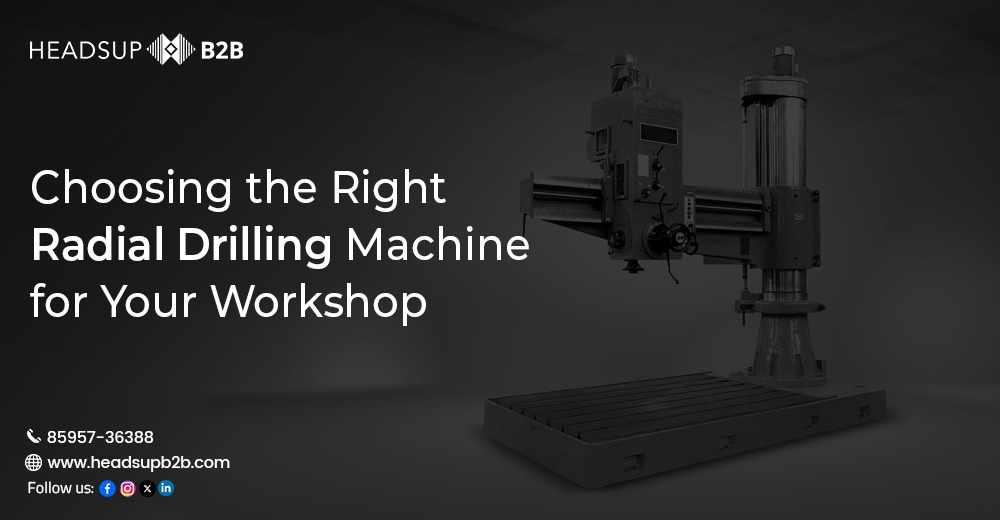
  • Choosing the Right Radial Drilling Machine for Your Workshop

    Choosing the Right Radial Drilling Machine for Your Workshop

    Selecting appropriate equipment for your workshop is the key step for productivity and safety. At Headsup B2B, we understand the complexities of choosing the ideal radial drilling machine for your needs. Through this blog, we will guide you through a comprehensive approach to workshop safety including selecting the appropriate equipment,

    that fits into the safety standards and operational requirements.

    Introduction

    The quality and type of radial drilling can greatly enhance your efficiency and productivity. So, Choosing the perfect radial drilling machine for your workshop is an important decision. but we know it also feels like a daunting task. Radial drilling machines are versatile, powerful, and essential for a variety of drilling tasks in both small and large workshops. Did you know that the first radial drilling machine was invented in the late 19th century, revolutionising the way holes were drilled in metal and other materials? With the advancement in technology, these machines have also evolved with advanced features that make them indispensable in modern manufacturing. At Headsup B2B, we specialise in connecting businesses with the perfect manufacturers to meet their needs. In this blog, we will discuss the basics of considering advanced features and future trends while choosing the right radial drilling machine.

    Definition and basic components

    A machine tool called a radial drilling machine is mostly used to drill round holes into massive workpieces.

    Drilling medium large-sized and heavy workpieces is the special purpose of radial drilling machines. These devices are perfect for components with significant height since they may be used to drill holes at a specific radial distance. They are mostly used for handling huge, heavy workpieces in situations where mobility is restricted.

    Why Is Radial Drilling Machine Important?

    You see, JCB bucket manufacturers are not the only ones who deal with large-size parts. There are countless other manufacturers such as crane manufacturers, tractor manufacturers, truck manufacturers, lathe machine manufacturers, and many more.

    They all deal with large-size parts. And when it comes to making large-diameter holes in these parts Radial Drilling Machine is the handiest tool out there in the machining industry. No wonder why they love using the Radial Drill as their primary drilling machine.

    Factors to Consider When Choosing a Radial Drilling Machine

    Workpiece Size and Material

    When selecting a radial drilling machine, it’s crucial to consider the size and type of materials you’ll be working with. Ensure the machine can handle the largest workpieces in your operations. Compatibility with different materials, such as metal, plastic, or wood, is also important to avoid machine damage and guarantee efficient performance.

    Drilling Depth and Precision

    Evaluate the depth and precision requirements for your drilling tasks. To achieve accurate and consistent results, especially for complicated projects a machine with adjustable depth settings and high precision capabilities is significant.

    Power and Speed

    The motor power and spindle speed of the radial drilling machine are key factors that influence its performance. Higher power and adjustable speed settings allow the machine to handle tougher materials and more complex tasks, providing versatility for various applications.

    Table Size and Adjustability

    Consider the dimensions of the machine’s table and its ability to adjust to different positions. You can work on a variety of tasks and easily accommodate various sizes of workpieces with larger, adjustable tables.

    Ease of Operation and Maintenance

    Choose a machine that is user-friendly and easy to operate, even for those with less experience. Additionally, consider the maintenance needs. Always choose machines that are easy to maintain and come with accessible parts as they can save time and reduce downtime, providing smooth and efficient operations in your workshop.

    How Headsup B2B Makes the Procurement of Radial Drilling Machines Easy

    At Headsup B2B, we simplify buying radial drilling machines for your workshop. Our platform offers a wide range of high-quality machines from reputable and trustworthy manufacturers, to provide our customers with the perfect fit for their needs. Here’s how we make procurement easy:

    Extensive Selection

    We provide a comprehensive range of radial drilling machines, from manual to fully automatic models, catering to various requirements and budgets.

    Detailed Product Information

    Each listing includes detailed specifications, user reviews, and also high-resolution images, allowing you to make informed decisions without needing to visit multiple sites.

    Expert Assistance

    Our team of experts is available to offer guidance and answer any questions, helping you choose the right machine based on your specific needs and operational goals.

    Competitive Pricing

    Moreover, we offer competitive prices and regular discounts, ensuring you get the best value for your investment.

    Streamlined Ordering Process

    The procurement process is straightforward and user-friendly. You can easily compare models, place orders, and track shipments all in one place.

    After-Sales Support

    Our commitment doesn’t end with your purchase. We also provide excellent after-sales support, including installation assistance and maintenance tips, to ensure your machine operates smoothly.

    By choosing Headsup B2B, you streamline the procurement process, save time, and gain access to the best radial drilling machines in the market.

  • How to Properly Install PVC Pipes: A Step-by-Step Guide

    How to Properly Install PVC Pipes: A Step-by-Step Guide

    Installing PVC pipe correctly is essential, whether you’re replacing a broken part or repairing a leak. At Headsup B2B, we understand the importance of PVC pipes and the installation process. We will look at the step by step for installing PVC pipes in this blog article. We will also go over the significance of PVC pipe quality and offer installation tips for PVC pipe. Now let’s get started and learn the best ways to install PVC pipes.

    Understand PVC Pipes

    Polyvinyl chloride is the plastic used to make PVC pipes. It manages waste in buildings and is used in vents and drains. It is robust, light, and stiff. PVC pipe is perfect for drain applications beneath bathroom vanities and kitchen sinks since it is simple to install.

    PVC can be attached to almost anything, except extremely hot environments, thanks to the wide variety of available fittings. Due to its ease of installation, resistance to nearly all alkaline and hazardous substances, and lack of need for hot soldering, it performs plumbing far better than the old standard cast iron pipe. There are two varieties, type 40 for residential dwellings and type 80 for industrial environments, which are specified in standards.

    Importance of PVC Pipe Quality

    The quality of the PVC pipe is crucial when installing a PVC repair coupling. Choosing a reliable brand that complies with industry norms guarantees robustness and longevity, which are essential. Superior PVC pipes are perfect for a range of plumbing applications since they are immune to corrosion, chemicals, and environmental conditions.

    Types of PVC Pipes

    Preparation and safety measures

    To make sure that the repair connection and the plumbing system as a whole are compatible, take into account variables like pipe diameter, wall thickness, and pressure ratings.

    Tools and Materials Required

    To install a PVC repair coupling effectively, you’ll need the following tools and materials:

    • Hacksaw or PVC pipe cutter: essential for cutting the damaged section of the PVC pipe.

    • Emery cloth or sandpaper: used to smooth the cut edges of the pipe, ensuring a clean surface for a strong bond.

    • PVC primer prepares the pipe and coupling surfaces for cementing by cleaning and softening the PVC.

    • PVC Cement creates a strong, permanent bond between the pipe and the coupling.

    • Measuring tape: helps to accurately measure the section of pipe to be removed and the coupling to be installed.

    • Marker or pencil: useful for marking the cutting points and alignment of the coupling.

    • Rags or paper towels: are necessary for cleaning up any excess primer or cement during the installation process.

    Cutting

    PVC is easily cuttable. It can be cut using a hacksaw, but for a straight edge, mitre saw abrasive discs are a preferable option. The entire line of the pipe may get distorted at a junction that is skewed as a result of the pipe not being cut straight.

    Deburr and Fit

    After cutting, remove any shavings from the pipe and smooth the inner edges, or deburr. After the pipe has been cut to the exact length, arrange it on the floor with the fittings in position to check that the length is accurate.

    Cleaning and Priming

    Selecting the right primer and cleaner: Choosing the right primer and cleaner is crucial for a strong bond. Use a primer that is compatible with PVC, often labelled as PVC primer, which cleans and softens the pipe surface to ensure the cement adheres properly.

    Steps to properly clean and prime the pipe ends

    1. Clean the pipe ends with a rag to remove dirt and grease.

    2. Apply the PVC primer to the outside of the pipe and the inside of the fitting using the applicator provided. Make sure to cover the entire surface area that will be joined.

    3. Allow the primer to dry for a few seconds before proceeding to the cementing step.

    Applying PVC Solvent Cement

    Choosing the right type of cement: Select a PVC Solvent Cement that matches your pipe type and application. Regular PVC cement works for most applications, but if you’re working with high-pressure systems, consider using heavy-duty cement.

    Application tips for a strong bond

    1. Apply a generous layer of PVC Solvent Cement to the primed areas on both the pipe and the fitting. Work quickly, as the PVC Solvent Cement dries fast.

    2. Twist the pipe a quarter turn as you push it into the fitting. This action spreads the cement evenly and ensures a good seal.

    Fitting the Pipes Together

    Ensuring proper alignment: Immediately after applying the cement, push the pipe fully into the fitting while making sure it’s aligned correctly. Misaligned pipes can lead to weak joints and potential leaks.

    Holding the joint in place for proper curing: Hold the joint together for about 30 seconds to allow the cement to set. After this, the joint should be stable enough to hold itself, but avoid putting any pressure on it for at least 15 minutes. Full curing typically takes 24 hours, after which the joint will be ready for use.

    Cleaning and Priming

    Steps to properly clean and prime the pipe ends:

    1. Clean the Pipe Ends: Start by wiping the pipe ends with a rag to remove any dirt, grease, or debris. This ensures a clean surface for the primer and cement to adhere to.

    2. Apply Primer: Use a PVC primer to clean and soften the pipe surface. Apply it to the outside of the pipe and the inside of the fitting. Make sure to cover the entire area that will be joined. Allow the primer to dry for a few seconds before moving on to the cementing process.

    Common Mistakes to Avoid

    • Common mistakes in PVC pipe cutting include uneven cuts, weak joints, and potential leaks. Always use a sharp hacksaw or PVC pipe cutter for a clean, straight cut.

    • Inadequate primer and cement application is a common mistake, as they clean and soften PVC, promoting strong bonding and reducing the risk of joint failure.

    • PVC pipes’ expansion and contraction with temperature changes are crucial for maintaining system integrity. Ensuring proper fitting and using expansion joints in temperature-variable areas is essential.

    Why Choose Headsup B2B for PVC Pipe Online Sourcing

    Wide Selection: Headsup B2B offers a vast range of PVC pipes and fittings. Whether you need Schedule 40, Schedule 80, or CPVC, you’ll find exactly what you’re looking for.

    High Quality: We ensure that all our PVC products meet the highest quality standards. You can trust that our pipes are durable, reliable, and stable.

    Competitive Pricing: We provide our customers with the best prices on the market. By sourcing directly from top manufacturers, we pass the savings on to you.

    Expert Support: Our team of experts is always ready to help. Whether you need advice on the right products or guidance on installation, we’re here to support you every step of the way.

    Easy Ordering: Our online platform is user-friendly and easy to navigate. You can quickly find what you need, place your order, and have it delivered to your doorstep.

    Customer Satisfaction: At Headsup B2B, we prioritise customer satisfaction. We strive to provide excellent service and ensure that you’re happy with your purchase.

    Choosing Headsup B2B for your PVC pipe sourcing means getting top-quality products, great prices, and exceptional support, all from the comfort of your home or office.

  • Carbon Steel vs. Stainless Steel: A Comprehensive Guide

    Carbon Steel vs. Stainless Steel: A Comprehensive Guide

    When it comes to choosing the right material for your next project, the debate between carbon steel and stainless steel is a common one.

    Both materials have unique properties that make them suitable for different applications, but understanding their differences can help you make a more informed decision. In this guide, we’ll explore the key differences between carbon steel and stainless steel, their advantages, disadvantages, and ideal uses to help you determine which material is best for your needs.

    Difference Between Carbon Steel vs Stainless Steel

    What is Carbon Steel?

    Carbon steel is a type of steel that contains a higher percentage of carbon compared to other types of steel. It is primarily composed of iron and carbon, with the carbon content typically ranging from 0.05% to 2.0%. Carbon steel is known for its strength and durability, making it a popular choice in various industries.

    Types of Carbon Steel

    1. Low Carbon Steel: Also known as mild steel, this type of carbon steel contains up to 0.3% carbon. It is relatively easy to form and weld, making it suitable for applications like automotive components, structural beams, and pipelines.

    2. Medium Carbon Steel: With a carbon content ranging from 0.3% to 0.6%, medium carbon steel offers a balance of strength and ductility. It is commonly used in manufacturing machinery parts, gears, and axles.

    3. High Carbon Steel: This type of steel contains more than 0.6% carbon, providing superior hardness and wear resistance. High carbon steel is often used in applications requiring sharp edges or high strength, such as cutting tools and springs.

    Advantages of Carbon Steel

    • Cost-Effective: Carbon steel is generally less expensive than stainless steel, making it a budget-friendly option for many applications.

    • High Strength: The higher carbon content enhances the strength and hardness of the steel, making it suitable for heavy-duty applications.

    • Good Machinability: Carbon steel is easier to machine compared to some other materials, which can reduce manufacturing costs.

    Disadvantages of Carbon Steel

    • Susceptible to Corrosion: Carbon steel is prone to rust and corrosion when exposed to moisture and chemicals, which can limit its use in certain environments.

    • Limited Corrosion Resistance: Unlike stainless steel, carbon steel does not offer inherent resistance to corrosion, which can affect its longevity in harsh conditions.

    What is Stainless Steel?

    Stainless steel is a type of steel alloy that contains a minimum of 10.5% chromium, which provides its signature resistance to corrosion. The addition of chromium forms a protective layer of chromium oxide on the surface of the steel, preventing rust and staining. Stainless steel is available in various grades and types, each offering different properties and benefits.

    Types of Stainless Steel

    1. Austenitic Stainless Steel: This type of stainless steel is non-magnetic and known for its excellent corrosion resistance and formability. It is commonly used in applications like kitchen appliances, medical instruments, and chemical processing.

    2. Ferritic Stainless Steel: Ferritic stainless steel is magnetic and offers good resistance to stress corrosion cracking. It is used in applications like automotive exhaust systems and industrial equipment.

    3. Martensitic Stainless Steel: This type of stainless steel is known for its high strength and hardness, making it suitable for applications like cutting tools and turbine blades.

    4. Duplex Stainless Steel: Duplex stainless steel combines the properties of both austenitic and ferritic stainless steels, offering high strength and excellent resistance to corrosion. It is used in applications like oil and gas equipment and chemical processing.

    Advantages of Stainless Steel

    • Exceptional Corrosion Resistance: The high chromium content provides excellent resistance to corrosion, making stainless steel ideal for use in harsh environments.

    • Durability: Stainless steel is highly durable and resistant to wear and tear, which contributes to its long service life.

    • Aesthetic Appeal: Stainless steel has a sleek, shiny appearance that is often desired in architectural and design applications.

    Disadvantages of Stainless Steel

    • Higher Cost: Stainless steel is generally more expensive than carbon steel due to its alloying elements and manufacturing processes.

    • Less Machinability: Stainless steel can be more challenging to machine compared to carbon steel, which may increase manufacturing costs.

    Key Differences of Carbon Steel vs. Stainless Steel

    Corrosion Resistance

    One of the most significant differences between carbon steel and stainless steel is their resistance to corrosion. Carbon steel is susceptible to rust and corrosion, particularly in moist or acidic environments. In contrast, stainless steel’s chromium content provides a protective layer that prevents rust and staining, making it suitable for applications where exposure to moisture or chemicals is a concern.

    Strength and Hardness

    Carbon steel generally offers higher strength and hardness compared to stainless steel, especially in high carbon grades. This makes carbon steel an excellent choice for applications requiring superior strength, such as structural components and heavy machinery.

    Stainless steel, while not as hard as high carbon steel, still offers good strength and durability. Its strength-to-weight ratio and resistance to deformation make it suitable for applications where both strength and corrosion resistance are required.

    Machinability

    Carbon steel is known for its good machinability, which makes it easier to cut, drill, and shape. This can result in lower manufacturing costs and greater flexibility in production.

    Stainless steel, on the other hand, can be more challenging to machine due to its toughness and work-hardening properties. Special tools and techniques may be required, which can increase production costs.

    Cost

    Carbon steel is generally more affordable than stainless steel, making it a cost-effective choice for many applications. The lower cost is due to the simpler composition and manufacturing processes involved.

    Stainless steel, with its alloying elements and corrosion-resistant properties, tends to be more expensive. However, its long-term benefits in terms of durability and maintenance can justify the higher initial cost.

    Applications of Carbon Steel and Stainless Steel

    Carbon Steel Applications

    • Construction: Carbon steel is widely used in the construction industry for structural beams, columns, and reinforcements due to its strength and cost-effectiveness.

    • Automotive: Carbon steel is used in automotive parts like chassis components and engine parts because of its high strength and machinability.

    • Pipelines: The durability and strength of carbon steel make it a suitable choice for pipelines and infrastructure projects.

    Stainless Steel Applications

    • Medical Instruments: Stainless steel’s corrosion resistance and biocompatibility make it ideal for medical instruments and surgical tools.

    • Kitchen Appliances: The aesthetic appeal and resistance to corrosion make stainless steel a popular choice for kitchen appliances, sinks, and cookware.

    • Chemical Processing: Stainless steel’s resistance to chemicals and high temperatures makes it suitable for chemical processing equipment and tanks.

    Choosing the Right Material for Your Project

    When deciding between carbon steel and stainless steel, consider the following factors:

    1. Environment: If your project involves exposure to moisture, chemicals, or harsh conditions, stainless steel’s corrosion resistance may be the better choice.

    2. Strength Requirements: For applications requiring high strength and hardness, carbon steel may offer better performance.

    3. Cost Considerations: If budget constraints are a primary concern, carbon steel’s lower cost may be advantageous.

    4. Machinability: Consider the complexity of machining required for your project and whether carbon steel’s machinability benefits align with your needs.

    Conclusion

    Both carbon steel and stainless steel have their distinct advantages and applications. Carbon steel offers strength, affordability, and good machinability, making it suitable for various structural and industrial uses. Stainless steel, with its exceptional corrosion resistance, durability, and aesthetic appeal, is ideal for applications where exposure to harsh environments or a sleek appearance is required.

    Understanding the key differences between these materials will help you make an informed decision based on your project’s specific needs. Whether you choose carbon steel or stainless steel, both materials have proven their worth across a range of industries and applications.

    For further assistance or to explore material options for your next project, feel free to contact our experts or browse our comprehensive catalog of raw materials.

    Frequently Asked Questions

    1. What is the difference between carbon steel and stainless steel?

    The main difference between carbon steel and stainless steel is their corrosion resistance. Carbon steel is prone to rust and corrosion, whereas stainless steel contains chromium, which forms a protective layer to prevent corrosion. This makes stainless steel ideal for environments exposed to moisture or chemicals.

    2. Which steel is more cost-effective: carbon steel or stainless steel?

    Carbon steel is generally more cost-effective than stainless steel. Its simpler composition and manufacturing processes contribute to its lower price. However, stainless steel’s durability and corrosion resistance can offer long-term cost savings in applications where maintenance and replacement are frequent.

    3. Can carbon steel be used in outdoor applications?

    Yes, carbon steel can be used in outdoor applications, but it is more susceptible to rust and corrosion when exposed to the elements. To improve its durability, carbon steel can be coated or treated to enhance its resistance to corrosion.

    4. Is stainless steel stronger than carbon steel?

    Stainless steel and carbon steel can vary in strength depending on their specific grades and compositions. Generally, high-carbon steel is stronger and harder than stainless steel. However, stainless steel offers good strength along with superior corrosion resistance.

    5. What are the best applications for stainless steel?

    Stainless steel is best suited for applications requiring resistance to corrosion and high temperatures. Common applications include medical instruments, kitchen appliances, chemical processing equipment, and architectural elements where both durability and aesthetic appeal are important.

  • Decoding Speed Breakers: Picking the Perfect Solution

    Decoding Speed Breakers: Picking the Perfect Solution

    Lessons from India’s Road Safety Initiatives

    On all types of roadways, speed breakers are a necessary component of traffic-calming strategies. Speed breakers significantly lower collisions and injuries caused by compelling vehicles to slow down. Research indicates that the best speed breaker can cut crashes by as much as 45%. We can increase everyone’s safety on our roadways by using the best speed-breaker solution.

    To assist you in selecting the best speed breaker for your particular set of road safety requirements, this thorough guide from experts at Headsup B2B thoroughly examines all the most significant speed breaker possibilities. Let’s collaborate to make the streets safer and more livable.

    Why are Speed Breakers Essential for Safe Driving?

    One of the main causes of traffic accidents and fatalities globally is speeding. Because of the laws of physics, speeding decreases a driver’s ability to manage traffic conditions safely and raises the possibility of serious injury in an accident. Road speed breakers are essential for maintaining general road safety and preventing accidents because they regulate speeds.

    It is commonly known that speed and collisions are related.

    Speed breakers enable other users of the road, such as bicycles and pedestrians, to more accurately assess gaps in traffic and cross safely by requiring safer driving speeds. Additionally, they offer drivers additional time to respond and avert any crashes. Using speed breakers to regulate speed is one of the most dependable and economical solutions to prevent fatalities on our roadways. Its broad use is essential to fulfilling the objectives of Vision Zero.

    What Kinds of Speed Breakers Are There?

    Speed breakers, often known as traffic-calming devices or speed bumps, are useful measures used to enforce slower speeds on public roads. They have different sizes and forms, and each has pros and cons. The many kinds of speed breakers are as follows:

    Traditional Road Speed Breakers

    Conventional road speed breakers, concrete or asphalt bumps, are permanent, 3–4 inches high, 1-2 feet broad, and compel traffic to slow down to 15-20 km/h. Although effective, they can cause damage and delays.

    Rubber Speed Humps/Breakers

    Rubber speed bumps and breakers, made from recycled rubber, offer a softer, safer, and easier-to-replace option for mixed-car traffic areas. They are less likely to harm vehicles and provide superior emergency access.

    Road Rubber Speed Breakers

    Road rubber speed breakers are moulded rubber strips installed across a road, providing consistent speed control across all lanes. They play a crucial role in highways, urban roads, and multi-lane environments, reducing vehicle damage and noise. Ladwa Solutions, a leading manufacturer, offers expert engineering services for custom-tailored traffic calming to reduce crashes.

    Speed Cushions

    Though smaller and more closely placed, speed cushions resemble speed bumps. While still efficiently slowing down automobiles, this design makes riding a bicycle or motorbike more comfortable. Frequently, reused plastic or rubber is used to make them.

    Speed Tables

    Speed tables are raised, flat-topped portions of a road that take up the whole width of a lane. They are usually used in places like the vicinity of schools or retail malls when a slower speed limit is required for a longer distance.

    Where can speed breakers be placed as per law?

    Factors to Consider While Choosing the Best Speed Breaker

    Examining road conditions, traffic patterns, speed restrictions, and emergency responders’ demands is necessary for selecting the appropriate speed breaker. A few crucial elements are:

    • The optimal speed breaker depends on regular traffic volume and average speeds. Conventional speed bumps are practical for low-volume residential routes, while long rubber breakers offer smoother decreases.

    • Road design, terrain, and temperature all impact speed bump safety. Flat, straight roads with visibility are ideal, while hilly or winding routes require extra precautions.

    • Speed breakers are crucial for emergency response vehicles and public transit, ensuring safety by maintaining space between them and gradually increasing profiles. Communication with emergency services and transportation organisations is essential during the selection and placement process. Road design, surroundings, and material performance should also be considered.

    • When choosing speed breakers, the cost is an important consideration in addition to their influence on road safety. To achieve the best value, agencies must strike a balance between price and quality. The overall investment is determined by both the initial outlay and long-term durability.

    Traffic engineers can calculate expected efficacy and support the best speed breaker selection with data on all these parameters. Selecting best speed breaker wisely improves traffic safety without having unfavourable effects.

    How Headsup B2B Makes Choosing and Sourcing the Best Speed Breaker

    Headsup B2B is your go-to solution for simplifying the process of selecting the perfect breaker. Here’s how:

    Extensive Selection:

    Headsup B2B offers a wide variety of options, ensuring you have access to the right options for your specific needs.

    Expert Guidance:

    Need help determining which is the best speed breaker? No problem! Headsup B2B provides expert guidance and support to help you make informed decisions. Whether you’re considering load capacity, speed ratings, or environmental factors, our team of professionals is here to assist you every step of the way.

    Customised Recommendations:

    Every industrial application is unique, and we understand that one size does not fit all. That’s why Headsup B2B offers customised recommendations tailored to your specific requirements. We consider factors like load capacity, operating conditions, and budget constraints to ensure you get the perfect bearing solution for your needs.