Tag: construction materials

  • Top Building Construction Materials for Durability and Eco-Friendliness in 2024

    Top Building Construction Materials for Durability and Eco-Friendliness in 2024

    Best Eco-Friendly Building Materials for Homes | Strength Meets Sustainability

    Ee explore the Best Eco-Friendly Building Materials for 2024 that combine strength and sustainability, ensuring your projects are both durable and eco-friendly.

    Introduction

    Sustainable living is becoming more and more of a worldwide necessity in a time when environmental worries are at an all-time high. The building industry is crucial to this shift because the materials used in construction have a big influence on the state of the environment on our planet. Using eco-friendly building materials is crucial to reducing our environmental impact as we approach 2024. According to recent industry studies, there has been a notable 30% rise in the use of sustainable building practices over the last five years, indicating a strong global trend towards greener construction techniques.

    Understanding Eco-Friendly Building Materials

    What are Eco-Friendly Construction Materials?

    Green building materials are eco-friendly construction solutions derived from renewable or recyclable resources, energy-efficient techniques, or sustainable practices. They minimize environmental harm, save non-renewable resources, and promote environmental sustainability by reducing the ecological impact of construction projects.

    Importance of Eco-Friendly Building Materials

    Beyond only protecting the environment, eco-friendly building materials are crucial. They are essential to creating a sustainable future because they lessen the negative effects of construction on the environment and public health. Using such materials, even inexpensive choices, is crucial to satisfying regulatory standards, attaining energy efficiency, and improving overall quality of life in light of the growing worldwide focus on sustainability. They are essential for lowering greenhouse gas emissions, preserving water and energy, and cutting down on landfill trash.

    Advantages of Sustainable Building Materials

    Using sustainable building materials has several advantages, such as:

    Environmental Impact Reduction: Using these materials greatly reduces the carbon impact of building a home. Pollution, habitat damage, and deforestation are decreased when resources are obtained responsibly, recycled, or quickly regenerated.

    Energy Efficiency: Because environmentally friendly materials frequently have better insulating qualities, using less energy for heating and cooling is possible. This lowers utility expenditures in addition to conserving energy.

    Healthier Living Environments: Green construction materials typically contain non-toxic, less volatile elements that improve indoor air quality and reduce the risk of health problems caused by dangerous chemicals off-gassing.

    Enhanced Property Value: Tenants and buyers that place a high value on sustainability are frequently drawn to buildings built using sustainable materials. Higher property values and a better return on investment may result from this.

    Durability and Longevity: A lot of ecologically friendly, long-lasting building materials are also quite durable. As a result, during the course of the building’s lifetime, regular replacements and repairs will have less impact on the environment.

    A 2024 poll revealed that over 50% of global builders now favor eco-friendly materials, indicating their increasing acceptance and integration into standard building procedures, contributing significantly to the industry’s shift towards sustainable practices.

    Types of Sustainable Building Materials for Home

    The need for more environmentally friendly housing has sped up the creation and use of sustainable construction materials. These materials reduce the negative effects of development on the environment while simultaneously having positive long-term effects on health and the economy. The key categories of sustainable construction materials that will revolutionise houses in 2024 are given here with emphasis on their special qualities, and benefits.

    Recycled Steel

    Recycled steel is a popular green building material due to its strength and longevity. Salvaged steel from automobiles, buildings, and other structures, melted down, and reformed into new steel goods. This reduces the carbon footprint of acquiring and processing raw materials and lowers the total energy consumption of the steel industry.

    Benefits

    • Cuts down on trash and landfill usage: Reusing scrap steel reduces the amount of waste that is disposed of in landfills.

    • Energy efficiency is around 75% less energy-intensive than producing new steel from fresh sources.

    • Strength and durability: Provides the same structural integrity as fresh steel, which is necessary for heavy-duty constructions and building frames.

    Bamboo

    Bamboo is well known for its outstanding environmental qualities. Bam is one of the fastest-growing plants on Earth. And it may be harvested every three to five years, unlike hardwood trees, which can take decades to reach maturity. Compared to conventional hardwoods, it is a more sustainable option because of its quick development cycle. Moreover, bamboo naturally wards off pests and diseases, reducing the need for artificial pesticides that are harmful to the environment.

    Benefits

    Renewable quickly: Bamboo grows three to five years to reach full size, much faster than hardwood trees.

    Carbon sequestration: Compared to many tree species, bamboo forests are better at absorbing carbon dioxide.

    Versatility: It may be used for many different things, such as decorative treatments and structural parts.

    Recycled Wood

    Reclaimed wood, obtained from dismantling existing buildings. It is one of the important component in new construction to reduce environmental impact and the need for new raw materials. Each piece of recycled wood has a distinct grain and patina, giving dwellings a rustic look without removing more trees. Cross-laminated timber (CLT) construction is becoming increasingly popular in sustainable architecture.

    • Waste reduction: It assists in lowering the amount of stuff that is thrown away.

    • A distinct visual appeal provides a unique appearance with a touch of history.

    • lowers the loss of forests: reduces the need for fresh wood, and safeguards the ecosystems of forests.

    Hempcrete

    The production of hempcrete occurs with hemp hurd, the woody core of the hemp plant, mixing with water and a lime-based binder. Consequently, a lightweight cementitious insulating material for walls, floors, and roofs. Hempcrete is environmentally friendly and sustainable because, throughout its curing process, it collects more CO2 than it releases. It controls moisture in the structure and acts as a great insulator, lowering the likelihood of mould growth and respiratory issues.

    Benefits

    Extremely sustainable: Hemp grows quickly without much water and doesn’t require toxic pesticides.

    Great insulation: offers exceptional acoustic and thermal qualities.

    Carbon-negative: Seeks out and retains ambient CO2 for growth and healing.

    Cork

    The cork oak tree, which regenerates its bark every nine to twelve years, is a renewable resource. Cork is main component for its insulation properties in flooring and wall coverings, and its natural resilience and compressibility make it a comfortable material. This growth is due to the increasing demand for natural cork, which can preserve wine for longer and has good storage capabilities.

    Benefits

    Sustainable harvesting cycle: Cork bark regenerates every 9 to 12 years, making it a renewable resource.

    Thermal insulation: Energy expenses are decreased by thermal insulation, which provides inherent thermal resistance.

    Acoustic properties: It is perfect for calm, quiet household conditions and helps decrease noise transmission.

    Straw Bales

    The production of bales of natural straw occurs from wheat, rice, barley, or oats are crushed, heaped, and covered with plaster. Because of this technique’s exceptional insulating qualities and sustainability, green buildings today have brought it back to life. Straw is a low-impact material and a good insulator made from agricultural waste. The plaster coating of correctly build straw bale structures , provides good fire protection as well as moisture and insect resistance.

    Benefits

    Better insulation: Straw bales may save a lot of money on heating and cooling because of their high R-values.

    Low-cost material: Straw is a cheap and easily accessible resource since it is frequently seen as agricultural waste.

    Fire resistance: Straw bale walls have the potential to be more fire resistant than many conventional building materials when properly sealed.

    Why Headsup B2B is the Best Online Platform for Sourcing Eco-Friendly Construction Material?

    Choosing the right platform for sourcing building materials can make a huge difference in the success of your projects. Here’s why Headsup B2B stands out as the best choice for builders, contractors, and developers:

    Wide Range of Building Construction Materials

    We offers a vast selection of building construction materials, from traditional options like steel and concrete to innovative and sustainable choices like bamboo and hempcrete. We can meet all demands related to your project.

    Quality Assurance

    We understand that the quality of materials is crucial for the durability and safety of your builds. That’s why we only partner with trusted suppliers who meet our high standards. You can be confident that every product you purchase is reliable and top-notch.

    Competitive Pricing

    we believe in providing value for your money. Our platform offers competitive pricing on all materials, ensuring you get the best deals without compromising on quality.

    Easy Navigation

    Our user-friendly website makes it simple to find exactly what you’re looking for. With intuitive search functions and detailed product descriptions, you can quickly locate the materials you need and make informed decisions.

    Sustainability Focus

    We are committed to promoting eco-friendly building practices. Our platform highlights sustainable materials, helping you choose options that are good for both your projects and the planet.

    Expert Support

    Need advice or have questions? Our team of experts is here to help. Whether you need assistance with product selection or have technical queries, we’re just a call or click away.

    Reliable Delivery

    We know that timely delivery is critical for keeping your projects on track. Headsup B2B ensures prompt and reliable shipping, so you get your materials when you need them.

    Secure Transactions

    Your security is our priority. Our platform uses advanced encryption and secure payment methods to protect your personal and financial information.

    With Headsup B2B, sourcing construction materials is easier, faster, and more reliable.
  • 9 Extraordinary Steel Innovations Driving Modern Construction Trends

    9 Extraordinary Steel Innovations Driving Modern Construction Trends

    Did you know that steel is one of the most widely used materials in construction, accounting for nearly half of all structural materials in modern buildings? It should not come as a surprise that steel inventions are the reason behind the current construction trends, and they influence the shape of the skyscrapers of our cities as well as the infrastructure that we depend on in our daily lives. Join us in the interactive session across the next nine case studies, which introduce the latest technologies in construction steel and how Headsup B2B helps companies embrace them.

    The Evolution of Construction Steel in Construction

    Steel, a cornerstone of modern construction, has undergone significant evolution since its inception. From the discovery of iron alloys to the invention of contemporary high-stress steel, it has been an interesting and ever-evolving path. The arrival of Bessemer’s process in the nineteenth century marked the beginning of a new age in steel production, making the manufacturing process cost-effective and efficient. The steel of the present age is not only a substance; it’s a sign of reliability, longevity, and sustainability. Technological developments and environmental concerns greatly motivated innovations in steel, changing the construction arena. They offer new opportunities to businesses via B2B business platforms such as Headsup B2B.

    9 Extraordinary Steel Innovations

    1. Advanced Steel Alloys: These alloys redefine strength and durability, pushing the boundaries of what is possible in construction.

    2. Light gauge steel frames: They are transforming the building sector through increased productivity, decreased waste, improved structural integrity, and sustainability. Because of these advantages, the construction sector has substantially contributed to lessening its environmental impact.

    3. High-Strength Low-Alloy (HSLA) Steel: Offering sustainability alongside strength, HSLA steel reduces environmental impact while delivering exceptional performance.

    4. Nanotechnology in Steel Coatings: Microscopic coatings enhance steel’s resistance to corrosion, prolonging the lifespan of structures in harsh environments.

    5. Prefabricated Steel Components: Prefabrication accelerates construction timelines, minimising disruption and maximising efficiency on-site.

    6. Shape Memory Alloys (SMAs): SMAs enable adaptive structures that respond dynamically to changing conditions, ushering in a new era of architectural innovation.

    7. Recycled Steel: Recycling technologies transform steel waste into a valuable resource, promoting sustainability and circularity in construction practices.

    8. 3D Printed Steel Structures: Revolutionary 3D printing techniques unleash unprecedented levels of customisation and efficiency in steel construction.

    9. Self-Healing Steel: Micro-cracks and corrosion are no match for self-healing steel, paving the way for maintenance-free structures that stand the test of time.

    Steel advancements have had major impacts on the modern construction industry. The introduction of high-grade, low-weight steel has opened up architectural possibilities by creating numerous wider, more modern structures and reshaping the skyline. Moreover, the creation of sustainable iron and steel production methods fits well with the prevailing push for environment-conscious construction countries.

    These developments like steel is the base of the construction of green energy projects, commercial and residential buildings, disaster management, international mergere and acquisitions, it is one of the major components contribution to the modernisation of the construction Industry.

    The steel helps in maintaining the durability and beauty of buildings. It also aids in saving costs and sustaining environmental safety.

    Forging the Future: Construction Steel Innovations in Modern Construction with Headsup B2B

    Reflecting on the extraordinary steel innovations driving modern construction trends, one thing becomes clear. The future of construction is defined by innovation, collaboration, and a steadfast commitment to excellence. With Headsup B2B leading the charge, businesses have the opportunity to embrace these innovations. We are shaping a future where “construction steel” continues to stand as a symbol of progress in the construction environment.

  • Innovative Uses of PVC Pipes in Various Construction Projects

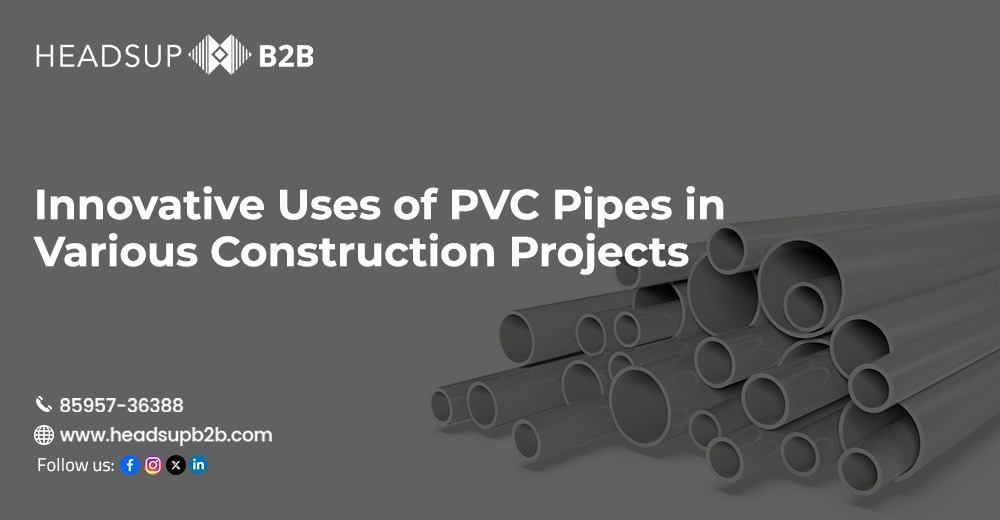
    Innovative Uses of PVC Pipes in Various Construction Projects

    From plumbing to playground equipment, PVC pipes have long been a staple in construction. However, the variety of applications of this material is not limited to traditional usages only.

    This blog focuses on providing you with a deep understanding of the innovative uses of PVC pipes in modern construction applications. Learn about the remarkable impact these modest tubes are having on sustainable building methods and imaginative architectural concepts. Let us together discover the unexplored power of PVC pipes and their contribution to the ever-changing modern construction approach.

    Welcome to a world where innovation meets functionality, brought to you by Headsup B2B one of the most trusted PVC Pipes marketplace.

    Advantages of PVC Pipes in Construction

    Before moving on to their uses, one should first understand the general advantages of PVC pipes in construction.

    The PVC pipes are well-known for their durability and longevity, and they are also resistant to corrosion and several chemicals.

    Their lightweight design has multiple advantages, like ease of use and less labour required, which eventually lead to low construction costs and time.

    That aside, PVC pipes are more cost-effective than metal and concrete, which makes them a desirable choice for contractors looking to streamline their budget while not compromising on quality.

    Explore Innovative Applications of PVC Pipes with Headsup B2B PVC Pipes Marketplace

    Underground Drainage Systems: One of the most common applications of PVC pipes in construction is in underground drainage systems. PVC pipes offer several advantages over traditional materials such as concrete or clay, including superior resistance to corrosion and ease of installation. Furthermore, PVC pipes are relatively lighter, which makes them the best option for these installations since heavy operations are bulky and difficult to handle.

    Sustainable Water Management: In the era of sustainability, PVC pipes are playing a crucial role in water management systems. PVC pipes are a versatile and cost-effective irrigation solution, whether it is for rainwater harvesting or green space irrigation systems. Their durable structure works for continuous services, and their chemical-resistant materials are competent enough to be applied across varied water treatment processes.

    Structural Support: PVC pipes are not just limited to carrying fluids; they can also provide structural support in construction projects. Whether it is the use of foundation reinforcement for underground structures, PVC pipes provide an alternative which is lightweight, durable, and easily transportable. Their versatility permits original designs in conjunction with robust resistance against dangers.

    Creative Architectural Designs: Innovative architects are pushing the boundaries of design by incorporating PVC pipes into their projects. From art installations to contemporary design elements in modern architecture, PVC pipes have an infinite amount of usage scope. Such versatility gives an architect a chance to develop a distinct and invigorating design that will certainly be an eye-grabbing element in an urban setting.

    Looking ahead, the future of PVC pipes in construction is bright with promise. Emerging technologies and materials hold the potential to further enhance the capabilities of PVC pipes, while integration with digital construction platforms promises greater efficiency and precision in project execution.

    Transforming Construction

    Shop with Headsup B2B PVC Pipes Marketplace

    Innovation knows no bounds, and PVC pipes exemplify this truth in the realm of construction. From structural support to creative design elements and sustainable initiatives, the possibilities are endless. As we embrace the innovative potential of PVC pipes, let’s seize the opportunity to revolutionise construction projects and shape a brighter future for the industry. Shop now at Headsup B2B PVC Pipes Marketplace, where collaboration sparks innovation and propels us toward a new era of construction excellence.

  • Introduction to GI (Galvanised Iron) Products: Applications and Benefits

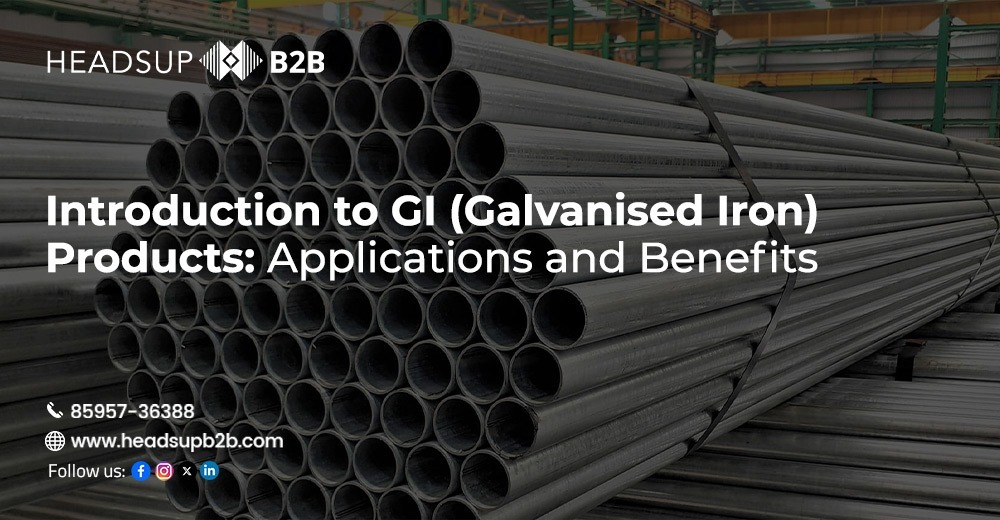
    Introduction to GI (Galvanised Iron) Products: Applications and Benefits

    Galvanised iron, usually abbreviated as G.I., is a type of steel that has its surface coated with zinc (by a process known as galvanization). It serves as an anti-rust armour that protects GI items against rust and corrosion, and thus the products become durable with a long life span. GI products can be seen everywhere, with their applications being broad and ranging from the industries of building, automotive, agriculture, and manufacturing.

    What are G.I. Products?

    G.I. items should be understood as products made out of galvanised iron, which refers to a steel type coated with a thin zinc layer to act as a barrier against rust and corrosion. Zinc provides cathodic shielding due to its sacrificial nature by getting corroded preferentially, thus preventing the rusting of the steel underneath. As a result of the galvanization, which is associated with a drastic increase in the durability and life expectancy of such products.

    The galvanization procedure can be utilised in the manufacture of boards, coils, pipes, and cables. Consequently, there are quite many GI products available in the market since different manufacturers will have different items they specialise in. This material not only has the strength and formability of steel but also zinc’s corrosion resistance for multiple application purposes.

    Applications of GI in Various Industries

    Construction Industry

    The construction industry heavily depends on GI for the projects that are built to withstand the test of time. Whether it’s for roofs that protect from the weather or fences that offer security, GI is a reliable option. Its resistance to corrosion makes it a well-liked option among architects and builders.

    Automobile Industry

    The automotive industry is also one of the major users of GI; from chassis to exhaust systems, it is a major component in vehicle manufacturing. Manufacturers rely on galvanized iron to enhance the lifespan and reliability of vehicles on the road.

    Connectivity

    Whether it is data transmission or powering households, GI gives the provision of smooth connectivity as well as the ability to withstand nature’s tests.

    Agriculture

    The GI is the foundation for everything that farmers use, from fencing to irrigation systems. Due to its strength and affordability, it’s no wonder that the agricultural sector makes use of it in its demanding environment and continuous workload.

    Benefits of GI Products

    • Corrosion Resistance
      Galvanization gives a sheath of protection from rust, extending the life of GI products outdoors as well as in industrial settings when compared with untreated ones.

    • Longevity and Low Maintenance
      Investing in GI is undoubtedly investing in our future. GI products have low maintenance requirements and a long lifespan that make them more cost-effective over their lifespan.

    • Versatility:
      GI products are designed to fit any situation, from the smallest fastener to the biggest structural beam. They are tailored to suit various applications in different industries.

    • Sustainability

    As businesses prioritise sustainability, GI stands out as a recyclable material. Its eco-friendly properties make it a responsible choice for environmentally conscious projects.

    Choosing the Right GI Products on Headsup B2B

    Headsup B2B helps you find expert B2B suppliers selling a wide range of GI products. Whether you are in construction, automotive, agriculture, or utilities, our platform connects you with the right suppliers for your requirements. Check out our listings, compare alternatives, and choose what fits your business best.

    Headsup B2B: Your Gateway to Industrial GI Excellence

    As we draw the curtains on this journey of GI (galvanised iron), it’s clear that their importance goes beyond construction. They reflect resilience, innovation, and sustainability in the face of the ever-changing industrial landscape.

    Our mission at Headsup B2B is to provide businesses with all the necessary tools for them to conveniently source from the desired industrial GI suppliers and materials. So, whether you’re building skyscrapers, revolutionising transportation, or cultivating the land, remember that GI products stand ready to support your vision for a stronger, more sustainable future. Join us at Headsup B2B and unlock the boundless potential of GI for your next endeavor.

  • Adhesives in Construction: Bonding Materials for Durability

    Adhesives in Construction: Bonding Materials for Durability

    In today’s constantly evolving construction industry, adhesives are the most important yet overlooked material. These seemingly humble materials play a pivotal role in ensuring the durability and longevity of structures worldwide.

    Adhesives, with their ability to seamlessly bond materials together, enhance buildings’ structural integrity and contribute to their aesthetic appeal. If you are looking for high-quality adhesives for construction projects,

    Headsup B2B is an online platform that provides a wide range of construction materials and adhesives from the most reliable construction adhesives suppliers.

    We connect construction adhesive suppliers with potential buyers and make the procurement process easy and smooth. In this blog, we will cover some important topics about adhesives like their types, uses, right procurement methods etc.

    What is Adhesive

    Construction adhesive is multipurpose, it helps to attach tile, moulding, and drywall, and also works as fixtures to walls, ceilings, and floors. It is often in tubes and used with caulking guns to join two surfaces together. The substance is as strong and reliable as rivets, screws, or nails.

    Types of Adhesive

    While selecting the appropriate glue for a project or repair, it’s critical to comprehend how various glue types behave with different materials. The types of adhesives you can use are as follows.

    • Epoxy Resin Adhesives

    • Hot Melt Adhesives

    • Acrylic Adhesives

    • Water-Based Adhesives

    • Solvent-Based Adhesives

    • Anaerobic Adhesives

    • Pressure Adhesives

    • Electrically Conductive Adhesives

    • Plastisol Adhesives

    • Thermoset Adhesives

    How to Choose the Right One for Your Project?

    Because every type of adhesive has unique properties, it is essential to consider the following factors when selecting the best adhesive.

    • Examine the surface type and condition because certain adhesives work only on porous surfaces and some suit nonporous ones.

    • The durability of the adhesive refers to its longevity. Even though environmental factors might impact durability, always choose adhesives that can last long.

    • The time taken by the glue to dry and cure is known as the drying and curing period. While there is no specific time for drying or curing, adhesives with quicker drying or curing will be a good choice if you have a certain time limit.

    • Choose the adhesive according to your needs and budget. You can also seek the help of experts like Headsup B2B to make your process easier.

    Applications of Construction Adhesives

    Here are some common uses of construction adhesives:

    • It helps in the adhesion of ceramic tiles

    • Used in carpet layering

    • Top-of counter Lamination and installation of veneers and laminates on interior furniture.

    • When mending a floor, adhesives work as the bonding layer between the substrate and the existing floor.

    • for the plasterboard lamination fastening process.

    • For HVAC, heating, ventilation, and air conditioning.

    • In prefabricated or manufactured houses.

    • Pre-finished panel fixing.

    • Repairing resilient or vinyl flooring.

    • Adhesives are also essential materials for repairing roof tiles and roofing systems.

    • Wall covering or wallpaper application as well as surface preparation.

    • Building materials and construction materials are included in the construction business.

    Headsup B2B: A Trustworthy Online Platform for Construction Adhesive Suppliers and Buyers

    Headsup B2B stands out as the top online platform for procuring adhesives, and here’s why:

    A Wide Range of Products from Prominent Construction Adhesives Suppliers

    Headsup B2B offers a vast range of adhesive products from reliable construction adhesives suppliers. Our platform offers you plenty of options to meet your specific project needs. Furthermore, we provide expert assistance to our customers for successful purchases.

    Easy-to-Use Platform

    The platform is designed with user-friendly navigation, making it simple to search for and find the right adhesives for your project’s needs. So, you can easily search for the product, select the category, and place the order.

    Transparent Pricing

    Headsup B2B provides transparent pricing information. Our platform also allows customers to compare prices from different construction adhesives suppliers and make informed purchasing decisions

    Efficient Procurement Process

    The professionals at Headsup B2B work with dedication and a customer-centric approach to streamline the procurement process. Our platform allows customers to quickly place orders, track shipments, and manage invoices, saving them time and hassle.

    Reliable Customer Support

    The platform offers reliable customer support to assist you with any queries or issues you may encounter during the procurement process.

  • Aggregates: Essential Components for Durable Construction

    Aggregates: Essential Components for Durable Construction

    The rapid growth of cities has led to increased pollution, with large populations concentrated in urban areas. However, amidst this urban sprawl, a surprising resource emerges: high-quality construction aggregates like gravel and sand. These aggregates are produced from the recycling and demolition of buildings, contributing to the strength and durability of structures. As a result, basic construction becomes more manageable and efficient. Today, in this competitive market, finding reliable aggregate suppliers is quite challenging. So, Headsup B2B, a prominent online platform for aggregate procurement, is here. We have the best product options from authentic aggregate suppliers. Additionally, we offer expert selection guidance and support to buyers.

    Despite being the most essential element for construction, aggregates are the most underrated material. So, let’s uncover some basic yet important details about the construction aggregates in this blog post.

    What is Aggregate?

    ​Sand, gravel, crushed stone, and other particles added to concrete, mortar, and asphalt to enhance their qualities are collectively known as aggregates. Aggregate can be artificial or natural and comes in several forms, sizes, and types.

    There are several reasons why aggregates are significant

    1. They strengthen and prolong the life of building materials like asphalt and concrete. Aggregates provide stability and strength to handle large loads and adverse weather by acting as a sturdy foundation and binding agent.

    2. They are an economical choice for various building projects since they are easily accessible and cost-effective.

    3. They are adaptable to the particular requirements of a project. Aggregates may be used to make the perfect mixture for a given application since they are available in several sizes, forms, and varieties.

    4. The aggregates are also used for landscaping, agriculture, and decoration.

    Types of Construction Aggregates

    Aggregates are of two types:

    Natural Aggregates

    Natural resources, including crushed stone, sand, and gravel, are the sources of natural aggregates. They are frequently found in rock quarries, riverbeds, and glacial deposits. They are the result of geological processes.

    Artificial Aggregates

    By combining and processing recycled concrete, slag, fly ash, and other materials, artificial aggregates are made. , also known as man-made or synthetic aggregates. Crushing, screening, and grading processes produce aggregates with the right size, shape, and strength.

    Properties of Construction Aggregates

    • The aggregates have special sizes and shoes that affect their workability, durability, and use.

    • Different aggregates have different porosity levels, which affect their water-absorbing ability. High-absorption-rate aggregates make the final material more susceptible to degeneration, such as cracking.

    • Aggregate strength is based on how resistant it is to impact and crushing. The aggregate’s strength influences the material’s strength and durability.

    • Durability: Aggregates are resilient to weather conditions, including moisture exposure, freezing and thawing cycles, and general wear and tear. The durability of aggregate affects the final material’s durability.

    Application of Construction Aggregates

    Concrete

    A vital component of concrete is aggregates, which provide strength and durability to constructions like roads, bridges, and buildings.

    Building Foundations

    Aggregates are the main component of the base material for building a foundation. It provides stability and support for the weight of the structure.

    Rail Ballast

    Aggregates are also used at the base of railway tracks, providing stability and strength to the tracks.

    Landscaping

    In landscaping, aggregates are the main elements in the decoration of gardens, walkways, and paths. It adds an aesthetic look.

    Water Filtration

    Aggregates also play a vital role in water filtration by removing impurities.

    Asphalt

    Aggregates also provide a robust and long-lasting surface for asphalt for road paving that can tolerate heavy traffic.

    Erosion Control

    In erosion control, aggregates are used to stop soil erosion and guard against landslides.

    Drainage Systems

    In drainage systems, aggregates are a major element in creating a porous material that lets water pass through and reduces floods and water damage.

    Why Choose Headsup B2B for Procuring Construction Aggregates?

    Choosing Headsup B2B for your construction aggregate procurement offers numerous benefits for buyers and suppliers. For buyers, Headsup B2B provides a user-friendly platform where you can easily browse and compare a wide range of aggregate suppliers.

    Quality Product at a Reliable Cost

    Headsup B2B provides the best option, ensuring you find the best quality materials at competitive prices. With transparent pricing and easy ordering processes, you can organise your procurement workflow and save valuable time and resources. Additionally, Headsup B2B offers a secure payment system and reliable delivery options, giving you peace of mind that your aggregates will arrive on time and in top condition.

    Increasing Visibility of Authentic Aggregate Suppliers

    Headsup B2B offers a valuable opportunity to showcase your products to a large network of potential buyers. Our platform also provides tools and resources to help aggregate suppliers manage their product lists, track sales, and optimise their marketing strategies. Headsup B2B also enables suppliers to maximise profits and stay ahead of the competition. With its focus on simplicity, transparency, and efficiency, Headsup B2B is the ideal choice for buyers and suppliers looking to streamline their construction aggregate procurement process.

  • HT Strands: Enhancing Structural Stability in Construction Projects

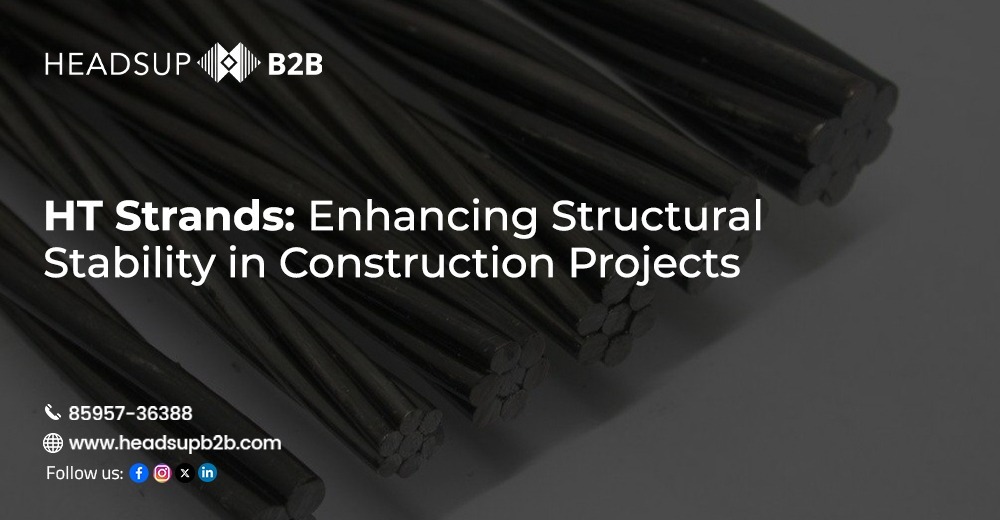
    HT Strands: Enhancing Structural Stability in Construction Projects

    Welcome to Headsup B2B, your go-to online platform for all construction material procurement needs! Are you curious about the secret behind the structural stability of contemporary buildings and infrastructure? Look no further than High Tensile Strands, commonly known as HT Strands!

    These High Tensile strands are the soul of concrete buildings; they provide great strength and support. High tensile strands, with their exceptional strength and durability, have been instrumental in supporting some of the tallest skyscrapers and longest bridges around the globe.

    In this blog post, we’ll discuss the various aspects of HT strands, like application, benefits, significance, and factors to consider for better constructional use.

    What are High Tensile Strands

    HT Strands are essentially strands of high-strength steel wire, meticulously made to withstand adverse climatic conditions and immense tension. It is the sturdy backbone of your concrete structures, providing crucial reinforcement to keep our buildings safe and strong.

    Significance of High Tensile Strands

    Enhanced Structural Strength: HT Strands possess exceptional tensile strength, making them capable of withstanding high loads and stresses.

    Improved Durability: HT Strands are highly resistant to corrosion, a common issue that can compromise the integrity of traditional reinforcement materials like rebar. Its corrosion resistance property guarantees the lasting durability of buildings and also reduces maintenance costs.

    Efficient Space Utilisation: The use of HT strands allows for the design of slender and lightweight structural elements without sacrificing strength or stability. Its space efficiency particularly maximises the functionality of high-rise buildings and long-span bridges.

    Its corrosion resistance property guarantees the lasting durability of buildings and also reduces maintenance costs.

    Prestressing Capabilities: One of the most significant advantages of HT Strands is their ability to be prestressed. Applying a compressive force to the concrete before its exposure to external loads is a process known as prestressing, resulting in improved crack resistance, minimised deflection, and better structural performance

    Application of High-Tensile Strands

    High-Rise Buildings

    The builders use HT Strands to reinforce the concrete columns, beams, and slabs in high-rise buildings because they provide structural support to withstand vertical and lateral loads.

    Infrastructure Projects

    HT Strands are the major component in infrastructure projects such as dams, tunnels, and highways. It ensures the durability and robustness of the structure by reinforcing the concrete elements and enhancing their load-bearing capacity and resistance to external forces.

    Pre-Stressed Concrete Elements

    To provide durability, reduce cracking, and increase performance, HT strands are commonly used in pre-stressed concrete elements such as precast beams, girders, and slabs.

    Industrial Facilities

    In industrial facilities such as manufacturing plants and warehouses, HT Strands are used to reinforce concrete floors, walls, and foundations, providing structural stability to support heavy machinery and equipment.

    Seismic Retrofitting

    In regions prone to earthquakes, engineers use HT Strands in seismic retrofitting projects to strengthen existing structures and improve their resilience to seismic forces. This helps to mitigate the risk of structural failure during earthquakes.

    Factors to Consider When Procuring HT Strands

    HT strands are one of the major components of the construction projects. It ensures the longevity and robustness of the structure and provides strength to withstand adverse environments. So, it becomes important to make an informed decision.

    Here are some factors to consider when procuring the HT strands

    1. Never compromise on quality standards.

    2. Budget is the major factor

    3. Reputation of supplier

    4. Strands’s compatibility with the project.

    Headsup B2B: one-stop-shop for all your construction needs

    Wide range of quality products

    we take pride in providing top-notch services to meet all your construction material procurement needs. The team of responsible professionals makes sure that our customers get access to a wide range of high-quality products, including HT Strands, sourced from authentic suppliers.

    Easy procurement process

    Headsup B2B is a user-friendly platform with an expert support team that makes the procurement process smooth and easy. This allows you to focus on the success of your construction projects.