Tag: construction materials

  • TMT Bars Length and Weight Chart: Complete Overview

    TMT Bars Length and Weight Chart: Complete Overview

    uWhen working on a construction project, it’s essential to know the dimensions and weight of the materials you’re working with. One of the most commonly used materials in construction is TMT bars (Thermo-Mechanically Treated bars), which are critical for reinforcing concrete structures. Having an understanding of TMT bar lengths and weights allows you to optimize your material calculations and make your procurement process smoother and more efficient.

    In this complete overview of TMT bars, we’ll provide a TMT bar length and weight chart that will help construction professionals, engineers, and project managers accurately determine how many bars they need and their total weight for construction projects.

    Why Knowing the Length and Weight of TMT Bars Is Important

    The weight and length of TMT bars are crucial for:

    • Material procurement: Knowing the weight helps with ordering the correct number of rods for the project.

    • Cost estimation: Accurate weight measurements help in calculating the total cost of the material.

    • Storage and transportation: Knowing the weight and size helps manage logistics effectively.

    • Construction planning: The right dimensions help in calculating the required quantities of steel for your project and ensure proper load distribution.

    Now, let’s take a look at the TMT bars length and weight chart.

    TMT Bar Length and Weight Chart

    Below is a detailed TMT bar length and weight chart for the most commonly used diameters. The data reflects the approximate weight of each bar and bundle, making it easier for you to calculate the required material for your construction project.

    Diameter of TMT Rod Weight of 1 Rod (Approx) Weight of 1 Bundle (Approx) Weight of 1 Ton (Approx)
    8 MM 4.6 Kgs 45-46 Kgs Approx 22 Bundles
    10 MM 7.1 Kgs 49-50 Kgs Approx 20 Bundles
    12 MM 10.4 Kgs 51-52 Kgs Approx 20 Bundles
    16 MM 18.3 Kgs 54-56 Kgs Approx 18 Bundles
    20 MM 30 Kgs 58-60 Kgs Approx 17 Bundles
    25 MM 46-48 Kgs 46-48 Kgs Approx 22 Bundles
    32 MM 75-78 Kgs 75-78 Kgs Approx 14 Bundles

    Example Calculations

    Let’s break down how to calculate the weight of a TMT bar based on the chart:

    1. For a 16mm TMT bar:

      • Weight of 1 Rod = 18.3 Kgs

      • Weight of 1 Bundle = 54-56 Kgs (for approximately 3 rods)

      • Weight of 1 Ton = Approx 18 Bundles

    2. For a 25mm TMT bar:

      • Weight of 1 Rod = 46-48 Kgs

      • Weight of 1 Bundle = 46-48 Kgs

      • Weight of 1 Ton = Approx 22 Bundles

    These values can be used to calculate the total weight of TMT bars required for your construction, helping you with material procurement and project planning.

    How to Use TMT Bar Weight Information

      • Material Procurement: Accurate weight calculations ensure that you buy the correct number of TMT bars for your project.

        • Cost Estimation: Knowing the weight helps in calculating the total cost of the material, considering the cost per kilogram of TMT bars.

        • Transportation: Knowing the weight of a bundle and how many bundles make up one ton helps with organizing transportation logistics.

        • Project Planning: Efficiently calculate the steel reinforcement needed for your project.

    Why Choose Headsup B2B for TMT Products

    At Headsup B2B, we offer a comprehensive range of TMT products, including various grades and diameters, to meet your construction needs. Our TMT bars are known for their strength, ductility, and corrosion resistance, making them ideal for a variety of construction applications.

    Contact us today to explore our wide range of TMT bars and find the right product for your project. Whether you’re building a high-rise structure or a residential project, we’ve got the right TMT products to ensure durability and strength.

  • 550 vs 550D TMT Bars: Which Is Better for Construction?

    550 vs 550D TMT Bars: Which Is Better for Construction?

    When it comes to construction, the strength and durability of the materials used are of utmost importance. One of the most critical elements in construction is reinforcement bars, commonly known as TMT bars (Thermo-Mechanically Treated bars). These bars play a significant role in providing structural support to buildings, bridges, and other infrastructure. Among the different types of TMT bars available, 550 TMT bars and 550D TMT bars are among the most widely used for various construction projects.

    While they may seem similar at first glance, there are key differences between them. In this article, we will delve into a detailed comparison of 550 TMT bars vs 550D TMT bars and help you decide which is the better choice for your construction needs.

    What Are TMT Bars?

    Before comparing the specific types, let’s first understand what TMT bars are. TMT bars are steel bars used in construction for reinforcement. The process of thermo-mechanical treatment (TMT) involves heating the steel to high temperatures and then cooling it rapidly to increase its strength. This process improves the tensile strength and ductility of the bars, making them ideal for use in reinforced concrete structures.

    TMT bars are available in different grades, which indicate their strength and other properties. The grade number is typically followed by a letter D, which signifies the bar’s ductility. For instance, a 550D TMT bar is stronger and more ductile than a regular 550 TMT bar.

    Understanding the 550 Grade TMT Bars

    550 TMT bars are widely used in residential, commercial, and industrial construction. The 550 refers to the tensile strength of the bar, which is 550 megapascals (MPa). This makes them suitable for a variety of construction applications, as they can handle a significant amount of stress without breaking.

    Key Features of 550 TMT Bars

    • Tensile Strength: The 550 MPa tensile strength makes these bars ideal for use in most structural applications, where moderate strength is needed.

    • Ductility: While they are not as ductile as 550D bars, they still offer a fair amount of flexibility and resistance to cracking.

    • Corrosion Resistance: 550 TMT bars are designed to resist corrosion, which is crucial for structures exposed to moisture or extreme weather conditions.

    • Cost-Effective: 550 TMT bars are generally more affordable compared to their higher-strength counterparts, making them a popular choice for budget-conscious projects.

    Understanding the 550D Grade TMT Bars

    The 550D TMT bars are essentially an upgraded version of the 550 TMT bars. The addition of the D indicates higher ductility, which means that these bars can withstand more bending and stretching before breaking. This increased flexibility is critical in areas where buildings or structures may be subject to dynamic loads or seismic activity.

    Key Features of 550D TMT Bars

    • Tensile Strength: Similar to the 550 TMT bars, the 550D bars also have a 550 MPa tensile strength, making them strong and capable of handling substantial loads.

    • Higher Ductility: The D in 550D signifies its superior ductility compared to the standard 550 bars. This means that 550D bars are less likely to fail under extreme conditions that require bending or stretching.

    • Corrosion Resistance: Like the 550 bars, the 550D TMT bars are also resistant to corrosion, ensuring longevity in different environmental conditions.

    • Higher Flexibility: Due to their enhanced ductility, 550D bars are often preferred in areas prone to seismic activity, where additional flexibility is required to withstand earthquakes and ground movement.

    550 vs 550D TMT Bars: Key Differences

    Let’s break down the major differences between 550 TMT bars and 550D TMT bars:

    1. Tensile Strength

    Both 550 TMT bars and 550D TMT bars have the same tensile strength of 550 MPa. This means that both bars can withstand similar levels of stress before breaking.

    2. Ductility

    The key difference between the two types of bars is ductility:

    • 550 TMT bars: These bars offer moderate ductility, meaning they can handle some amount of bending or stretching, but they are more likely to crack under extreme conditions.

    • 550D TMT bars: The D in 550D stands for ductility, which makes these bars more flexible and resistant to cracking. They are ideal for areas prone to seismic activity or heavy dynamic loads.

    3. Use in Construction

    • 550 TMT Bars: These are suitable for residential construction, low-rise buildings, and projects that don’t experience high stress. They are also ideal for light commercial projects where the risk of dynamic stress is low.

    • 550D TMT Bars: Due to their higher ductility, these bars are better suited for high-rise buildings, industrial structures, and areas subject to high seismic activity. They are also ideal for bridges, flyovers, and highway construction where additional flexibility is required.

    4. Cost

    • 550 TMT Bars: These bars are generally more affordable compared to 550D bars due to their lower ductility. They are a great option for budget-conscious projects.

    • 550D TMT Bars: While 550D TMT bars cost more due to their superior properties, they offer better performance and long-term durability, making them worth the investment in certain high-stress applications.

    5. Durability and Performance

    • 550 TMT Bars: They perform well under normal conditions and are highly durable, especially in environments that aren’t exposed to extreme stress.

    • 550D TMT Bars: These bars excel in challenging environments, especially in areas prone to earthquakes or other seismic activities, due to their superior flexibility and ability to absorb stress.

    Which Is Better for Construction?

    The choice between 550 TMT bars and 550D TMT bars depends on the specific requirements of the construction project.

    • For Low-Rise Buildings and Residential Projects: If you are working on a residential construction project or a low-rise building, 550 TMT bars would likely be sufficient. These bars are cost-effective and provide adequate strength for such applications.

    • For High-Rise Buildings and Seismic Areas: If your project involves high-rise buildings, bridges, or structures in areas with seismic activity, 550D TMT bars would be the better choice. Their enhanced ductility makes them more suitable for withstanding dynamic loads and earthquake resistance.

    Conclusion

    Both 550 TMT bars and 550D TMT bars are excellent choices for construction, but they serve different purposes. If you need a more cost-effective option for standard buildings, 550 TMT bars should meet your needs. However, if your project requires superior flexibility and strength, especially in high-rise buildings or earthquake-prone areas, the 550D TMT bars would be the better choice.

    Understanding these key differences will help you make an informed decision about which TMT bars are best suited for your specific construction project.

    HeadsUp B2B supplies a comprehensive range of TMT products, including both 550 and 550D TMT bars, to cater to all your construction needs. Whether you’re building a residential project or working on a large-scale infrastructure project, we provide top-quality materials that ensure durability and strength. Contact us today to explore our full range of TMT products and find the perfect solution for your construction requirements.

  • How to Choose the Best Building Construction Solutions

    How to Choose the Best Building Construction Solutions

    When embarking on a construction project, selecting the right building construction solutions is critical to ensuring the project’s success. Whether you’re working on residential, commercial, or industrial structures, the quality, cost-effectiveness, and sustainability of the solutions you choose will have a direct impact on the overall outcome. With a multitude of options available, ranging from materials to construction methods and technologies, the decision-making process can be overwhelming. This guide will walk you through key considerations and strategies to help you choose the best construction solutions that align with your project’s goals, budget, and long-term vision. By evaluating factors like durability, environmental impact, timelines, and the latest innovations in construction, you can make informed decisions that set the foundation for a successful build.

    What Are Building Construction Solutions?

    Building construction solutions refer to the wide range of methods, materials, technologies, and services used to build or renovate structures. These can range from traditional brick-and-mortar approaches to modern, sustainable, and modular systems.

    Why Choosing the Right One Matters?

    Making the wrong choice can lead to delayed timelines, bloated budgets, safety issues, and even legal problems. Choosing the right construction solution sets the foundation—literally and figuratively—for your project’s success.

    Understanding Your Construction Needs

    Residential vs Commercial Projects

    First things first: What kind of structure are you building?

    • Residential projects (like homes or apartments) require a different approach than

    • Commercial projects (such as offices, retail stores, or warehouses).

    The design, materials, timeline, and even regulations can differ significantly.

    New Builds vs Renovations

    Renovating an existing structure involves working around existing systems, walls, and limitations. New builds offer a blank canvas but come with their own complexities like land prep, zoning, and utility connections.

    Choosing the Right Construction Method

    Traditional Construction

    The time-tested method of building from the ground up using concrete, Metal steel, or wood frames. It’s durable and familiar but often slower and more labor-intensive.

    Modular and Prefabricated Solutions

    Think Lego blocks. Sections of the building are made off-site and then assembled on-site. It’s faster and often cheaper—plus, weather delays are reduced.

    Green Building Technologies

    Want to go eco-friendly? Consider:

    • Solar panels

    • Rainwater harvesting

    • Insulated concrete forms (ICFs)

    • LEED-certified systems

    These not only reduce your carbon footprint but can also lower utility bills in the long run.

    Evaluating Construction Companies

    Experience and Expertise

    Would you hire a newbie to build your dream home? Probably not. Look for:

    • At least 5–10 years in the business

    • Relevant project experience

    • Specialized skills (e.g., green building or smart tech)

    Certifications and Licenses

    Always ask to see:

    • Business licenses

    • Insurance coverage

    • Safety certifications

    • Any industry-specific accreditations

    Portfolio and Past Projects

    A good contractor will be proud to show off their work. Ask to tour past projects or view a digital portfolio. Pay attention to quality, style, and attention to detail.

    Importance of Project Management

    Role of a Project Manager

    This person is your construction quarterback—coordinating teams, timelines, and materials. They keep everything on track and should be your main point of contact.

    Tools and Software Used

    Modern project managers use tools like:

    • Procore

    • Buildertrend

    • Microsoft Project

    These platforms offer real-time updates and document sharing, keeping you in the loop 24/7.

    Quality of Materials

    Durable vs Cost-Effective Choices

    Everyone wants the best deal, but skimping on materials can lead to long-term costs in repairs and replacements. Strike a balance between:

    • Quality

    • Longevity

    • Budget

    Sustainable Materials

    Want to make an eco-conscious decision? Go for:

    • Bamboo flooring

    • Recycled steel

    • Low-VOC paints

    • Reclaimed wood

    These choices help the planet and can boost your building’s value.

    Local Building Codes

    Every city and town has its own rules. Make sure your contractor is familiar with the local regulations, or your project could be delayed—or worse, torn down.

    Permits and Approvals

    From zoning permits to environmental approvals, the red tape can be thick. A good builder helps you navigate the bureaucracy and stay compliant.

    Safety Standards

    Construction Site Safety Measures

    A safe site is a productive site. Make sure your builder follows:

    • OSHA standards

    • Regular safety audits

    • Proper signage and barriers

    Worker Insurance and Liability

    You don’t want to be liable if someone gets hurt. Ensure the company has worker’s compensation insurance and liability coverage.

    Timeline and Project Delivery

    Importance of Deadlines

    Time is money. A professional builder sets clear milestones and sticks to them.

    Handling Delays Efficiently

    Delays happen. What matters is how they’re handled. Look for:

    • Transparent communication

    • Backup plans

    • Flexibility in scheduling

    Communication and Transparency

    Client-Builder Interaction

    You should never feel left in the dark. A good company:

    • Offers regular check-ins

    • Responds to questions promptly

    • Updates you proactively

    Real-Time Updates and Reports

    Using cloud-based systems, you can access:

    • Photos of progress

    • Budget usage

    • Upcoming tasks

    All in real-time from your phone or laptop.

    Innovation and Technology in Construction

    Use of Drones, AI, and 3D Printing

    The future is now. These tools:

    • Improve accuracy

    • Reduce human error

    • Speed up construction

    Smart Construction Monitoring

    Sensors can track moisture, temperature, and movement—preventing costly damage before it happens.

    Customer Reviews and Reputation

    Online Reviews and Ratings

    Google, Yelp, and social media are your best friends. Look for:

    • Positive trends

    • How complaints are handled

    • Authentic, verified reviews

    Word-of-Mouth Recommendations

    Ask friends, family, or colleagues. A recommendation from someone you trust is often worth more than any online ad.

    After-Construction Support

    Maintenance Services

    Ask if they offer post-construction services like:

    • HVAC maintenance

    • Plumbing checks

    • Routine inspections

    Warranty and Support

    Make sure you get a written warranty covering:

    • Structural integrity

    • Workmanship

    • Materials

    Final Decision-Making Tips

    Comparing Quotes

    Don’t just go with the cheapest option. Compare:

    • Services offered

    • Materials used

    • Timeline commitments

    Trusting Your Gut

    If something feels off, it probably is. You’re trusting someone with a major investment—choose someone who gives you confidence.

    Conclusion

    Choosing the best building solution isn’t just about bricks and aggregates—it’s about trust, planning, communication, and vision. Whether you’re building your dream home or launching a commercial venture, taking the time to choose the right solution will save you from a world of stress later. Remember, don’t rush the process—own it. Your future space depends on it.

    FAQs

    1. What is the most cost-effective construction method?
    Modular and prefabricated construction is often the most cost-effective, especially for smaller projects.

    2. How do I know if a construction company is reliable?
    Look at their portfolio, certifications, online reviews, and ask for references. Transparency is a good sign.

    3. Is modular construction better than traditional?
    It depends. Modular is faster and often cheaper, but traditional offers more flexibility in design and materials.

    4. How can I ensure my project stays within budget?
    Set clear expectations, get a detailed quote, and keep a 10-15% buffer for unexpected costs.

    5. What’s the most common mistake in choosing construction solutions?
    Choosing based solely on price without checking quality, experience, or reputation.

  • What Is TMT Steel and Why It’s Critical for Structures

    What Is TMT Steel and Why It’s Critical for Structures

    What Is TMT Steel?

    TMT Steel, or Thermo Mechanically Treated Steel, is a type of reinforced steel used extensively in construction projects. It’s known for its superior strength, flexibility, and corrosion resistance, making it ideal for modern infrastructure. TMT steel bars are essential for building strong, durable structures that can withstand both natural and man-made challenges, ensuring safety and longevity.

    Importance of Steel in Construction

    Steel has been a critical material in construction for centuries, thanks to its excellent tensile strength and ability to support heavy loads. Over the years, advances in steel treatment, such as the TMT process, have further improved its characteristics, enhancing its performance in diverse structural applications. The development of TMT steel has revolutionized how we build infrastructure, ensuring structures can stand the test of time and external forces like earthquakes or heavy traffic.

    The Process of Making TMT Steel

    The Key Stages of Manufacturing

    TMT steel undergoes a specialized treatment process that involves the following key steps:

    1. Hot Rolling: The steel is heated to high temperatures and rolled into bars.

    2. Rapid Cooling: The hot bars are quickly cooled using water jets, which gives the steel its unique properties.

    3. Tempering: The outer surface hardens, while the core remains softer and more ductile, providing a balance of strength and flexibility.

    This process is what sets TMT steel apart from traditional mild steel, as it creates a tougher, more resilient product.

    How TMT Steel Is Different from Traditional Steel

    Traditional steel bars (like mild steel) lack the advanced treatment that gives TMT steel its extra strength and flexibility. The process of rapid cooling and tempering ensures that TMT steel bars have:

    • Stronger outer layers that resist corrosion and wear.

    • Softer inner cores that enhance flexibility, preventing brittle breakage under stress.

    Key Benefits of TMT Steel in Construction

    Superior Strength and Durability

    TMT steel bars are known for their incredible tensile strength, which allows them to support heavy loads and withstand harsh environmental conditions. This makes them ideal for high-rise buildings, bridges, and other infrastructure projects that need to stand strong under stress.

    High Flexibility and Ductility

    Unlike traditional steel, TMT bars have a high degree of ductility, meaning they can bend and stretch without breaking. This flexibility makes them resistant to cracks, especially in regions prone to earthquakes or heavy winds, where structures need to absorb dynamic forces.

    Corrosion Resistance

    The outer hardened layer of TMT steel offers exceptional corrosion resistance. This is particularly important for buildings and structures exposed to moisture or harsh environments, such as coastal areas. TMT bars resist rust, making them a long-lasting option for any construction project.

    Cost-Effectiveness

    While TMT steel may seem like a more expensive option upfront compared to traditional steel, its durability and lower maintenance costs make it a cost-effective choice in the long run. Its high strength also reduces the amount of material needed for a project, further lowering costs.

    How TMT Steel Is Critical for Structural Safety?

    Earthquake Resistance

    TMT steel is a preferred choice in earthquake-prone areas because its high tensile strength and ductility help structures absorb seismic shocks without collapsing. The steel’s ability to bend without breaking is crucial in ensuring that buildings and bridges remain intact during strong tremors.

    Structural Integrity and Longevity

    Structures built with TMT steel are more likely to maintain their integrity over time. The combination of strength and flexibility ensures that the building can withstand various forces, including vibrations, wind, and temperature fluctuations, without compromising safety.

    Impact on Building Codes and Regulations

    Building codes in many regions require the use of high-strength, corrosion-resistant materials like TMT steel to meet safety standards. As cities and infrastructure grow, the importance of using quality materials to adhere to these codes becomes even more critical for public safety.

    Applications of TMT Steel

    Residential Construction

    TMT steel is widely used in the construction of homes, apartments, and townhouses. Its strength ensures the building’s stability, while its corrosion resistance makes it ideal for long-lasting residential structures.

    Commercial and Industrial Projects

    For commercial buildings, factories, and warehouses, TMT steel provides the durability and load-bearing capacity needed for heavy-duty applications. It’s ideal for foundations, columns, beams, and slabs.

    Infrastructure Development

    TMT steel is also essential for large-scale infrastructure projects like bridges, flyovers, and dams. The material’s ability to withstand environmental pressures and dynamic loads makes it a go-to choice for infrastructure development.

    How to Choose the Right TMT Steel for Your Project

    Understanding Grade and Quality

    TMT steel comes in various grades, such as Fe 415, Fe 500, and Fe 550, indicating their strength levels. When choosing TMT Steel Bars, it’s important to consider the specific requirements of your project and select the appropriate grade based on factors like load-bearing capacity and seismic activity in your area.

    Tips for Selecting TMT Steel Suppliers

    • Check Certifications: Ensure the supplier provides certified TMT steel that meets industry standards.

    • Look for Reputation: Choose suppliers with a proven track record for quality and reliability.

    • Ensure Traceability: Make sure the steel bars are traceable to their source and manufacturing process.

    Conclusion

    Why TMT Steel Is a Game-Changer in Construction

    TMT steel has become an essential material in modern construction due to its unmatched strength, flexibility, and durability. Its ability to resist corrosion, handle seismic forces, and extend the life of structures makes it the ideal choice for any construction project. Whether you’re building residential homes, commercial towers, or large infrastructure projects, TMT steel offers significant advantages that ensure safety and longevity.

    FAQs

    1. What does TMT stand for in TMT Steel?

    TMT stands for Thermo Mechanically Treated, which refers to the unique treatment process that enhances the strength and durability of steel.

    2. How long does TMT Steel last in buildings?

    TMT steel can last for decades, with proper maintenance, due to its high corrosion resistance and durability. In some cases, it can last for over 50 years.

    3. Can TMT Steel be used for both residential and commercial construction?

    Yes, TMT steel is versatile and can be used for both residential and commercial construction projects, including bridges, skyscrapers, and industrial buildings.

    4. How do I know if the TMT Steel I’m buying is of good quality?

    Look for certifications like IS 1786 and check the manufacturer’s reputation. High-quality TMT steel should be free from cracks, lumps, and other defects.

    5. Is TMT Steel more expensive than regular steel?

    While TMT steel may be slightly more expensive than regular steel upfront, its durability

  • Top 10 Building Material Suppliers in Bihar

    Top 10 Building Material Suppliers in Bihar

    Bihar’s construction sector is experiencing exponential growth. It is a key player in the state’s economic growth with an allocation of ₹59,000 crore for road connectivity, flood management and power in Bihar. The allocated budget would fund infrastructure projects such as Patna airport development, the Western Koshi Canal project, and IIT Patna expansion. Building materials supplier play a pivotal role in ensuring and fueling the growth of the infrastructure sector across the state.

    With the expansion in the construction sector, the demand for the right quality material takes centre stage. The need for efficient procurement and fulfilment is at an all-time high in Bihar. Infrastructure sector companies must engage in seamless coordination to fulfil the created need. It is pertinent that highly credible companies delivering the right building materials are chosen to meet the state’s infrastructure demands.

    The most important factors to be considered when choosing the right companies for your infrastructure projects include credibility of the supplier, quality of the materials supplied, transparency in communication, budget and customer support post fulfilment. Here are the top ten companies leading the infrastructure sector and supplying building materials in Bihar

    List Of Building Material Supplier Companies in Bihar

    1. Larsen & Toubro (L&T) Construction

    Larsen & Toubro (L&T) Construction is an Indian MNC, headquartered in Mumbai. It operates extensively across Bihar in the infrastructure space. The company supplies materials such as cement, steel, and aggregates for its construction projects. The notable clients of the company include Patna Metro, aimed at enhancing the transportation of the state.

    2. Shapoorji Pallonji & Co. Ltd.

    Shapoorji Pallonji established as Littlewood Pallonji in 1865, is headquartered in Mumbai. The company deals in construction materials such as cement, steel, glass, and finishing materials. The company has developed various commercial and residential complexes across the state and Patna. Some notable projects in the state include Gandhi Setu, IIT Patna, Dr Kalam Agriculture College and civil construction projects such as bridges in Kishanganj, Bihar.

    3. Hindustan Construction Company (HCC)

    Established in 1926 by Seth Walchand, Hindustan Construction Company (HCC) has a notable presence in the infrastructure sector, including energy projects such as the Muzzafarpur Thermal Project, contributing to Bihar’s energy sector. It has also contributed to the famous Sone Bridge and Sone Barrage. The company has played an important role in improving the GT road across Bihar and Jharkhand. The company has a credible reputation in the construction domain for supplying high-quality materials and post-construction customer support.

    4. Headsup B2B Pvt Ltd

    Headsup B2B was founded in 2022 to simplify procurement by connecting buyers and sellers. The company is headquartered in New Delhi and specializes in end-to-end solutions, ensuring high-quality materials, operational excellence, and financial support. Headsup B2B helps strengthen their supply chain efficiently. The vision to revolutionize the building material supplier’s domain has enabled the company to expand its client base across Bihar and Pan India. One of the notable projects of Headsup B2B is its contribution to Buddha Stupa, Vaishali.

    5. Gammon India

    Gammon India is one of the largest civil engineering companies in the country. Gammon has its involved in several infrastructure projects in Bihar. The company was founded in 1922 under the vision of John C. Gammon, it is headquartered in Mumbai. The company such as elevated road corridors connecting AIIMS to Digha in Patna, and key bridges such as Gandhi Setu connecting the state capital with Hajipur, Vaishali.

    6. Nagarjuna Construction Company (NCC) Limited

    Nagarjuna Construction Company (NCC) Limited has ventured into large-scale projects across multiple sectors since its inception. The various sectors range from construction, transportation, water & environment, and power, including urban infrastructure. The company was incorporated in 1978 with its headquarters in Hyderabad. NCC has offices across the country including Patna. The key Bihar state projects that the company was involved in include Patna Metro construction and restoration of the Eastern Gandak Canal System and the Government Medical College & Hospital Campus in Madhubani.

    7. IRCON International Limited

    IRCON International Limited (IRCON) has played an important role in constructing bridges and railway lines. The projects across Bihar include the Concrete Sleeper plant at Madhepura and the Concrete Sleeper plant at Chak Sikandar IRCON has also been involved in the doubling of tracks on the Kiul-Gaya and Hajipur-Bachwara sections.

    8. B K Building Materials

    BK Building Materials was established in 1988 in Ludhiana and are known for high-quality ball bearings. The company has its own offices across the country, they have an office in Mithapur, Patna and they are known for their high-quality building materials.

    9. Rukmani Traders

    Rukmani Traders has a Bihar-wide presence with its headquarters in Patna. The company is a manufacturer & supplier of an extensive range of products, including building materials such as high-quality primary and secondary TMT bars.

    10. G K Enterprises

    GK Enterprises is located in Digha, AIIMS Road, Patna. The company provides a range of high-quality building materials including cement.

    Conclusion

    Bihar’s construction boom calls for strategic supplier selection to ensure quality and efficiency. Choosing credible suppliers with reliable materials, transparent pricing, and strong after-sales support is important. Bulk purchasing and long-term partnerships can optimize costs and project timelines. If you’re looking for the right building materials in Bihar, contact Headsup B2B for seamless procurement and fulfilment. The company is known for its after-fulfillment support, contact us today to know more!

  • Top 10 High Quality AAC Block Manufacturers in India

    Top 10 High Quality AAC Block Manufacturers in India

    In India, Autoclaved Aerated Concrete (AAC) blocks are transforming the construction industry by offering a lightweight, eco-friendly, and cost-effective alternative to traditional building materials. Their impressive fire resistance, thermal insulation, and soundproofing qualities make them the preferred choice for architects, builders, and homeowners alike. Here, we present the top 10 AAC block manufacturers in India who stand out for their high-quality products, innovation, and commitment to sustainable construction.

    1. Magicrete Building Solutions

    Magicrete Building Solutions is a leading name in the AAC block industry in India, known for its commitment to quality and sustainability. Headquartered in Gujarat, Magicrete produces blocks that offer superior strength and durability, suitable for both residential and commercial projects. Their products are manufactured in modern facilities with state-of-the-art technology, ensuring consistent quality and performance. Magicrete also provides other eco-friendly construction materials like wall panels and construction chemicals.

    Key Highlights:

    • ISO-certified manufacturing facilities

    • Strong distribution network across India

    • Customizable blocks for various applications

    2. Ultratech Cement Ltd. (Birla AAC Block)

    Ultratech Cement, part of the Aditya Birla Group, is a trusted leader in India’s construction material industry. The Ultratech Birla AAC blocks are lightweight, thermally efficient, and made from eco-friendly materials. The company’s commitment to sustainable development is evident through its green building materials and energy-efficient manufacturing processes. Ultratech AAC blocks are known for their exceptional thermal insulation and soundproofing qualities.

    Key Highlights:

    • Environmentally friendly AAC blocks with high compressive strength

    • Strong distribution network for prompt supply

    • Tailored solutions for large-scale projects

    3. Biltech Building Elements Ltd.

    Biltech Building Elements is a pioneer in the AAC block sector in India, offering high-quality, cost-effective, and environmentally safe building materials. Known for their innovative approach, Biltech uses advanced German technology to produce AAC blocks with precision and durability. Their products are highly recommended for seismic zones due to their lightweight nature, which reduces building load significantly.

    Key Highlights:

    • Use of cutting-edge technology for precise manufacturing

    • High strength-to-weight ratio suitable for earthquake-prone areas

    • Comprehensive quality checks for every batch

    4. Siporex India (AAC Blocks)

    Siporex India, part of the Indian conglomerate YTONG, is one of the oldest and most respected AAC block manufacturers globally. Their AAC blocks are made from fine silica sand and are widely regarded for their durability, thermal efficiency, and fire resistance properties. The company emphasizes sustainable practices and continuously invests in innovation to improve the quality and environmental impact of its products.

    Key Highlights:

    • Fire-resistant AAC blocks suitable for high-rise buildings

    • Excellent thermal insulation, reducing energy costs

    • Advanced production facilities with strict quality control

    5. JK Lakshmi Cement (JK Smartblox)

    JK Lakshmi Cement, known for its top-tier building materials, manufactures JK Smartblox AAC blocks. Their products provide a high degree of thermal insulation, which keeps interiors cool in summer and warm in winter. JK Lakshmi Cement is also known for its focus on customer satisfaction, ensuring a smooth supply chain and technical support for users.

    Key Highlights:

    • High thermal efficiency reducing energy consumption

    • Lightweight yet robust blocks for various constructions

    • Effective soundproofing properties

    6. ECO-CARE Building Products Pvt. Ltd.

    ECO-CARE Building Products specializes in sustainable building materials, including high-quality AAC blocks. The company focuses on environmentally friendly production practices and delivers blocks that meet the rigorous standards of LEED and IGBC certifications. ECO-CARE is ideal for projects that prioritize green construction and energy efficiency.

    Key Highlights:

    • Environmentally certified production processes

    • High durability and compressive strength

    • Available in various dimensions for customized building requirements

    7. Renacon AAC Blocks

    Renacon, based in Tamil Nadu, is a prominent AAC block manufacturer in southern India. Their AAC blocks are recognized for their superior strength-to-weight ratio, excellent sound insulation, and resistance to water absorption. Renacon’s AAC blocks are manufactured in a facility equipped with the latest machinery, and the company provides efficient after-sales support, ensuring customer satisfaction.

    Key Highlights:

    • Advanced technology for high-quality AAC blocks

    • Water-resistant and mold-resistant properties

    • Strong network across South India

    8. Buildmate Projects Pvt. Ltd.

    Buildmate Projects manufactures AAC blocks under strict quality standards, using high-grade building materials for durability and performance. With a focus on customer needs, Buildmate provides customized AAC blocks for different building applications. The company also emphasizes the energy efficiency of its products, making them suitable for green buildings.

    Key Highlights:

    • High compressive strength blocks ideal for load-bearing walls

    • Customizable sizes to suit project requirements

    • Focused on sustainable and green construction solutions

    9. Godrej Construction (AAC Blocks)

    Godrej Construction, a part of the renowned Godrej Group, manufactures high-quality AAC blocks as part of its sustainable building solutions portfolio. Godrej AAC blocks are lightweight, durable, and provide high thermal insulation, making them suitable for eco-conscious projects. The company is committed to innovation and uses cutting-edge technology to produce blocks that are consistent in quality.

    Key Highlights:

    • Lightweight and thermally efficient blocks

    • Suitable for both commercial and residential applications

    • Strong brand reputation and customer trust

    10. Prime AAC Blocks

    Prime AAC Blocks is known for producing AAC blocks that offer high compressive strength and excellent water resistance. Located in Telangana, Prime AAC Blocks provides a reliable product suitable for large-scale projects. Their AAC blocks are cost-effective and widely used in both high-rise buildings and independent houses.

    Key Highlights:

    • Cost-effective solution for all types of construction

    • High resistance to water absorption

    • Strong and lightweight, reducing structural load

    Build Smarter with Trusted Building Materials
    Headsup B2B supports builders, contractors, and developers with top-grade AAC Blocks and complete construction material solutions.
    👉 Request Bulk Pricing

  • Top 7 HT Strand Brands Approved by NHAI for Your Next Construction Project

    Top 7 HT Strand Brands Approved by NHAI for Your Next Construction Project

    When it comes to large-scale construction projects, High Tensile (HT) strands play a crucial role in providing structural integrity, particularly in bridges, highways, and other infrastructure projects. With the increasing demand for reliable construction materials, it is important to select high-quality HT strand brands that meet the standards set by the National Highways Authority of India (NHAI).

    In this article, we will explore the top 7 HT strand brands approved by NHAI for your next construction project. These brands have a strong reputation for producing durable and high-performance materials that ensure the safety and longevity of infrastructure projects.

    1. Usha Martin Ltd

    One of the most well-known names in the steel industry, Usha Martin Ltd. is a leading manufacturer of HT strands. The company’s products are known for their superior quality and adherence to international standards. NHAI-approved HT strands from Usha Martin are designed to withstand high loads, making them ideal for use in bridges, flyovers, and other large-scale infrastructure projects.

    Their prestressed concrete strands (PC strands) are popular due to their high tensile strength, corrosion resistance, and long life, ensuring the durability and resilience of the structures in which they are used. With manufacturing units located across India, Usha Martin ensures quick delivery to project sites, making them a top choice for timely construction requirements.

    2. Bharat Wire Ropes Ltd

    Bharat Wire Ropes Ltd. is another major player in the HT strand market, known for producing high-quality prestressed concrete strands that meet NHAI’s rigorous standards. Bharat Wire Ropes is known for its precision manufacturing processes, which guarantee high performance and durability in even the most demanding construction environments.

    Their HT strands are used extensively in highway construction, bridge-building, and railway infrastructure projects. Their wide range of wire ropes and strands are known for their superior mechanical properties, including excellent fatigue resistance and load-bearing capacity, ensuring long-lasting performance under extreme conditions.

    3. Tata Steel Ltd.

    Tata Steel Ltd., one of India’s largest steel producers, has been at the forefront of innovation in the steel industry for decades. Their HT strands, approved by NHAI, are engineered to meet the specific needs of modern infrastructure projects, delivering exceptional performance, durability, and reliability.

    Tata Steel’s prestressed concrete strands are known for their high tensile strength, precision engineering, and consistency in quality, making them ideal for large-scale infrastructure projects such as bridges and highways. The company’s global expertise in steel production ensures that their HT strands are always at the cutting edge of technology, offering unparalleled performance in the field.

    4. Sterlite Technologies Ltd.

    Sterlite Technologies Ltd. is a leading manufacturer of HT strands with a focus on high-performance materials designed for infrastructure projects that require superior strength and longevity. Their prestressed concrete strands are corrosion-resistant, providing long-term reliability and safety in even the most challenging environments.

    Sterlite Technologies’ products are NHAI-approved and widely used in bridge construction, highway projects, and high-tension applications. Their reputation for delivering high-quality strands with consistent performance makes them a trusted name in the industry, particularly for projects that demand the highest level of safety and structural integrity.

    5. Steel Authority of India Ltd. (SAIL)

    Steel Authority of India Ltd. (SAIL) is one of India’s largest state-owned steel producers, known for its high-quality steel products including HT strands. SAIL’s HT strands meet the stringent quality standards set by NHAI, ensuring that they can withstand the rigorous demands of infrastructure projects.

    SAIL’s prestressed concrete strands are highly sought after for their high tensile strength and superior load-bearing capacity. Their products are widely used in road construction, bridges, and other infrastructure projects where strength and durability are key factors. With a strong presence across India, SAIL ensures consistent supply and support for large-scale construction projects.

    6. Indian Steel Corporation Ltd.

    Indian Steel Corporation Ltd. is known for its precision-engineered HT strands that meet NHAI’s strict quality requirements. The company’s products are widely used in bridges, highways, and other infrastructure projects due to their corrosion resistance, high tensile strength, and ability to handle high loads.

    Their HT strands are manufactured using advanced technology, ensuring consistency in quality and performance across all batches. Indian Steel Corporation’s dedication to innovation and quality control has made them a preferred choice for NHAI-approved infrastructure projects.

    7. JSW Steel Ltd.

    As one of India’s leading steel manufacturers, JSW Steel Ltd. produces prestressed concrete strands that are NHAI-approved for use in highway and bridge construction. JSW’s HT strands are known for their exceptional tensile strength, corrosion resistance, and high load-bearing capacity, ensuring the long-term durability of the structures they are used in.

    JSW Steel’s HT strands are engineered to deliver optimal performance in the most demanding construction environments. Their consistent quality control and adherence to international standards make them a top choice for large-scale infrastructure projects in India.

    Why Choose NHAI-Approved HT Strands?

    The NHAI approval ensures that the HT strands you select for your construction projects meet stringent quality and safety standards. Using NHAI-approved brands not only guarantees the reliability and performance of the materials but also ensures that your project complies with national regulations.

    These brands have established themselves as leaders in the prestressed concrete strand industry, offering superior strength, durability, and resistance to environmental factors like corrosion and fatigue. By choosing NHAI-approved HT strands, you can be confident in the longevity and safety of your infrastructure projects.

    Conclusion

    Selecting the right HT strand for your next construction project is crucial to ensuring the safety, durability, and longevity of your infrastructure. The top 7 NHAI-approved brands listed above—including Metal Solutions provide a range of high-quality, high-performance options that meet the evolving demands of modern infrastructure projects. Known for its commitment to quality, strength, and compliance with industry standards, Metal Solutions stands alongside other trusted manufacturers in delivering reliable HT strands for highways, bridges, and large-scale developments. By choosing one of these trusted brands, you can ensure that your project is built to last.

  • How Many Types of Sand Used in Construction?

    How Many Types of Sand Used in Construction?

    Sand is a crucial material in the construction industry, playing an essential role in building foundations, creating concrete, and ensuring the durability of structures. The type of sand used can significantly affect the strength, stability, and overall quality of a construction project. In this comprehensive article, we explore the different types of sand used in construction, their specific purposes, and why choosing the right sand is vital for every building project.

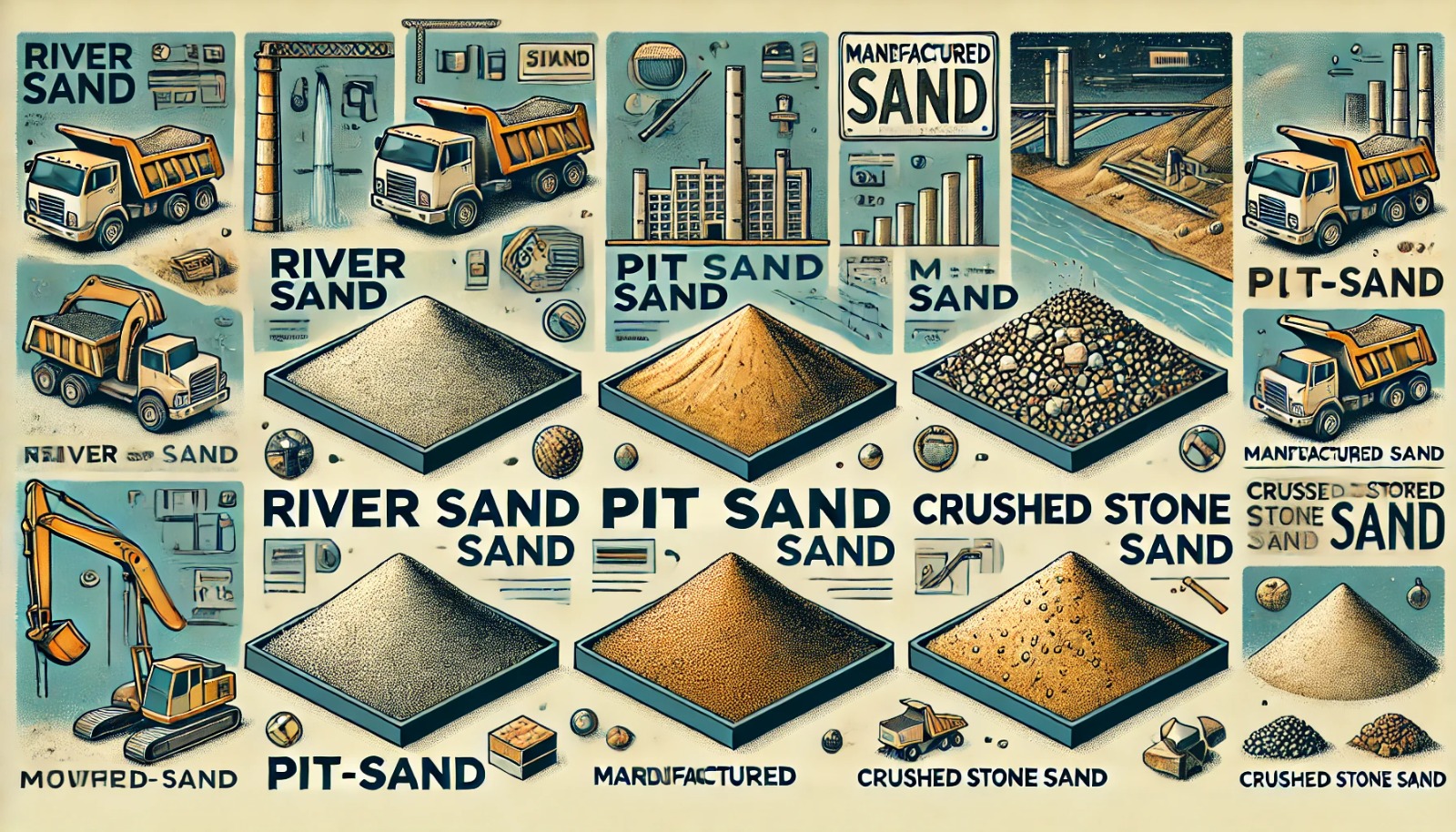
    7 Types of Sand Used in Construction and Their Uses

    1. River Sand

    River sand is one of the most commonly used types of sand in construction. Sourced from riverbeds, this sand has a smooth texture, fine grains, and is typically free of impurities. It is well-suited for plastering and masonry work due to its high quality and smooth consistency. River sand’s natural properties also make it ideal for concrete production, providing strength and a solid finish to structures.

    Advantages of River Sand

    • High-quality texture: Ensures smooth finishes in plastering and brickwork.

    • Naturally occurring: Readily available from riverbeds.

    • Cost-effective: Commonly used and affordable.

    However, excessive extraction of river sand can lead to environmental concerns, such as erosion and disruption of aquatic ecosystems, prompting the search for alternative sand sources.

    2. P Sand

    P sand is extracted from deep pits in the ground, usually from sandy soils located far from rivers and streams. It is coarse and angular, making it suitable for concrete production where strength is required. Its rough texture allows for a better bond with other materials, like cement and gravel, which enhances the durability of reinforced concrete structures.

    Advantages of Pit Sand

    • Angular particles: Provide better bonding in concrete mixes.

    • Free from salts: Prevents the risk of corrosion in reinforcement bars.

    • High strength: Suitable for structural applications.

    Due to its coarse nature, pit sand is not suitable for plastering work, as it can produce a rough finish.

    3. Manufactured Sand (M-Sand)

    Manufactured sand (M-sand) is an artificially created type of sand, made by crushing hard granite stones. It has become a popular alternative to natural sand, especially in areas where river or pit sand is not readily available. M-sand is used extensively in concrete production and other construction applications, and it offers several benefits over natural sand types.

    Advantages of Manufactured Sand (M Sand)

    • Consistent quality: M-sand is manufactured to specific standards, ensuring uniform grain size and purity.

    • Environmental sustainability: Reduces the need for river sand extraction.

    • Improved strength: Enhances the strength of concrete due to its angular and rough texture.

    M-sand is also less prone to impurities, such as silt and clay, which can weaken the concrete mixture.

    4. Sea Sand

    Sea sand is sourced from coastal areas and beaches. Although abundant, sea sand is less commonly used in construction due to its high salt content, which can cause corrosion of steel reinforcement in concrete. However, when properly treated and washed, sea sand can be used in certain applications where the risk of corrosion is minimized.

    Advantages of Sea Sand

    • Abundance: Easily available in coastal areas.

    • Cost-effective: Generally cheaper than river or pit sand.

    Despite its availability, the high salt content of sea sand limits its usage in most construction projects unless it undergoes thorough desalination and cleaning processes.

    5. Desert Sand

    Desert sand is abundant in arid regions, but it is rarely used in construction due to its fine grain size and smooth texture, which makes it unsuitable for concrete. Desert sand particles are too fine to bind properly with cement, leading to weak concrete mixtures. Although recent innovations in construction materials have explored ways to use desert sand, its use remains limited.

    Challenges of Using Desert Sand

    • Fine texture: Does not provide adequate bonding in concrete.

    • Smooth surface: Reduces the overall strength of the material.

    As of now, desert sand is primarily considered a last resort or experimental material for specialized construction projects.

    6. Quarry Dust

    Quarry dust is a byproduct of stone crushing and is often used as a replacement for sand in construction. It is coarser than typical sand but can be used in various construction applications, including paving, concrete blocks, and road construction. Quarry dust is highly valued for its cost-effectiveness and availability, especially in areas where traditional sand sources are scarce.

    Advantages of Quarry Dust

    • Affordable: A byproduct that reduces waste from stone quarries.

    • Improved strength: Can enhance the strength of concrete mixtures.

    • Widely available: Readily accessible in quarrying areas.

    Quarry dust’s coarse texture limits its use in fine plastering work, but it is an excellent option for filling material and road construction.

    7. Crushed Stone Sand

    Crushed stone sand is made by mechanically crushing rocks into small particles. Like manufactured sand, it provides an alternative to natural sand in construction, offering good binding properties and strength. Crushed stone sand is especially useful in concrete mixes and masonry work, as it can improve the durability and stability of structures.

    Advantages of Crushed Stone Sand

    • High strength: Suitable for structural applications.

    • Cost-effective: A practical substitute for natural sand in many regions.

    • Versatility: Can be used in concrete, mortar, and other construction materials.

    Choosing the Right Sand for Next Construction Projects

    Types of sand used in construction plays a critical role in the strength, durability, and overall success of any construction projects. Each sand has specific properties that make it suitable for different applications, from river sand’s smooth texture for plastering to pit sand’s coarse grains for concrete. With the growing emphasis on sustainability and the limited availability of natural sand, alternatives like manufactured sand and quarry dust are becoming increasingly popular.

    By understanding the properties and best uses of each type of sand, construction professionals can make informed decisions that optimize project outcomes, enhance structural integrity, and minimize environmental impacts.

  • Aggregates in Concrete Mix Design Proportions, Workability, and Performance

    Aggregates in Concrete Mix Design Proportions, Workability, and Performance

    Concrete is a basic building material that gives infrastructure and buildings strength and longevity. Aggregate materials are one of the main ingredients in concrete. In this blog post from Headsup B2B, we’ll examine the function of aggregates in concrete mix design, paying particular attention to their performance, workability, and proportions.

    Introduction

    Concrete is a basic building material that gives infrastructure and buildings strength and longevity. Aggregate materials are one of the main ingredients in concrete. To get the appropriate workability and performance, it is essential to comprehend how these elements impact the concrete mix. In this blog, we shall examine the function of aggregates in concrete mix design, paying particular attention to their performance, workability, and proportions.

    Types of Aggregate Materials

    Coarse Aggregates

    Coarse aggregates are the larger of the two materials used in concrete and are often made up of several small stones. A few types are gravel and crushed stone. These materials help introduce concrete’s strength and bulk. Gravel is a small stone, that does not have a rough surface, it is washed by water mainly sourced from river beds. The other, crushed, is uneven and is produced by the mechanical breaking of rocks into smaller pieces. All of them are necessary for developing an excellent concrete mix that is suitable for construction.

    Fine Aggregates

    They are termed fine aggregates and are coarser than silt particles commonly being sand. Sand then goes in between the larger coarse aggregates and the fine aggregates cement them together. It helps in achieving a uniform mix of concrete that is easy to deal with on the construction site. Sand can be classified as river sand crushed and mixed sand etc. The kind of sand that is used greatly determines the quality of the concrete that will be produced.

    Choosing the Right Type of Aggregate

    Deciding on which type of aggregates to use is a very vital decision any construction project firm has to make. However, the choice is to be based on the necessities of the project implemented. For example, the construction of any gigantic project such as a bridge requires robust and long-lasting aggregates. Sidewalks for instance may not be such major projects that require such strong materials. There is also the environmental factor; for instance, there are regions that experience freeze/thaw cycles, and one has to use aggregates that will not be affected by such a condition. The kind of aggregates one uses determines the conduct of the concrete and how long it will last.

    Proportions of Aggregate Materials

    Importance of Correct Proportions in Concrete Mix

    Proportioning of concrete is a very essential aspect that determines the quality of a concrete mix. The right proportion of aggregate materials, binder material, which is cement, and water makes the concrete strong and at the same time easily manageable. If the proportions are off then it may crack, and it becomes weak or even hard to work with for an individual. This makes sure that the stresses that the concrete is likely to experience after it has been entered are catered for.

    Common Ratios Used in Concrete Mix Design

    Standard ratios are usually followed while designing concrete mixes to balance workability and strength. The 1:2:3 ratio is a typical combination that indicates:

    one cement section

    two parts sand or fine aggregate

    Crushed stone or gravel in three sections for coarse aggregate

    Factors Influencing the Choice of Proportions

    Several factors influence the choice of proportions in a concrete mix-

    Project Requirements

    Depending on the nature of the project that needs to be completed, different tasks are called for. For instance, you may need very strong concrete for a bridge and very ordinary concrete for the sidewalk. Regarding the proportions of concrete, it is necessary to indicate that the specific load-bearing requirements and the intended application of the element dictate the proportions of the concrete composition.

    Environmental Conditions

    This is the aspect that determines the mix design depending on the environment where the concrete is to be used. In the regions with freezing and thawing cycles, it is vital to use aggregates that are not prone to cracking. He said that in hot climate conditions, a blend of concrete that has lower tendencies of losing water and shrinking is desirable.

    Workability

    The methods of handling concrete including the ability to mix it, transport it, place it and finish it is also critical. One has to understand that to produce more workable concrete may require more fine aggregates and water but this should not in any way deter strength.

    Workability of Concrete

    Definition and Importance of Workability in Concrete

    In main earthwork construction workability relates to the ease at which the concrete can be mixed, placed and compacted as well as the methods that can be employed to finish the concrete. Workability in concrete refers to how easy it is to work on the concrete while placing it without the material segregating or the cement falling to the base or floating on the water. It is pivotal because the decision made here determines the good quality and the ease of construction. There are some inevitable consequences of the low workability of concrete such as void, honeycombing, and poor surface finish which results in the reduction of the strength of structures.

    How Aggregate Materials Affect the Workability

    • Size and Shape of Aggregates

    • Texture of Aggregates

    • Grading of Aggregates

    Methods to Improve Workability

    1. Use of Admixtures

    2. Adjusting Water Content

    3. Optimizing Aggregate Grading

    Performance of Concrete

    How Aggregate Materials Impact the Strength and Durability of Concrete

    Concrete’s strength and longevity are largely determined by its aggregate content. How they affect these properties is as follows

    Strength

    Aggregates form the major component and foundation of concrete establishing its volume and general framework. It also reveals that workability and well-graded aggregate with the required size and shape of the aggregates affect the property of concrete in terms of compressive strength. These characteristics require the cement paste and the aggregates to have a good bond to achieve overall high strength.

    Durability

    It does not easily wear out even when attacked by weather, chemically corrosive substances and internal physical pressures. Strength and durability: The aggregates used in making concrete which is lessened to weathering and chemical attack improve the durability of concrete. For instance, alkali-resistant aggregates that do not affect the cement alkali reactivity reduce effects like AAR that cause cracked structures.

    Testing Methods to Evaluate the Performance of Concrete Mixes

    • Compressive Strength Test

    • Slump Test

    • Flexural Strength Test

    • Durability Tests

    • Aggregate Tests

    Builders and engineers may make sure that the concrete mix design satisfies the necessary performance standards and offers strength, durability, and dependability for construction projects by carrying out these tests.

    Practical Tips for Selecting Aggregates

    Guidelines for Choosing the Right Aggregates for Specific Projects

    1. Understand Project Requirements

    2. Match Aggregate Properties to Environmental Conditions

    3. Consider Aesthetic Requirements

    Tips for Testing and Ensuring Quality Aggregates

    1. Conduct Regular Testing

    2. Check for Impurities

    3. Evaluate Physical Properties

    4. Consult Standards and Specifications

    Choose Headsup B2B for the Aggregate Materials

    Being one of the most trustworthy online platforms for aggregate materials Headsup B2B provides superior quality aggregate materials. We have the best manufacturers and suppliers on our platform that only provide the best material at reasonable prices. Headsup B2B also provides expert assistance to customers and helps them throughout the selection and buying process. We have a dedicated team for delivery and you can also track your order on our user-friendly platform.

  • TMT Bars vs. Traditional Steel: A Comparative Analysis

    TMT Bars vs. Traditional Steel: A Comparative Analysis

    It almost seems impossible to construct anything without steel and steel rebar. Classical rebars, or iron rods, are dependable building components that continue to withstand the test of time in old, robust structures. Headsup B2B – a B2B marketplace providing TMT steel bars and other construction materials knows the value of these materials for your project. In this blog post, the important points that distinguish TMT steel bars from conventional ones will be highlighted with a brief on why TMT is a preferred option for the modern construction.

    Introduction

    Advancements in technology over the course of the twentieth century introduced many changes to construction. Among the most significant is the use of TMT steel bars as the most recommended construction steel bar. These bars are used for reinforcement of concrete structures and are supplementary reinforcements other than steel bars. Interested in why such a difference? The key differences lie in the raw materials and the manufacturing process. Let’s look at how TMT steel bars differ from conventional steel bars and why TMT bars are usually preferred.

    Understanding TMT Steel Bars and Traditional Steel Bars

    TMT Steel Bars?

    TMT bars are reckoned as the modern generation of construction materials that are characterised by high strength and durability. This is made possible by heat treatment followed by rapid cooling, something that reduces the impurities by using virgin iron ore.

    Traditional Steel Bars?

    Conventional bars are the foundation of traditional construction and are usually mild steel. They receive no treatment and can’t brag about any design advantages.

    Learn More:- 10 Steps to Finding the Best TMT Bars in India

    Manufacturing Process

    TMT Steel Bars: Manufacturing Process

    High-strength reinforcement bars are called thermo-mechanically treated, or TMT, bars. TMT bars are manufactured using rolling, water quenching, atmospheric cooling, and self-tempering techniques. These processes are critical to producing high-quality TMT bars. The quality of rolling mills, quenching systems, tempering processes, and raw materials all contribute significantly to the quality assurance of TMT bars. The top producers of TMT bars give careful consideration to these phases and elements to create exceptional, unrivalled goods.

    Traditional Bars: Manufacturing Process

    High Yielding Strength Deformed TMT steel bars. After heat treatment, these conventionally used steels are manufactured via a cold twisting technique. The TMT steel bars acquire physical imperfections as a result of the cold twisting procedure. There are various benefits to these deformations.

    Difference Between TMT Steel Bars and Traditional Bars

    Strength

    TMT steel bars significantly increase strength, which makes them perfect for the structural demands of today. Even though they are dependable, traditional bars might not be as strong. Although steel TMT bars remain the only material used in modern buildings, the newer grades are making it even more practical and aesthetically pleasing.

    Flexibility

    Like a skillfully performed dance, TMT steel bars give flexibility in addition to strength. In the construction of bridges, tunnels, coastal buildings, and marine projects, TMT bars are the preferred choice, meeting all requirements effectively. Available in various sizes and weights, they offer tailored solutions, and their superior concrete adhesion, as seen in VRKP’s dual-ribbed design, instills confidence in engineers.

    More simplistic applications might be better served by traditional bars, which are robust but less agile.

    Ductility

    Any material’s ductility is its capacity to undergo deformation without collapsing, even after it has reached its breaking point. When it comes to preventing structural collapse in construction constructions, TMT steel bars are more ductile than TOR Steel. TMT steel bars also contribute to a building structure’s increased strength because of their exceptional strength.

    Elongation

    Any material’s ability to extend before failing is known as elongation. This component is crucial in determining any bar’s ductility. The more the elongation, the greater the ductility and, consequently, the reduced likelihood of any structural structure being damaged. TMT steel bars improve the safety of your projects because they are longer than traditional bars.

    Fire-Resistance

    Low thermal stability makes traditional steel bars incapable of withstanding high temperatures. However, TMT bars’ greater thermal stability allows them to hold onto almost 80% of the surrounding temperature, assisting in the safety and security of construction projects in the event of a fire.

    Corrosion Resistance

    TMT bars include an edge that is naturally resistant to corrosion. Longevity is ensured by the protective layer formed during the treatment procedure, particularly in demanding situations. When purchasing building materials, one should take into account exposure to dampness, water seepage, and salt water. Because of the unique chemical treatments, steel TMT bars are your best option, but typical bars in construction need a little extra care to prevent rust.

    Which TMT steel or traditional bars are best for your project depends on its particular requirements. TMT steel bars improve green buildings by using environmentally friendly procedures. While classic bars offer unparalleled dependability, they add a contemporary twist with their strength, flexibility, and resistance to corrosion.

    Headsup B2B is an online platform for the best TMT steel bars. We provide TMT bars from trustworthy suppliers and manufacturers. We also offer expert assistance and a wide range of TMT steel bars that can cater for your specific projects. So, visit Headsup B2B and place your order now!