Tag: wire and cable

  • 10 Electrical Wires And Cables

    10 Electrical Wires And Cables

    Electrical wires are cables that are essential for safe and consistent power transmission across various applications such as residential, commercial and industrial set-up. In this blog, we will explore the top ten electrical wires and cables, their construction design and their applications.

    1. Flame Retardant Cables

    Fire is a major risk factor in any infrastructure setting. To mitigate the same Flame Retardant Wires were designed.

    Primarily used in residential and commercial buildings, these wires are competent in preventing fire.The main purpose of using FR wires is to reduce the risk of fire. Moreover, they improve the safety for both individuals and property. From a design point of view, these FR wires resist the spread of flames in the event of a fire, thereby limiting fire damage and providing additional time for occupants to evacuate safely. ​

    2. Multicore Flexible Cables

    Multicore flexible cables are multiple insulated conductors bundled together in a flexible outer sheath. Designed for high flexibility and good durability, these cables also enable good power or signal transmission. Available in different configurations such as shielded and unshielded, they are widely used in applications across a range of industries such as automation, robotics, industrial machines, and electrical appliances.

    3. Copper Armoured Cables

    The first armoured cables came into being during the early 1900s and evolved as Copper Armoured Cables for improved safety, efficiency and durability in electrical installations. These cables have a multi-layered design with conductor, insulation, filler, armouring and sheath. Copper is used as a conductor material, ensuring excellent conductivity, with the armouring made of steel, protecting against damage, and the insulation made of materials like XLPE. They find uses in power distribution and underground and outdoor installation projects.

    4. Fiber Optic Cable

    Fibre optic cables have an efficient data transmission technique, utilising light signals to transfer data through smaller glass or plastic strands. They function by using the technique known as total internal reflection to bounce light off the cable’s interior walls.

    High-speed internet and calls can be made practical using fibre optics, which have far quicker speeds and more bandwidth than regular copper connections. Their durability against electromagnetic interference and ability to carry data across a distance with little signal loss makes these devices far more trustworthy.

    5. Submersible Cables

    Submersible cables, including flat submersible cables, are mainly used for powering submersible pumps. These cables are designed to function underwater and in wet environments. Their multiple layers include conductors, insulators and sheathing. Conductors are of highly conductive copper or aluminium with efficient electricity transmission. Insulation is made of PVC and rubber, which is used to protect the insulator from water. The last sheathing layer is made of PVC and rubber. Submersible cables survive and perform well in water and under high pressure.

    6. Solar DC Cables

    Solar DC cables facilitate the transfer of direct current electricity, generated by solar panels to inverters and other components. These cables are designed to withstand harsh environmental conditions including UV radiation, extreme temperatures and moisture. These cables have a single core made of copper with insulation and sheathing. High-quality copper provides conductivity and durability. DC cables have one directional polarity and they operate on low voltage.

    7. Aluminum Armoured Cable

    Aluminum Armoured Cable(AAC) is an electrical cable designed to perform efficiently in harsh environments. These cables constitute several layers such as the conductor, insulator, and armour for construction. The conductors are of aluminium, hence lightweight, with excellent conductivity of electricity. Insulators are made of PVC, making them resistant and protecting against harsh conditions. Some other uses of AAC are that these cables are used for telecommunication, construction sites, and mining.

    8. Electrical House Wires

    Electrical house wires, also known as electric wires, are essential for safe and efficient electricity distribution in homes. They consist of key components like a conductor, insulating layer, shielding layer, protective sheath, and filling components. Tensile components are added to large cables for strength, and to prevent stretching or breaking. The most common conductors, copper and aluminium, are chosen for their conductibility, cost efficiency, and weight. Insulating layers, made from materials like Cross-Linked Polyethylene, PVC, and Rubber, ensure safety and depend on factors like thermal resistance and moisture resistance. The sheathing layer, made of copper tape or braided copper, protects against electromagnetic interference, isolating the wires from other electrical devices.

    9. High Tension Cables

    High Tension (HT) cables are electrical cables intended for carrying high-voltage electricity across large distances with efficiency and safety. These cables are sheathed with insulators such as XLPE, Cross-Linked Polyethylene, PVC, or Polyvinyl Chloride, to withstand both great electrical stress and extreme temperatures, in addition to other environmental factors. HT cables are used in power transmission networks, industrial plants, substations, and other similar major infrastructure projects. Its rugged construction helps to minimize power loss and enhance safety, and durability in demanding applications. These cables provide insulation and excellent conductivity, thus ensuring a reliable solution for efficient and secure electricity transmission in combined demanding high-voltage applications.

    10. Braided Cables

    Braided cables have a mesh of woven metallic cables, usually copper or silver, that covers the conducting wires. These types of cables help the conductor become more protected while offering more flexibility. Moreover, braided cables help provide further mechanical strength and electromagnetic protection and can also bear more physical wear and tear.

    They are often used in vehicles, tools and parts in the automobile, aerospace and mining industries.

    Wires and cables find their use in daily life at our homes and also ensure efficient electricity transmission in your business – commercial settings, factories & industries and infrastructure projects. Be it home electricals or submersible cables for under water use, Headsup B2B is your one stop solution for all your wires and cables needs. Contact us to ensure seamless electrical connectivity.
  • Top 10 Wire Companies in India | Powering the Nation

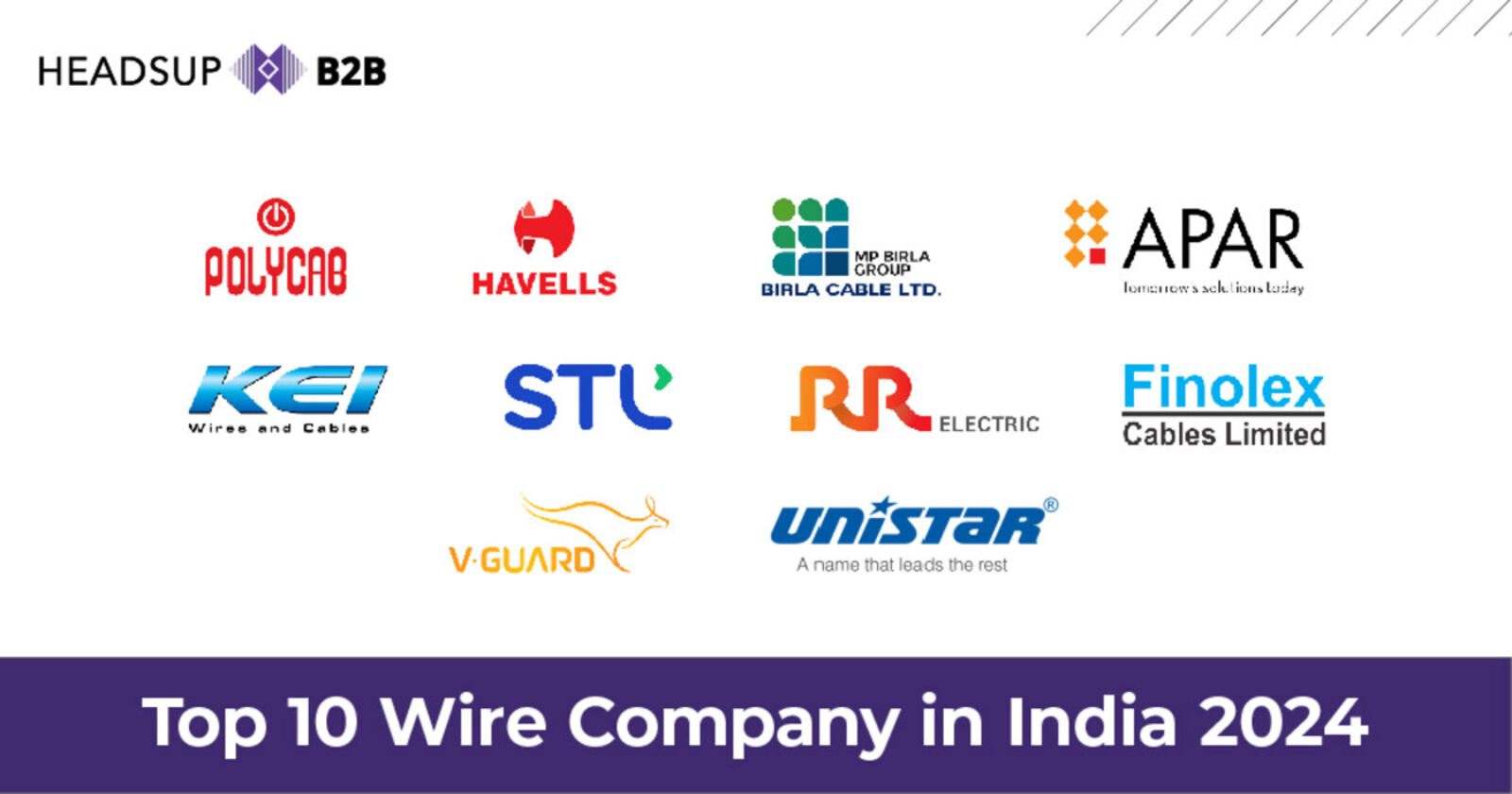
    Top 10 Wire Companies in India | Powering the Nation

    India’s burgeoning economy has led to a significant increase in demand for electricity, consequently driving the growth of the wire and cable industry. Several companies have emerged as leaders in this sector, offering a wide range of products for residential, commercial, and industrial applications.

    Let’s explore the Top 10 Electric wire companies in India that have made a substantial impact.

    The Powerhouses of the Indian Wire Brands Industry

    1. Polycab India Limited: A household name in India, Polycab is renowned for its extensive product range, including wires, cables, switches, and electricals. With a strong focus on innovation and quality, Polycab has established a dominant position in the market.

    2. Havells India Ltd: A diversified conglomerate, Havells has a significant presence in the wire and cable segment. The company is known for its robust products, wide distribution network, and commitment to safety standards.

    3. Finolex Cables Ltd: A pioneer in the industry, Finolex is synonymous with quality and durability. The company offers a comprehensive range of Electric wires and cables for various applications, catering to both domestic and industrial customers.

    4. KEI Industries Limited: With a strong focus on research and development, KEI Industries has emerged as a leading player in the wire and cable industry. The company is known for its technologically advanced products and its commitment to sustainable practices.

    5. Sterlite Technologies Ltd: While primarily known for its optical fiber cables, Sterlite Technologies also has a significant presence in the copper wire and cable segment. The company’s focus on cutting-edge technology and global expansion has contributed to its growth.

    6. RR Kabel: A rapidly growing company, RR Kabel has gained popularity for its innovative products and competitive pricing. The company offers a wide range of wires and cables for various applications, including residential, commercial, and industrial.

    7. V-Guard Industries Ltd: Primarily known for its water heaters, V-Guard has a substantial presence in the wire and cable industry. The company offers high-quality products with a focus on safety and durability.

    8. Birla Cable Ltd: A part of the Aditya Birla Group, Birla Cable has a strong foothold in the wire and cable market. The company offers a wide range of products, catering to both domestic and export markets.

    9. Apar Industries Ltd: With a focus on aluminum conductors, Apar Industries is a major player in the wire and cable industry. The company has a strong presence in the power transmission and distribution segment.

    10. Universal Cables Ltd: A leading manufacturer of copper and aluminum conductors, Universal Cables has a wide customer base across India. The company offers a diverse product range, catering to various industries.

    Factors to Consider When Choosing The Best Wire in India

    • Quality: Look for companies with a strong reputation for producing high-quality wires and cables.

    • Safety Standards: Ensure that the products comply with relevant safety standards and certifications.

    • Product Range: Choose a company that offers a wide range of products to suit your specific needs.

    • Price: Compare prices from different companies to get the best value for your money.

    Warranty: Consider the warranty offered by the company for its products.

  • Wires and Cables in Industrial Settings: A Guide to Durability and Performance

    Wires and Cables in Industrial Settings: A Guide to Durability and Performance

    Welcome to Headsup B2B, your dependable source for top-notch wires and cables. The right wire and cable is vital in industrial environments for optimal performance and safety.

    However, with so many options, selecting the best can be challenging. By providing straightforward and helpful insights, “Wires and Cables in Industrial Settings: A Guide to Durability and Performance” aims to make your decision-making easier. This guide is perfect for engineers, purchasing managers, and business owners in the industrial sector.

    Introduction

    The wire and cable are nowadays the most important and basic material for households and industries. Wire and cable are necessary to sustain efficient data transport, power distribution, and communication in this complex world of connections. But not every cable is created equal. Beyond their external look, industrial and commodity cables differ greatly from one another.

    We’ll delve deeper into the realm of cables in this post to understand the key differences between these two groupings and why they are significant.

    What are Cables?

    An electrical cord is similar to a power cable. It consists of one or more electrical wires secured together by a covering for protection. This assembly is used to transfer electrical power between locations. Power lines can be found above, below, or in the open for permanent wiring within structures.

    Components of Wire and Cable

    Essential components make up wires and cables, ensuring they function effectively. These primary parts are conductors, insulation, shielding, and jacketing.

    Conductors

    The essential element in charge of transporting electrical current is the conductor. Conductors typically consist of copper or aluminum, though they can vary in diameter and materials to meet different voltage requirements.

    Insulation

    An insulating material envelops the conductor so as to safeguard the cable from outside influence and energy dissipation. Some of the used insulations are rubber, XLPE and PVC.

    Shielding

    To reduce electromagnetic interference and maintain the integrity of electric signals, engineers use metallic shields made from copper or aluminum.

    Jacketing

    The outermost layer, called the jacket, provides extra protection against various influences, chemicals, and ultraviolet radiation. Common types of jacketing include PVC, PE or LSZH material.

    Different Types of Wire and Cable

    Power cables are available in a variety of kinds, each intended to satisfy certain voltage and application needs. It is essential to comprehend the differences between these kinds in order to choose the appropriate cable for a certain application.

    Low Power Cables

    Low-voltage cables are essential for everyday electrical needs, powering household appliances, lighting systems, and small electronics. With a voltage range of up to 1 kV, they are versatile and easy to install, making them suitable for indoor and outdoor applications. Conductors made of copper or aluminium and insulation materials like PVC or rubber ensure reliability and efficiency in power distribution.

    Medium Voltage Cables

    Medium voltage cables range from 1KV-69KV and are important in industrial and distribution systems to supply power to operating equipment. These cables carry electric power over medium distances and are used in local electricity distribution systems. It’s important to note that manufacturers use copper or aluminum conductors and cross-linked polyethylene insulation, ensuring the cables are highly durable and reliable in performance.

    High Voltage Cables

    HV cables particularly the 66 kV cables are used for power transmission and they serve different purposes. These cables are meant to operate at much higher voltage ranges falling in between the medium voltage cables and extra-high voltage cables. They are particularly relevant in industrial and distribution loops, for which a large amount of power transmission is needed. Increased awareness of high voltage cable functions, such as 66 kV cables, makes one aware of advancement in power cables.

    Submarine Cables

    Submarine power cables play as critical in electrical interconnection over water channels to power islands and offshore initiatives. They are equipped with waterproofing features so as to withstand the threats posed by marine life and the sea bed terrain. They are essential power supply systems for the continuity of energy projects in ‘harsh’ conditions, supporting renewable energy efforts and facilitating connection of islands to the grid, thus being indispensable for offshore energy operations.

    Features of Wire and Cables

    Easy to Use

    Power cables are renowned for having an intuitive design that makes them simple to install and operate. They are available for usage in a variety of applications for people, businesses, and homes thanks to their standardised connections and simple design. Power cables are often used in exposed setups, underground installations, overhead configurations, and permanent building wiring because they are easy to handle.

    Voltage Rating

    The highest voltage that a cable can withstand without breaking is indicated by its voltage rating. Selecting a cable with the right voltage rating is essential for both effectiveness and safety.

    Material for Insulation

    The choice of the insulants impacts the cables’ stability with regard to temperature changes, mechanical pressures, as well as other environmental factors. Ideally, varying applications could probably require varying materials of insulation.

    Environmental Aspects to Take into Account

    When used in hazardous or outdoor settings, power cables need to be built to resist things like dampness, UV rays, and extremely high or low temperatures.

    Capacity for Carrying Current

    In electrical current transmission, current-carrying capacity is one of the parameters that determines the efficiency of a cable in transmitting electricity. Its implementation is invaluable in preventing overheating and system issues.

    How to Identify Quality Wire and Cable

    To ensure that the electrical system is both effective and safe, it is important that only high quality power cables be chosen. Here are some important things to think about:

    Material for Conductors

    Check if the cable is made with strong and quality conductors including copper or aluminum that facilitates power delivery.

    Quality of Insulation

    Check the insulating material. Quality cables are made from enhanced materials such as XLPE or PVC, which offers protection against environment fluctuations and electrical loss.

    Material of Jacket

    The outer jacket needs to be sturdy and impervious to sunlight, chemicals, and physical harm. High-quality cables frequently have PVC, PE, or LSZH jackets.

    Accreditations

    Seek accreditations from reputable standards organisations. Adherence to industry norms guarantees that the cable satisfies safety and functionality specifications.

    Rating for Voltage

    Choose cables which have the corresponding voltage ratings for the use intended for them. Optimum cables are designed to carry specified loads without getting overheated or having a compromised performance standard.

    Capacity for Carrying Current

    Take into account the cable’s capability to transport current. High-quality cables are made to withstand specified loads without overheating or deteriorating in performance.

    Manufacturer Standing

    Select cables made by reliable producers. It is more probable for well-known businesses to follow quality guidelines throughout production.

    Bend radius and flexibility

    High-quality cables are flexible and have an appropriate bend radius, making installation simple in a variety of situations without sacrificing functionality.

    Adaptability to Environmental Elements

    Check how resistant the cable is to other conditions such as dampness, UV radiation and high temperatures. Subsequently, cables of the highest quality are intended to withstand various situations.

    Labelling and Packaging

    Observe the labelling and packaging of the cables. A dedication to quality is demonstrated by the cable’s requirements, which are substantiated and comprehensive.

    Cable Applications

    Many applications employ different kinds of cables, each chosen for its own set of qualities and functionalities.

    Let’s examine the applications for a few typical cable types:

    Power cables

    These cables move electrical energy between locations. They are frequently used to deliver power to structures, equipment, and appliances in commercial, industrial, and domestic environments.

    Data cables

    People use communication cables to send data messages between machines. These cables find wide use in audio/video applications, computer networks, and telecommunications systems.

    Coaxial wires

    Low-loss high-frequency signal transmission is possible using coaxial cables. High-speed internet connections, CCTV installations, and TV systems frequently employ them.

    Ethernet cables

    These cables enable data transfer between devices connected to local area networks (LANs). Data centres, workplaces, and residences commonly use Ethernet cables for this purpose.

    HDMI cords

    HDMI (High-Definition Multimedia Interface) connections send high-definition video and audio information between devices. You often find these connections in entertainment devices, gaming consoles, and home theatre systems.

    USB cords

    Printers, cameras, tablets, smartphones, and power supplies connect to computers or power sources using USB (Universal Serial Bus) connections. They make it easier to transfer data and charge devices.

    Read More :- 10 Tips for Choosing the Right Wire and Cable

    Headsup B2B: Your Go-To Source for the Best Wires and Cables

    we understand how crucial quality wires and cables are for industrial operations. We aim to provide our customers with the best products that guarantee quality, safety, reliability, and top performance. We offer a wide range of wires and cables tailored to meet various industrial needs, from power and control to data transmission.