Tag: Warehouse operations

  • Lifting Efficiency: The Role of Pallets Overhead Cranes in Warehousing

    Lifting Efficiency: The Role of Pallets Overhead Cranes in Warehousing

    Preface

    In today’s fast-paced world of warehousing and logistics, efficiency is key. Every second counts when it comes to moving goods in and out of storage. At Headsup B2B, we understand the critical role that warehouse equipment plays in boosting productivity and ensuring smooth operations. Through this blog post, we’ll explore how pallets and overhead cranes work together to change the efficiency of warehouses significantly. ​Whether you’re a warehouse manager, logistics coordinator, or business owner, this guide will provide valuable insights to help you make informed decisions.

    Introduction

    It is feasible to handle large, bulky items that are challenging to move using manual handling equipment, such coils, pipes, profiles, and other things, by installing a warehouse equipment like overhead crane .

    These lifting devices improve operator safety and ergonomics by enabling the physical transfer of heavy goods across the facility with only a single remote control.

    What is Pallet and its Types?

    Pallets are a crucial piece of logistical gear in packing. A pallet is a flat, transportable, sturdy platform that can support a load.

    Pallets come in several varieties and are used for stacking, storing, assembling, and moving products. By facilitating the simple transportation of stacked items using equipment or machines like pallet jacks and forklifts, they increase the operational efficiency of warehouses.

    Warehouse Cranes: What Are They?

    For raising palletised or packed goods to high storage levels warehouses uses the warehouse cranes. High-bay warehouse cranes are needed to load and unload the unusually high system in warehouses with high-bay racking. Crane warehouses are semi-automated; however, cranes operated manually or remotely may still need human intervention.

    At the end of a manufacturing line, smaller robotic cranes can lift, pack, and palletise goods. Visit our robotics website to learn more about our work cell and robotic crane options.

    The 6 Types of Overhead Cranes

    Overhead cranes come in six primary varieties that are ideal for usage in warehouse environments. Let’s examine each of them to assist you in choosing the one that best suits your structure.

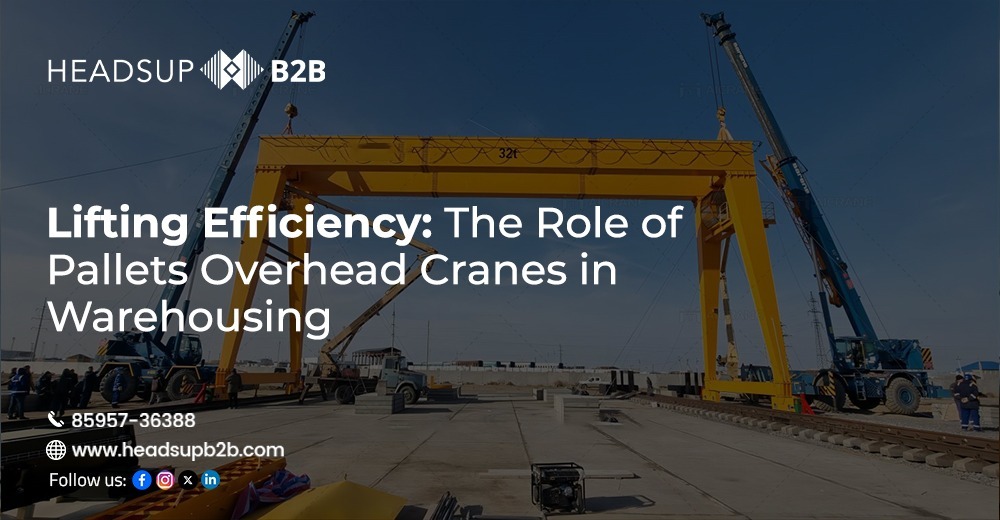
    Gantry Crane

    Gantry cranes are free-standing, moveable cranes with limited scope, suitable for hobbyists or mechanics. Larger models are available for warehouses to hold and transport loads. While small models are affordable, most warehouses require larger models for loading and transporting loads. Gantry cranes come in various shapes and sizes, with larger models being more expensive.

    Jib Cranes

    Jib cranes, stationary, floor-mounted cranes with a chain host, are ideal for short-distance lifting of objects or materials. They offer ease of use, lifting capacity, and affordability. However, they have limited lifting power and lack flexibility compared to other crane types.

    Bridge Cranes

    Bridge cranes are popular warehouse options with custom-designed runways and support columns. They can encompass the entire warehouse or part of it, with a hoist moving along the runway and the entire bridge moving forward or backwards. Ideal for moving heavy objects, they are reliable and efficient. Despite being expensive, they can carry objects throughout a warehouse, unlike other overhead cranes.

    Workstation Cranes

    Workstation cranes, similar to bridge cranes, are floor-mounted and work over fixed spaces, suitable for warehouses requiring overhead cranes but not for entire spaces, requiring floor-mounted supports.

    Monorail Cranes

    Monorail cranes, named after their fixed track, transport objects and materials in warehouses like elevated conveyor lines. They can run around curves, making them ideal for assembly lines and certain warehouse transport processes.

    Top and Under-Running Cranes

    Top and under-running cranes are popular warehouse options, mounted on runway beams or vice versa. Top-running cranes have increased lifting ability and can traverse a significant distance due to their design and makeup.

    What are the benefits of an overhead crane?

    The following benefits come from moving big goods using a warehouse overhead crane:

    • Control over the load: warehouse overhead cranes frequently have precision controls that enable the operator to position the load in the precise spot using a remote control device. This is in contrast to forklifts, which might cause stacking mistakes.

    • The facility’s ergonomics: warehouse overhead cranes relieve operators of physical strain by enabling them to transport products between two or more spots in the centre with a single button push. The many varieties of warehouse overhead cranes can have clamps or lifts for rolls, coils, sheets, or pallets, among other accessories, to facilitate the movement of cargo.

    • Increased safety: To prevent impediments and potential accidents with personnel and material handling equipment, the crane lifts large, heavy objects to a specific height above the ground. Safety features guarantee dependable and efficient functioning.

    How does a warehouse overhead crane work?

    A warehouse overhead crane system safely lifts and moves the loads from one location to another in a facility. It consists of a bridge-like overhead structure with girders for stability. The main girder moves goods horizontally, while side girders facilitate transverse movement. Different configurations are available for different facilities. Loads are lifted using a hoist integrated into the trolley, which uses a hook, pulleys, rope, cable, or chain to minimise effort. The load is usually fitted with a hitch system for easy picking up.

    A warehouse overhead crane is a safe solution for moving heavy loads, with components like an emergency stop button and pushbutton panels that ensure proper operation. These cranes can be adapted to logistics centre requirements and have safety features like limit stops for trolleys and overhead sections, lifting mechanisms, and safety latches on hooks to secure the load during movement.

    Application of a warehouse overhead crane:

    Warehousing

    When assessing the necessity for an overhead crane, the first industry that springs to mind is warehousing, where commodities, supplies, and equipment are frequently transported, positioned, and prepared. An overhead crane is a great help in warehousing since it can quickly lift big products from storage to the shipping dock.

    Assembly

    Large equipment assembly industries need a way to lift and move partially assembled assemblies from one place to another so they may be finished. Because forklifts, automatic goods vehicles, and other methods of material handling are insufficient or unsafe, using an overhead crane is essential. Moving assemblies is a normal element of the production process.

    Transportation

    When large, bulky goods need to be loaded onto trucks, trains, and aeroplanes, the same guidelines that apply to storage also apply to transportation. Large goods are conveniently positioned for transportation by overhead cranes. This may be particularly true for international transportation when large items and containers must be lowered into ship holds.

    Equipment Maintenance

    Overhead cranes help facilitate repairs of punch presses and other production equipment by progressively moving and placing parts for convenient access. Heavy machinery may be moved with gantry and bridge cranes from their permanent site to a repair facility and back again. Lifting machinery up and over other equipment to put at a repair station is made easier with the use of overhead cranes.

    Choosing the Right Warehouse Equipment

    When it comes to selecting the perfect overhead crane for your warehouse, several key factors need to be considered to ensure you make the right choice. Here’s a quick guide to help you navigate through the process.

    Factors to Consider

    1. Load Capacity: The maximum weight the crane can lift is crucial. Always consider the heaviest load you need to move and add a safety margin. Choosing a crane and othe warehouse equipment with the right load capacity prevents overloading and potential accidents.

    2. Span: This is the distance between the crane’s runway rails. It determines how far the crane can move horizontally. Measure your workspace carefully to ensure the crane covers the required area.

    3. Lift Height: This refers to how high the crane can lift a load. Consider the height of your warehouse and the maximum height at which you need to store or retrieve items.

    4. Usage Frequency: How often you’ll use the crane affects its durability and performance. For frequent use, opt for a crane designed for high cycles. For occasional use, a lighter-duty crane may suffice.

    Tips for Selecting the Best Warehouse Equipment

    1. Assess Your Needs: Make a list of your specific requirements, including load types, workspace dimensions, and operational frequency.

    2. Consult Experts: Don’t hesitate to seek advice from crane manufacturers or suppliers. They can provide valuable insights and recommend the best options based on your needs.

    3. Consider Future Growth: Think about your future needs. Investing in a slightly more capable crane now can save you from needing an upgrade soon.

    4. Safety Features: Ensure the crane has essential safety features like overload protection, emergency stops, and reliable braking systems.

    5. Budget Wisely: While it’s important to consider cost, don’t compromise on quality and safety. Balance your budget with the crane’s capabilities and lifespan.

    Importance of Regular Maintenance and Inspections

    Regular maintenance and inspections are vital for the longevity and safety of your overhead crane. Here’s why:

    1. Prevent Accidents: Routine checks can identify potential issues before they lead to accidents, ensuring the safety of your employees and equipment.

    2. Maximise Efficiency: Well-maintained cranes operate smoothly, reducing downtime and increasing productivity.

    3. Extend Lifespan: Regular servicing extends the life of your crane, providing better returns on your investment.

    How Headsup B2B Can Be Your Reliable Partner in Sourcing Warehouse Equipment

    Choosing the right warehouse equipment is crucial for efficiency and safety. Headsup B2B is here to help you make the best choices. Here’s why we can be your reliable partner in sourcing warehouse equipment:

    Wide Range of Products

    Headsup B2B offers a vast selection of warehouse equipment, including overhead cranes, forklifts, shelving systems, and more. No matter your needs, we have the right tools to keep your operations running smoothly.

    Expert Guidance

    Our team of experienced professionals is ready to provide you with expert advice. Whether you’re setting up a new warehouse or upgrading your current one, we can help you find the most suitable equipment. We understand that every warehouse is unique, and so we tailor our recommendations to meet your specific requirements.

    Quality Assurance

    Headsup B2B partner with trustworthy manufacturers to ensure that all the warehouse equipment we offer is of the highest quality. This means you can rely on our products to be durable, efficient, and safe. Our commitment to quality ensures that you get the best value for your investment.
  • The Warehouse Manager’s Handbook: Choosing the Right Material Handling Equipment

    The Warehouse Manager’s Handbook: Choosing the Right Material Handling Equipment

    In the modern day, material handling is critical as it improves the efficiency and productivity of industrial facilities and warehouses. Good material handling procedures lower operating expenses and increase worker safety by lowering mishaps and injuries brought on by incorrect material handling. Effective material handling is now even more essential to meeting consumer expectations in light of the growth of e-commerce and the growing need for quicker delivery times. Warehouse material handling equipment is essential in the modern day for maximising warehouse operations and realising company success. It is also very difficult to choose the right products, so, the team at Headsup B2B is here to help you with the right product and easy procurement methods.

    Headsup B2B is one of the well-known and trustworthy online material handling equipment sourcing platforms that provides a wide range of options from various reputable manufacturers and suppliers. So, without wasting your precious time, let’s discuss material handling equipment, its importance, and the process of choosing the right products.

    What is Material Handling?

    The moving, storing, safeguarding, and management of goods and materials during the production, distribution, consumption, and disposal processes is referred to as material handling. It covers a broad variety of tasks, including moving, storing, lifting, and retrieving goods and materials while making use of different tools, processes, and systems.

    Importance of Warehouse Material Handling Equipment:

    Material handling plays a critical role in warehouse operations to ensure the smooth and productive flow of items throughout the facility. The following succinctly describes the significance of material handling in warehouse operations:

    • Safety: Worker safety and the prevention of harm to commodities are the two main goals of material handling equipment and processes.

    • Efficiency: Meeting customer needs and reducing inventory costs depends on the efficient and timely flow of items through the warehouse.

    • Productivity: The productivity of employees and the general operations of the warehouse may be enhanced by the adoption of effective material handling tools and practices.

    • Customer Satisfaction: Sustaining client happiness and loyalty requires accurate and prompt delivery of goods.

    • Space utilisation: By optimising the use of warehouse space, material handling methods and tools may help store more items.

    Types of Material Handling Equipment:

    Forklift:

    A forklift is a compact industrial vehicle with a front-mounted, power-operated forked platform that can be lifted and lowered to lift or carry items. Numerous sectors, like warehouses and other big storage facilities, depend on forklifts to meet their demands. Combustion engines or electric batteries power forklifts. It plays a crucial role in the sector of the transportation of products and resources.

    Conveyors:

    A conveyor system is a mechanical handling device that moves loads and materials automatically across a space quickly and effectively. Among its many advantages, this technology lessens human error, lowers workplace dangers, and lowers labour expenses. They are handy for transferring large or heavy objects from one location to another. A conveyor system can move things using a chain, wheels, rollers, or a belt.

    Pallet Racking Systems

    Pallet racking is a material organisation method on metal shelves that involves rowing pallets of goods. Forklifts can reach the various levels of shelves in the system. By using vertical space, these systems are used to boost storage density. The idea is the same as considering the advantages of constructing skyscrapers in a city with limited space.

    Automated Guided Vehicles (AGVs)

    Often known as self-guided or autonomous guided vehicles, automated guided vehicles (AGVs) are load carriers or material handling systems that operate independently inside warehouses, distribution centres, or production facilities without the need for a driver or operator.

    Factors to Consider While Selecting the Warehouse Material Handling Equipment:

    Budget constraints and total cost of ownership:

    • Start by setting a clear budget to work within.

    • Consider the upfront and maintenance expenses, such as repairs, and operational costs.

    • Choose equipment that offers a good balance between initial investment and long-term affordability.

    Maintenance Requirements and Availability of Spare Parts:

    • Check the maintenance requirements of each piece of equipment.

    • Also, ensure that spare parts are readily available and will only cause short downtimes if they need replacements.

    • Opt for equipment with straightforward maintenance procedures to minimise disruptions to operations.

    Operator Training and Safety Regulations compliance:

    • Prioritise equipment that is user-friendly and easy to train operators on.

    • Check to make sure that the equipment complies with all safety regulations and standards.

    • Moreover, invest in the proper training programmes to ensure operators are proficient in using the equipment safely.

    Scalability and Future Expansion Needs:

    • Consider your warehouse’s growth potential and future needs.

    • Choose equipment that can adapt to changes in demand and warehouse layout.

    • Look for modular designs and add-on feature options to accommodate expansion.

    Environmental Considerations (e.g., energy efficiency, emissions):

    • Evaluate the environmental impact of each piece of equipment, including energy consumption and emissions.

    • Choose energy-efficient models to reduce operating costs and environmental footprints.

    • Select equipment that meets or exceeds environmental regulations and standards.

    How Headsup B2B Helps in the Procurement of the Right Warehouse Material Handling Equipment.

    Headsup B2B simplifies the process of getting the right material handling equipment for your warehouse. Here’s how:

    1. Wide Selection: Headsup B2B offers a wide range of equipment options, ensuring you find exactly what you need.

    2. Expert Guidance: Headup B2B is a platform that provides expert advice and guidance to help you navigate through various options and make the right decisions.

    3. Transparent Pricing: With clear pricing and cost breakdowns, you can easily compare options and stay within your budget.

    4. Efficient Procurement: Headsup B2B offers a streamlined procurement process that saves time and hassle, allowing you to focus on running your warehouse smoothly.

    5. Quality Products: We partner with reputable suppliers, ensuring that equipment meets high-quality standards and is built to last.

    With Headsup B2B, procuring the right warehouse material handling equipment has become easier and more stress-free.

  • Forklifts: Versatile Handling Equipment for Various Industries

    Forklifts: Versatile Handling Equipment for Various Industries

    Did you know that industrial forklifts are responsible for lifting and moving over 70% of the world’s goods? These complex machines are needed in many industries, from warehouses to manufacturing and retail. Welcome to Headsup B2B, your prime portal linking suppliers and clients for premium material handling solutions. As an online marketplace connecting suppliers and clients, we strive to simplify the procurement process, offering a diverse range of forklift options tailored to meet the unique needs of various industries.

    In today’s blog, we will discuss the importance of forklifts in industries and how Headsup B2B is your go-to place for forklift suppliers.

    Understanding Forklifts: A Closer Look

    Forklifts are available in different forms, and each of them is made for a specific purpose. They cover everything from the well-known counterbalance forklifts to advanced order pickers, and these material handling machines take an important role in every industry all over the globe. Whether navigating narrow warehouse aisles or tackling outdoor terrain, industrial forklifts adapt seamlessly. Don’t underestimate their simplicity; these tools hide a layer of complexity that renders them indispensable in modern business operations.

    Industrial Forklifts in the Field: Diverse Industry Applications

    Forklifts aren’t just limited to warehouses; they’re versatile workhorses found across various industries. Here’s a glimpse into their wide-ranging applications:

    • Warehousing and Logistics: Forklifts are the backbone of warehouse operations, effortlessly manoeuvring through aisles to move and stack goods.

    • Construction and Manufacturing: In bustling construction sites and busy manufacturing plants, forklifts handle heavy materials with precision, keeping projects on track.

    • Retail and wholesale: In bustling stores and distribution centers, forklifts ensure efficient stock movement and replenishment.

    • Agriculture and farming: From loading produce onto trucks to arranging hay bales, forklifts simplify agricultural tasks.

    • Automotive industry: Forklifts facilitate the handling of car parts and equipment, supporting smooth production processes.

    The Forklift Advantage: Streamlining Operations

    Forklifts aren’t just heavy machines; they’re productivity powerhouses, offering a plethora of benefits across industries:

    • Increased Efficiency: Forklifts streamline operations, moving heavy loads swiftly and reducing manual labour.

    • Enhanced Safety: With proper training and maintenance, forklifts ensure a safer work environment, minimising the risk of accidents.

    • Versatility: From indoor warehouses to rough outdoor terrains, forklifts adapt to various environments with ease.

    • Cost-Effectiveness: Their efficiency translates to cost savings, optimising resources, and improving the bottom line.

    • Environmental Sustainability: Electric forklifts and eco-friendly practices contribute to a greener footprint, aligning with modern sustainability goals.

    How Headsup B2B Connects Suppliers and Clients for Industrial Forklifts

    Headsup B2B isn’t just another platform; it’s the bridge between suppliers and clients. The forklift suppliers showcase a list of forklifts with technical specifications as well as pricing that clients can view and make comparisons with seamlessly. By providing accessible communication routes, customers can look for answers, make deals, and seal transactions within the shortest time possible. Headsup B2B is a powerful tool that guarantees openness and trust, thus making the order placement process seamless and satisfying for all its customers. Whether it’s for warehousing or any other industry, Headsup B2B makes connecting suppliers and clients a breeze, fostering a dynamic marketplace for handling equipment.