Tag: Types of Industrial Automation

  • What Are Industrial Automation Solutions and How Do They Work?

    What Are Industrial Automation Solutions and How Do They Work?

    Industrial automation has become the backbone of modern manufacturing, logistics, and production industries. With the rise of smart factories, artificial intelligence, and the Internet of Things (IoT), businesses are increasingly turning to automation to boost productivity, reduce costs, and enhance safety. But what exactly are industrial automation solutions, and how do they work? This comprehensive guide breaks it all down—systems, components, technologies, applications, and the future of automation.

    Understanding Industrial Automation

    Industrial automation refers to the use of advanced technologies, control systems, and machinery to automate industrial processes. Instead of relying on human labor, automation systems manage repetitive tasks, monitor operations, control equipment, and make decisions based on data.

    At its core, automation aims to achieve:

    • Increased efficiency

    • Higher output with consistent quality

    • Improved safety

    • Reduced human error and labor costs

    Automation solutions range from simple mechanical systems to complex AI-driven smart factories.

    Key Components of Industrial Automation Systems

    An industrial automation system is made up of several interdependent parts. Let’s break down the major components:

    1. Sensors and Actuators

    • Sensors detect physical conditions like temperature, pressure, proximity, and motion.

    • Actuators convert electrical signals into physical actions like moving a valve, starting a motor, or opening a gate.

    2. Programmable Logic Controllers (PLCs)

    • PLCs are industrial computers designed to monitor inputs, make logic-based decisions, and control outputs.

    • They are highly reliable, easy to program, and central to almost every automated system.

    3. Human Machine Interface (HMI)

    • An HMI allows humans to interact with the automation system.

    • It provides real-time data, diagnostics, alerts, and manual control options through screens or dashboards.

    4. Supervisory Control and Data Acquisition (SCADA)

    • SCADA systems provide centralized monitoring and control of large-scale operations.

    • They gather data from sensors, provide visualization, issue alarms, and allow remote control of devices.

    5. Robotics

    • Industrial robots perform tasks like welding, painting, assembly, and packing with speed and accuracy.

    • Robots reduce the risk of human error and can operate in hazardous environments.

    6. Communication Networks

    • These allow components to communicate with each other in real time.

    • Protocols like Ethernet/IP, Modbus, and PROFINET ensure seamless data exchange between devices and control units.

    How Do Industrial Automation Solutions Work?

    Industrial automation works by integrating hardware and software systems to perform tasks automatically. Here’s a simplified view of how an automated system functions:

    1. Input Data Collection
      Sensors gather data about the environment or machinery—e.g., temperature, product presence, speed.

    2. Data Processing and Decision Making
      The PLC or controller interprets the data, applies logic, and decides what action to take.

    3. Control Signals Sent
      Based on the logic, control signals are sent to actuators or other machines to perform actions—e.g., turning on a motor, adjusting a conveyor belt, or stopping a process.

    4. Monitoring and Feedback
      SCADA or HMI systems provide feedback to human operators and adjust processes if necessary.

    This loop of monitoring, decision-making, and execution runs continuously, allowing for non-stop production with minimal intervention.

    Types of Industrial Automation

    1. Fixed Automation

    • Also called hard automation.

    • Used in high-volume, repetitive manufacturing tasks.

    • High initial cost, low flexibility.

    2. Programmable Automation

    • Suited for batch production.

    • Can be reprogrammed for different products.

    • Offers moderate flexibility and efficiency.

    3. Flexible Automation

    • Enables rapid changes in product design and process.

    • Common in advanced manufacturing plants with high product variability.

    Benefits of Industrial Automation

    The shift toward automation provides significant value:

    • Improved Production Speed: Machines can operate 24/7 without fatigue.

    • Cost Reduction: Reduces need for manual labor and minimizes human errors.

    • Enhanced Product Quality: Consistent processes result in uniform output.

    • Real-Time Monitoring: Advanced systems provide instant insights and alerts.

    • Worker Safety: Automation reduces the risk of workplace injuries in hazardous environments.

    Technologies Powering Modern Industrial Automation

    1. Internet of Things (IoT)

    • Connects machines, sensors, and systems for seamless data exchange.

    • Enables predictive maintenance and real-time analytics.

    2. Artificial Intelligence (AI)

    • Allows systems to learn from data and improve over time.

    • Used in predictive maintenance, process optimization, and defect detection.

    3. Machine Vision

    • Cameras and image-processing algorithms inspect products and guide machines.

    • Crucial for quality control and precision manufacturing.

    4. Cloud Computing

    • Stores and analyzes vast amounts of data from industrial operations.

    • Enables remote control, historical data analysis, and performance benchmarking.

    Challenges in Implementing Industrial Automation

    While automation has many benefits, it also brings challenges:

    • High Upfront Costs: Systems can be expensive to install.

    • Integration Complexity: Merging new tech with old systems can be tricky.

    • Skilled Labor Shortage: There’s a growing need for workers trained in robotics, AI, and control systems.

    • Cybersecurity Risks: Connected devices are vulnerable to cyberattacks if not properly secured.

    The Future of Industrial Automation

    Industrial automation is evolving rapidly. Here’s what lies ahead:

    • Collaborative Robots (Cobots): Robots that safely work alongside humans.

    • 5G Networks: Faster and more reliable communication between machines.

    • Digital Twins: Virtual replicas of physical systems for simulation and optimization.

    • Edge Computing: Real-time data processing closer to the source for faster decision-making.

    • Sustainable Automation: Energy-efficient systems that reduce environmental impact.

    Conclusion

    Industrial automation solutions are transforming industries by making operations smarter, faster, and safer. As technology advances, automation is no longer just a tool for large manufacturers—it’s a strategic investment for businesses of all sizes. Understanding how these systems work and where they can be applied is the first step to embracing a future defined by efficiency, innovation, and resilience.

    Whether you’re just beginning to explore automation or planning to upgrade your current systems, now is the time to invest in the future.
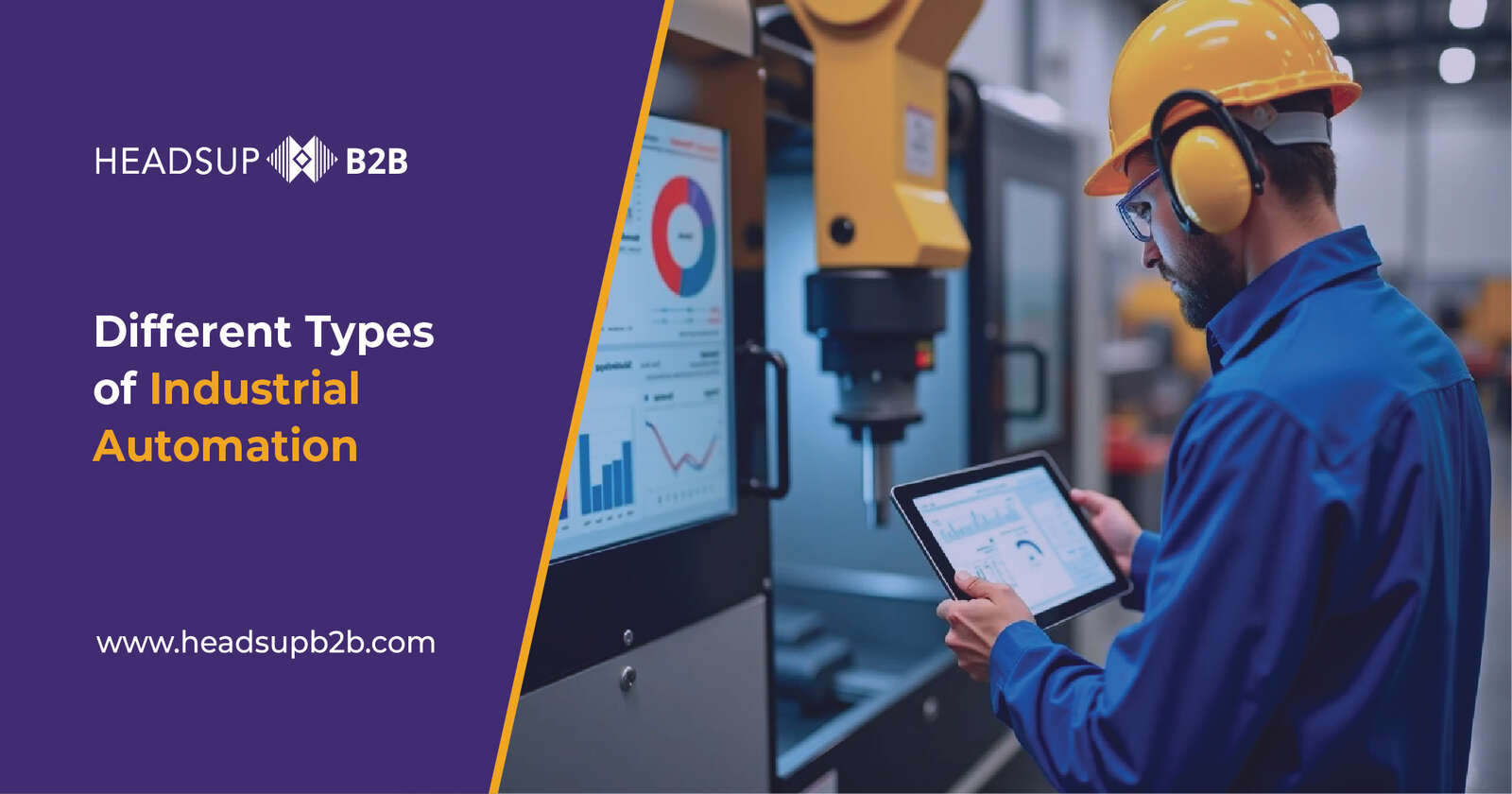
  • Different Types of Industrial Automation

    Different Types of Industrial Automation

    Ever wondered how factories keep producing at lightning speed without missing a beat? The answer lies in industrial automation. But here’s the twist—it’s not a one-size-fits-all solution. There are different types of industrial automation, each designed to suit specific production needs.

    Whether you’re in manufacturing, food processing, or any industry that runs on machines, understanding these types will help you choose the best path for scaling up. Let’s break it all down.

    What is Industrial Automation?

    Before diving into the types, here’s a quick refresher:
    Industrial automation refers to using machines, control systems, and software to handle industrial processes—minimizing or eliminating human involvement.

    The main goals? Boost productivity, reduce error, cut costs, and improve safety.

    Why Understanding the Types Matters?

    Choosing the wrong type of automation is like using a bulldozer to crack a walnut—it’s overkill and costly. Knowing the different types helps you:

    • Select the right solution for your business

    • Optimize efficiency and cost

    • Stay competitive and scalable

    The Four Main Types of Industrial Automation

    1. Fixed (Hard) Automation

    What Is It?

    Also known as hard automation, this type is designed for high-volume, repetitive tasks. The setup is rigid and tailored for one specific process.

    Common Applications:

    • Automotive assembly lines

    • Bottling and packaging in food production

    • Metal stamping

    Pros:

    • Super-fast production

    • Low per-unit cost (after setup)

    • Consistent output quality

    Cons:

    • Zero flexibility

    • High initial cost

    • Time-consuming to reprogram or reconfigure

    Best For:

    Companies that mass-produce a single product for a long period.

    2. Programmable Automation

    What Is It?

    As the name suggests, programmable automation can be reprogrammed for different tasks. It’s ideal for batch production—where one product is made for a time and then the system switches to another.

    Common Applications:

    • Electronics assembly

    • Textile manufacturing

    • Injection molding

    Pros:

    • More flexible than fixed automation

    • Suitable for varying product types

    • Medium-volume production capabilities

    Cons:

    • Changeovers take time and planning

    • Higher cost per unit than fixed automation

    Best For:

    Businesses producing multiple product models in batches.

    3. Flexible (Soft) Automation

    What Is It?

    Flexible automation is the next level of programmable automation. It allows for quick and easy changeovers, often automatically, making it ideal for dynamic production environments.

    Common Applications:

    • Custom manufacturing

    • Advanced robotics systems

    • Consumer electronics

    Pros:

    • Extremely adaptable

    • Fast product changeovers

    • Reduces downtime

    Cons:

    • High cost to implement

    • Requires skilled personnel

    Best For:

    Industries needing frequent design changes and low to medium batch sizes.

    4. Integrated Automation

    What Is It?

    This refers to a fully integrated system where machines, software, sensors, and control systems work seamlessly together. It’s a smart factory model, often associated with Industry 4.0.

    Common Applications:

    • Smart manufacturing

    • Continuous production systems

    • High-tech industries

    Pros:

    • Full automation and connectivity

    • Real-time data and monitoring

    • Optimized efficiency and quality control

    Cons:

    • High upfront cost

    • Complex to implement and maintain

    Best For:

    Large, tech-savvy companies ready to invest in long-term gains and full digital transformation.

    Bonus: Emerging Types of Automation

    Technology doesn’t stand still, and neither does automation. Here are two emerging types to keep an eye on:

    Collaborative Automation (Cobots)

    Cobots are designed to work safely alongside humans, assisting in tasks like material handling, inspection, and light assembly. They offer flexibility and cost-efficiency for small to medium enterprises.

    Hyperautomation

    This is a broader concept that combines AI, ML, robotic process automation (RPA), and more to automate everything possible across an organization—not just the shop floor.

    Comparison Table: Types of Industrial Automation

    Type

    Flexibility

    Volume

    Cost

    Changeover Time

    Best For

    Fixed Automation

    Low

    High

    High

    Long

    Mass production

    Programmable

    Medium

    Medium

    Medium

    Moderate

    Batch production

    Flexible

    High

    Low-Medium

    High

    Fast

    Custom manufacturing

    Integrated

    Very High

    High

    Very High

    Real-time

    Smart, connected factories

    How to Choose the Right Type

    Ask yourself:

    • What’s your production volume?

    • How often do you change product designs?

    • What’s your budget and technical capacity?

    • Do you need real-time data and smart systems?

    Understanding your unique business needs is key to selecting the right automation strategy.

    Conclusion

    Industrial automation isn’t just about machines doing the work—it’s about choosing the right kind of machines, systems, and software for your specific needs.

    From fixed automation for high-volume production to flexible and integrated systems for dynamic operations, each type offers unique advantages. By understanding them, you can future-proof your operations and unlock new levels of productivity, safety, and efficiency.

    FAQs

    1. What type of automation is best for mass production?

    Fixed (hard) automation is the most efficient for large-scale, repetitive production lines.

    2. Can small businesses use flexible automation?

    Yes, especially with modern robotics and software platforms becoming more affordable and scalable.

    3. What’s the difference between programmable and flexible automation?

    Programmable automation requires manual reprogramming for each task change, while flexible automation can switch tasks with minimal or no manual intervention.

    4. Is integrated automation only for big companies?

    While it’s more common in large enterprises, small and mid-sized businesses can gradually adopt integrated solutions with modular systems.

    5. Are cobots considered a type of automation?

    Yes! Cobots are part of collaborative automation and are becoming increasingly popular due to their safety and ease of use.