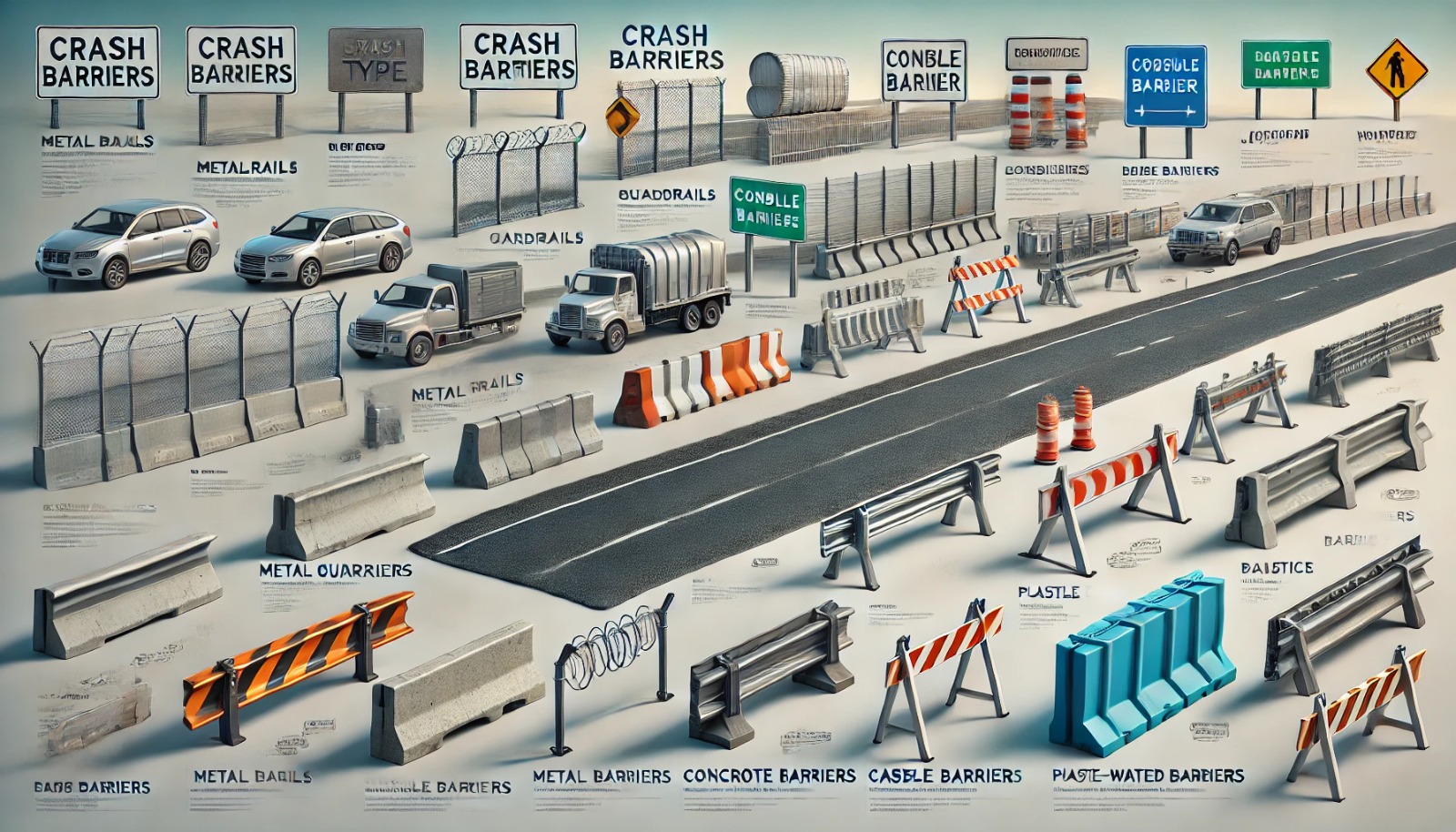
Tag: types of crash barrier

  • Types of Crash Barriers: Ensuring Road Safety

    Types of Crash Barriers: Ensuring Road Safety

    Road safety is a paramount concern for governments and organizations worldwide. One of the critical components in enhancing road safety is the implementation of effective crash barriers. These structures are designed to prevent vehicles from veering off the road, reduce the severity of crashes, and protect pedestrians and infrastructure. In this article, we will delve into the various types of crash barriers, their functionalities, and their applications.

    Types of Crash Barriers In India

    1. W-Beam Guardrails

    The W-Beam Guardrail is one of the most commonly used types of crash barriers. It consists of a steel beam with a distinctive “W” shape, mounted on posts at regular intervals. The design allows it to absorb and dissipate energy during a collision, minimizing the impact on the vehicle occupants. W-Beam Guardrails are typically used on highways, rural roads, and bridge approaches. Their ease of installation and cost-effectiveness make them a popular choice for road safety.

    Advantages of W-Beam Guardrails:

    • Cost-effective: Relatively low installation and maintenance costs.

    • Versatile: Suitable for various road types and conditions.

    • Efficient energy absorption: Reduces the force of impact during a collision.

    2. Thrie-Beam Guardrails

    • Thrie-Beam Guardrails are an enhanced version of the W-Beam Guardrails, offering additional strength and impact resistance. They feature a triple-wave design, which provides greater rigidity and stability.

    Advantages of Thrie-Beam Guardrails:

    • Enhanced durability: Greater resistance to impacts and environmental factors.

    • Higher impact resistance: Better suited for high-speed and high-traffic areas.

    • Improved safety: Provides increased protection for vehicle occupants.

    3. Cable Barriers

    Cable Barriers are flexible systems consisting of steel cables mounted on posts. These barriers are designed to catch and redirect vehicles during a crash, preventing them from crossing into oncoming traffic or leaving the roadway. The flexibility of Cable Barriers allows them to absorb and dissipate impact energy effectively.

    Advantages of Cable Barriers:

    • Flexibility: Can be used in various road configurations and terrains.

    • Energy absorption: Effective in reducing crash severity.

    • Cost-efficient: Lower installation and maintenance costs compared to rigid barriers.

    4. Concrete Barriers

    Concrete Barriers are rigid, heavy-duty barriers commonly used in high-risk areas such as highways, bridge parapets, and urban roads. They are designed to withstand significant impact forces and prevent vehicles from crossing into opposing lanes or leaving the road. Concrete Barriers provide a high level of protection and are highly durable.

    Advantages of Concrete Barriers:

    • High impact resistance: Can withstand severe collisions.

    • Durability: Long-lasting and resistant to environmental factors.

    • Safety: Provides robust protection for both vehicles and pedestrians.

    5. Crash Cushions

    Crash Cushions, also known as impact attenuators, are designed to absorb the kinetic energy of a colliding vehicle, reducing the severity of the crash. They are typically used in areas where vehicles are likely to impact a fixed object, such as the end of a guardrail or a median barrier. Crash Cushions come in various designs, including sand barrels, water-filled barriers, and energy-absorbing materials.

    Advantages of Crash Cushions:

    • Energy absorption: Reduces the force of impact during a collision.

    • Versatility: Can be used in various road configurations and applications.

    • Enhanced safety: Minimizes damage to vehicles and reduces injury risk to occupants.

    6. Bridge Barriers

    Bridge Barriers are specially designed to provide protection on bridges and elevated roadways. They prevent vehicles from leaving the bridge deck and protect pedestrians and cyclists. Bridge Barriers are typically made of concrete or steel and are designed to withstand significant impact forces.

    Advantages of Bridge Barriers:

    • High impact resistance: Can withstand severe collisions on bridges.

    • Safety: Provides robust protection for vehicles, pedestrians, and cyclists.

    • Durability: Long-lasting and resistant to environmental factors.

    7. Median Barriers

    Median Barriers are placed in the center of divided highways to prevent vehicles from crossing into oncoming traffic. They can be made of concrete, steel, or cable and are designed to redirect vehicles back into their lanes during a collision. Median Barriers play a crucial role in reducing head-on collisions and enhancing road safety.

    Advantages of Median Barriers:

    • Prevents crossover accidents: Reduces the risk of head-on collisions.

    • Versatility: Can be used in various road configurations and materials.

    • Safety: Enhances overall road safety by keeping vehicles within their lanes.

    Conclusion

    In conclusion, crash barriers are vital components in ensuring road safety. The different types of crash barriers, including W-Beam Guardrails, Thrie-Beam Guardrails, Cable Barriers, Concrete Barriers, Crash Cushions, Bridge Barriers, and Median Barriers, each offer unique benefits and applications. By understanding the characteristics and advantages of each type, we can make informed decisions on implementing the most effective barriers for specific road conditions and traffic volumes. Ensuring the proper use of crash barriers is crucial in reducing the severity of accidents and protecting the lives of road users.

    Why Choose Headsup as Your B2B Procurement Partner for Road Safety Solutions?

    Choosing the right procurement partner is crucial for ensuring safety, compliance, and operational efficiency. Headsup stands out as a trusted B2B procurement partner for road safety solutions. because we combine quality products, expert guidance, and seamless supply-chain support designed for businesses of all sizes.

  • Highway Crash Barriers : A Lifeline on the Road

    Highway Crash Barriers : A Lifeline on the Road

    Highway crash barriers, often overlooked in the grand scheme of road infrastructure, play a pivotal role in safeguarding lives. These unsung heroes of road safety are meticulously designed and engineered to absorb the impact of a vehicle collision, redirecting it safely and preventing catastrophic consequences.

    The Crucial Role of Crash Barriers

    At the heart of highway safety lies the concept of mitigating impact. Crash barriers are the first line of defense when a vehicle veers off course. By strategically positioning these barriers along high-risk sections of the road, such as curves, bridges, and medians, engineers can significantly reduce the severity of accidents.

    These barriers are not merely static obstacles. They are meticulously engineered structures, often composed of steel or concrete, designed to deform upon impact, absorbing energy and redirecting the vehicle in a controlled manner. This controlled redirection prevents the vehicle from careening into dangerous obstacles like trees, poles, or oncoming traffic.

    Types of Crash Barriers

    Several types of crash barriers cater to different road conditions and traffic volumes.

    • W-Beam Barriers: These are the most common type, characterized by their distinctive W-shape. They are effective in absorbing impact and redirecting vehicles.

    • Thrie-Beam Barriers: Similar to W-beam barriers, but with a slightly different profile, Thrie-beam barriers are also widely used.

    • Cable Barriers: Composed of high-tensile steel cables, these barriers are often used in mountainous regions or areas with limited space.

    • Concrete Barriers: While less common, concrete barriers offer exceptional durability and are suitable for high-traffic areas.

    Beyond Physical Barriers

    The effectiveness of crash barriers extends beyond their physical attributes. Proper installation, maintenance, and regular inspections are crucial to ensure their optimal performance. Any damage or deterioration can compromise their ability to protect lives.

    Moreover, advancements in technology have led to the development of intelligent crash barriers. These barriers can communicate with vehicles, providing real-time warnings and potentially mitigating accidents before they occur.

    The Economic Impact

    While the primary focus of crash barriers is safety, their economic implications are undeniable. By preventing accidents and reducing their severity, these barriers contribute to significant cost savings in terms of healthcare, property damage, and lost productivity.

    Call to Action

    The importance of highway safety cannot be overstated. As we strive for safer roads, it is imperative to invest in cutting-edge crash barrier technologies. HeadsUp b2b, a leading provider of innovative safety solutions, offers a comprehensive range of crash barriers designed to meet the highest standards.

    By partnering with HeadsUp b2b, road authorities and infrastructure developers can access state-of-the-art products and expert guidance to create safer highways for everyone.

  • Choosing the Perfect Crash Barrier: A Comprehensive Safety Guide

    Choosing the Perfect Crash Barrier: A Comprehensive Safety Guide

    Crash Barrier stand as silent sentinels, offering protection and security to drivers, passengers, and pedestrians alike. These unassuming structures serve as the first line of defense, mitigating the impact of vehicular accidents and safeguarding lives.

    However, not all crash barriers are created equal, and selecting the right one for your specific needs requires careful consideration. In this comprehensive guide, we delve into the intricacies of crash barrier, equipping you with the knowledge needed to make an informed choice that prioritizes safety above all else.

    Understanding the Crash Barriers

    Before delving into the selection process, it’s essential to grasp the fundamental purpose and types of crash barriers. Essentially, crash barrier, also known as guardrails or safety barriers, are physical barriers installed along roadsides, medians, and bridges to redirect or absorb the kinetic energy of vehicles during collisions. By doing so, they prevent vehicles from veering off the road or crossing into opposing lanes, thereby reducing the severity of accidents and potential injuries.

    The selection of crash barriers depends on various factors, including the roadway’s speed limit, traffic volume, surrounding environment, and the types of vehicles expected to traverse the area. Broadly categorized, crash barriers fall into three main types: rigid, semi-rigid, and flexible.

    Rigid barriers, typically made of concrete or steel, offer maximum resistance to vehicle impacts but lack flexibility, which can lead to severe damage to vehicles and occupants. Semi-rigid barriers, constructed from materials like cable, offer a balance between rigidity and flexibility, effectively absorbing impact energy while minimizing vehicle damage. Flexible barriers, often composed of wire ropes or plastic elements, provide the greatest flexibility and energy absorption, ideal for low-speed environments and areas with frequent minor collisions.

    Key Considerations for Selecting Crash Barriers

    Choosing the right crash barriers involves a systematic evaluation of various factors to ensure optimal performance and cost-effectiveness. Here are key considerations to guide your decision-making process:

    1. Roadway Characteristics: Assess the road’s speed limit, curvature, grade, and surrounding terrain to determine the appropriate barrier type and placement. High-speed highways may require more robust barriers capable of withstanding significant impact forces, while urban streets may benefit from flexible barriers designed to minimize collateral damage.

    2. Crash Severity: Consider the potential severity of collisions based on historical accident data and traffic patterns. Areas prone to high-speed collisions or heavy commercial traffic may necessitate stronger barriers with greater impact resistance to mitigate the risk of catastrophic accidents.

    3. Barrier Length and Height: Determine the optimal length and height of the barrier based on the road’s alignment, sightlines, and potential hazards. Longer barriers provide continuous protection along vulnerable stretches of road, while taller barriers effectively contain larger vehicles and prevent rollovers.

    4. Installation and Maintenance: Evaluate the ease of installation and ongoing maintenance requirements associated with different barrier systems. Modular barriers with simple installation procedures and minimal upkeep offer long-term cost savings and operational efficiency.

    5. Aesthetic Considerations: Balance safety considerations with aesthetic preferences to ensure that crash barriers complement the surrounding environment and architectural landscape. Choose barrier designs and finishes that blend seamlessly with the roadway aesthetics without compromising safety standards.

    6. Regulatory Compliance: Familiarize yourself with local, state, and federal regulations governing crash barrier specifications, performance standards, and installation requirements. Ensure that selected barriers comply with applicable safety standards and undergo rigorous testing to verify their efficacy in real-world crash scenarios.

    Steps to Select the Right Crash Barriers

    Armed with a thorough understanding of crash barrier fundamentals and key decision-making criteria, it’s time to select the right barrier for your specific application. Here’s a step-by-step guide to help you navigate the selection process:

    1. Conduct a Site Assessment: Begin by conducting a comprehensive site assessment to identify potential hazards, traffic patterns, and environmental factors that may influence barrier selection. Gather relevant data on roadway characteristics, accident history, and existing infrastructure to inform your decision-making process.

    2. Define Performance Requirements: Determine the desired performance characteristics and objectives for the crash barrier based on the site assessment findings. Consider factors such as impact resistance, deflection capacity, vehicle containment, and compatibility with existing infrastructure to establish clear performance criteria.

    3. Evaluate Barrier Options: Research available crash barrier options and consult with industry experts to identify suitable candidates that meet your performance requirements and budget constraints. Consider factors such as material durability, design flexibility, and compatibility with surrounding landscape to narrow down your options.

    4. Perform Cost-Benefit Analysis: Conduct a cost-benefit analysis to assess the long-term economic viability of each barrier option, taking into account initial procurement costs, installation expenses, and ongoing maintenance requirements. Compare the total cost of ownership for each option to identify the most cost-effective solution.

    5. Seek Stakeholder Input: Engage relevant stakeholders, including transportation agencies, local authorities, and community members, to solicit input and feedback on proposed barrier options. Consider stakeholder preferences, concerns, and priorities to ensure consensus and buy-in throughout the decision-making process.

    6. Select and Implement Barrier Solution: Based on the findings of your evaluation and stakeholder consultations, select the most suitable crash barrier solution that aligns with your performance requirements, budgetary constraints, and regulatory compliance obligations. Coordinate with qualified contractors to oversee the installation process and ensure adherence to safety standards and specifications.

    7. Monitor and Evaluate Performance: Establish a system for monitoring and evaluating the performance of installed crash barriers over time to identify any issues or deficiencies that may arise. Implement routine inspections, maintenance protocols, and performance assessments to ensure continued effectiveness and compliance with safety standards.

    Conclusion

    Choosing the right crash barrier is a critical aspect of road safety planning and infrastructure development.

    By understanding the basic principles of crash barrier design, evaluating important decision-making criteria, and following a clear selection process, transportation agencies, engineers, and policymakers can effectively reduce the risk of vehicle accidents and save lives on our roads. Remember, safety should always be the top priority when choosing crash barriers, as every decision helps achieve the shared goal of building safer and more resilient transportation networks for everyone.

  • Metal Beam Crash Barrier Supplier Industry

    Metal Beam Crash Barrier Supplier Industry

    In our modern world, which is so globalized and interconnected, road safety is critically important. Through our tireless efforts, we have improved road safety and created more future-oriented solutions.

    One such solution is the metal beam crash barrier. This component is the core element in increasing road safety. beam crash barriers come in two variants: W-beam barrier and Thrie-beam barrier.

    About the Metal Beam Crash Barriers

    Metal beam crash barrier is made with a strong and durable material, such as galvanized steel. It is designed to absorb the impact of vehicle force during the accident to minimize the risk of severe accidents.

    The metal beam crash barriers has a special shape that provides flexibility and strength that allows it to absorb energy efficiently. To enhance visibility, it has a shiny coating. It is supported by posts that are anchored in the ground, maintaining the alignment and stability of the metal beam crash barrier.

    Role of the Metal Beam Barrier in Road Safety

    • The metal beam crash barrier helps redirect the vehicle that has strayed from the road. It also prevents cars from colliding with objects like trees, poles, etc.

    • By absorbing and distributing the collision force of the vehicle, it prevents severe accidents, minimizes injury and fatal risk to the drivers, and improves the overall safety of roadways.

    • Metal beam crash barriers are often installed in the median of divided highways to prevent vehicles from crossing over. And through this, it prevents the possibility of severe accidents and the chances of head-on collisions, which are usually more serious and fatal.

    • The metal beam crash barriers also safeguard other roadside infrastructure and elements like traffic signs, utility poles, and other fixtures. It keeps the vehicles from hitting these things directly by absorbing the impact force.

    • It has a reflective surface that also helps to enhance visibility during low-light conditions, and crash barriers are also helpful in giving drivers another caution to stay on the right route; this helps them to recognize possible risks and road borders.

    • Metal beam crash barriers need low maintenance and are made to last a long time. Because it is resistant to various adverse weather conditions and environmental elements, it is one of the most cost-effective options for long-term road safety.

    • Generally, in the design and installation of crash barriers, the defined safety criteria and recommendations are followed. By adhering to these rules and standards, the barriers are guaranteed to satisfy particular crashworthiness standards, offering a dependable degree of safety for drivers and road users.

    • Metal beam crash barriers are often prefabricated and can be quickly installed along roadways. This significantly helps in the implementation of safety measures without causing any sort of disturbance to the traffic flow.

    Exemplary Clients Who Inspire Us

    The client’s testimonial says a lot about the company. You can go through our client’s testimonials to ensure the quality of our products and services. We have provided metal beam crash barriers, signage poles, street light poles, other road safety products, electrical and raw construction products, and other products to many prominent government and private firms such as Delhi Metro Rail Corporation, Larsen and Turbo, Vedanta, and Shapoorji Pallongi. And HeadsupB2B is still their most preferred and trusted material supplier company in India.

    Explore Now : Top 7 Metal Beam Crash Barrier Manufacturers Companies in India

    Metal Beam Crash Barrier specifications

    Specification W-Beam Barrier Thrie Beam Barrier
    Material High-grade steel (IS 2062 or equivalent) High-grade steel (IS 2062 or equivalent)
    Rail Thickness 3 mm (customizable up to 5 mm) 3 mm (customizable up to 5 mm)
    Rail Width 312 mm 510 mm
    Corrugation Depth Approximately 83 mm Approximately 83 mm
    Total Length 4318 mm (effective length 4000 mm) 4318 mm (effective length 4000 mm)
    Post Dimensions 75 mm x 150 mm, typically 5 mm thick 75 mm x 150 mm, typically 5 mm thick
    Spacer Dimensions Typically around 75 mm x 150 mm Typically around 75 mm x 150 mm
    Protective Coating Hot-dip galvanized, approx. 550 g/m² Hot-dip galvanized, approx. 550 g/m²
    Containment Levels Designed for vehicles up to 10,000 kg at speeds of 70 km/h More durable construction for higher impact endurance
    Impact Severity Index Tested for compliance with safety standards Tested for compliance with safety standards
    Standard Compliance MORTH, AASHTO M180, EN 1317-1 & 2 MORTH, AASHTO M180, EN 1317-1 & 2
    Typical Height Above Ground Approximately 850 mm Approximately 850 mm

    Why Choose Us

    Our team has collaborated with several respectable government and private organizations. We source products directly from the manufacturers and also guarantee that they are delivered to our customers with the utmost care and safety. Our team will inform you of the process and will attend to your questions and problems. For the best products, contact Headsup B2B, a certified supplier of metal beam crash barriers.