Preface
Maintaining traffic safety requires the use of traffic cones. These vivid orange cones are commonly seen on roadways, bridges, and construction sites. Because of their striking colours and unique design, they are very recognisable and helpful for directing and diverting traffic.
Headsup B2B is a prominent sourcing platform for traffic safety cones and other road safety equipment. Our professionals understand the importance of road safety, and hence we help our customers get the best products from trustworthy manufacturers and suppliers.
Here in this blog, we will cover all the information you want regarding traffic cones, from their basic characteristics to their wide range of uses.
What are Traffic Safety Cones?
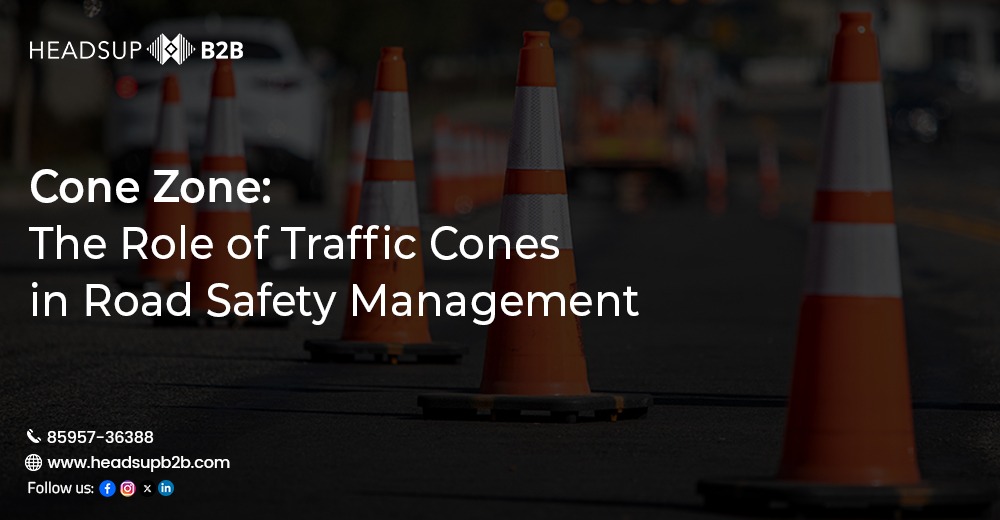
The orange and white (or yellow and white) cone-shaped items you see on roadways are called traffic safety cones, often referred to as pylons, road cones, or safety cones. These are transient signs used to safely guide traffic.
Road safety cones are easily recognisable since they are usually constructed of bright plastic and frequently have reflective stripes to increase their visibility at night. Additionally, they are lightweight and portable, allowing for fast deployment and adjustment.
Types of Traffic Safety Cones
There are many different kinds and sizes of traffic cones, and each one has a specific use in traffic control and road safety. For indoor events or minor road repairs, mini-traffic and tiny traffic cones—typically measuring 460mm and 500mm—are frequently utilised. Conversely, larger cones—750mm and 1m cones, for example—are more robust and conspicuous, which makes them perfect for highways and busy locations.
There are more colours available for these traffic safety cones than the conventional orange. Cones with colour come in red, green, blue, and yellow, offering choices for a variety of applications and visibility needs. A traffic cone’s various sizes and colours have distinct functions that guarantee safety in a range of circumstances.
Maintenance and Storage
For traffic cones to last a long time and be effective, maintenance is necessary.
-
Frequent washing with a light soap and water can help keep their colour and reflecting qualities intact.
-
To maintain visibility and safety, any damage, such as cracks or fading, must be looked for and repaired.
-
Stoeing cones is more effective by stacking them tightly to prevent distortion and to conserve space. Their utility is further improves by proper storage, which reduces needless wear and strain.
-
Traffic cones are far more durable and functional by adhering to these easy care and storage guidelines.
When and where are traffic safety cones useful?
Road Construction and Maintenance
During road construction or maintenance traffic safety cones describes the work zones. They alert vehicles to lane closures and steer them clear of danger. This safeguards employees and helps to avoid mishaps.
Traffic Management
Use of cones by law enforcement and traffic management staff to guide traffic during collisions, road closures, and major events. To maintain safe and orderly traffic, they erect barriers, diversions, and temporary lanes.
Sports and Recreational Activities
Orange traffic cones are used in sports to designate training grounds and establish boundaries. They are frequently used to give participants clear visual clues in soccer exercises, obstacle courses, and racetracks.
Construction Sites
To mark off work zones, offer people and equipment visibility, and guarantee the safety of both employees and bystanders, safety cones are crucial at construction sites.
Parking Control
Collapsible traffic cones plays crucial role in parking lots to mark off parking places, limited areas, and no-parking zones. They lessen traffic congestion and aid in vehicle organisation.
Event Management
PVC traffic cones are used by event planners to control crowds and guide foot traffic. To maintain safety and order at sizable events, they identify entrances, exits, and limited zones.
Features of Traffic Safety Cones
Vibrant Colours
Rubber traffic cones are available in vivid hues such as lime green, red, and orange. The cones are clearly visible even from a distance because of their striking colours.
Reflective Strips
Traffic cones with reflective stripes are common. These improve low-light visibility and guarantee safety at night or in inclement weather.
Sturdy Materials
Materials used to make road traffic cones include polypropylene, rubber, and PVC. These materials tolerate severe weather and heavy use because they are resilient and weather-resistant.
Multiple-Height Choices
Cones are available in a range of heights to meet diverse purposes. Shorter cones work well in parking lots and pedestrian areas, whereas taller cones are appropriate for usage on roads.
Foldable Patterns
Traffic cones that collapse are lightweight and simple to store. For emergency circumstances and temporary traffic control, they are perfect.
Weighted Bases
The bases of certain traffic cones are weighted. These offer stability, keeping the cones from toppling over in blustery weather or when struck by moving cars.
Role of Traffic Safety Cones
Identifying the construction zones
Traffic cones has frequent use in indicating locations undergoing maintenance or construction, assisting in warning vehicles of the presence of personnel and machinery.
Making deviations
In order to help cars safely navigate around an accident, road closure, or other occurrence, traffic cones play important role in temporarily divert around the location.
Designating closed lanes
Traffic cones play crucial role in marking off close lanes because of construction or other causes to help direct traffic into the remaining free lanes.
Assigning directions to traffic
To help maintain smooth traffic flow, road staff uses traffic cones to temporarily construct lanes or direct traffic around an accident or other issue.
Pedestrian Safety
When sidewalks needs repair or streets need to be closed, safety cones work as temporary paths for pedestrians.
Advantages of Traffic Cones
Portability
Traffic cones are portable and lightweight. Emergency responders and event planners will find collapsible cones helpful since they can be kept in tiny locations.
Cost-Effectiveness
Cones for traffic control are less expensive than other devices. Long-term usage is ensured by their durability, offering exceptional value for the money.
Flexibility
Cones for traffic roads are adaptable instruments with several uses. Sports, event planning, traffic control, and other applications are all possible with them. They are useful in a variety of circumstances due to their versatility.
Usability
The simplicity of traffic cones is one of its main benefits. They don’t require any specialised training and are simple to deploy. They are easily arranged by anyone to control traffic or delineate regions.
Visibility
Traffic cones are quite noticeable because to their vivid colours and shiny strips. This lowers the possibility of collisions and raises pedestrian and motorist safety.
Durability
Traffic cones are resistant to a wide range of weather conditions since they are made of durable materials. They are resistant to collision, rain, and UV ray damage, so they endure longer and function dependably.
Improvement of Safety
Safety cones improve safety by designating obstacles, diversions, and prohibited areas clearly. They direct traffic, guard construction site workers, and avert mishaps.
All things considered, traffic cones are a crucial safety device that keeps pedestrians, cars, and other road users safe by clearly marking where they should and shouldn’t go.
The cutting-edge road safety equipment from Headsup B2B will improve traffic safety. Visit our platform and see our wide selection right now to preserve lives and guarantee efficient traffic flow. Put money into safety to ensure a better, accident-free future!