Tag: TMT bar benefits

  • TMT Bars vs. Traditional Steel: A Comparative Analysis

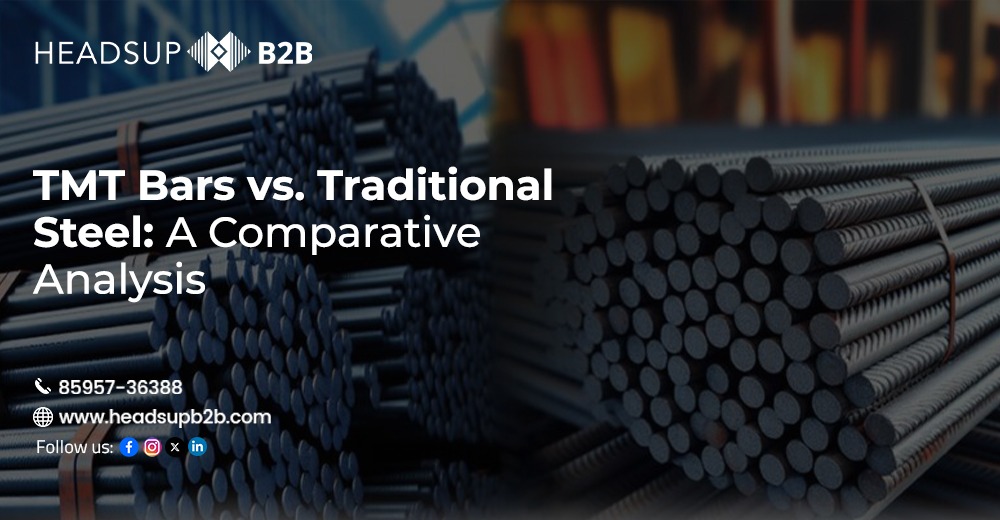
    TMT Bars vs. Traditional Steel: A Comparative Analysis

    It almost seems impossible to construct anything without steel and steel rebar. Classical rebars, or iron rods, are dependable building components that continue to withstand the test of time in old, robust structures. Headsup B2B – a B2B marketplace providing TMT steel bars and other construction materials knows the value of these materials for your project. In this blog post, the important points that distinguish TMT steel bars from conventional ones will be highlighted with a brief on why TMT is a preferred option for the modern construction.

    Introduction

    Advancements in technology over the course of the twentieth century introduced many changes to construction. Among the most significant is the use of TMT steel bars as the most recommended construction steel bar. These bars are used for reinforcement of concrete structures and are supplementary reinforcements other than steel bars. Interested in why such a difference? The key differences lie in the raw materials and the manufacturing process. Let’s look at how TMT steel bars differ from conventional steel bars and why TMT bars are usually preferred.

    Understanding TMT Steel Bars and Traditional Steel Bars

    TMT Steel Bars?

    TMT bars are reckoned as the modern generation of construction materials that are characterised by high strength and durability. This is made possible by heat treatment followed by rapid cooling, something that reduces the impurities by using virgin iron ore.

    Traditional Steel Bars?

    Conventional bars are the foundation of traditional construction and are usually mild steel. They receive no treatment and can’t brag about any design advantages.

    Learn More:- 10 Steps to Finding the Best TMT Bars in India

    Manufacturing Process

    TMT Steel Bars: Manufacturing Process

    High-strength reinforcement bars are called thermo-mechanically treated, or TMT, bars. TMT bars are manufactured using rolling, water quenching, atmospheric cooling, and self-tempering techniques. These processes are critical to producing high-quality TMT bars. The quality of rolling mills, quenching systems, tempering processes, and raw materials all contribute significantly to the quality assurance of TMT bars. The top producers of TMT bars give careful consideration to these phases and elements to create exceptional, unrivalled goods.

    Traditional Bars: Manufacturing Process

    High Yielding Strength Deformed TMT steel bars. After heat treatment, these conventionally used steels are manufactured via a cold twisting technique. The TMT steel bars acquire physical imperfections as a result of the cold twisting procedure. There are various benefits to these deformations.

    Difference Between TMT Steel Bars and Traditional Bars

    Strength

    TMT steel bars significantly increase strength, which makes them perfect for the structural demands of today. Even though they are dependable, traditional bars might not be as strong. Although steel TMT bars remain the only material used in modern buildings, the newer grades are making it even more practical and aesthetically pleasing.

    Flexibility

    Like a skillfully performed dance, TMT steel bars give flexibility in addition to strength. In the construction of bridges, tunnels, coastal buildings, and marine projects, TMT bars are the preferred choice, meeting all requirements effectively. Available in various sizes and weights, they offer tailored solutions, and their superior concrete adhesion, as seen in VRKP’s dual-ribbed design, instills confidence in engineers.

    More simplistic applications might be better served by traditional bars, which are robust but less agile.

    Ductility

    Any material’s ductility is its capacity to undergo deformation without collapsing, even after it has reached its breaking point. When it comes to preventing structural collapse in construction constructions, TMT steel bars are more ductile than TOR Steel. TMT steel bars also contribute to a building structure’s increased strength because of their exceptional strength.

    Elongation

    Any material’s ability to extend before failing is known as elongation. This component is crucial in determining any bar’s ductility. The more the elongation, the greater the ductility and, consequently, the reduced likelihood of any structural structure being damaged. TMT steel bars improve the safety of your projects because they are longer than traditional bars.

    Fire-Resistance

    Low thermal stability makes traditional steel bars incapable of withstanding high temperatures. However, TMT bars’ greater thermal stability allows them to hold onto almost 80% of the surrounding temperature, assisting in the safety and security of construction projects in the event of a fire.

    Corrosion Resistance

    TMT bars include an edge that is naturally resistant to corrosion. Longevity is ensured by the protective layer formed during the treatment procedure, particularly in demanding situations. When purchasing building materials, one should take into account exposure to dampness, water seepage, and salt water. Because of the unique chemical treatments, steel TMT bars are your best option, but typical bars in construction need a little extra care to prevent rust.

    Which TMT steel or traditional bars are best for your project depends on its particular requirements. TMT steel bars improve green buildings by using environmentally friendly procedures. While classic bars offer unparalleled dependability, they add a contemporary twist with their strength, flexibility, and resistance to corrosion.

    Headsup B2B is an online platform for the best TMT steel bars. We provide TMT bars from trustworthy suppliers and manufacturers. We also offer expert assistance and a wide range of TMT steel bars that can cater for your specific projects. So, visit Headsup B2B and place your order now!

  • 10 Steps to Finding the Best TMT Bars in India

    10 Steps to Finding the Best TMT Bars in India

    1. Introduction

    Importance of TMT Bars in Construction

    Thermo-Mechanically Treated (TMT) bars are integral to modern construction, providing essential strength and durability to structures. As the backbone of reinforced concrete construction, TMT bars ensure safety and longevity, making them a critical choice for builders.

    Overview of TMT Bars in the Indian Market

    India, with its booming construction industry, has seen a significant demand for high-quality TMT bars. The market is flooded with various brands and grades, making it crucial for buyers to make informed decisions to ensure the structural integrity of their projects.

    2. Understanding TMT Bars

    Definition and Features

    TMT bars are high-strength reinforcement bars with a tough outer core and a softer inner core. They are designed to withstand high stress and strain, ensuring the structural stability of buildings and infrastructures.

    Manufacturing Process

    The manufacturing process of TMT bars involves three main steps: quenching, self-tempering, and atmospheric cooling. This process imparts the characteristic strength and flexibility to the bars, making them ideal for various construction needs.

    3. Types of TMT Bars

    Grade Classification (Fe 415, Fe 500, Fe 550, Fe 600)

    TMT bars are classified into different grades based on their tensile strength:

    Fe 415: Suitable for small-scale construction and residential buildings.

    Fe 500: Commonly used for commercial and high-rise buildings.

    Fe 550: Preferred for industrial and infrastructure projects.

    Fe 600: Used in heavy-duty construction requiring superior strength.

    Applications Based on Grades

    Each grade of TMT bar serves specific construction needs, ensuring the right balance between strength and flexibility for different types of projects.

    4. Benefits of Using TMT Bars

    Strength and Durability

    TMT bars offer exceptional strength and durability, ensuring that structures can withstand various loads and stresses over time.

    Earthquake Resistance

    The superior ductility of TMT bars allows them to absorb and dissipate energy during seismic events, reducing the risk of structural failure.

    Corrosion Resistance

    Specially treated to resist corrosion, TMT bars maintain their integrity in harsh environmental conditions, ensuring long-term durability.

    Cost-Effectiveness

    While TMT bars might have a higher upfront cost, their longevity and reduced maintenance needs make them a cost-effective choice in the long run.

    5. Key Factors to Consider When Choosing TMT Bars

    Quality Standards and Certifications

    Ensuring that TMT bars meet national and international quality standards is crucial. Certifications from bodies like BIS (Bureau of Indian Standards) guarantee the bars’ quality and performance.

    Brand Reputation

    Reputable brands are more likely to adhere to stringent manufacturing standards, providing reliable and consistent quality.

    Cost and Budget Considerations

    Balancing cost with quality is essential. It’s important to evaluate the cost-effectiveness of TMT bars in relation to their performance and longevity.

    Availability and Supply Chain

    Reliable supply chains ensure timely delivery of materials, preventing construction delays and cost overruns.

    6. Step-by-Step Guide to Finding the Best TMT Bars

    Step 1: Determine Your Construction Needs

    Identify the specific requirements of your construction project to select the appropriate grade and type of TMT bars.

    Step 2: Research and Shortlist Reputable Brands

    Look for brands with a proven track record of quality and reliability in the market.

    Step 3: Verify Quality Standards and Certifications

    Ensure the TMT bars meet relevant quality standards and certifications for safety and performance.

    Step 4: Compare Prices and Cost-Effectiveness

    Evaluate different brands based on their pricing and the value they offer in terms of durability and strength.

    Step 5: Check for Earthquake and Corrosion Resistance

    Select TMT bars that offer excellent resistance to seismic activity and corrosion for long-term reliability.

    Step 6: Assess Availability and Supply Chain Reliability

    Ensure the chosen brand can provide consistent supply to avoid project delays.

    Step 7: Read Reviews and Testimonials

    Look for feedback from other builders and contractors to gauge the performance of different TMT bars.

    Step 8: Consult with Construction Experts

    Seek advice from structural engineers and construction experts to make an informed decision.

    Step 9: Conduct a Physical Inspection

    Inspect the TMT bars for any physical defects and ensure they meet your quality standards.

    Step 10: Make an Informed Purchase Decision

    Based on your research and expert consultations, choose the best TMT bars that meet all your project requirements.

    7. Common Mistakes to Avoid When Choosing TMT Bars

    Ignoring Quality for Price

    Compromising on quality to save costs can lead to long-term issues and higher expenses due to repairs and maintenance.

    Overlooking Certification and Standards

    Always ensure the TMT bars are certified to meet quality standards to ensure structural safety.

    Neglecting Expert Consultation

    Failing to seek expert advice can result in poor material choices that affect the overall quality and safety of the construction.

    8. Top 5 Brands of TMT Bars in India

    Some of the top TMT bar brands in India include

    1. Tata Tiscon

    2. JSW Neosteel

    3. SAIL TMT

    4. Shyam Steel

    5. Vizag Steel

    Comparative Analysis

    Comparing the features, quality, and pricing of these brands can help in selecting the best option for specific construction needs.

    9. Case Studies: Successful Construction Projects Using TMT Bars

    Project 1: High-Rise Building in Mumbai

    The use of Fe 500 grade TMT bars ensured the structural integrity and earthquake resistance of this 50-story skyscraper.

    Project 2: Bridge Construction in Kerala

    Fe 550 grade TMT bars were chosen for their high tensile strength, providing the necessary support for the bridge’s heavy load capacity.

    Project 3: Residential Complex in Delhi

    The use of corrosion-resistant TMT bars extended the lifespan of this large residential complex, reducing maintenance costs over time.

    10. Expert Insights on Choosing the Best TMT Bars

    Interviews with Industry Experts

    Insights from structural engineers and construction professionals highlight the importance of selecting high-quality TMT bars for safety and durability.

    Tips and Recommendations

    Experts recommend prioritizing quality and certifications, consulting with professionals, and choosing brands with a strong market reputation.

    1. Future Trends in TMT Bar Manufacturing

    Technological Innovations

    Advancements in manufacturing technology are leading to the production of even stronger and more durable TMT bars.

    Sustainable Practices

    Eco-friendly manufacturing practices are becoming more prevalent, with a focus on reducing the environmental impact of TMT bar production.

    Learn About :- Best Tmt/Sariya for Constructions

    Conclusion

    Recap of Key Points

    Selecting the best TMT bars involves understanding their types and benefits, considering key factors like quality standards and brand reputation, and following a systematic approach to ensure the best choice.

    Final Recommendations

    By prioritizing quality, consulting with experts, and conducting thorough research, builders can ensure the structural integrity and longevity of their construction projects.