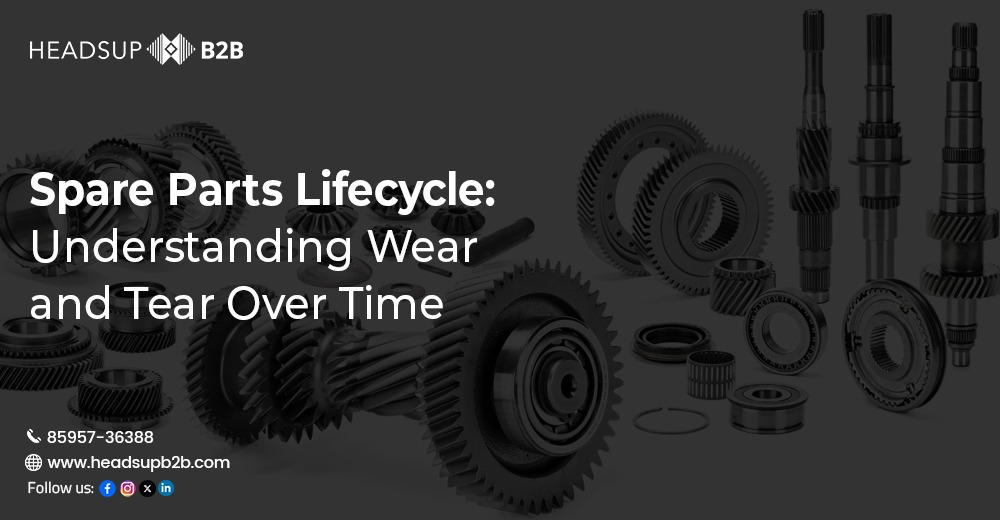
Spare parts in the domain of industrial machinery and equipment are often unnoticed driving forces that ensure the effective work of machines. At Headsup B2B, we fully appreciate how these genuine parts contribute towards effective business processes. In this blog, “Spare Parts Lifecycle: Understanding Wear and Tear Over Time,” the focus we set ourselves herein is to encompass procedures and operations of spare parts right from the point of installation to the point of replacement. Knowledge of spare parts’ life cycle will enable you to make the right decisions, improve performance, and reduce unnecessary time losses. So, let’s discuss entering the fascinating world of wear and tear and discover how to extend the life of your essential components.
Introduction
The lifecycle of spare parts will inevitably include wear and tear, particularly in the supply chain, transportation, storage, and warehousing sectors. As it turns out, comprehending wear and tear involves more than just accepting that products and machinery lose value over time. It also entails realising how this inevitable process affects asset management, operational effectiveness, and the long-term viability of machinery.
In this article, we’ll discuss the subject of wear and tear of genuine parts and their effect. We’ll outline its effects in areas such as maintenance, capital equipment, and how to properly manage its impacts throughout an organization for different specialists.
What Does “Wear and Tear” Mean?
Wear and tear: the slow deterioration of physical assets that occurs over time, affecting industry efficiency by impacting safety or cost-effectiveness in a work process. It is a natural part of the genuine parts lifecycle and has an impact on maintenance schedules, replacement planning, and budgeting for repairs. This is not a sign of abuse or over-use, but instead common from everyday use. However, this can have a big impact on the timeline, which makes it important for all types of businesses to set up regular inspections and maintenance with proactive facility management throughout. Knowing the wear and tear is necessary for a company to be prepared when it comes time to add new or replace existing equipment with more durable goods, as well as technologies that may last longer, making them easier (and less costly) to maintain.
Engine wear, rust and corrosion, and the slow deterioration of gaskets and seals are examples of wear and tear that impact trucks and shipping containers and raise maintenance expenses.
The Beginning of a Spare Part’s Journey
Understanding the journey of a genuine parts from the start can help you appreciate its role in your machinery. Here’s a look at the early stages:
Manufacturing and Quality Control
Every spare part is processed starting from a manufacturing plant, a place where accuracy is esteemed highly. Clever engineers, with the help of quality materials and sophisticated tools, produce parts of the required quality. All in all, there is strict quality assurance where every part is inspected for defects and suitability for operation under certain conditions.
Initial Installation and Setup of Genuine Parts
When a spare part passes through the quality assurance department, this is when the spare part is most appropriate for installation. This is a critical phase, and any changes made should be carefully planned. Proper installation enables the part to fit and to work in the required manner. The technicians know what measures to take to fit the part properly and the correct instruments to employ, which will ensure that everything meets the right specifications and rotational efficiency.
Importance of Correct Installation for Longevity of Genuine Parts
Proper installation is very important for the durability of any spare part. It is important to note that even the most robust part manufactured to match the assembly line can falter before its intended lifespan if the installation process is not done right. Correct fastening and installation of the authentic parts eliminate problems such as misalignment, premature wear, or system failure. Apart from that, it also helps in prolonging the life of that particular part and also the performance and durability of your machines.
Early Life: The Break-In Period
Just after installing a new spare part, it experiences what is commonly referred to as the ‘’break-in ‘’ period. At this time, the part fleshes out its position in the larger apparatus. This is rather typical for the parts, where some amount of rubbing occurs after they are placed in the operating conditions. Supervision is very important in this phase. Pay attention to a change in power output or discrete signals of wear and tear, like oscillations or sounds.
To ensure a smooth break-in period, follow these best practices:
Conduct Regular inspections of genuine parts
It is important to inspect the part often in order to make sure there are no abnormalities in the wear patterns.
Lubricate Appropriately
Lubricate the right type and quantity to minimize friction and wear of the components in the engine.
Follow the manufacturer’s guidelines
Follow the guidelines of the installation and use given in the user manual of the respective manufacturers.
Mid-Life: Optimal Performance of Genuine Parts
The second stage of the break-in period is the mid-life stage where the spare part produces optimal performance to power the vehicle. At this time, the part should run without issues, and even the slightest signs of tear and wear should be negligible.
To maintain peak performance, establish a regular maintenance schedule:
Routine Checks
Regularly inspect the part to ensure it’s operating correctly and there are no signs of wear or damage.
Timely Lubrication
Keep on applying the oil as instructed on the instruction manual to reduce friction and wear on the part.
Address common issues
Familiarize yourself with such issues as heating issues or improper alignment and deal with them. If a part is signaling problems, take measures to rectify it so that it does not worsen the situation.
Signs of Aging: Recognising Wear and Tear
As machinery and equipment age, identifying signs of wear and tear becomes crucial for maintaining optimal performance. Here’s how you can spot these signs and take preventive measures to extend the life of your spare parts:
How to Identify Wear and Tear in Different Types of Parts
-
Visual Inspection: Look for obvious signs like cracks, corrosion, or fraying in parts. Changes in colour or texture can also indicate wear.
-
Performance Issues: Notice any decline in efficiency, strange noises, or vibrations. These can be early indicators that a part is wearing out.
-
Fit and Movement: Check if parts are loose or if there’s excessive play in moving components, which can signify wear.
Diagnostic Tools and Techniques
-
Vibration Analysis: This enables the identification of situations where some of the parts of a machine are out of balance or perhaps misaligned.
-
Thermography: With the help of thermal cameras, visually identify overheating authentic parts, which means a high level of friction or abrasion.
-
Oil Analysis: It is possible to test the lubricants for the supply of metal particles, which signifies internal wear before it is noticeably seen.
Case Studies/Examples of Wear Patterns
-
Bearings: Pitting and ovalization can arise over time, leading to spalling of the bearings, which increases vibration and noise.
-
Belts: Rubber belts could wear and develop small cracks or look frayed at the edges, as a sign that they must be replaced.
-
Gears: Some signs that could indicate that the gears are worn are as follows; pitting on the teeth of gears can make the alignment of gears and the performance of the gears go sour.
Preventive Measures and Maintenance Strategies
-
Routine Inspections and Proactive Maintenance
- Regularly scheduled inspections can catch wear and tear early. Create a maintenance calendar to confirm checks are consistent.
-
Using Technology and Software for Monitoring
- Implement condition-monitoring software that tracks the health of your equipment in real-time. This helps in predicting failures before they happen.
-
Training Staff to Recognise Early Signs of Wear
- Educate your team on the common signs of wear and tear. Regular training sessions can empower them to identify issues early, ensuring timely intervention.
By understanding and recognising the signs of ageing in spare parts, and implementing proactive maintenance strategies, you can significantly extend the life of your equipment, ensuring smoother operations and reducing unexpected downtimes.
End of Life: Replacement and Recycling
Knowing when to replace spare parts is crucial for maintaining your machinery’s performance. Here are some key indicators that a part needs replacing:
-
Visible Wear and Tear: Look for signs like cracks, corrosion, or significant wear.
-
Decreased Performance: If your equipment isn’t running as efficiently, a worn-out part could be the cause.
-
Unusual noises or vibrations: These can be signs that a part is no longer functioning properly.
The Process of Removing and Replacing Parts
-
Preparation: Ensure the machinery is turned off and properly secured.
-
Remove the Old Part: Follow the manufacturer’s instructions to remove the worn part safely.
-
Install the New Part: Carefully install the replacement, ensuring it’s properly fitted and secured.
-
Test the equipment: Run a test to make sure the new part is functioning correctly and the machinery is operating smoothly.
Environmentally Friendly Disposal and Recycling Options
-
Recycle Old Parts: Many components can be recycled. Check with local recycling centres or return the parts to the manufacturer if they offer recycling programs.
-
Proper Disposal: For parts that can’t be recycled, ensure they are disposed of in an environmentally responsible manner according to local regulations.
Extending the Lifecycle: Tips and Tricks
Ways to Extend the Life of Your Genuine Parts
-
Regular Maintenance: Routine checks and maintenance can prevent early wear and extend the life of parts.
-
Proper Lubrication: Keeping parts well-lubricated reduces friction and wear.
The Role of High-Quality Materials and Genuine Parts
-
Choose Quality: Investing in high-quality spare parts can lead to longer-lasting performance and fewer replacements.
-
OEM Parts: Original Equipment Manufacturer (OEM) parts are often more reliable than generic alternatives.
Importance of Proper Storage and Handling
-
Store Correctly: Keep spare parts in a clean, dry place to prevent damage from moisture and dust.
-
Handle with Care: Avoid dropping or mishandling parts to prevent damage before they are even used.
By understanding when to replace parts and how to extend their life, you can keep your machinery running efficiently and sustainably.
Why Choose Headsup B2B For Spare Parts?
When keeping your machinery and operations running smoothly, choosing the right supplier for spare parts is crucial. At Headsup B2B, we are dedicated to providing top-quality spare parts that ensure your equipment performs at its best. Here’s why Headsup B2B should be your go-to source for all your spare parts needs:
High-Quality Products
Our spare parts are sourced from trusted manufacturers known for their reliability and durability. This means you get components that stand the test of time, which also reduces the need for frequent replacements.
Extensive Catalogue of Genuine Parts
We offer a wide range of spare parts or genuine parts for various industries and applications. We have you covered, whether you need parts for heavy machinery, electronics, or industrial equipment.
Expert Support
Our team of knowledgeable professionals is always ready to assist you. From helping you find the right part to providing maintenance tips, we also ensure you get the support you need.
Competitive Pricing
We understand the importance of cost-effectiveness. That’s why we offer competitive prices without compromising on quality, helping you manage your budget effectively.
Fast and Reliable Delivery
Time is money in the industrial world. Our efficient logistics ensure receive your spare parts quickly, minimising downtime and also keeping your operations on track.
Customer-Centric Approach
At Headsup B2B, customer satisfaction is our priority. We strive to provide a seamless shopping experience, from easy online ordering to hassle-free returns and further exchanges.
Sustainable Practices
We are committed to sustainability. Our parts are made using environmentally friendly processes, and we offer to recycle options to help you dispose of old parts responsibly.
Choosing Headsup B2B for buying genuine parts needs means partnering with a reliable, customer-focused company that understands the importance of quality, efficiency, and sustainability. Trust us to keep your machinery running smoothly and your business thriving.
