Tag: solar power

  • Why Solar Power is the Key to a Sustainable Future

    Why Solar Power is the Key to a Sustainable Future

    We’re at a crossroads. Climate change, rising energy costs, and depleting fossil fuels are forcing us to rethink how we power our lives. Enter solar power—the shining star of renewable energy. But what makes it so special? Why is it more than just a trend?

    Let’s break down exactly why solar power is the key to a sustainable future and how it might just save the planet.

    What is Solar Power?

    Solar power is the energy we capture from the sun and convert into electricity or heat. It’s clean, abundant, and freely available.

    How It Works (Photovoltaic & Thermal)

    There are two main types:

    • Photovoltaic (PV): Converts sunlight directly into electricity using solar panels.

    • Solar Thermal: Uses mirrors or panels to collect sunlight and heat water or air.

    Why Solar Power is Considered Sustainable

    • Unlimited Resource: The sun isn’t going anywhere for another 5 billion years. Unlike fossil fuels, it’s not running out anytime soon.

    • Minimal Environmental Impact: No air pollution. No water contamination. Solar energy is one of the most eco-friendly options we have.

    • Renewable and Clean: Once the infrastructure is built, it provides energy without emitting harmful gases or depleting resources.

    Benefits of Solar Energy

    • Reduces Greenhouse Gas Emissions: By replacing coal or gas power, solar drastically cuts down carbon emissions—helping slow global warming.

    • Lowers Electricity Bills: Homeowners and businesses can generate their own power and reduce or even eliminate monthly bills.

    • Energy Independence: Countries and individuals can rely less on imported fossil fuels and unstable markets.

    Low Maintenance and Long-Term Savings

    Solar systems typically last 25–30 years with minimal upkeep, making them a smart long-term investment.

    Solar Power vs Fossil Fuels

    Emissions Comparison

    • Solar: Virtually zero emissions.

    • Fossil Fuels: Major contributor to pollution and climate change.

    Solar Technology Advancements

    • More Efficient Panels: New materials like perovskite are pushing solar panel efficiency to new heights.

    • Energy Storage Solutions: Lithium-ion and other batteries are making it easier to store solar energy for use at night or during bad weather.

    • Smart Solar Grids: Smart technology helps balance supply and demand, making solar more stable and reliable.

    • Solar in Urban Design: Solar windows, solar roofing tiles, and even solar roads are changing how cities are powered.

    Solar Power and Developing Countries

    • Off-Grid Solutions: In places without electricity, small solar systems offer light, phone charging, and more—without the need for a grid.

    • Empowering Rural Communities: Solar helps power schools, clinics, and small businesses in remote areas, improving quality of life.

    • Affordable Infrastructure: Instead of building massive fossil fuel plants, developing nations can leapfrog straight to renewables.

    Challenges to Solar Energy Adoption

    • High Initial Costs: Solar panels and installation still require significant upfront investment.

    • Intermittency (Night & Weather): Solar doesn’t work at night and is less effective on cloudy days—creating reliability challenges.

    • Storage and Distribution Limitations: Energy needs to be stored and transported efficiently, which isn’t always easy or cheap.

    Future of Solar Power

    • Innovations on the Horizon: Think solar paint, flexible panels, and satellite solar farms—yes, really!

    • Global Energy Shift: Experts believe solar will become the world’s #1 energy source within decades.

    • Vision for a Solar-Powered World: A world where clean, reliable, and affordable energy is a basic human right—solar makes that possible.

    Conclusion

    Solar power isn’t just another energy source—it’s the energy source of the future. Clean, abundant, and increasingly affordable, it holds the promise of a world powered without pollution or waste. As technology grows and awareness spreads, solar is set to lead the charge toward a truly sustainable future. The sun rises every day—why not rise with it?

    FAQs

    1. How efficient is solar power today?

    Most modern panels convert around 18–22% of sunlight into electricity, with new tech pushing those numbers higher.

    2. Can solar energy power an entire home?

    Yes! With enough panels and

    proper storage, many homes run 100% on solar.

    3. What happens when it’s cloudy or nighttime?

    Solar doesn’t produce power then, but batteries or grid backup systems can supply energy when needed.

    4. Is solar energy really affordable?

    Upfront costs can be high, but tax credits and falling prices make solar more affordable than ever—plus it saves money over time.

    5. How long do solar panels last?

    Most panels come with 25–30 year warranties, and many still perform well after that.
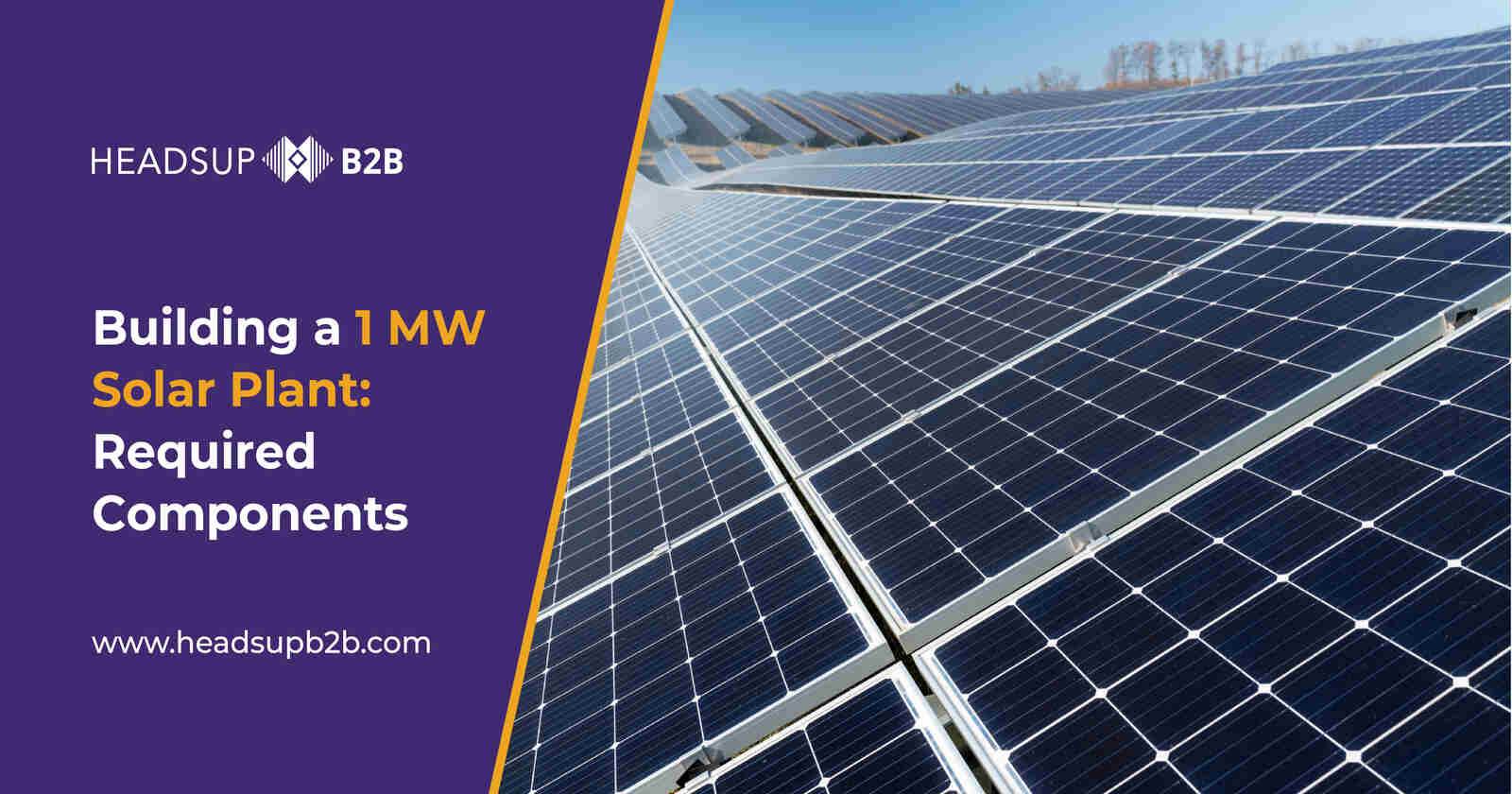
  • Building a 1 MW Solar Plant: Required Components

    Building a 1 MW Solar Plant: Required Components

    Imagine a nation that runs on clean energy and powers thousands of households, contributing to net zero emissions and reducing carbon footprints, healing the planet and combating climate change. The Indian government revised the goal of the National Solar Mission, in 2022 aims for the same.

    The new goal aims at significantly increasing the country’s renewable energy capacity. According to the energy generation and consumption trends, Solar power is expected to meet half of the world’s electricity demand by 2030, with 80% of the energy grid. This makes Solar a forerunner in combating climate change. With its significant contributions to the green energy revolution, how do we leverage it to make the greater vision a reality? The answer may lie in understanding how to build a scalable 1 MW Solar Power plant.

    Let us explore the various components required to build a 1 MW Solar plant.

    Why 1 MW Solar Power Plant?

    A 1 MW solar plant is a common benchmark for industrial and commercial energy needs, with a capacity to light up 2,500-3,000 solar panels, depending on their wattage. It provides a practical and scalable solution to meet high-energy demands. The panel efficiency is up to 22% in Monocrystalline or Polycrystalline panels.

    Building 1 MW of solar power projects is a challenging and rewarding endeavour due to its potential role in bridging the gap between current and  the future achievement of climate change goals. Its impact extends beyond power generation, contributing to a more sustainable and resilient energy landscape. With collaboration and innovation, solar energy can fuel sustainable growth. Solar power costs 18% less than coal-fired electricity and stands at ₹4.34 per kWh, proving to be a viable, cost-efficient and sustainable alternative to conventional energy sources.

    The electric power generated by solar panels is in direct current (DC) form. This form cannot be used to power most household electrical appliances. The three types of inverters are string inverters, microinverters and Hybrid inverters that are utilised in inverter systems. This scale of solar power may need multiple inverters with an efficiency of about 98%.

    Mounting System

    The need for secure attachment to a surface, roof or ground for the panels is fulfilled by robust mounting systems. The placement of this device ensures maximum sunlight absorption and, hence, increased efficiency. Mounting systems can be fixed or adjustable, with some even tracking the sun’s movement for increased efficiency. With a tilt angle of 15-30°, multiple mounting systems can be utilised for complete efficiency.

    Charge Controller: For a 1 MW solar power project, the charge controller plays a critical role in regulating the charging process. During the charging process, there is a chance that overcharging happens due to the excess flow of the current. To avoid this, charge controllers ensure optimal performance and battery longevity.

    Battery Storage: Sometimes, the solar energy generated is more than what is used. Battery storage helps save the excess solar energy that has been generated for future use. The excess solar power generated from 2,500 to 3,000 solar panels can be saved with the help of battery storage.

    A 1 MW solar plant offers a cost-effective path to India’s energy independence, with installation costs ranging from INR 4-8 crores, depending on the region. It is a sustainable investment. With a 25-year lifespan for solar panels and 10–15 years for inverters, it guarantees long-term energy savings and environmental benefits.

  • Generating 1 GW of Solar Power: A Roadmap to Successful Solar Projects

    Generating 1 GW of Solar Power: A Roadmap to Successful Solar Projects

    Imagine a world that runs on clean energy, powering millions of households and commercial setups and healing the planet by combating climate change. How do we ensure this happens? How does 1 GW of solar power generation establishment sound? Developing such a large-scale solar project requires strategic planning, innovation, and collaboration.

    The Importance of Scaling Solar Power

    1 GW of solar power has the transformative potential of not only lighting homes with clean energy but also proceeding towards reducing greenhouse gas emissions. 1 GW of solar power converts to one billion joules of energy per second. This enormous amount of energy can power 75,000 homes and reduce greenhouse emissions by 2 million metric tons. It is vital to scale up solar power to 1 GW to achieve the sustainable development goals, equivalent to removing approximately 435,000 cars from the road for a year.

    7 Key Steps : Guide Developing a 1 GW Solar Project

    1. Site Selection

    When developing a solar project, site selection sets the foundation for success. The site selection needs careful consideration of multiple factors such as solar radiation, availability of sunlight, availability of land, and the outcome of the Environmental Impact Assessment (EIA). With ample sunlight availability, sufficient land is needed to set up a 1 GW solar power project. For setting up a plant for generating 1 GW of power, about 3,000 acres of land is needed.

    2. Feasibility Studies

    A feasibility study of various locations for solar energy generation potential includes studying solar radiation, calculating the levelized cost of energy, and evaluating the long-term project viability.

    3. Securing Permits and Approvals

    Before setting up any solar power projects in India, it is mandatory to get the required approval from DISCOM and ensure that land use approvals have been obtained. ISO certification assures the quality of service.

    4. Technology

    Technology plays an important role, and choosing the right photovoltaic panel depends on the cost and efficiency. For 1 GW of solar energy, 3.125 million panels may be required to be installed if one panel is a standard 320 watts.

    5. Financing the Project

    For financing a solar power project, it is vital to outline funding strategies such as equity, government subsidies, green bonds, and Power Purchase Agreements (PPAs). The cost of a 1MW solar power plant in India is Rs 4–5 crores, including the costs of solar panels, solar inverters, combiners & junction boxes, protective gear arrangements, SCADA & data logger systems, land banks, and the cost of erection systems.

    6. Project Execution

    The importance of efficient logistics cannot be emphasised adequately. From sourcing the right materials to installation, commissioning, and post-commissioning maintenance support, every phase depends on timely and successful project execution. An efficient execution requires a seamless end-to-end process and streamlined, real-time monitoring followed by rigorous post-installation testing.

    7. Grid Integration and Maintenance

    Integrating solar power into the electrical grid is a multifaceted process that includes assessment of grid capacities, installation of suitable inverter technologies, adoption of power electronics, utilization of smart meters, incorporation of energy storage solutions, and securing necessary permits, which is followed by maintenance considerations such as regular inspections, performance monitoring, upgrades and retrofitting, and grid resilience planning to ensure safety from harsh weather conditions and other emergencies.

    The Bottom Line

    Developing 1 GW of solar power projects is a challenging yet rewarding endeavour. With innovation and collaboration, solar energy can fuel sustainable growth. Solar power costs 18% less than coal-fired electricity and stands at ₹4.34 per kWh, proving to be a viable alternative that is cost-efficient and sustainable.

    Solar power is the future of energy. Power the future with 1 GW of solar energy—sustainability starts with smart execution. Partner with Headsup B2B for seamless procurement and coordination in your solar projects, ensuring reliable, efficient, and scalable solutions for a cleaner tomorrow.