Solar energy shares about 80% of the total renewable energy segment, and with the National Solar Mission reaching an ambitious goal of 280 GW by 2030, the country is gearing up for a clean energy revolution with solar leading with a cudgel. In this blog, we will get into the details of solar energy systems and how the components work together.
Key Components of a Solar Energy System
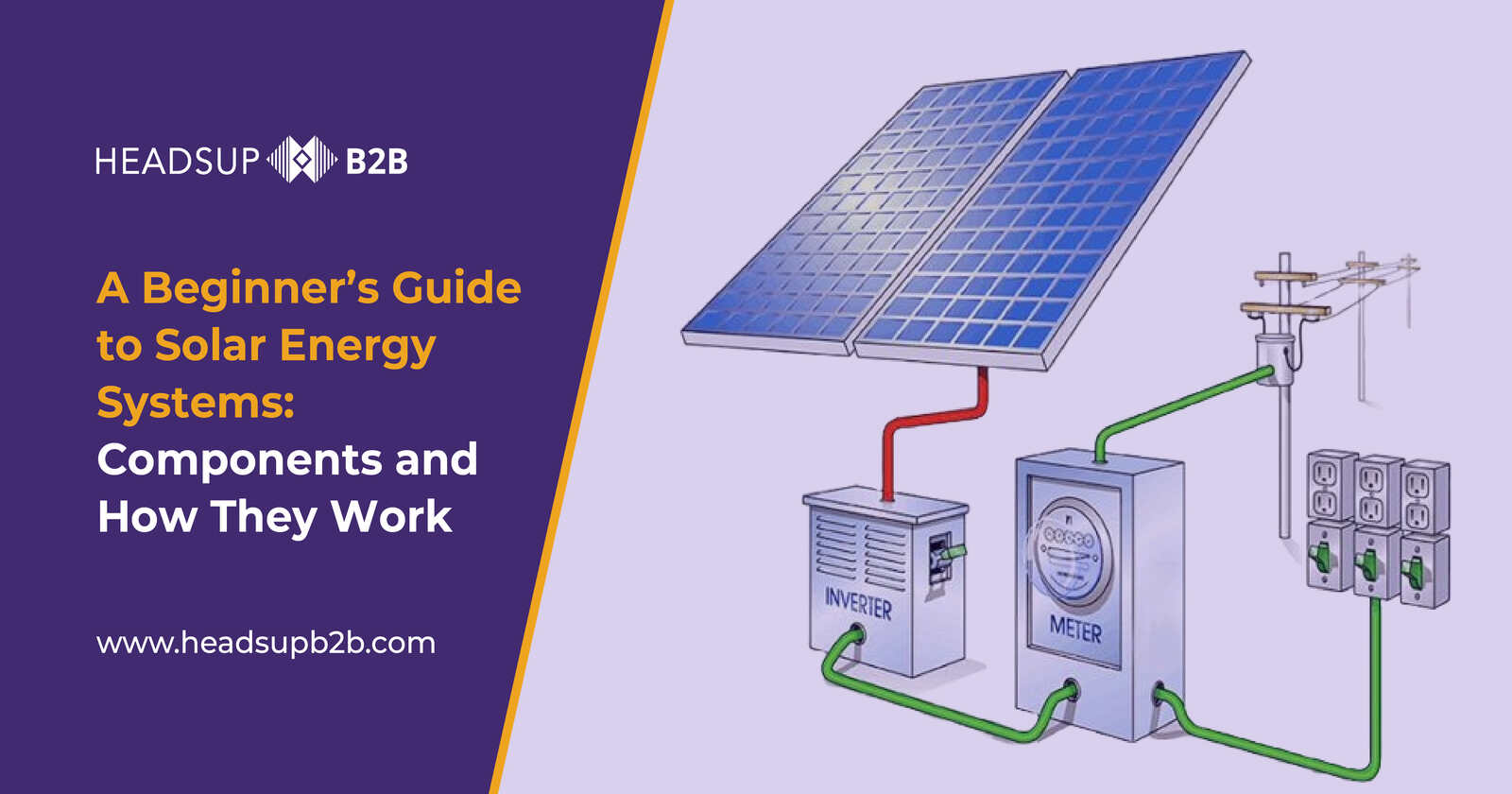
Being the heart of solar energy systems, they convert sunlight into electricity that lights up businesses and homes. These panels comprise multiple photovoltaic cells, that are made with semiconductor materials such as silicon.
Inverter
The electric power generated by solar panels is in direct current (DC) form. This form cannot be used to power most household electrical appliances.
There are 3 main types of inverters
-
String Inverters: Used in Series form
-
Microinverters: Installed on individual panels.
-
Hybrid Inverters: Can support solar energy as well as battery storage
Mounting System:- The need for secure attachment to a surface, roof or ground for the panels is fulfilled by robust mounting systems. The placement of this device ensures maxim sunlight absorption and hence, increased efficiency. Mounting systems can be fixed or adjustable, with some even tracking the sun’s movement for increased efficiency.
Charge Controller:- During the charging process, there is a chance that overcharging happens due to the excess flow of the current. To avoid the same, charge controllers ensure that the flow of the current is done in a manner to avoid it.
Battery Storage:-Sometimes the solar energy which is generated is excess against the use. Battery storage helps save the excess solar energy that has been generated for future use.
In systems with battery storage, a charge controller regulates the flow of electricity from the solar panels to the batteries. It prevents overcharging and ensures the batteries operate within safe voltage limits, thereby extending their lifespan.
Electric Meter and Monitoring System:- The electric meter tracks the amount of electricity generated, consumed, and sent back to the grid. Monitoring systems, often app-based, allow users to track their system’s performance in real-time, ensuring everything runs efficiently.
How a Solar Energy System Works?
- The first step is capturing the sunlight which is done as soon as the sunlight hits the solar panel. The photovoltaic cells absorb the photons from the sunlight, the electrons in the semiconductor become charged and energizing of the semiconductor materials generates DC electricity.
-
The generation of DC electricity is followed by converting it into Alternating Current with the help of a battery. This is done with the help of inverters.
-
Powering Your Home Once converted to AC electricity, the energy is directed to the electrical panel (or breaker box) of your home.
- Storing the excess energy requires batteries or is being sent back to the grid. In the On-grid systems, it is sent back to the grid and in off-grid systems, it is stored in a battery.
- For systems with battery storage, the stored energy can be used during periods of low sunlight or power outages, ensuring a continuous power supply.
Benefits of Solar Energy Systems
-
Renewable Energy Source
-
Cost Savings
-
Energy Independence
-
Environmental Impact
-
Low Maintenance
Conclusion
When selecting a solar energy system, the important considerations that need to be made are energy consumption, the space of the roof, the budget allocated and the local weather conditions. Also, suppliers’ selection of critical components such as solar panels, inverters, mounting systems, and charge controllers needs to be done thoroughly. Contact Headsup B2B for all your solar energy systems needs.