Tag: PVC pipe fittings

  • 5 Tips for Selecting the Right PVC Pipe Fittings

    5 Tips for Selecting the Right PVC Pipe Fittings

    Choosing the right PVC pipe fittings can make or break a project, whether it’s a DIY plumbing fix or a professional installation. Poorly selected fittings can result in leaks, costly repairs, or system inefficiencies. But don’t worry! By following these simple tips, you can confidently choose the best PVC pipe fittings that will stand the test of time and keep your systems running smoothly.

    Understanding PVC Pipe Fittings

    Before diving into tips, it’s essential to understand what PVC pipe fittings are and why they are crucial. PVC pipe fittings are connectors used to join lengths of PVC pipes in plumbing, irrigation, and various construction applications. These fittings come in several shapes and sizes, each designed for specific uses. Understanding their types and uses will help you make the right choice.

    1: Know Your Pipe Size and Type

    The first step in choosing the right PVC pipe fitting is knowing the size and type of pipe you’re working with. PVC pipes come in various diameters, and selecting a fitting that fits the exact pipe size is essential to avoid leaks or system failures.

    • Standard pipe sizes: PVC pipes generally come in standard sizes, from ½-inch to 6 inches in diameter. Some systems may use larger sizes for industrial applications. Ensure you measure the outer diameter of your pipe accurately to choose fittings that match perfectly.

    • Pipe types: There are different types of PVC pipes, such as Schedule 40 and Schedule 80, with varying wall thicknesses. Be sure to check your pipe’s schedule rating to select compatible fittings.

    2: Consider the Application

    Next, think about where and how the PVC pipe fittings will be used. The application plays a huge role in determining the type of fitting required. Not all PVC fittings are suitable for every situation.

    • Residential vs. Commercial use: Residential plumbing typically deals with lower pressure systems, while commercial systems may need stronger, more durable fittings. Ensure you select fittings appropriate for the pressure and type of system.

    • Environment: If your system is exposed to hot water, UV light, or extreme outdoor conditions, choose fittings designed for such environments. Fittings for hot water systems need to handle higher temperatures, while UV-resistant fittings are ideal for outdoor installations.

    3: Check for Durability and Material Compatibility

    Durability is key to the longevity of your PVC pipe fittings. It’s essential to consider the material compatibility and the environment in which they’ll be used. Poor quality fittings may crack, degrade, or leak over time.

    • Durable materials: When selecting fittings, look for those made from high-quality, durable PVC that can handle stress and pressure. Some fittings are made with a higher grade of material for better resilience.

    • Material compatibility: Ensure the fittings are compatible with the pipe material you’re using. Mismatched materials can result in weak joints that are prone to failure.

    4: Choose Between Slip or Threaded Fittings

    PVC pipe fittings come in two main types: slip fittings and threaded fittings. Choosing the right type depends on how you plan to connect the pipes.

    • Slip fittings: These are the most common types of PVC fittings. The pipe slips into the fitting and is glued in place with PVC cement. Slip fittings are typically used in systems where a tight, secure bond is necessary.

    • Threaded fittings: Threaded fittings have internal threads that allow you to screw the pipe into place. These are ideal when you need a removable connection, such as in valves or faucets. Be mindful of thread compatibility and seal the connection properly to avoid leaks.

    5: Focus on Quality Standards and Certifications

    To ensure your PVC pipe fittings meet safety and quality standards, always check for the relevant certifications. These certifications indicate that the fittings have been tested for strength, durability, and performance.

    • Recognized standards: Look for fittings that comply with ASTM (American Society for Testing and Materials) standards, ensuring they meet minimum requirements for safety and reliability.

    • Certifications: Certifications from trusted organizations like NSF (National Sanitation Foundation) indicate that the fittings are safe for drinking water systems.

    Common Mistakes to Avoid

    When selecting PVC fittings, several common mistakes can lead to complications down the road:

    1. Not matching the pipe size: Choosing a fitting that’s too large or too small for the pipe can cause leaks or weak connections.

    2. Overlooking the environment: Fittings not designed for hot or outdoor use can degrade quickly.

    3. Cheap, low-quality fittings: While budget-friendly fittings may be tempting, they often lack durability and reliability.

    By avoiding these errors, you’ll ensure a more successful installation.

    The Benefits of Using High-Quality PVC Fittings

    Investing in high-quality PVC fittings may cost a bit more upfront, but the benefits far outweigh the price difference. Premium PVC fittings offer:

    • Long-term savings: They last longer, reducing the need for repairs or replacements.

    • Reduced leaks and failures: High-quality fittings are less prone to cracks or leaks, ensuring your system remains efficient.

    How to Properly Install PVC Pipe Fittings

    Proper installation is essential for ensuring the longevity and reliability of your PVC pipe fittings. Follow these simple steps:

    1. Clean the ends of the pipe and fittings.

    2. Apply PVC primer to both the pipe and fitting.

    3. Coat both parts with PVC cement.

    4. Insert the pipe into the fitting and twist slightly to ensure an even bond.

    5. Allow the joint to cure for at least 24 hours before applying pressure.

    The Cost Factor: Is It Worth Investing in Premium PVC Fittings?

    While it’s easy to opt for cheaper fittings, investing in premium products often saves you more money in the long run. Premium fittings are more durable, perform better, and require fewer repairs, making them more cost-effective over time.

    Maintenance of PVC Pipe Fittings

    To maximize the life of your PVC fittings, regular maintenance is key. Check the fittings periodically for signs of wear, such as cracks or leaks, and replace any damaged components immediately.

    Where to Buy the Best PVC Pipe Fittings

    You can purchase high-quality PVC pipe fittings from local hardware stores, specialty plumbing supply shops, or reputable online marketplaces. Always check reviews and verify the seller’s reputation before making a purchase to ensure you’re getting a product that meets your needs.

    Conclusion

    Selecting the right PVC pipe fittings is crucial to the success of your plumbing or construction project. By knowing your pipe size, considering the application, choosing durable materials, and focusing on quality, you can avoid costly mistakes and ensure a long-lasting, reliable system.

    Frequently Asked Questions (FAQs)

    1. What’s the difference between Schedule 40 and Schedule 80 PVC fittings?
      Schedule 40 is standard for residential applications, while Schedule 80 has thicker walls and is suitable for higher-pressure systems.

    2. Can PVC pipe fittings be used for hot water systems?
      Yes, but you must select fittings that are rated for higher temperatures.

    3. How long do PVC pipe fittings last?

      High-quality PVC fittings can last for decades if properly installed and maintained.

    4. Are all PVC fittings the same?

      No, fittings come in various shapes, sizes, and materials, each designed for specific uses.

    5. Can PVC fittings be used outdoors?

      Yes, but be sure to choose UV-resistant fittings for outdoor applications to prevent degradation from sunlight.
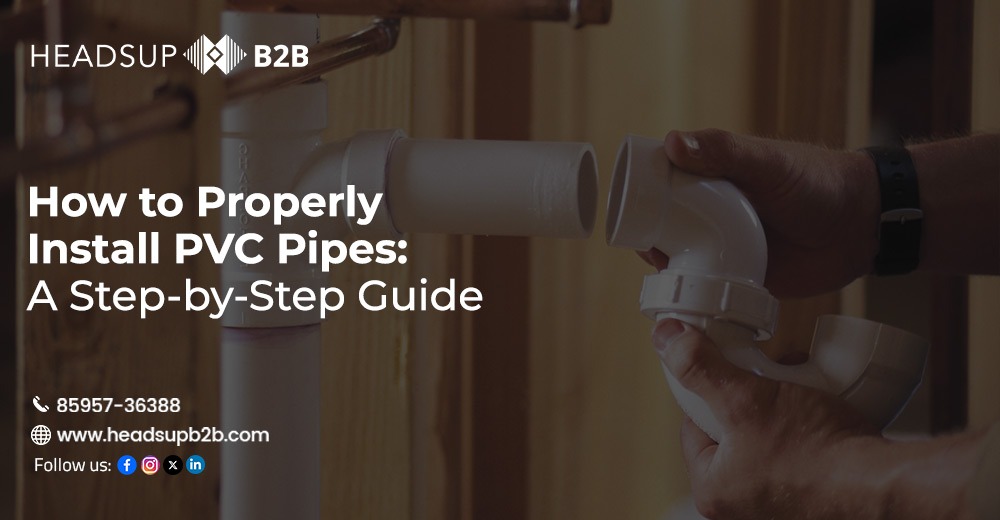
  • How to Properly Install PVC Pipes: A Step-by-Step Guide

    How to Properly Install PVC Pipes: A Step-by-Step Guide

    Installing PVC pipe correctly is essential, whether you’re replacing a broken part or repairing a leak. At Headsup B2B, we understand the importance of PVC pipes and the installation process. We will look at the step by step for installing PVC pipes in this blog article. We will also go over the significance of PVC pipe quality and offer installation tips for PVC pipe. Now let’s get started and learn the best ways to install PVC pipes.

    Understand PVC Pipes

    Polyvinyl chloride is the plastic used to make PVC pipes. It manages waste in buildings and is used in vents and drains. It is robust, light, and stiff. PVC pipe is perfect for drain applications beneath bathroom vanities and kitchen sinks since it is simple to install.

    PVC can be attached to almost anything, except extremely hot environments, thanks to the wide variety of available fittings. Due to its ease of installation, resistance to nearly all alkaline and hazardous substances, and lack of need for hot soldering, it performs plumbing far better than the old standard cast iron pipe. There are two varieties, type 40 for residential dwellings and type 80 for industrial environments, which are specified in standards.

    Importance of PVC Pipe Quality

    The quality of the PVC pipe is crucial when installing a PVC repair coupling. Choosing a reliable brand that complies with industry norms guarantees robustness and longevity, which are essential. Superior PVC pipes are perfect for a range of plumbing applications since they are immune to corrosion, chemicals, and environmental conditions.

    Types of PVC Pipes

    Preparation and safety measures

    To make sure that the repair connection and the plumbing system as a whole are compatible, take into account variables like pipe diameter, wall thickness, and pressure ratings.

    Tools and Materials Required

    To install a PVC repair coupling effectively, you’ll need the following tools and materials:

    • Hacksaw or PVC pipe cutter: essential for cutting the damaged section of the PVC pipe.

    • Emery cloth or sandpaper: used to smooth the cut edges of the pipe, ensuring a clean surface for a strong bond.

    • PVC primer prepares the pipe and coupling surfaces for cementing by cleaning and softening the PVC.

    • PVC Cement creates a strong, permanent bond between the pipe and the coupling.

    • Measuring tape: helps to accurately measure the section of pipe to be removed and the coupling to be installed.

    • Marker or pencil: useful for marking the cutting points and alignment of the coupling.

    • Rags or paper towels: are necessary for cleaning up any excess primer or cement during the installation process.

    Cutting

    PVC is easily cuttable. It can be cut using a hacksaw, but for a straight edge, mitre saw abrasive discs are a preferable option. The entire line of the pipe may get distorted at a junction that is skewed as a result of the pipe not being cut straight.

    Deburr and Fit

    After cutting, remove any shavings from the pipe and smooth the inner edges, or deburr. After the pipe has been cut to the exact length, arrange it on the floor with the fittings in position to check that the length is accurate.

    Cleaning and Priming

    Selecting the right primer and cleaner: Choosing the right primer and cleaner is crucial for a strong bond. Use a primer that is compatible with PVC, often labelled as PVC primer, which cleans and softens the pipe surface to ensure the cement adheres properly.

    Steps to properly clean and prime the pipe ends

    1. Clean the pipe ends with a rag to remove dirt and grease.

    2. Apply the PVC primer to the outside of the pipe and the inside of the fitting using the applicator provided. Make sure to cover the entire surface area that will be joined.

    3. Allow the primer to dry for a few seconds before proceeding to the cementing step.

    Applying PVC Solvent Cement

    Choosing the right type of cement: Select a PVC Solvent Cement that matches your pipe type and application. Regular PVC cement works for most applications, but if you’re working with high-pressure systems, consider using heavy-duty cement.

    Application tips for a strong bond

    1. Apply a generous layer of PVC Solvent Cement to the primed areas on both the pipe and the fitting. Work quickly, as the PVC Solvent Cement dries fast.

    2. Twist the pipe a quarter turn as you push it into the fitting. This action spreads the cement evenly and ensures a good seal.

    Fitting the Pipes Together

    Ensuring proper alignment: Immediately after applying the cement, push the pipe fully into the fitting while making sure it’s aligned correctly. Misaligned pipes can lead to weak joints and potential leaks.

    Holding the joint in place for proper curing: Hold the joint together for about 30 seconds to allow the cement to set. After this, the joint should be stable enough to hold itself, but avoid putting any pressure on it for at least 15 minutes. Full curing typically takes 24 hours, after which the joint will be ready for use.

    Cleaning and Priming

    Steps to properly clean and prime the pipe ends:

    1. Clean the Pipe Ends: Start by wiping the pipe ends with a rag to remove any dirt, grease, or debris. This ensures a clean surface for the primer and cement to adhere to.

    2. Apply Primer: Use a PVC primer to clean and soften the pipe surface. Apply it to the outside of the pipe and the inside of the fitting. Make sure to cover the entire area that will be joined. Allow the primer to dry for a few seconds before moving on to the cementing process.

    Common Mistakes to Avoid

    • Common mistakes in PVC pipe cutting include uneven cuts, weak joints, and potential leaks. Always use a sharp hacksaw or PVC pipe cutter for a clean, straight cut.

    • Inadequate primer and cement application is a common mistake, as they clean and soften PVC, promoting strong bonding and reducing the risk of joint failure.

    • PVC pipes’ expansion and contraction with temperature changes are crucial for maintaining system integrity. Ensuring proper fitting and using expansion joints in temperature-variable areas is essential.

    Why Choose Headsup B2B for PVC Pipe Online Sourcing

    Wide Selection: Headsup B2B offers a vast range of PVC pipes and fittings. Whether you need Schedule 40, Schedule 80, or CPVC, you’ll find exactly what you’re looking for.

    High Quality: We ensure that all our PVC products meet the highest quality standards. You can trust that our pipes are durable, reliable, and stable.

    Competitive Pricing: We provide our customers with the best prices on the market. By sourcing directly from top manufacturers, we pass the savings on to you.

    Expert Support: Our team of experts is always ready to help. Whether you need advice on the right products or guidance on installation, we’re here to support you every step of the way.

    Easy Ordering: Our online platform is user-friendly and easy to navigate. You can quickly find what you need, place your order, and have it delivered to your doorstep.

    Customer Satisfaction: At Headsup B2B, we prioritise customer satisfaction. We strive to provide excellent service and ensure that you’re happy with your purchase.

    Choosing Headsup B2B for your PVC pipe sourcing means getting top-quality products, great prices, and exceptional support, all from the comfort of your home or office.