Tag: overhead cranes

  • The Highs and Lows of Pallet Storage with Overhead Cranes

    The Highs and Lows of Pallet Storage with Overhead Cranes

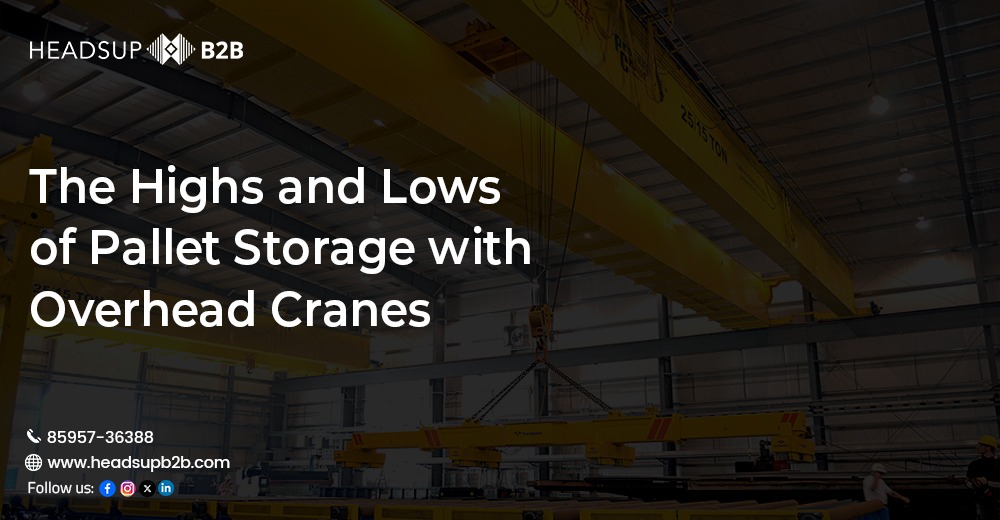
    Headsup B2B welcomes you! For companies that manage huge numbers of goods, effective and secure storage solutions are essential. Overhead cranes may greatly improve the process of pallet storage, which is a popular technique. in this blog post, we will examine the benefits and drawbacks of lifting pallets with crane, offering insightful advice to help you maximise your storage operations.

    Introduction

    Effective pallet management is critical to the proper running of the logistics and storage sector. lifting pallets with crane is a highly efficient method of addressing issues. An effective way to increase storage capacity and boost workflow efficiency is with these overhead cranes. The advantages and also the difficulties of using cranes to raise pallets will be discussed in this blog, along with useful advice to help companies make the most out of their pallet storage plans. It’s critical to weigh the benefits and drawbacks of utilising cranes in pallet storage when making decisions, whether you’re looking to increase storage capacity or raise safety requirements.

    What are Overhead Cranes

    A heavy-duty piece of equipment called an overhead crane can be used in manufacturing facilities’ overhead areas to move very large loads and equipment precisely and safely from one place to another.

    Types of Overhead Cranes

    • Single Girder Overhead Crane

    • Double Girder Overhead Crane

    • Gantry Crane

    • Jib Crane

    • Monorail Crane

    How overhead cranes are used in pallet storage

    Pallet storage relies heavily on overhead cranes, which also offer dependable and effective ways to move, lift, and arrange palletized goods in warehouses and distribution centres. These are some typical uses for them.

    Vertical Storage Utilisation

    Warehouses can make effective use of vertical storage space thanks to overhead cranes. Cranes optimise storage capacity by raising pallets vertically and stacking them high, all without increasing the size of the warehouse.

    Efficient Material Handling

    Pallets may be lifted, lowered, and positioned precisely with the use of overhead cranes, which provide exact control over pallet movement. This accuracy improves operating effectiveness and reduces the possibility of product damage.

    Versatile Handling Capabilities

    Pallets of any size, whether normal, enormous, or custom-sized, can be handled by overhead cranes. This adaptability meets a wide range of industry storage needs.

    Enhanced Safety Standards

    Cranes reduce floor-level obstacles by functioning overhead, enhancing ground-based equipment and personnel safety.

    Integration with Warehouse Management Systems (WMS)

    Automated storage systems and WMS can be connected with overhead cranes. Order fulfilment that is effective, real-time inventory tracking, and seamless warehouse operations management are all made possible by this integration.

    Advantages of Lifting Pallets with Crane

    Cranes are handling tools that are often used to lift large objects. Due to this, it can easily eliminate the role of human muscle in lifting objects from one point to the other in the warehouse. Besides, they will ensure a safer environment to work in, and at the same time, it will enhance the production process by using less time.

    • Maximised Storage Space Utilisation

    • Improved Operations in the Transportation of Goods

    • Enhanced Safety Standards

    • Versatility and Flexibility

    • Economies in the Short Run and Planning for the Long-run.

    • Ways of Integrating with Automation and Technology

    • Environmental Benefits

    • Operational Adaptability

    Challenges of Lifting Pallets with Crane

    A few challenges that are associated with lifting pallets with crane are-

    Initial Cost and Installation

    Overhead cranes can be expensive to buy and install, particularly for smaller companies or those with tighter budgets.

    Maintenance and Operational Costs

    To guarantee safe and effective operation, overhead cranes need to undergo routine inspections, maintenance, and also possibly expensive repairs.

    Operator Training and Certification

    Specialised training and certification are necessary for operating overhead cranes in order to guarantee safe handling and adherence to legal requirements.

    Space Limitations and Accessibility

    Because cranes take up space, there may be fewer alternatives for how the warehouse’s operations and storage spaces can be laid out.

    Complexity in Integration and Automation

    Incorporating overhead cranes into automated storage systems or current warehouse management systems (WMS) may necessitate intricate software and engineering setups.

    Safety Concerns

    Misuse of overhead cranes, including collisions, falling loads, and structural failures, can result in accidents.

    Limitations in Handling Certain Loads

    The weight and size limitations of overhead cranes prevent them from handling very heavy or large pallets.

    Best Practices for Selecting Effective Pallet Storage with Cranes

    Several best practices are necessary for efficient, safe, and space-efficient pallet storage with cranes. The following are some essential behaviours

    • Load capacity: To manage the necessary load, weigh and measure the products you need to store. Then, select pallets with the right load capacity rating.

    • Strength and durability: Examine the steel’s quality to make sure the pallets can sustain the weight of your goods without buckling or breaking under the circumstances in your storage space.

    • To ensure smooth handling and transportation, make sure the pallets are compatible with the cranes and the other machinery you already have, such as reach trucks, pallet jacks, and forklifts.

    • Ease of maintenance: To guarantee the pallets’ long-term operation, so, take into account how quickly they can be cleaned, mended, and maintained.

    Headsup B2B Trustworthy Platform for All Your Warehouse Needs

    Hence, if you are in search of excellent quality overhead cranes, then check Headsup B2B, a business-to-business platform for all types of warehouse solutions.

    We are selling only the highest quality overhead cranes from reputable manufacturers. Headsup B2B maintains their large inventory of products with reasonable prices. In addition to the quality of the products, we also give consultations in procuring all the necessary items. Therefore, go to our platform and order the product today.
  • Lifting Efficiency: The Role of Pallets Overhead Cranes in Warehousing

    Lifting Efficiency: The Role of Pallets Overhead Cranes in Warehousing

    Preface

    In today’s fast-paced world of warehousing and logistics, efficiency is key. Every second counts when it comes to moving goods in and out of storage. At Headsup B2B, we understand the critical role that warehouse equipment plays in boosting productivity and ensuring smooth operations. Through this blog post, we’ll explore how pallets and overhead cranes work together to change the efficiency of warehouses significantly. ​Whether you’re a warehouse manager, logistics coordinator, or business owner, this guide will provide valuable insights to help you make informed decisions.

    Introduction

    It is feasible to handle large, bulky items that are challenging to move using manual handling equipment, such coils, pipes, profiles, and other things, by installing a warehouse equipment like overhead crane .

    These lifting devices improve operator safety and ergonomics by enabling the physical transfer of heavy goods across the facility with only a single remote control.

    What is Pallet and its Types?

    Pallets are a crucial piece of logistical gear in packing. A pallet is a flat, transportable, sturdy platform that can support a load.

    Pallets come in several varieties and are used for stacking, storing, assembling, and moving products. By facilitating the simple transportation of stacked items using equipment or machines like pallet jacks and forklifts, they increase the operational efficiency of warehouses.

    Warehouse Cranes: What Are They?

    For raising palletised or packed goods to high storage levels warehouses uses the warehouse cranes. High-bay warehouse cranes are needed to load and unload the unusually high system in warehouses with high-bay racking. Crane warehouses are semi-automated; however, cranes operated manually or remotely may still need human intervention.

    At the end of a manufacturing line, smaller robotic cranes can lift, pack, and palletise goods. Visit our robotics website to learn more about our work cell and robotic crane options.

    The 6 Types of Overhead Cranes

    Overhead cranes come in six primary varieties that are ideal for usage in warehouse environments. Let’s examine each of them to assist you in choosing the one that best suits your structure.

    Gantry Crane

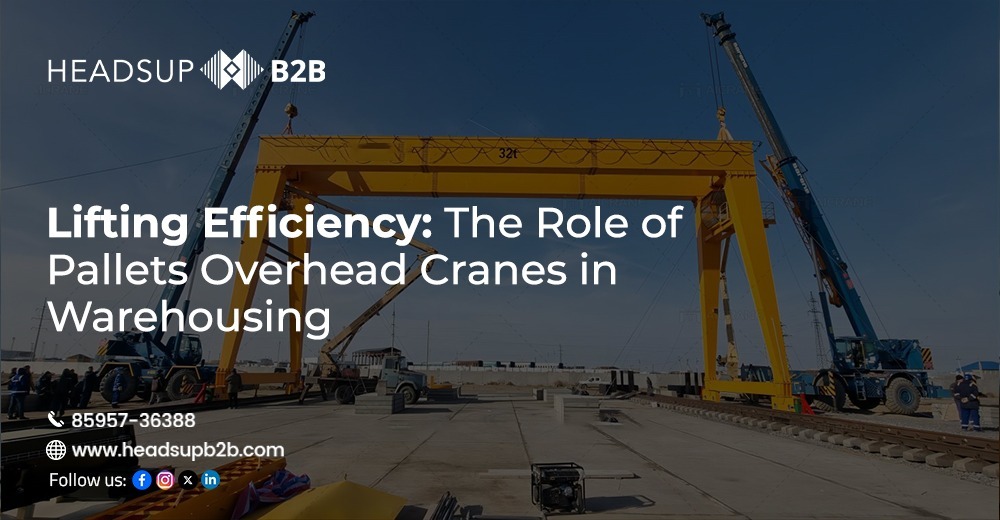
    Gantry cranes are free-standing, moveable cranes with limited scope, suitable for hobbyists or mechanics. Larger models are available for warehouses to hold and transport loads. While small models are affordable, most warehouses require larger models for loading and transporting loads. Gantry cranes come in various shapes and sizes, with larger models being more expensive.

    Jib Cranes

    Jib cranes, stationary, floor-mounted cranes with a chain host, are ideal for short-distance lifting of objects or materials. They offer ease of use, lifting capacity, and affordability. However, they have limited lifting power and lack flexibility compared to other crane types.

    Bridge Cranes

    Bridge cranes are popular warehouse options with custom-designed runways and support columns. They can encompass the entire warehouse or part of it, with a hoist moving along the runway and the entire bridge moving forward or backwards. Ideal for moving heavy objects, they are reliable and efficient. Despite being expensive, they can carry objects throughout a warehouse, unlike other overhead cranes.

    Workstation Cranes

    Workstation cranes, similar to bridge cranes, are floor-mounted and work over fixed spaces, suitable for warehouses requiring overhead cranes but not for entire spaces, requiring floor-mounted supports.

    Monorail Cranes

    Monorail cranes, named after their fixed track, transport objects and materials in warehouses like elevated conveyor lines. They can run around curves, making them ideal for assembly lines and certain warehouse transport processes.

    Top and Under-Running Cranes

    Top and under-running cranes are popular warehouse options, mounted on runway beams or vice versa. Top-running cranes have increased lifting ability and can traverse a significant distance due to their design and makeup.

    What are the benefits of an overhead crane?

    The following benefits come from moving big goods using a warehouse overhead crane:

    • Control over the load: warehouse overhead cranes frequently have precision controls that enable the operator to position the load in the precise spot using a remote control device. This is in contrast to forklifts, which might cause stacking mistakes.

    • The facility’s ergonomics: warehouse overhead cranes relieve operators of physical strain by enabling them to transport products between two or more spots in the centre with a single button push. The many varieties of warehouse overhead cranes can have clamps or lifts for rolls, coils, sheets, or pallets, among other accessories, to facilitate the movement of cargo.

    • Increased safety: To prevent impediments and potential accidents with personnel and material handling equipment, the crane lifts large, heavy objects to a specific height above the ground. Safety features guarantee dependable and efficient functioning.

    How does a warehouse overhead crane work?

    A warehouse overhead crane system safely lifts and moves the loads from one location to another in a facility. It consists of a bridge-like overhead structure with girders for stability. The main girder moves goods horizontally, while side girders facilitate transverse movement. Different configurations are available for different facilities. Loads are lifted using a hoist integrated into the trolley, which uses a hook, pulleys, rope, cable, or chain to minimise effort. The load is usually fitted with a hitch system for easy picking up.

    A warehouse overhead crane is a safe solution for moving heavy loads, with components like an emergency stop button and pushbutton panels that ensure proper operation. These cranes can be adapted to logistics centre requirements and have safety features like limit stops for trolleys and overhead sections, lifting mechanisms, and safety latches on hooks to secure the load during movement.

    Application of a warehouse overhead crane:

    Warehousing

    When assessing the necessity for an overhead crane, the first industry that springs to mind is warehousing, where commodities, supplies, and equipment are frequently transported, positioned, and prepared. An overhead crane is a great help in warehousing since it can quickly lift big products from storage to the shipping dock.

    Assembly

    Large equipment assembly industries need a way to lift and move partially assembled assemblies from one place to another so they may be finished. Because forklifts, automatic goods vehicles, and other methods of material handling are insufficient or unsafe, using an overhead crane is essential. Moving assemblies is a normal element of the production process.

    Transportation

    When large, bulky goods need to be loaded onto trucks, trains, and aeroplanes, the same guidelines that apply to storage also apply to transportation. Large goods are conveniently positioned for transportation by overhead cranes. This may be particularly true for international transportation when large items and containers must be lowered into ship holds.

    Equipment Maintenance

    Overhead cranes help facilitate repairs of punch presses and other production equipment by progressively moving and placing parts for convenient access. Heavy machinery may be moved with gantry and bridge cranes from their permanent site to a repair facility and back again. Lifting machinery up and over other equipment to put at a repair station is made easier with the use of overhead cranes.

    Choosing the Right Warehouse Equipment

    When it comes to selecting the perfect overhead crane for your warehouse, several key factors need to be considered to ensure you make the right choice. Here’s a quick guide to help you navigate through the process.

    Factors to Consider

    1. Load Capacity: The maximum weight the crane can lift is crucial. Always consider the heaviest load you need to move and add a safety margin. Choosing a crane and othe warehouse equipment with the right load capacity prevents overloading and potential accidents.

    2. Span: This is the distance between the crane’s runway rails. It determines how far the crane can move horizontally. Measure your workspace carefully to ensure the crane covers the required area.

    3. Lift Height: This refers to how high the crane can lift a load. Consider the height of your warehouse and the maximum height at which you need to store or retrieve items.

    4. Usage Frequency: How often you’ll use the crane affects its durability and performance. For frequent use, opt for a crane designed for high cycles. For occasional use, a lighter-duty crane may suffice.

    Tips for Selecting the Best Warehouse Equipment

    1. Assess Your Needs: Make a list of your specific requirements, including load types, workspace dimensions, and operational frequency.

    2. Consult Experts: Don’t hesitate to seek advice from crane manufacturers or suppliers. They can provide valuable insights and recommend the best options based on your needs.

    3. Consider Future Growth: Think about your future needs. Investing in a slightly more capable crane now can save you from needing an upgrade soon.

    4. Safety Features: Ensure the crane has essential safety features like overload protection, emergency stops, and reliable braking systems.

    5. Budget Wisely: While it’s important to consider cost, don’t compromise on quality and safety. Balance your budget with the crane’s capabilities and lifespan.

    Importance of Regular Maintenance and Inspections

    Regular maintenance and inspections are vital for the longevity and safety of your overhead crane. Here’s why:

    1. Prevent Accidents: Routine checks can identify potential issues before they lead to accidents, ensuring the safety of your employees and equipment.

    2. Maximise Efficiency: Well-maintained cranes operate smoothly, reducing downtime and increasing productivity.

    3. Extend Lifespan: Regular servicing extends the life of your crane, providing better returns on your investment.

    How Headsup B2B Can Be Your Reliable Partner in Sourcing Warehouse Equipment

    Choosing the right warehouse equipment is crucial for efficiency and safety. Headsup B2B is here to help you make the best choices. Here’s why we can be your reliable partner in sourcing warehouse equipment:

    Wide Range of Products

    Headsup B2B offers a vast selection of warehouse equipment, including overhead cranes, forklifts, shelving systems, and more. No matter your needs, we have the right tools to keep your operations running smoothly.

    Expert Guidance

    Our team of experienced professionals is ready to provide you with expert advice. Whether you’re setting up a new warehouse or upgrading your current one, we can help you find the most suitable equipment. We understand that every warehouse is unique, and so we tailor our recommendations to meet your specific requirements.

    Quality Assurance

    Headsup B2B partner with trustworthy manufacturers to ensure that all the warehouse equipment we offer is of the highest quality. This means you can rely on our products to be durable, efficient, and safe. Our commitment to quality ensures that you get the best value for your investment.