Tag: Material Handling Equipment

  • The Importance of Material Handling Equipment in the Construction Industry

    Material handling equipment plays a crucial role in the efficiency and success of the construction industry.

    These specialized tools and machinery are essential for transporting, storing, and managing materials and goods throughout construction sites. From forklifts to cranes, material handling equipment streamlines operations, increases productivity, and enhances safety.

    In the fast-paced environment of construction, having the right equipment can make all the difference in meeting project timelines and budget constraints.

    This introduction will delve into the various types of material handling equipment used in the construction industry, their importance in optimizing workflow, and the impact they have on overall project outcomes.

    Evolution and Importance

    Historical Development of Material Handling Equipment.

    The Significance of Material Handling in Modern Construction Projects.

    Material handling equipment has come a long way since the ancient times when manual labor was the primary method of moving goods. From simple tools like ropes and pulleys to complex machinery like forklifts and conveyor belts, the evolution of material handling equipment has revolutionized the way we handle goods.

    In ancient civilizations, such as the Egyptians and Romans, laborers used basic tools and manual techniques to transport materials for construction. The invention of the wheel marked a significant advancement in material handling, enabling the movement of heavier loads with greater ease. Over time, innovations like the invention of cranes and hoists further improved efficiency in material transport and contributed to the development of early construction projects.

    The Industrial Revolution brought about a significant shift in material handling practices with the introduction of steam-powered machinery and conveyor systems. This era saw the mechanization of many material handling processes, leading to increased productivity and the ability to handle larger volumes of goods.

    In modern construction projects, efficient material handling is crucial for ensuring productivity, safety, and cost-effectiveness. Proper material handling not only speeds up the construction process but also reduces the risk of accidents and damage to materials. With the advancements in technology, construction companies now have access to a wide range of specialized equipment designed to streamline material handling operations.

    Today, construction firms utilize a variety of equipment such as cranes, forklifts, and excavators to handle materials efficiently. Automated systems like robotic arms and drones are also being integrated into construction sites to enhance material handling operations further. These technological advancements not only improve efficiency but also contribute to a safer working environment for construction workers.

    Understanding the historical development and the importance of material handling in construction projects is essential for professionals in the industry to enhance efficiency and achieve project success. By leveraging modern equipment and technologies, construction companies can optimize their material handling processes and stay competitive in the ever-evolving industry landscape.

    The Role of Technology in Modern Material Handling

    Automation and Robotics in Material Handling.

    The Future of Material Handling in Construction.

    The Impact of Sustainable Practices on Material Handling.

    Challenges and Opportunities in Material Handling Innovation.

    The Integration of IoT and Data Analytics in Material Handling Systems.

    Training and Skill Development in Efficient Material Handling Practices.

    The Importance of Ergonomics in Material Handling Equipment Design.

    Safety Regulations and Compliance in Material Handling Operations.

    Types of Equipment

    In the construction and material handling industries, various types of equipment play crucial roles in ensuring efficient operations and completing tasks effectively. Let’s explore some of the most common equipment used in these sectors:.

    Cranes and Their Applications

    Cranes are essential for lifting and moving heavy materials and objects on construction sites. They come in various types such as tower cranes, mobile cranes, and overhead cranes, each serving specific purposes. Tower cranes are commonly used in tall building construction, while mobile cranes are versatile for various construction projects. Overhead cranes are ideal for indoor operations such as warehouses and manufacturing facilities.

    Forklifts: Versatile Handling Solutions

    Forklifts are versatile machines used for lifting and moving materials over short distances. They are commonly found in warehouses, distribution centers, and manufacturing facilities, providing efficient material handling solutions. Forklifts come in different types, including counterbalance forklifts, reach trucks, and pallet jacks, each designed for specific tasks and environments.

    Conveyors: Streamlining Material Movement

    Conveyors are used to transport materials from one location to another, streamlining the material handling process. They are especially useful for moving bulk materials, packages, and items along production lines. Types of conveyors include belt conveyors, roller conveyors, and overhead conveyors, with each type suited for different applications based on material type, weight, and transfer distance.

    Hoists: Lifting and Positioning Aid

    Hoists are equipment used for lifting and lowering heavy loads with precision. They are commonly used in construction, manufacturing, and maintenance operations to position materials or equipment at specific heights. Electric chain hoists, wire rope hoists, and air hoists are among the commonly used types, offering varying load capacities and lifting speeds to meet different requirements.

    Excavators: Essential for Heavy Tasks

    Excavators are heavy-duty machines equipped with a bucket, arm, and cab mounted on a rotating platform. They are used for digging, trenching, and earthmoving tasks on construction sites, road projects, and excavation sites. Excavators come in different sizes, from mini excavators for compact spaces to large excavators for heavy-duty tasks, providing versatility and efficiency in various applications.

    These types of equipment are essential for enhancing productivity, improving safety, and streamlining operations in various industries. Businesses can benefit from understanding the diverse capabilities of these equipment types to optimize their workflow and achieve operational excellence.

    Advantages and Impact

    In the realm of construction, the adoption of modern technologies has revolutionized the way projects are planned and executed. These advancements bring forth a multitude of advantages that not only enhance operational efficiency but also significantly impact safety standards and cost-effectiveness. Let’s delve into the key benefits of embracing these innovations in the construction industry.

    Boosting Efficiency on Construction Sites

    One of the most significant advantages of integrating technology into construction processes is the substantial boost in efficiency on job sites. Through the use of tools such as Building Information Modeling (BIM) and project management software, project managers can streamline workflows, improve communication among team members, and ensure that tasks are completed within stipulated timelines. This increased efficiency translates to faster project completion, reduced downtime, and ultimately, higher productivity.

    Enhancing Safety Standards

    Safety is paramount in the construction industry, and technology plays a pivotal role in enhancing safety standards on job sites. With the implementation of drones for site inspections, wearable technology for monitoring workers’ health and safety, and virtual reality simulations for training purposes, construction companies can significantly reduce accidents and mitigate risks. By prioritizing safety through technological interventions, construction sites become safer environments for workers, leading to fewer injuries and improved overall well-being.

    Cost-Effectiveness in Operations

    In addition to boosting efficiency and safety, technology also contributes to the cost-effectiveness of construction operations. By leveraging project management software for budget tracking, equipment monitoring sensors for predictive maintenance, and automated processes for repetitive tasks, construction companies can optimize their resources and minimize wastage. These cost-saving measures not only result in better financial outcomes for projects but also improve the overall competitiveness of construction firms in a dynamic market.

    Minimizing Manual Labor Requirements

    Another notable impact of technology in construction is the reduction of manual labor requirements. As robotics and automation become more prevalent in the industry, tasks that were traditionally labor-intensive can now be performed with greater precision and efficiency. This shift not only alleviates the physical burden on workers but also allows skilled laborers to focus on more complex aspects of construction projects, leading to higher quality outputs.

    The advantages and impact of integrating technology into the construction industry are clear and far-reaching. From boosting efficiency and enhancing safety standards to achieving cost-effectiveness and minimizing manual labor requirements, the adoption of modern technologies is instrumental in driving progress and innovation in construction practices. By embracing these advancements, construction companies can position themselves for success in an increasingly competitive landscape.

    Challenges and Solutions

    Addressing Maintenance Issues

    In this section, we delve into the common maintenance issues faced by industries and explore effective solutions to tackle them. From equipment breakdowns to preventive maintenance strategies, we uncover the challenges and provide insights on how to maintain operational efficiency. Maintenance issues can disrupt workflow, lead to downtime, and incur unexpected costs. By implementing a proactive maintenance schedule and investing in predictive maintenance technologies, companies can minimize unplanned downtime and optimize their operational performance. Additionally, conducting regular equipment inspections, prioritizing spare parts management, and fostering a culture of maintenance awareness among employees are crucial steps in ensuring seamless operations.

    Training Needs for Efficient Handling

    Efficient handling of equipment and processes is crucial for productivity and safety. We discuss the importance of training programs tailored to the specific needs of employees. By addressing the skills gap and promoting continuous learning, organizations can enhance their workforce’s capabilities and overall performance. Training not only improves employee skills but also boosts morale and job satisfaction, leading to a more engaged and productive workforce. Furthermore, incorporating hands-on training sessions, utilizing simulators for skill development, and offering certifications for specialized roles can further enhance employees’ proficiency and confidence in handling complex machinery and tasks.

    Integration of Advanced Technologies

    As industries evolve, the integration of advanced technologies becomes imperative. From IoT to AI-driven solutions, we analyze the benefits and challenges of adopting these technologies. By exploring real-world examples and best practices, we highlight how companies can leverage innovation to stay competitive in today’s dynamic marketplace. Integrating advanced technologies enhances operational efficiency, enables data-driven decision-making, and opens up new opportunities for automation and process optimization. Companies that embrace digital transformation are better positioned to adapt to market changes and drive sustainable growth. Moreover, fostering a culture of experimentation and continuous improvement, establishing cross-functional teams for technology implementation, and monitoring industry trends for disruptive innovations are essential strategies for successful technology integration.

    Technological Advancements

    Automation and Robotics in Material Handling

    The integration of automation and robotics in material handling processes has revolutionized the efficiency and productivity of warehouses and manufacturing facilities. From automated guided vehicles (AGVs) to robotic arms, these technologies streamline operations, reduce human error, and enhance safety. Artificial Intelligence (AI) plays a crucial role in advancing automation by enabling machines to learn from data, make decisions, and perform tasks that traditionally required human intervention. Machine learning algorithms further refine these systems, allowing for predictive maintenance scheduling and adaptive workflows that optimize throughput.

    IoT Integration for Smart Operations

    The Internet of Things (IoT) has enabled the creation of smart, interconnected systems that gather and analyze data to optimize operations. In material handling, IoT sensors can track inventory levels, monitor equipment performance, and predict maintenance needs, leading to proactive decision-making and cost savings. Real-time data analytics and cloud computing have expanded the capabilities of IoT in material handling, allowing for remote monitoring, predictive analytics, and automated alerts for potential issues. The seamless integration of IoT devices with existing systems is driving efficiency and scalability in modern operations.

    Sustainability Initiatives for Green Construction

    With a growing focus on sustainability, technological advancements in green construction have gained momentum. From energy-efficient building materials to renewable energy integration, these initiatives aim to minimize environmental impact and promote eco-friendly practices in the construction industry. Advanced construction technologies like 3D printing and prefabrication techniques are not only reducing waste but also accelerating project timelines. Additionally, the adoption of Building Information Modeling (BIM) software aids in designing energy-efficient structures and optimizing resource utilization throughout the building lifecycle. The emphasis on sustainable construction practices is reshaping the industry, fostering environmentally conscious approaches and driving long-term ecological benefits.

    The convergence of automation, IoT, and sustainability in the construction and material handling sectors signifies a shift towards smarter, greener, and more efficient practices. By leveraging these technological advancements, industries can enhance operational excellence, reduce carbon footprint, and drive innovation towards a more sustainable future. The continued evolution of these technologies promises to shape the future of work environments, emphasizing efficiency, sustainability, and technological integration.

    Economic and Environmental Impact

    Cost Analysis of Implementing Material Handling Equipment

    Investing in material handling equipment such as conveyor belts, forklifts, and automated systems can initially be costly for businesses. However, a thorough cost analysis will reveal the long-term benefits and cost savings of such investments.

    Discuss the importance of considering factors like efficiency improvements, labor savings, and reduced operational costs when evaluating the economic impact of implementing material handling equipment.

    Highlight how advancements in technology have led to more efficient and cost-effective solutions in material handling, ultimately impacting the bottom line of businesses positively.

    ROI and Long-term Benefits

    Explore the concept of Return on Investment (ROI) concerning material handling equipment. Calculate and analyze the ROI from investing in efficient and advanced equipment compared to traditional manual methods.

    Highlight the long-term benefits, such as increased productivity, reduced error rates, and enhanced safety measures, that contribute to the economic sustainability of businesses. Additionally, delve into the intangible benefits, like improved employee morale and customer satisfaction, that result from streamlined material handling processes.

    Promoting Sustainable Practices and Reducing Carbon Footprint

    Discuss the role of material handling equipment in promoting sustainable practices and reducing the carbon footprint of industries.

    Emphasize the importance of energy-efficient equipment, recycling processes, and waste reduction strategies in achieving environmental sustainability goals. Provide examples of companies that have successfully integrated eco-friendly practices into their material handling operations and the positive impact on the environment.

    Furthermore, explore the concept of circular economy in material handling, where products are designed to be reused or recycled, thereby minimizing waste and environmental impact.

    Highlight the growing trend of consumers preferring environmentally conscious businesses, driving companies to adopt sustainable material handling practices not only for cost savings but also for brand reputation and market competitiveness.

    Sustainability Initiatives in Material Handling

    In addition to reducing costs and enhancing operational efficiency, sustainability initiatives in material handling play a crucial role in shaping a company’s reputation and fostering long-term success. Discuss how implementing green practices in material handling operations can lead to a positive brand image, attracting environmentally conscious customers and investors. Highlight the importance of setting clear sustainability goals, monitoring performance metrics, and continuously improving processes to achieve a greener supply chain.

    Explore the concept of cradle-to-cradle design in material handling equipment, focusing on creating products that can be easily disassembled, recycled, or repurposed, thereby minimizing waste and contributing to a circular economy.

    Innovations in Eco-Friendly Material Handling

    The evolution of technology has paved the way for innovations in eco-friendly material handling solutions that not only enhance operational efficiency but also reduce environmental impact. Explore the latest trends in sustainable material handling, such as the use of renewable energy sources, smart sensors for optimizing resource utilization, and automated systems for minimizing energy consumption. Discuss how advancements in robotics and artificial intelligence are revolutionizing material handling processes, leading to greater precision, speed, and sustainability. Highlight case studies of companies that have successfully implemented cutting-edge eco-friendly material handling technologies and the benefits they have experienced in terms of cost savings, environmental sustainability, and competitive advantage.

    Conclusion

    Material handling equipment plays a crucial role in the construction industry by increasing efficiency, improving safety, and reducing manual labor. Investing in the right equipment can lead to significant cost savings and productivity gains for construction companies. With advancements in technology and equipment design, the future of material handling in construction looks promising, promising further improvements in project delivery and overall industry growth.
  • Cost-Benefit Analysis: When to Rent vs. Buy Material Handling Equipment

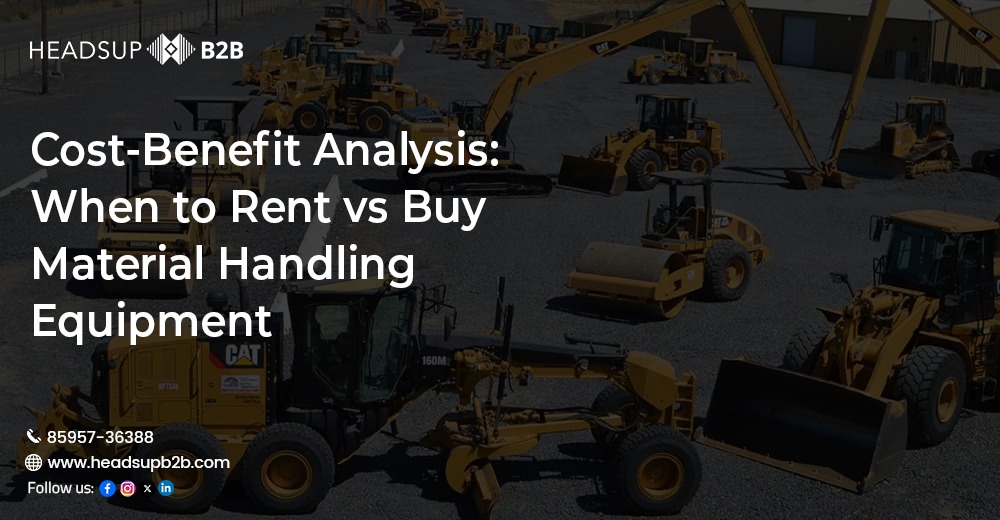
    Cost-Benefit Analysis: When to Rent vs. Buy Material Handling Equipment

    Welcome to Headsup B2B, your go-to platform for all things related to construction equipment. Whether you’re running a small construction business or managing large-scale projects, one key decision you often face is whether to rent or buy material handling equipment. .. The budget, project efficiency, and general operations can all be significantly impacted by this choice. We will discuss renting vs purchasing industrial material handling equipment in this article, giving you useful information to help you make an informed choice.

    Introduction

    One of the most important and costly decisions that any contractor or construction firm must make is whether to purchase or rent industrial material handling equipment. Each strategy has advantages and disadvantages, so purchasers must weigh the pros and drawbacks of each option individually. Choosing wisely between renting and purchasing industrial material handling equipment might save you a significant amount of money over time, but making a poor choice can be quite expensive.

    Understanding Costs of Industrial Material Handling Equipment

    When deciding between renting or buying industrial material handling equipment, it’s crucial to understand the different costs involved.

    Initial Costs

    Purchase Price vs. Rental Fees: Buying equipment requires a significant upfront investment, often involving a hefty purchase price. In contrast, renting typically involves smaller, manageable fees, spread out over time.

    Financing Options and Down Payments: For those who opt to buy, financing options like loans can help manage the purchase. However, this usually requires a down payment, adding to the initial outlay.

    Operational Costs

    Maintenance and Repair: Ownership means you’re responsible for all maintenance and repairs. This can be costly, especially as the equipment ages. Renters, on the other hand, usually benefit from included maintenance services.

    Insurance: Owning equipment means you’ll need insurance to cover potential damages or loss. Renting often includes basic insurance, reducing your responsibilities.

    Storage and Transportation: Once you own the equipment, you’ll need space to store it and means to transport it between sites. These logistics can add significant costs.

    Hidden Costs

    Depreciation: Owned equipment loses value over time due to depreciation. This is a hidden cost that can impact your financial planning and resale value.

    Opportunity Cost of Capital: Investing a large sum in equipment means those funds aren’t available for other business opportunities. This opportunity cost is often overlooked but can be substantial.

    Understanding these costs helps make an informed decision about whether to rent or buy industrial material handling equipment. Each option has its financial implications, and it’s vital to consider all aspects to choose what’s best for your business.

    Types of Industrial Material Handling Equipment

    When to buy Industrial Material Handling Equipment?

    Purchasing large machines and equipment is undoubtedly a significant financial commitment; yet, if you have carefully considered your options and have a well-thought-out plan of action in place, you may be able to save money over time. Purchasing Equipment may be wise when…

    The equipment would be often utilised: Investing in heavy equipment such as backhoe loaders and excavators makes sense if you have a lot of projects planned for the next several months or years.

    You can afford to store and keep up the new equipment with ease: Keeping heavy construction equipment stored while not in use is one of the biggest problems. However, purchasing equipment can make more sense and be more economical if you have an industrial garage and insurance coverage. Additionally, purchasing equipment may make more sense if you have the funds to cover maintenance expenses.

    You’re going to expand: If your firm is booming, you have a tonne of projects in the works, and you’re even prepared to go to the next level, then purchasing industrial material handling equipment also makes a lot more sense because it will provide a solid return on investment down the road.

    There isn’t a firm that rents out equipment nearby, or even in your city: Getting the heavy equipment to the project site is one of the main problems. Therefore, you would have to waste money and time in the process of getting the equipment if it is a significant bother to obtain it at the job site. Purchasing equipment is the preferable option in this situation.

    When to rent IIndustrial Material Handling Equipment?

    Not everyone is wealthy enough to purchase the equipment. In certain situations, renting CE could make more sense. When…

    • Before purchasing a new equipment, it’s advisable to test it in real-world work settings by renting it and using it, even if you have the necessary investment capacity to purchase the equipment, to understand its practicality on the job site.

    • To boost the existing fleet during the busy season, consider renting the equipment to supplement the existing fleet and avoid the need to store and maintain it during the slow season, as summer work doubles.

    • You wish to minimise the expense of repairs and upkeep: Renting equipment ensures that you are not responsible for unforeseen maintenance costs on your equipment and makes it much easier to precisely incorporate the cost of the equipment into the project estimate.

    • You need specific tools for a temporary project: Specialised tools could be required for some one-time tasks. In this case, renting equipment can be a wise choice. Additionally, renting equipment is preferable than purchasing a new one, particularly for projects that last less than three years.

    Benefits of Renting Industrial Material Handling Equipment

    • Flexibility

      • Short-term vs. long-term project needs: Renting allows you to match equipment to the specific duration of your projects.

      • Ability to upgrade or change equipment as needed: Easily switch to newer models or different types of equipment as your project requirements change.

    • Lower Upfront Investment

      • Preserving capital for other business needs: Renting requires less initial cash outlay, freeing up funds for other important business activities.

      • Predictable monthly expenses: Rental fees are consistent and predictable, making budgeting easier.

    • Maintenance and Repairs

      • Reduced responsibility for upkeep: Rental agreements often include maintenance, so you don’t have to worry about repair costs.

      • Access to well-maintained, up-to-date equipment: Rental companies typically provide modern, well-maintained equipment, ensuring optimal performance and reliability.

    Read More:- 10 Essential Material Handling Equipment for Your Business

    Benefits of Buying Industrial Material Handling Equipment

    Long-Term Cost Efficiency

    • Cost Savings Over Time: Ownership can lead to lower costs in the long run compared to continuous rental fees.

    • Tax Benefits: You can take advantage of tax deductions for depreciation and interest, reducing your overall taxable income.

    Asset Ownership

    • Building Equity: Owning equipment adds value to your business, as the equipment becomes a tangible asset.

    • Resale Value: You can recoup some costs by selling the equipment when it’s no longer needed or when upgrading.

    Operational Control

    • Full Control Over Use: Owning equipment allows you to use it whenever and however you need without relying on rental agreements.

    • Customization Options: You can modify and customise the equipment to better suit your specific project needs.

    Choosse Headsup B2B

    Explore our platform for rental and purchase options of industrial material handling equipment. Whether you need to buy for long-term usage or rent for a brief project, we have a variety of options to meet your needs.

    Contact us for personalised assistance. Our professionals to help you find the best solution for your business, and make sure that you get the most value from your equipment investments.

    Follow us on social media for more tips and updates. Stay connected with Headsup B2B for the latest trends, advice, and news in the world of industrial material handling equipment.

  • The Warehouse Manager’s Handbook: Choosing the Right Material Handling Equipment

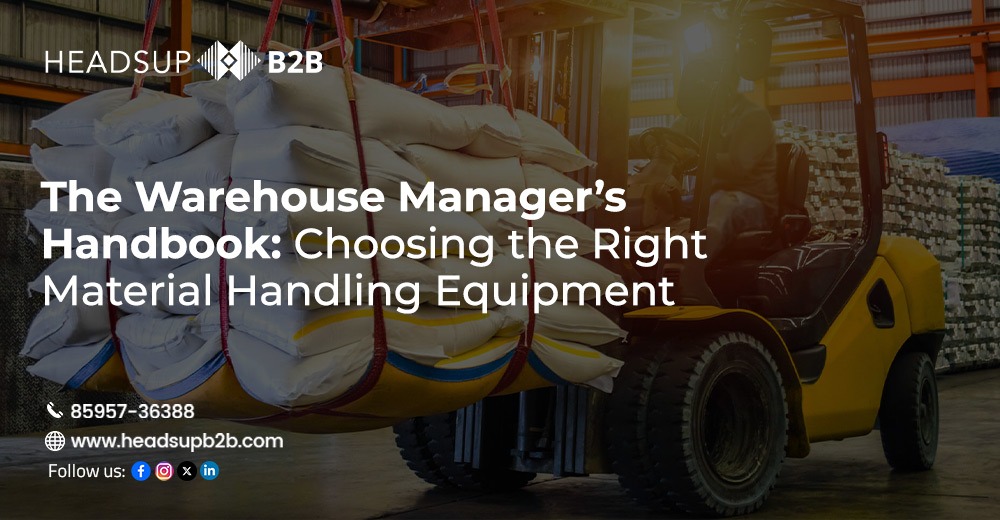
    The Warehouse Manager’s Handbook: Choosing the Right Material Handling Equipment

    In the modern day, material handling is critical as it improves the efficiency and productivity of industrial facilities and warehouses. Good material handling procedures lower operating expenses and increase worker safety by lowering mishaps and injuries brought on by incorrect material handling. Effective material handling is now even more essential to meeting consumer expectations in light of the growth of e-commerce and the growing need for quicker delivery times. Warehouse material handling equipment is essential in the modern day for maximising warehouse operations and realising company success. It is also very difficult to choose the right products, so, the team at Headsup B2B is here to help you with the right product and easy procurement methods.

    Headsup B2B is one of the well-known and trustworthy online material handling equipment sourcing platforms that provides a wide range of options from various reputable manufacturers and suppliers. So, without wasting your precious time, let’s discuss material handling equipment, its importance, and the process of choosing the right products.

    What is Material Handling?

    The moving, storing, safeguarding, and management of goods and materials during the production, distribution, consumption, and disposal processes is referred to as material handling. It covers a broad variety of tasks, including moving, storing, lifting, and retrieving goods and materials while making use of different tools, processes, and systems.

    Importance of Warehouse Material Handling Equipment:

    Material handling plays a critical role in warehouse operations to ensure the smooth and productive flow of items throughout the facility. The following succinctly describes the significance of material handling in warehouse operations:

    • Safety: Worker safety and the prevention of harm to commodities are the two main goals of material handling equipment and processes.

    • Efficiency: Meeting customer needs and reducing inventory costs depends on the efficient and timely flow of items through the warehouse.

    • Productivity: The productivity of employees and the general operations of the warehouse may be enhanced by the adoption of effective material handling tools and practices.

    • Customer Satisfaction: Sustaining client happiness and loyalty requires accurate and prompt delivery of goods.

    • Space utilisation: By optimising the use of warehouse space, material handling methods and tools may help store more items.

    Types of Material Handling Equipment:

    Forklift:

    A forklift is a compact industrial vehicle with a front-mounted, power-operated forked platform that can be lifted and lowered to lift or carry items. Numerous sectors, like warehouses and other big storage facilities, depend on forklifts to meet their demands. Combustion engines or electric batteries power forklifts. It plays a crucial role in the sector of the transportation of products and resources.

    Conveyors:

    A conveyor system is a mechanical handling device that moves loads and materials automatically across a space quickly and effectively. Among its many advantages, this technology lessens human error, lowers workplace dangers, and lowers labour expenses. They are handy for transferring large or heavy objects from one location to another. A conveyor system can move things using a chain, wheels, rollers, or a belt.

    Pallet Racking Systems

    Pallet racking is a material organisation method on metal shelves that involves rowing pallets of goods. Forklifts can reach the various levels of shelves in the system. By using vertical space, these systems are used to boost storage density. The idea is the same as considering the advantages of constructing skyscrapers in a city with limited space.

    Automated Guided Vehicles (AGVs)

    Often known as self-guided or autonomous guided vehicles, automated guided vehicles (AGVs) are load carriers or material handling systems that operate independently inside warehouses, distribution centres, or production facilities without the need for a driver or operator.

    Factors to Consider While Selecting the Warehouse Material Handling Equipment:

    Budget constraints and total cost of ownership:

    • Start by setting a clear budget to work within.

    • Consider the upfront and maintenance expenses, such as repairs, and operational costs.

    • Choose equipment that offers a good balance between initial investment and long-term affordability.

    Maintenance Requirements and Availability of Spare Parts:

    • Check the maintenance requirements of each piece of equipment.

    • Also, ensure that spare parts are readily available and will only cause short downtimes if they need replacements.

    • Opt for equipment with straightforward maintenance procedures to minimise disruptions to operations.

    Operator Training and Safety Regulations compliance:

    • Prioritise equipment that is user-friendly and easy to train operators on.

    • Check to make sure that the equipment complies with all safety regulations and standards.

    • Moreover, invest in the proper training programmes to ensure operators are proficient in using the equipment safely.

    Scalability and Future Expansion Needs:

    • Consider your warehouse’s growth potential and future needs.

    • Choose equipment that can adapt to changes in demand and warehouse layout.

    • Look for modular designs and add-on feature options to accommodate expansion.

    Environmental Considerations (e.g., energy efficiency, emissions):

    • Evaluate the environmental impact of each piece of equipment, including energy consumption and emissions.

    • Choose energy-efficient models to reduce operating costs and environmental footprints.

    • Select equipment that meets or exceeds environmental regulations and standards.

    How Headsup B2B Helps in the Procurement of the Right Warehouse Material Handling Equipment.

    Headsup B2B simplifies the process of getting the right material handling equipment for your warehouse. Here’s how:

    1. Wide Selection: Headsup B2B offers a wide range of equipment options, ensuring you find exactly what you need.

    2. Expert Guidance: Headup B2B is a platform that provides expert advice and guidance to help you navigate through various options and make the right decisions.

    3. Transparent Pricing: With clear pricing and cost breakdowns, you can easily compare options and stay within your budget.

    4. Efficient Procurement: Headsup B2B offers a streamlined procurement process that saves time and hassle, allowing you to focus on running your warehouse smoothly.

    5. Quality Products: We partner with reputable suppliers, ensuring that equipment meets high-quality standards and is built to last.

    With Headsup B2B, procuring the right warehouse material handling equipment has become easier and more stress-free.

  • 10 Essential Material Handling Equipment for Your Business

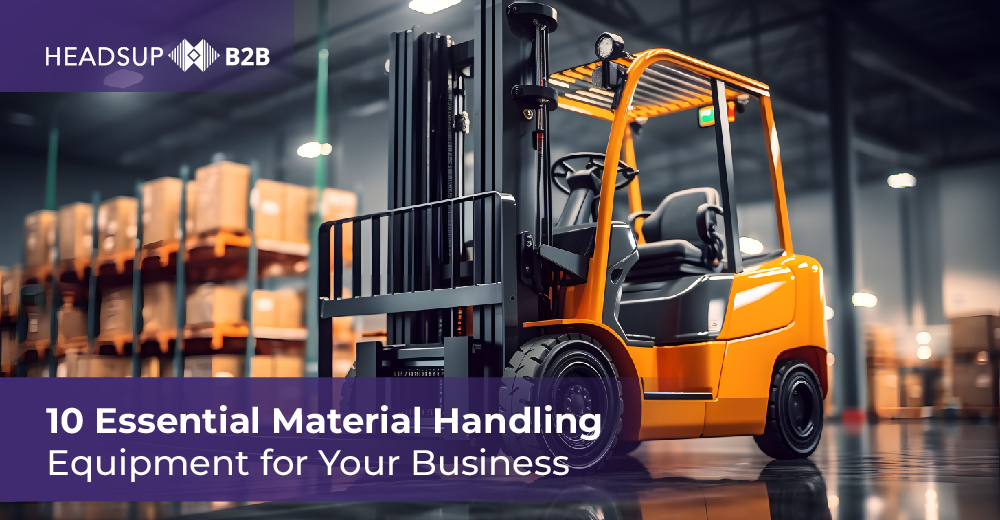
    10 Essential Material Handling Equipment for Your Business

    In today’s competitive business landscape, efficient material handling equipment is crucial for optimizing operations and maintaining a competitive edge. Whether you operate a warehouse, manufacturing facility, or distribution center, choosing the right material handling equipment can significantly enhance productivity, streamline processes, and ensure workplace safety. Here, we outline the ten essential types of material handling equipment that every business should consider integrating into their operations.

    10 Types of Material Handling Equipments

    1. Forklifts

    Forklifts are indispensable in any warehouse or distribution setting where the movement and stacking of heavy materials are routine. They come in various types, including counterbalance forklifts, reach trucks, and pallet jacks, each suited for different operational needs.

    2. Conveyors

    Conveyors automate the movement of materials, reducing manual handling and optimizing throughput. They are versatile and can be customized to fit different layouts and material types, from roller conveyors for carton handling to belt conveyors for bulk materials.

    3. Pallet Racking Systems

    Efficient storage is fundamental to streamlined operations. Pallet racking systems, such as selective racks, drive-in racks, and push-back racks, maximize vertical space utilization and facilitate organized inventory management.

    4. Industrial Shelving

    Industrial shelving systems provide accessible storage for smaller items or goods that do not require pallet storage. Options include boltless shelving, wire shelving, and mobile shelving systems, each offering different benefits in terms of accessibility and space utilization.

    5. Storage Containers and Bins

    For organizing and transporting smaller parts or items within a facility, storage containers and bins are essential. These range from stackable plastic bins to metal storage containers, designed to withstand various environmental conditions.

    6. Pallet Jacks

    Pallet jacks, or pallet trucks, are indispensable for moving palletized goods within a confined space or short distances. They are available in manual, electric, and specialized models, catering to different load capacities and operational requirements.

    7. Dock Equipment

    Efficient loading and unloading operations rely on well-equipped docks. Dock levelers, dock seals, and dock shelters ensure smooth transitions between trucks and warehouse floors, enhancing safety and operational efficiency.

    8. Hoists and Cranes

    Hoists and cranes are critical for lifting and maneuvering heavy loads safely. Options range from overhead cranes for large-scale operations to portable hoists for smaller tasks, ensuring flexibility and precision in material handling.

    9. Automated Guided Vehicles (AGVs)

    AGVs represent the future of material handling, offering autonomous transportation of goods within a facility. They navigate using sensors and predefined routes, reducing labor costs and increasing efficiency in large-scale operations.

    10. Carton and Case Handling Equipment

    For businesses involved in packaging and fulfillment, carton and case handling equipment streamline the packing process. This includes case erectors, carton sealers, and packing stations, optimizing throughput and ensuring product integrity.


    Investing in high-quality material handling equipment is not just about efficiency; it’s about creating a safer and more productive workplace environment. Each of these equipment types plays a crucial role in optimizing workflow, reducing downtime, and minimizing the risk of workplace injuries.