Tag: Industrial Automation

  • Top Automated Industrial Warehouse Solutions in India

    Top Automated Industrial Warehouse Solutions in India

    Warehouse automation in India is no longer a futuristic dream—it’s here, growing, and redefining how businesses operate. From bustling e-commerce giants like Flipkart to traditional manufacturers transitioning into smart factories, automation is fueling efficiency, accuracy, and profitability.

    With India’s industrial sectors expanding rapidly, the need for scalable, intelligent, and cost-effective warehousing solutions has skyrocketed. Let’s explore the top players, the tech behind it, and why automated warehousing is the future of logistics in India.

    What is Warehouse Automation?

    Warehouse automation refers to the use of technology—like robotics, AI, and software systems—to perform tasks traditionally done by humans. These tasks range from inventory tracking to picking, packing, transporting, and storing goods.

    Types of Warehouse Automation:

    • Basic Automation – Conveyors, sorting systems

    • Advanced Automation – Robotics, AS/RS, autonomous vehicles

    • Software Automation – WMS, AI algorithms, predictive analytics

    Benefits of Automated Warehouse Solutions

    Why are Indian industries racing toward automation?

    • Boosted Efficiency – Robots don’t tire, and AI never sleeps.

    • Lower Operational Costs – Reduced dependency on manual labor.

    • Better Accuracy – Minimized human errors in picking and shipping.

    • Real-time Inventory Management – Always know what’s in stock.

    Key Drivers of Automation in India

    • E-commerce Boom – Same-day delivery is impossible without automation.

    • Rising Expectations – Consumers demand speed and accuracy.

    • Labor Challenges – High attrition rates and training costs.

    • Make in India – Push for modernization of infrastructure and logistics.

    Top Automated Warehouse Solutions in India

    1. Grey Orange

    Grey Orange is a pioneer in warehouse robotics, offering intelligent systems that integrate robots with AI. Their Butler robots and Grey Matter™ software form a flexible solution that adapts to real-time demands.

    2. Addverb Technologies

    This Noida-based company builds innovative robotics-based solutions like Dynamo (AMRs), Quadron (Carton shuttles), and Veloce (pallet shuttles).

    3. Godrej Consoveyo

    A division of Godrej & Boyce, this company provides comprehensive automation for warehouses with a focus on AS/RS, cranes, and conveyor solutions.

    4. Falcon Autotech

    Falcon Autotech designs highly modular and scalable sorting and scanning systems. Their DWS (Dimension, Weigh, Scan) solutions are widely used by e-commerce firms.

    5. Mahindra Logistics

    Mahindra is moving beyond trucks and warehouses to build automated fulfillment centers, leveraging AGVs (automated guided vehicles), IoT, and AI tools.

    6. Gati-KWE

    With Japanese logistics partner Kintetsu, Gati has introduced cutting-edge warehouse systems using robotics, automated storage, and real-time tracking.

    Technologies Powering Warehouse Automation in India

    🧠 Artificial Intelligence (AI) & Machine Learning

    AI helps warehouses predict order patterns, optimize routes, and even reassign robots in real time for max efficiency.

    📡 Internet of Things (IoT)

    From smart sensors that track package conditions to real-time equipment diagnostics, IoT is the digital backbone of modern warehouses.

    🤖 Robotics

    Robots—whether they’re AMRs, AGVs, or robotic arms—are the workhorses of the automated warehouse, handling tasks with speed and precision.

    🏗️ Automated Storage and Retrieval Systems (AS/RS)

    These are mechanized systems for automatically placing and retrieving loads. They’re fast, accurate, and save massive floor space.

    🧾 Warehouse Management Systems (WMS)

    WMS software manages everything from stock locations to order tracking, helping businesses keep tight control over operations.

    ⚠️ Challenges in Implementing Warehouse Automation

    💰 High Initial Costs

    Robots and AI systems are expensive upfront, even if they pay off in the long run.

    👷 Skill Gap

    Many workers are unfamiliar with the new tech, and retraining takes time and money.

    🧩 Legacy System Integration

    Not all older warehouses are ready for smart tech. Integrating old and new systems can be a nightmare.

    🔮 Future of Warehouse Automation in India

    India’s warehousing future is smart, sustainable,

    and software-driven. Expect the integration of 5G, blockchain for secure supply chains, and green automation to dominate in the coming years.

    Also, look out for the rise of micro-fulfillment centers in urban areas for faster last-mile delivery.

    ✅ Conclusion

    Warehouse automation is no longer a luxury—it’s a necessity. With rising demand, complex supply chains, and fierce competition, businesses in India are increasingly turning to automation to stay ahead. Whether it’s AI-driven robots or IoT-connected systems, the future belongs to those who automate smart and scale fast.

    FAQs

    1. What is the cost of setting up an automated warehouse in India?
    Costs vary widely based on scale and technology but can range from ₹1 crore to ₹50 crores or more for large enterprises.

    2. Can small businesses in India afford warehouse automation?
    Yes, with modular solutions and SaaS-based WMS, even SMEs can automate gradually and affordably.

    3. Which industries benefit most from warehouse automation?
    E-commerce, FMCG, pharmaceuticals, automotive, and electronics are top beneficiaries.

    4. How long does it take to implement a warehouse automation system?
    Implementation can take 3–12 months depending on complexity, infrastructure, and integration needs.

    5. Are there government incentives for warehouse automation in India?
    Indirectly, yes. Initiatives like “Make in India” and PLI schemes support modernization and automation efforts.
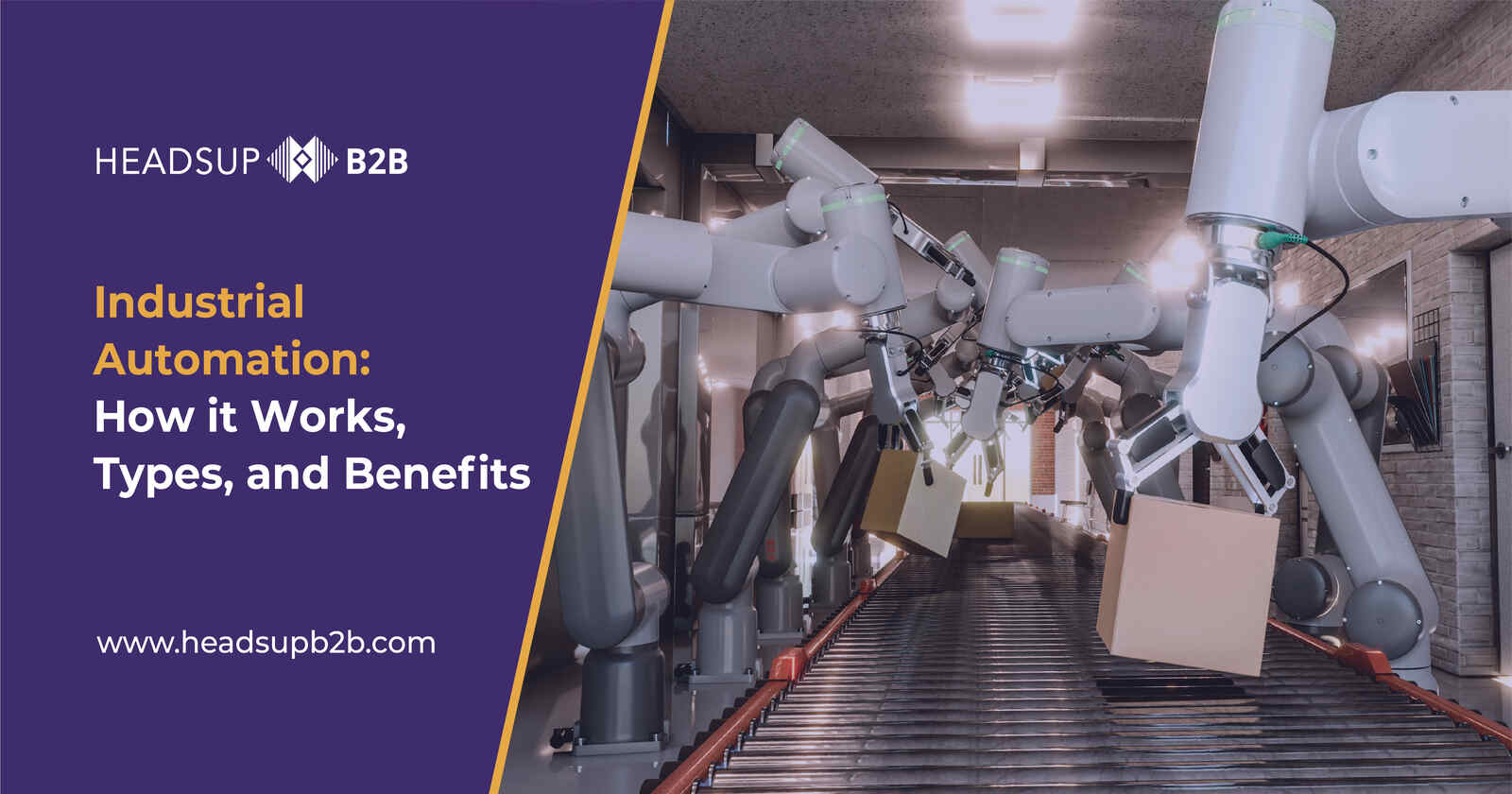
  • Industrial Automation: How it Works, Types, and Benefits

    Industrial Automation: How it Works, Types, and Benefits

    Imagine a world where machines take care of repetitive, risky, and time-consuming tasks—while humans focus on creativity and strategy. That’s not the future anymore. It’s happening right now, thanks to industrial automation.

    In today’s highly competitive landscape, automation isn’t just a luxury for big corporations—it’s a necessity for any business that wants to scale efficiently. Let’s break down exactly how industrial automation works, the different types, and the benefits it brings to industries around the world.

    What is Industrial Automation?

    At its core, industrial automation is the use of technologies like machines, control systems, and software to operate industrial processes with minimal or no human intervention. Instead of people doing the heavy lifting, machines do it faster, more accurately, and around the clock.

    How Industrial Automation Works

    Automation systems are made up of several working parts that interact like a well-oiled machine. Here’s how they come together:

    1. Sensors and Input Devices

    These are like the eyes and ears of the system. Sensors collect real-time data such as temperature, pressure, speed, and more.

    2. Controllers (PLC, DCS)

    This is the brain. Devices like Programmable Logic Controllers (PLCs) process the sensor data and make decisions. For example, if a sensor detects overheating, the controller can shut down the machine instantly.

    3. Actuators and Output Devices

    These are the muscles. Actuators perform the physical actions—turning motors, opening valves, or moving arms—based on instructions from the controller.

    4. Human-Machine Interface (HMI)

    The HMI allows operators to monitor and control the system through a user-friendly dashboard or screen.

    5. Software and Communication

    Systems like SCADA and Industrial IoT platforms gather, analyze, and report data for optimization and predictive maintenance.

    Put it all together and you get a seamless system that can run everything from manufacturing lines to power plants.

    Types of Industrial Automation

    Not all automation systems are created equal. They vary based on flexibility, complexity, and application.

    1. Fixed (Hard) Automation

    Used in mass production settings, such as car manufacturing. It’s fast and efficient but lacks flexibility. Once programmed, it’s hard to change.

    2. Programmable Automation

    Great for batch production. Systems can be reprogrammed to handle different tasks. Common in textile and electronics industries.

    3. Flexible (Soft) Automation

    Highly adaptive and ideal for modern industries that require frequent changes. You’ll find this in custom manufacturing and smart factories.

    Top Benefits of Industrial Automation

    Why are companies rushing to automate? The advantages speak for themselves:

    1. Higher Productivity: Machines don’t sleep, get tired, or take breaks. They run 24/7, massively boosting output.

    2. Improved Accuracy and Consistency: Automation reduces human error and ensures every product meets exact standards.

    3. Enhanced Safety: Hazardous tasks can be done by machines, reducing risk for human workers.

    4. Cost Savings: Though initial setup can be expensive, long-term savings come from reduced labor, energy use, and material waste.

    5. Better Data and Insights: Automated systems generate loads of data, which can be analyzed to make smarter, faster decisions.

    Real-World Applications of Industrial Automation

    • Manufacturing: From assembling cars to making smartphones, automation drives efficiency and consistency in factories.

    • Food & Beverage: Sorting, bottling, packaging, and quality control—automation ensures hygiene and accuracy.

    • Pharmaceuticals: Precise dosing, mixing, and packaging are critical here, and automation helps meet strict regulations.

    • Oil & Gas: Automation helps monitor pipelines, detect leaks, and improve worker safety in dangerous environments.

    • Logistics & Warehousing: Automated systems pick, pack, and ship products with blazing speed and accuracy.

    Emerging Technologies in Industrial Automation

    • Robotics: Industrial robots are now smarter, safer, and more collaborative (like cobots).

    • AI and Machine Learning: Machines can now learn from past data and make predictions—like when a machine might fail.

    • Industrial IoT (IIoT): IIoT connects devices and sensors to the internet, providing real-time insights and remote control.

    • Edge Computing: Processing data near the source rather than in a distant cloud reduces delay and increases efficiency.

    Challenges of Industrial Automation

    Nothing is perfect. Here are a few roadblocks:

    • High Initial Cost: Small businesses may find automation expensive to implement upfront.

    • Job Displacement: As machines replace manual tasks, there are concerns about job loss—though new tech jobs are also being created.

    • Cybersecurity Risks: Connected machines can be hacked if not secured properly.

    • Integration Complexity: Merging old legacy systems with modern automation can be tricky and requires expertise.

    Future of Industrial Automation

    The future is hyperautomation—where everything that can be automated will be. We’ll see:

    • Greater human-robot collaboration

    • More use of green automation (sustainable energy use)

    • Smarter systems powered by AI and big data

    The shift will empower businesses to be faster, safer, and more customer-focused.

    Conclusion

    Industrial automation isn’t just changing factories—it’s reshaping the entire economy. By understanding how it works, the types available, and the benefits it brings, businesses can make informed decisions and stay ahead of the curve.

    FAQs

    1. What is the main goal of industrial automation?

    To improve productivity, safety, and efficiency by reducing human intervention in industrial processes.

    2. Which industries use automation the most?

    Automotive, electronics, pharmaceuticals, food & beverage, and oil & gas are major users.

    3. Is automation only for large companies?

    Not at all. With advances in technology, even small and medium-sized businesses can afford automation solutions.

    4. Can automation completely replace human jobs?

    It can replace some roles but also creates new opportunities in programming, system design, and maintenance.

    5. What is the first step to automating a business?

    Start by identifying repetitive, time-consuming tasks and consult with automation experts for the best approach.

  • What is Industrial Automation?

    What is Industrial Automation?

    Industrial automation refers to the use of control systems like computers, robots, and information technologies to manage industrial processes and machinery—without much human intervention. In simpler words? It’s what helps machines run factories smarter and faster than humans ever could.

    History and Evolution

    Automation isn’t exactly new. The seeds were planted during the First Industrial Revolution with steam-powered machines. But things really took off in the 20th century, when electronics, computers, and robotics came into play. Today, we’re looking at smart factories powered by AI, IoT, and cloud computing.

    Importance of Industrial Automation

    Why Automation Matters in Industry

    Industrial automation isn’t just about making machines move—it’s about making businesses move forward. Companies need to scale faster, minimize errors, and meet massive demand. Automation is the ticket to doing that.

    Impact on Productivity and Efficiency

    With automated systems, machines work 24/7, downtime is reduced, and errors are minimized. It’s like switching from a bicycle to a bullet train. You go further, faster—and with fewer bumps along the way.

    Core Components of Industrial Automation

    Hardware Components

    • Sensors: Sensors act like the “eyes and ears” of an automated system. They detect temperature, pressure, motion, light, and more—feeding data into the system for real-time action.

    • Actuators: Actuators are the “muscles” of the system. They take commands from the controller and perform physical actions—like opening a valve or moving a robotic arm.

    • Controllers (PLC, DCS, etc.): Controllers are the “brains.” They process sensor data and make decisions. PLCs (Programmable Logic Controllers) and DCS (Distributed Control Systems) are popular choices depending on the application.

    Software Components

    • SCADA: Supervisory Control and Data Acquisition (SCADA) software helps monitor and control equipment in real time. Think of it as the dashboard of an automated factory.

    • HMI: Human Machine Interface (HMI) provides a visual interface so operators can interact with the automation system easily—like clicking buttons or viewing charts.

    • Industrial IoT Platforms: These platforms connect devices, sensors, and machines to the internet for smarter monitoring, analytics, and remote control.

    Types of Industrial Automation

    • Fixed (Hard) Automation: This type is designed for high-volume production with limited flexibility—perfect for tasks that don’t change much, like bottling beverages or stamping car parts.

    • Programmable Automation: This allows systems to be reprogrammed for different tasks. Ideal for batch production where flexibility is needed but not constantly.

    • Flexible (Soft) Automation: Highly adaptable and capable of handling various tasks with minimal manual changes. Great for modern, dynamic manufacturing needs.

    Industrial Automation Technologies

    • Robotics: Robots handle repetitive, dangerous, or precision-heavy tasks. From welding cars to picking items in warehouses, robots are everywhere.

    • Artificial Intelligence and Machine Learning: AI makes automation smart. It allows machines to learn from data, predict failures, and optimize processes—all on their own.

    • Industrial Internet of Things (IIoT): IIoT connects industrial machines to the internet, enabling real-time monitoring, analytics, and predictive maintenance.

    Big Data and Analytics

    Automated systems generate tons of data. Big data tools help businesses make sense of it all, leading to smarter decisions and improved performance.

    Applications of Industrial Automation

    • Automotive Industry: From assembling engines to painting car bodies, automation dominates the auto world, ensuring speed and precision.

    • Food and Beverage Industry: Automation handles everything from sorting and packaging to quality control—ensuring hygiene and consistency.

    • Pharmaceuticals and Healthcare: Automation helps maintain sterile conditions, accurate mixing, and precise dosing—critical in drug manufacturing.

    • Oil and Gas: From drilling to refining, automation increases safety and reduces human error in dangerous environments.

    Advantages of Industrial Automation

    • Enhanced Efficiency and Productivity: Machines don’t get tired, and they don’t need coffee breaks. They work around the clock, increasing output without sacrificing quality.

    • Reduced Operational Costs: Although the setup can be pricey, automation lowers long-term costs by reducing labor, waste, and downtime.

    • Improved Safety: Machines can work in hazardous environments—protecting human workers from dangerous tasks.

    • Consistency and Quality: Automated systems don’t make careless mistakes. They follow the same process, over and over, delivering consistent results.

    Challenges in Industrial Automation

    • High Initial Investment: Automation systems can be expensive to set up—especially for small businesses.

    • Job Displacement Concerns: As machines take over manual tasks, there’s fear about job losses. However, new tech jobs are also being created.

    • Cybersecurity Risks: Connected systems can be vulnerable to cyberattacks. Protecting industrial networks is a top priority.

    • System Integration Complexity: Mixing new automation with old systems can be tricky. It takes careful planning and expert know-how.

    • Hyperautomation: It’s not just automation—it’s automation on steroids. Hyperautomation combines AI, ML, and RPA to automate everything that can be automated.

    • Edge Computing in Industry: Edge computing processes data locally rather than in the cloud, reducing latency and making real-time decisions lightning-fast.

    • Human-Robot Collaboration: Collaborative robots (cobots) work side-by-side with humans, combining the best of both worlds: strength and intelligence.

    • Sustainable and Green Automation: Future automation will focus on energy efficiency, reducing waste, and using eco-friendly materials.

    Getting Started with Industrial Automation

    • Assessing Business Needs: Start by understanding what parts of your operation can benefit the most from automation.

    • Choosing the Right Technology: Don’t chase trends. Choose technologies that align with your goals, budget, and workforce.

    • Partnering with Automation Experts: Consult with experts or vendors who can guide you through the design, integration, and scaling process.

    Conclusion

    Industrial automation is transforming how the world builds, packages, ships, and even thinks. It’s no longer a luxury—it’s a necessity. With smarter systems, advanced technology, and endless opportunities, industrial automation is paving the way for a faster, safer, and more efficient future.

    Headsup b2b offer all industrial automation solution, we can connect with us for any require for automation warehousing solutions

    FAQs

    1. What industries benefit the most from industrial automation?

    Industries like automotive, manufacturing, pharmaceuticals, electronics, food processing, and oil & gas benefit greatly due to their repetitive and high-volume operations.

    2. Is industrial automation expensive to implement?

    The initial investment can be high, but it pays off in the long run with lower operational costs, fewer errors, and higher productivity.

    3. Can automation fully replace human labor?

    Not entirely. While machines handle repetitive tasks, human creativity, judgment, and oversight are still essential—especially in complex or unpredictable environments.

    4. How does automation improve product quality?

    By following precise and consistent processes, automation minimizes human error and ensures each product meets the same high standards.

    5. What skills are needed to work in industrial automation?

    Key skills include programming (like PLCs), electrical and mechanical engineering, data analysis, and a good grasp of control systems and robotics.

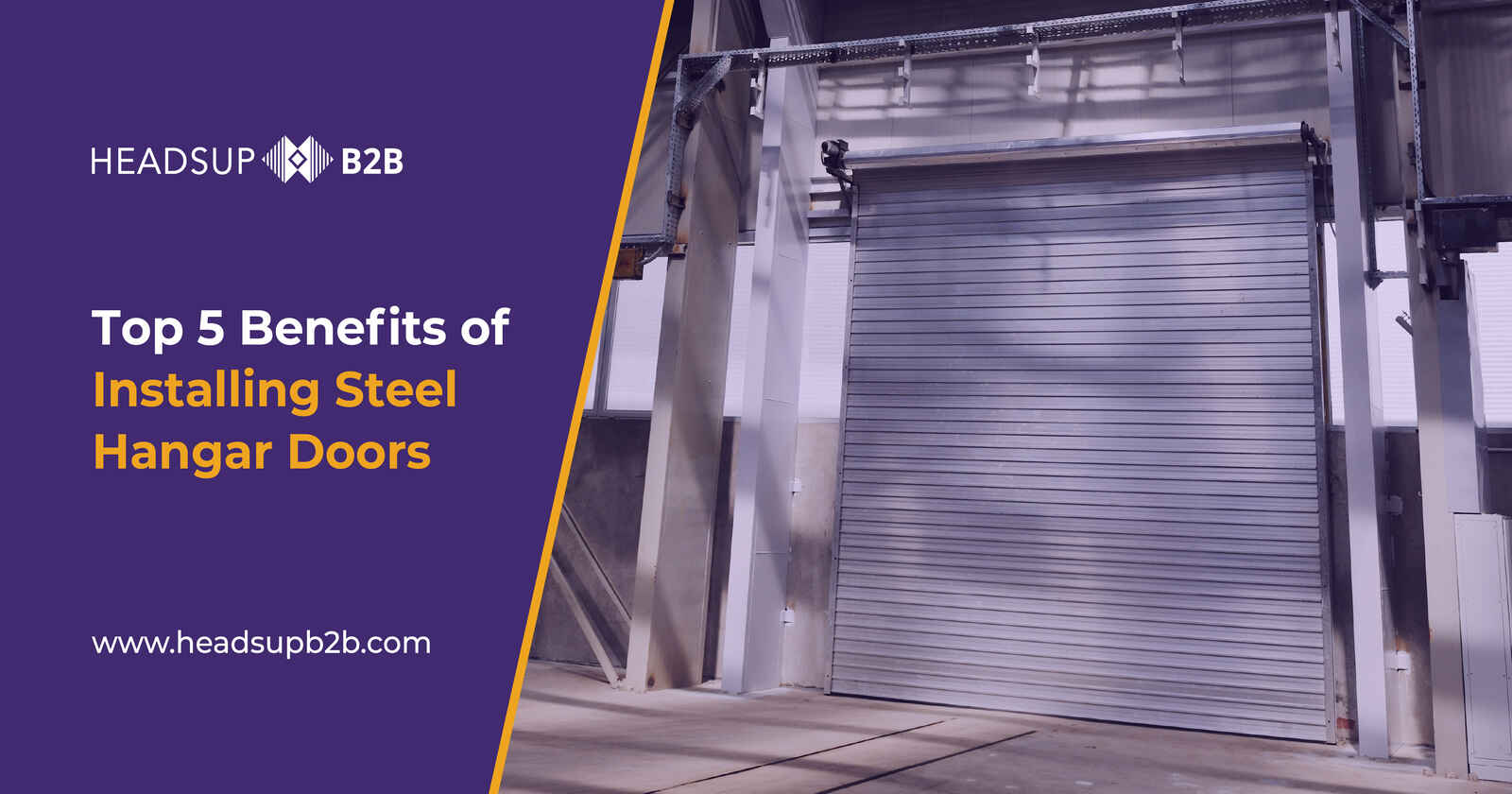
  • Top 5 Benefits of Installing Steel Hangar Doors

    Top 5 Benefits of Installing Steel Hangar Doors

    Did you know that 70% of hangar maintenance issues stem from inefficient or low-quality doors?

    Traditional doors often fall short, coming to industries that are operations intensive, and require storage and security. It is pertinent to use high-quality doors to ensure the long-term durability of the doors and ensure security of operations. The global demand for steel hangar doors is rising. It is projected to grow from $88 million in 2020 to $109 million by 2026, at a CAGR of 3.7% during 2021-2026.

    Five Key Benefits of installing Steel Hangar Doors

    1. Superior Durability and Strength:– Steel Hangar doors are made of robust material such as steel which has excellent strength and resilience, unlike wood or aluminum.

    2. Enhanced Security: – Security is a top priority for industrial warehouses, aircraft storage and commercial buildings. The advanced locking systems of these doors make them adept for these infrastructures.

    3. Customization and Versatility – With alternatives like bi-fold, hydraulic and sliding, these doors are customizable and versatile.

    4. Energy Efficiency and Insulation – Steek Hangar doors are a proponent of energy efficiency due to their potential design which includes insulation, helping to improve energy efficiency and regulate internal temperature.

    5. Low Maintenance and Cost-Effectiveness – These doors are cost-effective as they are made of steel which is not only robust and resilient but also low maintenance. These characteristics including anti-corrosive, anti-warp and pests make it even more cost-effective in the longer run.

    An aviation company that switched from Alumniuum Hangar doors to steel Hangar doors reported about 40% reduction in maintenance cost and improved protection against extreme weather conditions. In addition to the same, it made the security of the premises even more enhanced.

    Best Practices in Implementation

    • Factory requirement assessment leads to the determination of the ideal hangar type.

    • Collaboration with manufacturers and suppliers of high repute ensures quality and service.

    • Automation and smart locking mechanisms may be considered as per the need to make the security and convenience, better.

    • In the set-ups where energy efficiency is a criterion, insulation needs to be robust with the right investment.

    Steel Hangar doors are not only observing a sustained increase in demand but they are also preferred against other types of doors due to considerably better security and operational functionality. If your business is looking to upgrade the security and leverage features like customizability, Headsup B2B is your one-stop solution for all steel hangar door needs.. Contact us today for all your industrial solutions needs.