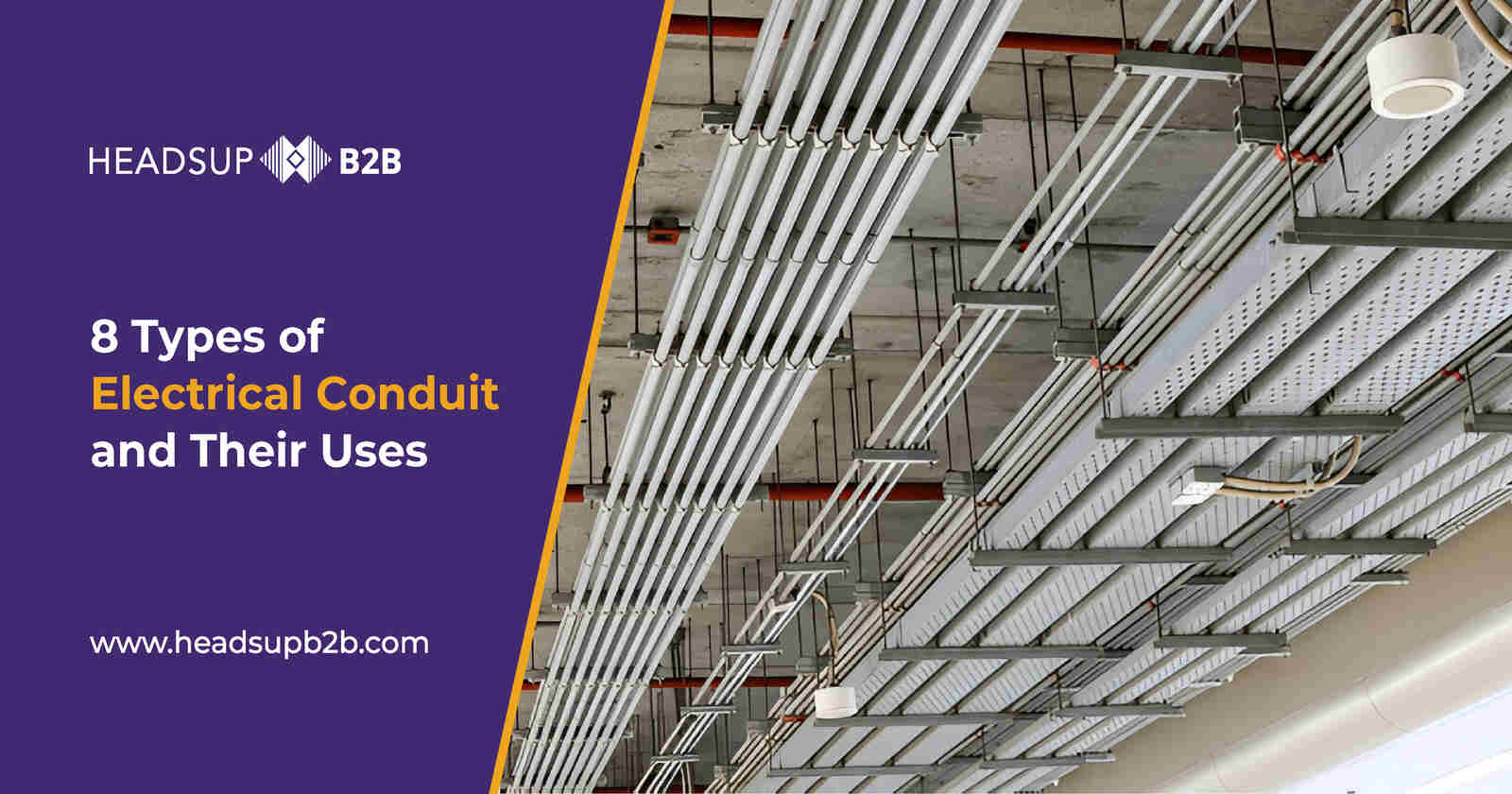
Imagine a road without a proper route, and humans with a machine without a casing, wires messy with parts vulnerable and exposed. Just as wires require proper insulation for short-circuit risk mitigation and shock prevention, wiring systems need conduits to fulfil the same purpose. Just as different types of wires require different casings, wiring systems related to various applications need different types of conduits.
8 Types of Electrical Conduit and Their Uses
1. Rigid Metal Conduit
Rigid Metal Conduit is used for maximum protection in outdoor environments and industrial settings. Their features include being thick-walled, heavy-duty, and galvanised.
2. Intermediate Metal Conduit
Intermediate Metal conduit fulfils moderate durability needs. In terms of materials used, they utilise lighter, steel conduits with walls thinner than RMC. They are suitable for environments that are exposed, including outdoor settings.
3. Electrical Metallic Tubing
Suited for residential and commercial buildings, Electrical Metallic Tubing is lightweight and thin-walled. EMT is made of aluminium for tubing, with widespread use in indoor wiring.
4. Flexible Metal Conduit (FMC)
Used in tight spaces and areas that are prone to vibrations, flexible metal conduit is coiled and bendable.
5. Liquid-Tight Flexible Metal Conduit (LFMC)
Mainly used in wet and oily environments, Liquid-Tight Flexible Metal Conduits come with a weatherproof plastic jacket. LFMC is perfect for protecting wires near pumps, motors, or outdoor equipment where moisture is common.
6. Polyvinyl Chloride (PVC) Conduit
Polyvinyl Chloride Conduit is a non-metallic conduit. These plastic pipes are resistant to corrosion and cheap. PVC finds applications outdoors and underground.
7. High-Density Polyethylene (HDPE) Conduit
High-Density Polyethylene conduit is available in a variety of telecom and power cable applications. Because of their flexibility and non-metallic nature, they are used in directional boring and trenching.
8. Rigid Non-Metallic Conduit (RNC)
There are applications that require the conduits to be non-corrosive in nature due to highly corrosive environments. Similar to PVC, Rigid Non-Metallic Conduits are used widely in chemical plants and are flexible in nature.
Comparison of Electrical Conduit Types
| Conduit Type | Material | Key Feature | Typical Use | Environment |
| Rigid Metal (RMC) | Galvanised steel | Thick-walled, heavy | Outdoor, industrial | Harsh, exposed |
| Intermediate (IMC) | Steel | Lighter, thinner | Exposed, outdoor | Moderate durability |
| EMT | Aluminium/steel | Lightweight, thin | Indoor wiring | Residential, commercial |
| FMC | Steel/aluminium | Flexible, coiled | Tight, vibrating areas | Machinery, equipment |
| LFMC | Metal & plastic | Waterproof, flexible | Wet, oily locations | Pumps, motors |
| PVC Conduit | Plastic (PVC) | Non-metallic, cheap | Underground, outdoor | Corrosive, damp |
| HDPE Conduit | Polyethylene | Flexible, durable | Telecom, power cables | Trenching, boring |
| RNC | Plastic | Flexible, non-corrosive | Chemical plants | Highly corrosive |
Be it an underground application or a high-end residential setting, Electrical conduits not only act as protective shields but also make the wiring systems more presentable. Before choosing the right type of conduit, knowledge of different types of conduits is important; for the same, an expert in electrical wiring systems is important. Headsup B2B ensures your project success with the best-suited, cost-effective and durable electrical conduits. If you need for expert wiring system solution, contact us today.