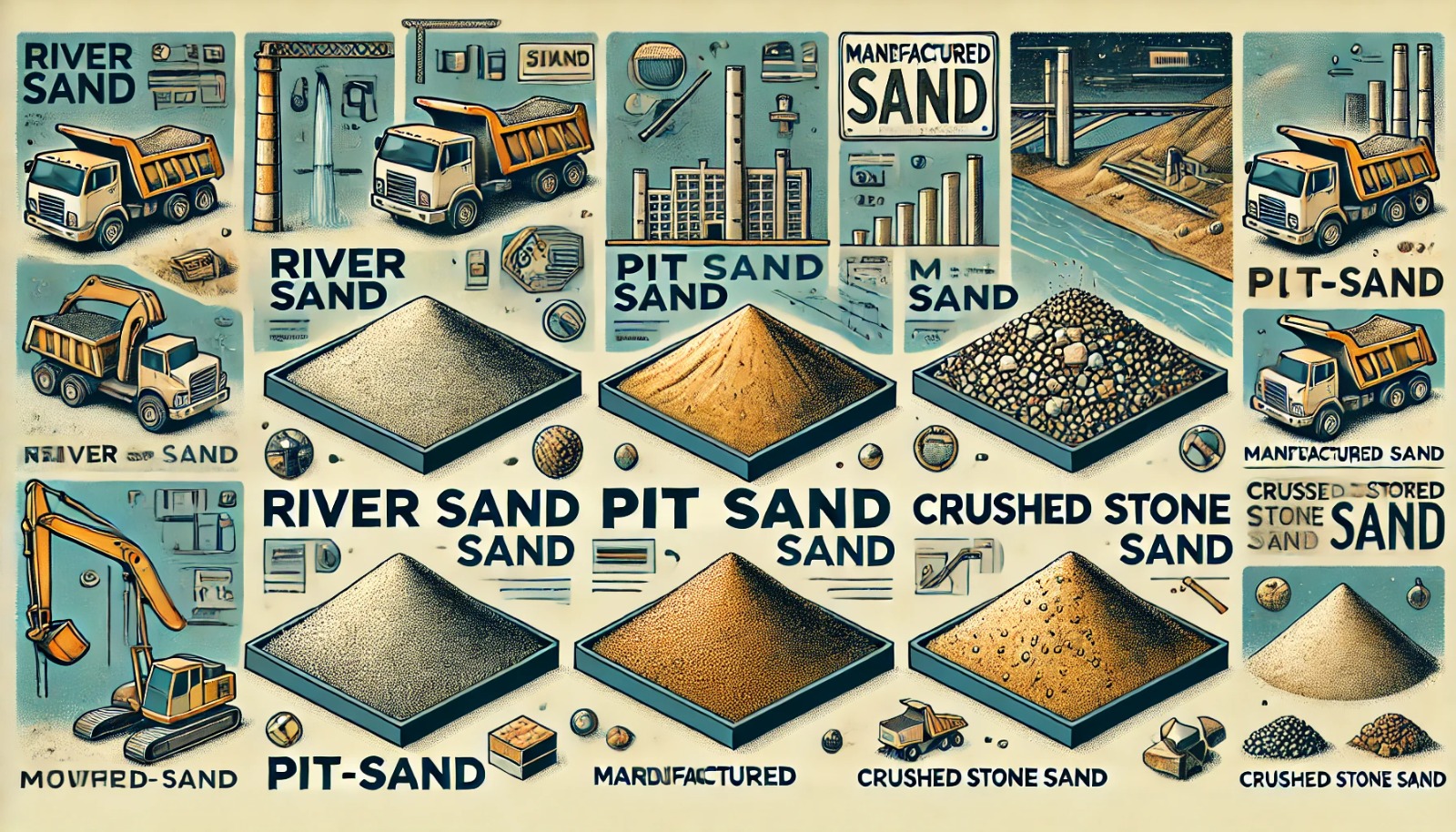
Sand is a crucial material in the construction industry, playing an essential role in building foundations, creating concrete, and ensuring the durability of structures. The type of sand used can significantly affect the strength, stability, and overall quality of a construction project. In this comprehensive article, we explore the different types of sand used in construction, their specific purposes, and why choosing the right sand is vital for every building project.
7 Types of Sand Used in Construction and Their Uses
1. River Sand
River sand is one of the most commonly used types of sand in construction. Sourced from riverbeds, this sand has a smooth texture, fine grains, and is typically free of impurities. It is well-suited for plastering and masonry work due to its high quality and smooth consistency. River sand’s natural properties also make it ideal for concrete production, providing strength and a solid finish to structures.
Advantages of River Sand
-
High-quality texture: Ensures smooth finishes in plastering and brickwork.
-
Naturally occurring: Readily available from riverbeds.
-
Cost-effective: Commonly used and affordable.
However, excessive extraction of river sand can lead to environmental concerns, such as erosion and disruption of aquatic ecosystems, prompting the search for alternative sand sources.
2. P Sand
P sand is extracted from deep pits in the ground, usually from sandy soils located far from rivers and streams. It is coarse and angular, making it suitable for concrete production where strength is required. Its rough texture allows for a better bond with other materials, like cement and gravel, which enhances the durability of reinforced concrete structures.
Advantages of Pit Sand
-
Angular particles: Provide better bonding in concrete mixes.
-
Free from salts: Prevents the risk of corrosion in reinforcement bars.
-
High strength: Suitable for structural applications.
Due to its coarse nature, pit sand is not suitable for plastering work, as it can produce a rough finish.
3. Manufactured Sand (M-Sand)
Manufactured sand (M-sand) is an artificially created type of sand, made by crushing hard granite stones. It has become a popular alternative to natural sand, especially in areas where river or pit sand is not readily available. M-sand is used extensively in concrete production and other construction applications, and it offers several benefits over natural sand types.
Advantages of Manufactured Sand (M Sand)
-
Consistent quality: M-sand is manufactured to specific standards, ensuring uniform grain size and purity.
-
Environmental sustainability: Reduces the need for river sand extraction.
-
Improved strength: Enhances the strength of concrete due to its angular and rough texture.
M-sand is also less prone to impurities, such as silt and clay, which can weaken the concrete mixture.
4. Sea Sand
Sea sand is sourced from coastal areas and beaches. Although abundant, sea sand is less commonly used in construction due to its high salt content, which can cause corrosion of steel reinforcement in concrete. However, when properly treated and washed, sea sand can be used in certain applications where the risk of corrosion is minimized.
Advantages of Sea Sand
-
Abundance: Easily available in coastal areas.
-
Cost-effective: Generally cheaper than river or pit sand.
Despite its availability, the high salt content of sea sand limits its usage in most construction projects unless it undergoes thorough desalination and cleaning processes.
5. Desert Sand
Desert sand is abundant in arid regions, but it is rarely used in construction due to its fine grain size and smooth texture, which makes it unsuitable for concrete. Desert sand particles are too fine to bind properly with cement, leading to weak concrete mixtures. Although recent innovations in construction materials have explored ways to use desert sand, its use remains limited.
Challenges of Using Desert Sand
-
Fine texture: Does not provide adequate bonding in concrete.
-
Smooth surface: Reduces the overall strength of the material.
As of now, desert sand is primarily considered a last resort or experimental material for specialized construction projects.
6. Quarry Dust
Quarry dust is a byproduct of stone crushing and is often used as a replacement for sand in construction. It is coarser than typical sand but can be used in various construction applications, including paving, concrete blocks, and road construction. Quarry dust is highly valued for its cost-effectiveness and availability, especially in areas where traditional sand sources are scarce.
Advantages of Quarry Dust
-
Affordable: A byproduct that reduces waste from stone quarries.
-
Improved strength: Can enhance the strength of concrete mixtures.
-
Widely available: Readily accessible in quarrying areas.
Quarry dust’s coarse texture limits its use in fine plastering work, but it is an excellent option for filling material and road construction.
7. Crushed Stone Sand
Crushed stone sand is made by mechanically crushing rocks into small particles. Like manufactured sand, it provides an alternative to natural sand in construction, offering good binding properties and strength. Crushed stone sand is especially useful in concrete mixes and masonry work, as it can improve the durability and stability of structures.
Advantages of Crushed Stone Sand
-
High strength: Suitable for structural applications.
-
Cost-effective: A practical substitute for natural sand in many regions.
-
Versatility: Can be used in concrete, mortar, and other construction materials.
Choosing the Right Sand for Next Construction Projects
Types of sand used in construction plays a critical role in the strength, durability, and overall success of any construction projects. Each sand has specific properties that make it suitable for different applications, from river sand’s smooth texture for plastering to pit sand’s coarse grains for concrete. With the growing emphasis on sustainability and the limited availability of natural sand, alternatives like manufactured sand and quarry dust are becoming increasingly popular.
By understanding the properties and best uses of each type of sand, construction professionals can make informed decisions that optimize project outcomes, enhance structural integrity, and minimize environmental impacts.