Tag: benefits of Automation

  • 7 Key Benefits of Industrial Automation Solutions

    7 Key Benefits of Industrial Automation Solutions

    Industrial automation has become a critical component for modern manufacturing operations. As industries grow more complex and consumer demands increase, companies are turning to automation solutions to stay competitive and improve their operational efficiency. The transformation brought by automation is undeniable, providing various benefits that help organizations thrive in a highly competitive market.

    In this article, we will explore seven key benefits of industrial automation solutions that can revolutionize operations, reduce costs, enhance safety, and lead to long-term profitability.

    1. Increased Efficiency and Productivity

    Industrial automation significantly boosts productivity by automating repetitive and labor-intensive tasks. With automated systems, businesses can optimize production lines, reduce downtime, and improve throughput. Automated machines work around the clock without the need for breaks, fatigue, or downtime that is common in human workers. As a result, businesses can meet production quotas faster and more efficiently, with fewer human resources required to complete tasks.

    Key advantages include:

    • Faster production cycles: Automated systems can operate faster than manual processes, increasing the overall throughput of a manufacturing plant.

    • Precision and accuracy: Machines can consistently perform tasks with higher precision, leading to fewer errors and less waste.

    • 24/7 operation: Automation systems are designed to work continuously without requiring breaks, ensuring round-the-clock production.

    2. Cost Reduction

    One of the most notable benefits of industrial automation is its ability to reduce costs. While there may be an initial investment in automation technology, the long-term savings far outweigh the upfront costs. Reduced labor costs, fewer errors, less waste, and improved energy efficiency lead to significant savings over time.

    Key savings include:

    • Labor cost reduction: By automating tasks, companies can reduce the number of employees needed for manual work, thus lowering labor-related expenses.

    • Fewer errors: Automation reduces the likelihood of human error, which can result in costly product defects and rework.

    • Lower energy consumption: Advanced automation systems are often designed to operate with optimized energy efficiency, reducing utility bills.

    3. Enhanced Quality Control

    Industrial automation solutions ensure consistent, high-quality production, which is essential in industries such as automotive manufacturing, electronics, and pharmaceuticals. Automated quality control systems can monitor every step of the production process, from raw material inspection to final product testing.

    Quality control benefits include:

    • Consistency: Automated systems maintain a consistent level of quality across production lines, ensuring that every product meets the desired specifications.

    • Real-time monitoring: Automation systems can provide real-time feedback on production processes, enabling immediate adjustments to maintain product quality.

    • Reduced defects: By minimizing human involvement in production, automation reduces the risk of defects caused by fatigue or lack of attention to detail.

    4. Improved Worker Safety

    In industries where hazardous materials, machinery, and extreme conditions are common, worker safety is a top priority. Industrial automation helps protect workers by taking over dangerous tasks such as handling toxic chemicals, lifting heavy objects, or working in unsafe environments.

    Safety improvements include:

    • Hazardous environment management: Robots and automated systems can operate in environments that may be dangerous for human workers, such as high-temperature or high-pressure areas.

    • Risk reduction: Automation minimizes the risk of accidents and injuries caused by human error or fatigue.

    • Better compliance: Automation helps organizations comply with safety regulations, reducing the risk of fines and legal issues.

    5. Greater Flexibility and Scalability

    As demand for products fluctuates, businesses need to be able to scale their operations quickly. Industrial automation solutions offer the flexibility to adjust production volumes, product types, and operational processes with ease.

    Flexible and scalable automation benefits include:

    • Adaptability: Automated systems can be reprogrammed or reconfigured to accommodate changes in production requirements, such as varying product designs or production volumes.

    • Faster response to market demands: With automation, companies can quickly ramp up production in response to increased demand or adapt to changes in consumer preferences.

    • Reduced lead times: The ability to adjust production processes quickly reduces lead times and improves the company’s responsiveness to the market.

    6. Data-Driven Insights and Predictive Maintenance

    Industrial automation systems often come equipped with advanced sensors and data collection capabilities that provide valuable insights into production performance. By collecting and analyzing data in real-time, businesses can monitor equipment health, identify inefficiencies, and predict maintenance needs before a breakdown occurs.

    Data-driven benefits include:

    • Predictive maintenance: Automation systems can predict equipment failure based on data analysis, allowing businesses to perform maintenance only when necessary, thus avoiding unplanned downtime and reducing maintenance costs.

    • Performance optimization: By analyzing data, businesses can identify areas of inefficiency and make data-driven decisions to improve productivity and reduce costs.

    • Real-time decision-making: Automation provides real-time data that allows managers to make informed decisions quickly, improving overall business agility.

    7. Environmental Sustainability

    Sustainability is a growing concern for businesses around the world. Industrial automation plays a crucial role in promoting environmental sustainability by reducing energy consumption, minimizing waste, and improving the overall efficiency of manufacturing processes. Automation systems can be designed to operate with minimal environmental impact, aligning with eco-friendly business practices.

    Environmental benefits include:

    • Reduced waste: Automation ensures that materials are used efficiently, leading to less waste during the production process.

    • Energy-efficient systems: Automated systems are often designed to operate at peak energy efficiency, lowering energy consumption and reducing the company’s carbon footprint.

    • Sustainable manufacturing: Automation facilitates sustainable manufacturing practices by optimizing resource usage and reducing emissions, aligning with global sustainability goals.

    Conclusion

    Industrial automation solutions provide numerous benefits that go beyond just improving operational efficiency. They play a pivotal role in reducing costs, enhancing safety, improving quality control, and enabling businesses to stay agile in a fast-changing marketplace. As companies continue to evolve, investing in automation technology will remain a key factor in maintaining competitiveness, sustainability, and growth.
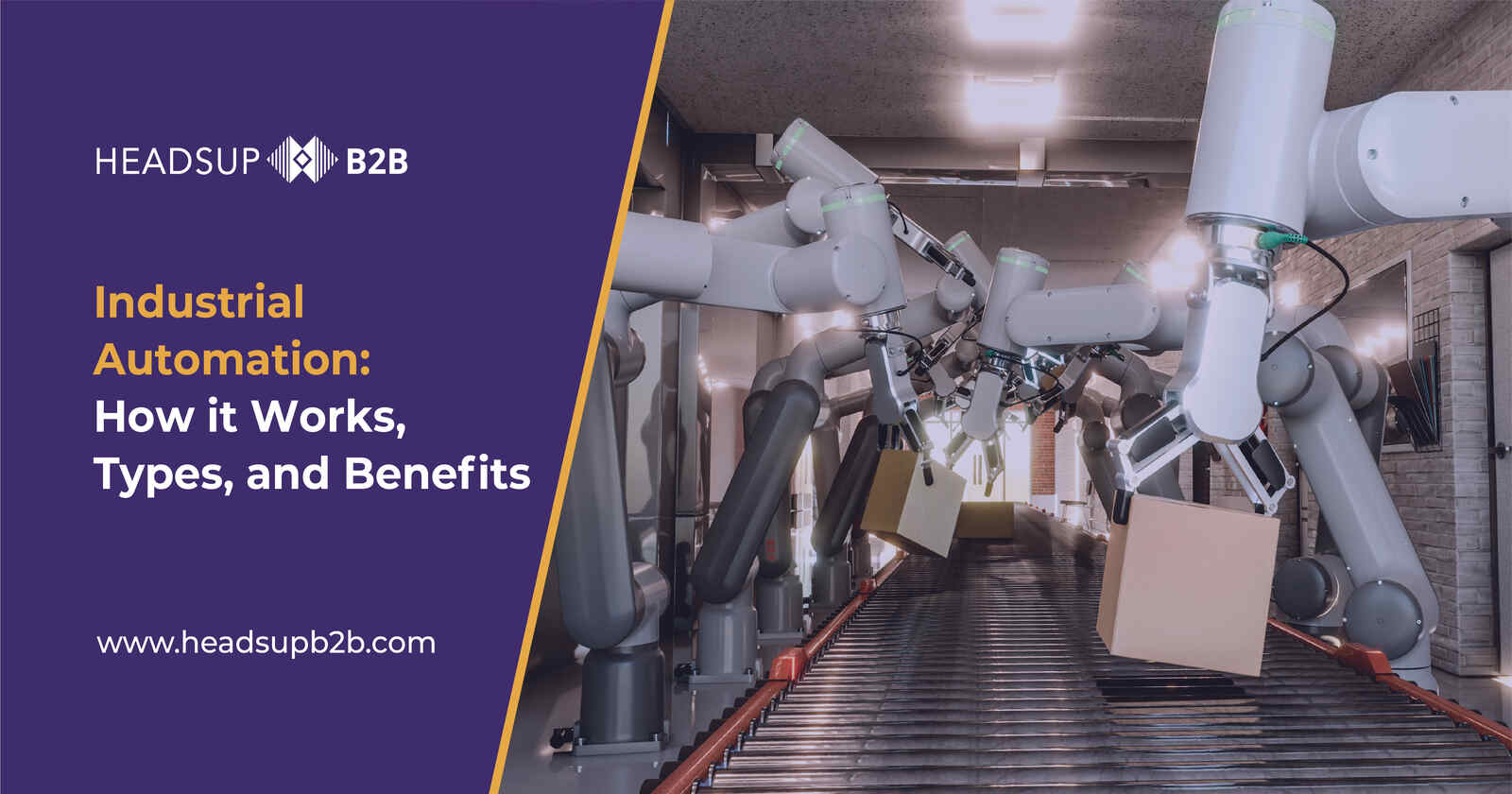
  • Industrial Automation: How it Works, Types, and Benefits

    Industrial Automation: How it Works, Types, and Benefits

    Imagine a world where machines take care of repetitive, risky, and time-consuming tasks—while humans focus on creativity and strategy. That’s not the future anymore. It’s happening right now, thanks to industrial automation.

    In today’s highly competitive landscape, automation isn’t just a luxury for big corporations—it’s a necessity for any business that wants to scale efficiently. Let’s break down exactly how industrial automation works, the different types, and the benefits it brings to industries around the world.

    What is Industrial Automation?

    At its core, industrial automation is the use of technologies like machines, control systems, and software to operate industrial processes with minimal or no human intervention. Instead of people doing the heavy lifting, machines do it faster, more accurately, and around the clock.

    How Industrial Automation Works

    Automation systems are made up of several working parts that interact like a well-oiled machine. Here’s how they come together:

    1. Sensors and Input Devices

    These are like the eyes and ears of the system. Sensors collect real-time data such as temperature, pressure, speed, and more.

    2. Controllers (PLC, DCS)

    This is the brain. Devices like Programmable Logic Controllers (PLCs) process the sensor data and make decisions. For example, if a sensor detects overheating, the controller can shut down the machine instantly.

    3. Actuators and Output Devices

    These are the muscles. Actuators perform the physical actions—turning motors, opening valves, or moving arms—based on instructions from the controller.

    4. Human-Machine Interface (HMI)

    The HMI allows operators to monitor and control the system through a user-friendly dashboard or screen.

    5. Software and Communication

    Systems like SCADA and Industrial IoT platforms gather, analyze, and report data for optimization and predictive maintenance.

    Put it all together and you get a seamless system that can run everything from manufacturing lines to power plants.

    Types of Industrial Automation

    Not all automation systems are created equal. They vary based on flexibility, complexity, and application.

    1. Fixed (Hard) Automation

    Used in mass production settings, such as car manufacturing. It’s fast and efficient but lacks flexibility. Once programmed, it’s hard to change.

    2. Programmable Automation

    Great for batch production. Systems can be reprogrammed to handle different tasks. Common in textile and electronics industries.

    3. Flexible (Soft) Automation

    Highly adaptive and ideal for modern industries that require frequent changes. You’ll find this in custom manufacturing and smart factories.

    Top Benefits of Industrial Automation

    Why are companies rushing to automate? The advantages speak for themselves:

    1. Higher Productivity: Machines don’t sleep, get tired, or take breaks. They run 24/7, massively boosting output.

    2. Improved Accuracy and Consistency: Automation reduces human error and ensures every product meets exact standards.

    3. Enhanced Safety: Hazardous tasks can be done by machines, reducing risk for human workers.

    4. Cost Savings: Though initial setup can be expensive, long-term savings come from reduced labor, energy use, and material waste.

    5. Better Data and Insights: Automated systems generate loads of data, which can be analyzed to make smarter, faster decisions.

    Real-World Applications of Industrial Automation

    • Manufacturing: From assembling cars to making smartphones, automation drives efficiency and consistency in factories.

    • Food & Beverage: Sorting, bottling, packaging, and quality control—automation ensures hygiene and accuracy.

    • Pharmaceuticals: Precise dosing, mixing, and packaging are critical here, and automation helps meet strict regulations.

    • Oil & Gas: Automation helps monitor pipelines, detect leaks, and improve worker safety in dangerous environments.

    • Logistics & Warehousing: Automated systems pick, pack, and ship products with blazing speed and accuracy.

    Emerging Technologies in Industrial Automation

    • Robotics: Industrial robots are now smarter, safer, and more collaborative (like cobots).

    • AI and Machine Learning: Machines can now learn from past data and make predictions—like when a machine might fail.

    • Industrial IoT (IIoT): IIoT connects devices and sensors to the internet, providing real-time insights and remote control.

    • Edge Computing: Processing data near the source rather than in a distant cloud reduces delay and increases efficiency.

    Challenges of Industrial Automation

    Nothing is perfect. Here are a few roadblocks:

    • High Initial Cost: Small businesses may find automation expensive to implement upfront.

    • Job Displacement: As machines replace manual tasks, there are concerns about job loss—though new tech jobs are also being created.

    • Cybersecurity Risks: Connected machines can be hacked if not secured properly.

    • Integration Complexity: Merging old legacy systems with modern automation can be tricky and requires expertise.

    Future of Industrial Automation

    The future is hyperautomation—where everything that can be automated will be. We’ll see:

    • Greater human-robot collaboration

    • More use of green automation (sustainable energy use)

    • Smarter systems powered by AI and big data

    The shift will empower businesses to be faster, safer, and more customer-focused.

    Conclusion

    Industrial automation isn’t just changing factories—it’s reshaping the entire economy. By understanding how it works, the types available, and the benefits it brings, businesses can make informed decisions and stay ahead of the curve.

    FAQs

    1. What is the main goal of industrial automation?

    To improve productivity, safety, and efficiency by reducing human intervention in industrial processes.

    2. Which industries use automation the most?

    Automotive, electronics, pharmaceuticals, food & beverage, and oil & gas are major users.

    3. Is automation only for large companies?

    Not at all. With advances in technology, even small and medium-sized businesses can afford automation solutions.

    4. Can automation completely replace human jobs?

    It can replace some roles but also creates new opportunities in programming, system design, and maintenance.

    5. What is the first step to automating a business?

    Start by identifying repetitive, time-consuming tasks and consult with automation experts for the best approach.