Category: Solar Panel

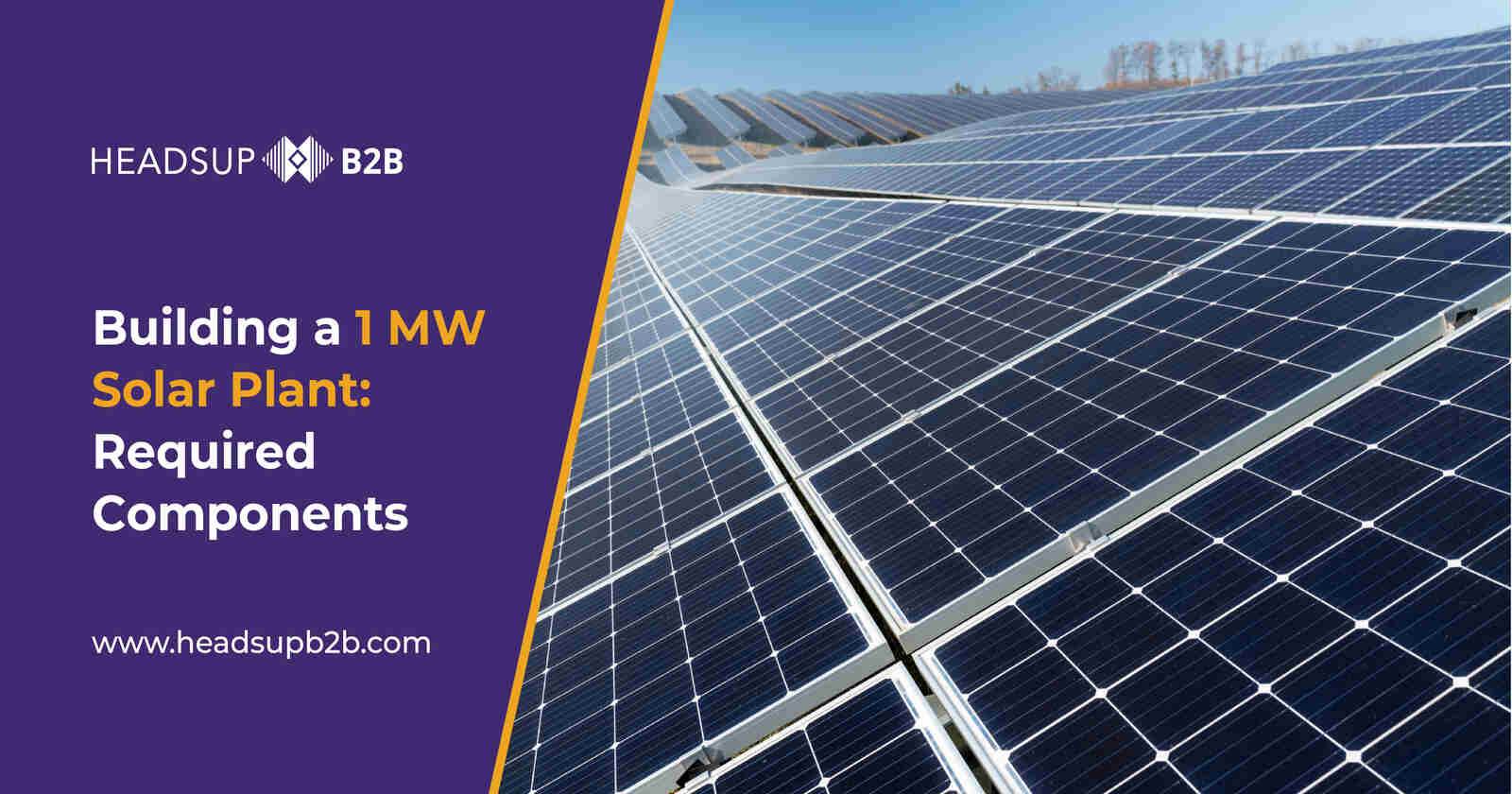
  • Building a 1 MW Solar Plant: Required Components

    Building a 1 MW Solar Plant: Required Components

    Imagine a nation that runs on clean energy and powers thousands of households, contributing to net zero emissions and reducing carbon footprints, healing the planet and combating climate change. The Indian government revised the goal of the National Solar Mission, in 2022 aims for the same.

    The new goal aims at significantly increasing the country’s renewable energy capacity. According to the energy generation and consumption trends, Solar power is expected to meet half of the world’s electricity demand by 2030, with 80% of the energy grid. This makes Solar a forerunner in combating climate change. With its significant contributions to the green energy revolution, how do we leverage it to make the greater vision a reality? The answer may lie in understanding how to build a scalable 1 MW Solar Power plant.

    Let us explore the various components required to build a 1 MW Solar plant.

    Why 1 MW Solar Power Plant?

    A 1 MW solar plant is a common benchmark for industrial and commercial energy needs, with a capacity to light up 2,500-3,000 solar panels, depending on their wattage. It provides a practical and scalable solution to meet high-energy demands. The panel efficiency is up to 22% in Monocrystalline or Polycrystalline panels.

    Building 1 MW of solar power projects is a challenging and rewarding endeavour due to its potential role in bridging the gap between current and  the future achievement of climate change goals. Its impact extends beyond power generation, contributing to a more sustainable and resilient energy landscape. With collaboration and innovation, solar energy can fuel sustainable growth. Solar power costs 18% less than coal-fired electricity and stands at ₹4.34 per kWh, proving to be a viable, cost-efficient and sustainable alternative to conventional energy sources.

    The electric power generated by solar panels is in direct current (DC) form. This form cannot be used to power most household electrical appliances. The three types of inverters are string inverters, microinverters and Hybrid inverters that are utilised in inverter systems. This scale of solar power may need multiple inverters with an efficiency of about 98%.

    Mounting System

    The need for secure attachment to a surface, roof or ground for the panels is fulfilled by robust mounting systems. The placement of this device ensures maximum sunlight absorption and, hence, increased efficiency. Mounting systems can be fixed or adjustable, with some even tracking the sun’s movement for increased efficiency. With a tilt angle of 15-30°, multiple mounting systems can be utilised for complete efficiency.

    Charge Controller: For a 1 MW solar power project, the charge controller plays a critical role in regulating the charging process. During the charging process, there is a chance that overcharging happens due to the excess flow of the current. To avoid this, charge controllers ensure optimal performance and battery longevity.

    Battery Storage: Sometimes, the solar energy generated is more than what is used. Battery storage helps save the excess solar energy that has been generated for future use. The excess solar power generated from 2,500 to 3,000 solar panels can be saved with the help of battery storage.

    A 1 MW solar plant offers a cost-effective path to India’s energy independence, with installation costs ranging from INR 4-8 crores, depending on the region. It is a sustainable investment. With a 25-year lifespan for solar panels and 10–15 years for inverters, it guarantees long-term energy savings and environmental benefits.

  • Solar DC Cables: Choosing the Right Cables for Efficient Solar Power Transmission

    Solar DC Cables: Choosing the Right Cables for Efficient Solar Power Transmission

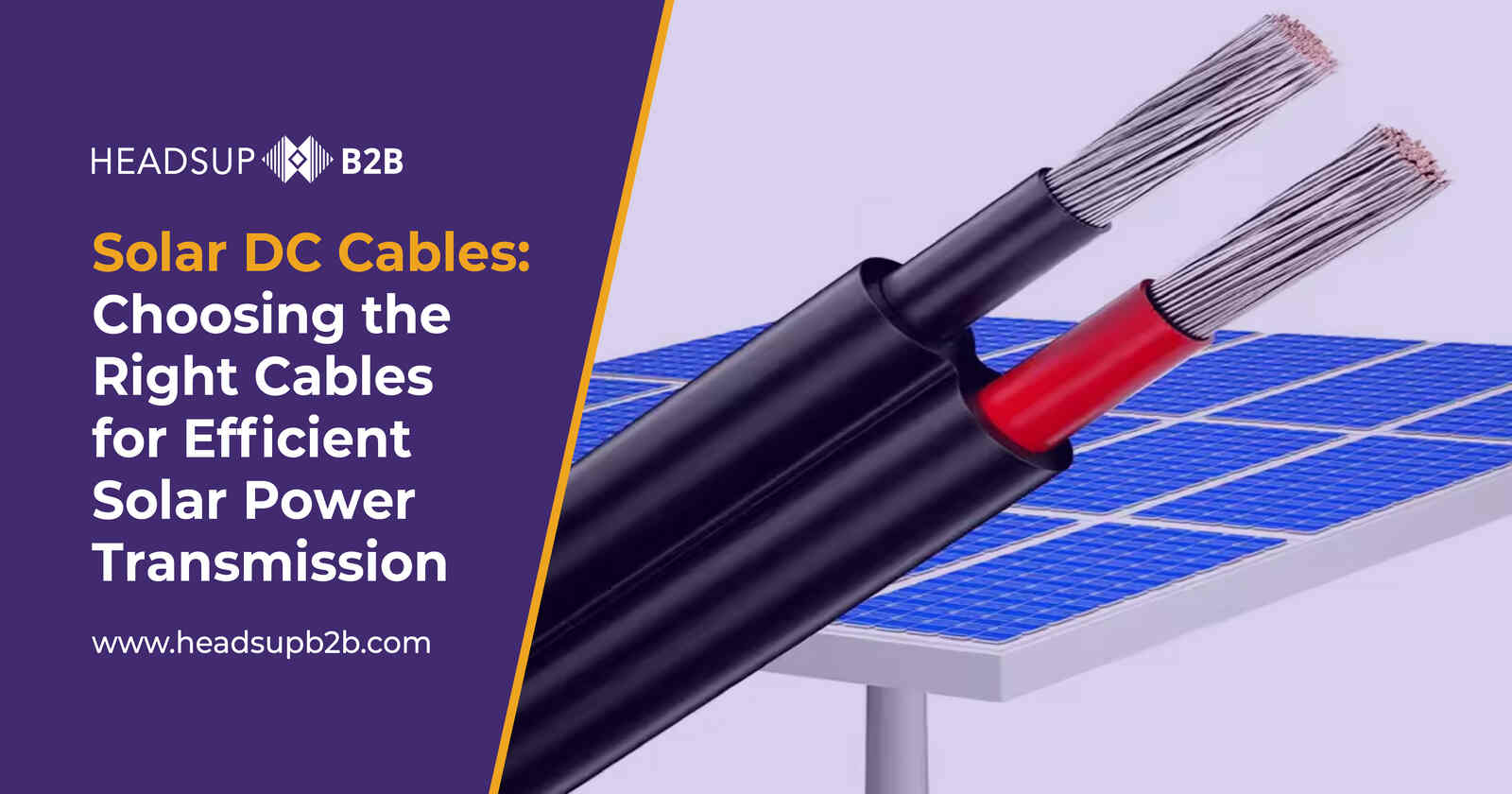
    Solar DC cables facilitate the transfer of direct current electricity, generated by solar panels to inverters and other components. These cables are robustly designed to withstand harsh environmental conditions including UV radiation, extreme temperatures and moisture.

    Solar DC cables are single-core copper cables, that are insulated, sheathed and constructed with high-quality copper providing optimum conductivity and durability.

    These cables differ from AC cables in that they include an oscillating current to transmit power over long distances, as opposed to DC cables designed for a steady, unidirectional flow of electrons. The electricity flows in one direction without changing polarity. In terms of voltage, DC cables operate at low voltage, while AC cables operate at high voltage levels.

    The installation of both types of cables is different due to the design, construction and usage. DC cables connect solar panels to inverters and among the panels, carry direct current. Installations are done in series and parallel on the solar panel side. AC cables connect inverters to solar grids or household- electrical systems. They facilitate the distribution of the converted current. The main materials used in the design of Solar DC cables are copper and aluminium. Copper has excellent conductivity, flexibility durability and thermal performance. On the other hand, aluminium is cost-effective and lightweight.

    Key Factors to Consider When Choosing Solar DC Cables

    Selecting the right kind of DC cables is vital for minimising energy consumption and at the same time ensuring the efficiency of the photovoltaic systems.

    Current Rating – Using rated cables reduces overheating reducing the chances of fire hazards. Efficient power transmission dictates the ability to carry electrical current without excessive resistance. They help with voltage drop management, standard compliance and system longevity. Factors that decide the current rating selection include cable size, ambient temperature and installation requirements.

    Voltage Rating – Higher voltage ratings are vital for safety assurance, prevention of equipment damage, following compliances and maintaining system performance.

    Cable Insulation and Jacket Materials: the insulation of cables and jacket materials ensures the performance, longevity and safety of solar energy systems. The insulation used is XLPE insulation which operates in the temperature range of -40°C to +90°C.

    Types of Solar DC Cables

    • Single-Core vs. Multi-Core Cables – Single-core cables have a single conductor while multi-core have multiple conductors within a single sheathing, used to transmit low voltage power signal, as opposed to high voltage power signal transmission.

    • PV1-F Cables – These cables provide connections between solar panels and other components. The voltage rating for the same is 0.6/1 kV AC and up to 1.8 kV DC. In PVF-1 cables, the materials that are used are copper and aluminium, providing anti-corrosion properties and ensuring optimum conductivity.

    • Cable Certifications and Standards – Various compliance standards such as BIS, NEC and UL certifications ensure the safety, efficiency and trust in renewable energy resources.
    • MC4 Connector Cables – MC4 Connector cables are designed with a simple plug and socket mechanism ensuring connections between other components such as inverters and solar panels.

    Benefits of Solar DC Cables

    Efficiency: Solar DC Cables are constructed to reduce heat loss ensuring that the cell operates with optimum performance producing consistent energy over time.

    Durability & Longevity These cables are constructed to minimize resistance leading to heat loss, producing more electricity over time.

    Safety: DC cables are flame-resistant and minimise smoke propagation in case of fire. This feature enhances overall safety in solar installations. These cables are more flexible than typical DC cables as they can route around obstacles. It makes them helpful in different installation conditions. These cables can be used in various settings, including large commercial solar farms.

    Flexibility and Installation: The flexibility of these cables makes it easier for them to get installed. These cables can be used in different commercial settings making them versatile for various energy systems.

    Conclusion

    Solar DC cables are crucial in ensuring efficient and safe power transmission in photovoltaic systems. Their durability, flexibility, and compliance with safety standards make them ideal for various solar applications.

    Selecting the right cables enhances system performance, minimizes energy loss, and ensures long-term reliability. With proper installation and quality materials, these cables contribute to the seamless operation of solar energy systems. Headsup B2B is your one-stop solution for all your wires and cables needs. Contact us today to find the right solar DC cable for all your solar power needs.

  • Generating 1 GW of Solar Power: A Roadmap to Successful Solar Projects

    Generating 1 GW of Solar Power: A Roadmap to Successful Solar Projects

    Imagine a world that runs on clean energy, powering millions of households and commercial setups and healing the planet by combating climate change. How do we ensure this happens? How does 1 GW of solar power generation establishment sound? Developing such a large-scale solar project requires strategic planning, innovation, and collaboration.

    The Importance of Scaling Solar Power

    1 GW of solar power has the transformative potential of not only lighting homes with clean energy but also proceeding towards reducing greenhouse gas emissions. 1 GW of solar power converts to one billion joules of energy per second. This enormous amount of energy can power 75,000 homes and reduce greenhouse emissions by 2 million metric tons. It is vital to scale up solar power to 1 GW to achieve the sustainable development goals, equivalent to removing approximately 435,000 cars from the road for a year.

    7 Key Steps : Guide Developing a 1 GW Solar Project

    1. Site Selection

    When developing a solar project, site selection sets the foundation for success. The site selection needs careful consideration of multiple factors such as solar radiation, availability of sunlight, availability of land, and the outcome of the Environmental Impact Assessment (EIA). With ample sunlight availability, sufficient land is needed to set up a 1 GW solar power project. For setting up a plant for generating 1 GW of power, about 3,000 acres of land is needed.

    2. Feasibility Studies

    A feasibility study of various locations for solar energy generation potential includes studying solar radiation, calculating the levelized cost of energy, and evaluating the long-term project viability.

    3. Securing Permits and Approvals

    Before setting up any solar power projects in India, it is mandatory to get the required approval from DISCOM and ensure that land use approvals have been obtained. ISO certification assures the quality of service.

    4. Technology

    Technology plays an important role, and choosing the right photovoltaic panel depends on the cost and efficiency. For 1 GW of solar energy, 3.125 million panels may be required to be installed if one panel is a standard 320 watts.

    5. Financing the Project

    For financing a solar power project, it is vital to outline funding strategies such as equity, government subsidies, green bonds, and Power Purchase Agreements (PPAs). The cost of a 1MW solar power plant in India is Rs 4–5 crores, including the costs of solar panels, solar inverters, combiners & junction boxes, protective gear arrangements, SCADA & data logger systems, land banks, and the cost of erection systems.

    6. Project Execution

    The importance of efficient logistics cannot be emphasised adequately. From sourcing the right materials to installation, commissioning, and post-commissioning maintenance support, every phase depends on timely and successful project execution. An efficient execution requires a seamless end-to-end process and streamlined, real-time monitoring followed by rigorous post-installation testing.

    7. Grid Integration and Maintenance

    Integrating solar power into the electrical grid is a multifaceted process that includes assessment of grid capacities, installation of suitable inverter technologies, adoption of power electronics, utilization of smart meters, incorporation of energy storage solutions, and securing necessary permits, which is followed by maintenance considerations such as regular inspections, performance monitoring, upgrades and retrofitting, and grid resilience planning to ensure safety from harsh weather conditions and other emergencies.

    The Bottom Line

    Developing 1 GW of solar power projects is a challenging yet rewarding endeavour. With innovation and collaboration, solar energy can fuel sustainable growth. Solar power costs 18% less than coal-fired electricity and stands at ₹4.34 per kWh, proving to be a viable alternative that is cost-efficient and sustainable.

    Solar power is the future of energy. Power the future with 1 GW of solar energy—sustainability starts with smart execution. Partner with Headsup B2B for seamless procurement and coordination in your solar projects, ensuring reliable, efficient, and scalable solutions for a cleaner tomorrow.

  • Renewable Energy Companies in India

    Renewable Energy Companies in India

    India’s renewable energy market has witnessed rapid growth. It is presently valued at over USD 21 Billion and growing at a CAGR of 8.77%. The country’s renewable energy capacity stands at 201.45 Gigawatts (GW) with a portfolio of 47.71 GW of Wind power, 92.12 GW of Solar power, and 56.96 GW of Hydropower. India’s ambitious target of 500 GW of renewable solutions offers substantial market opportunities in clean energy.

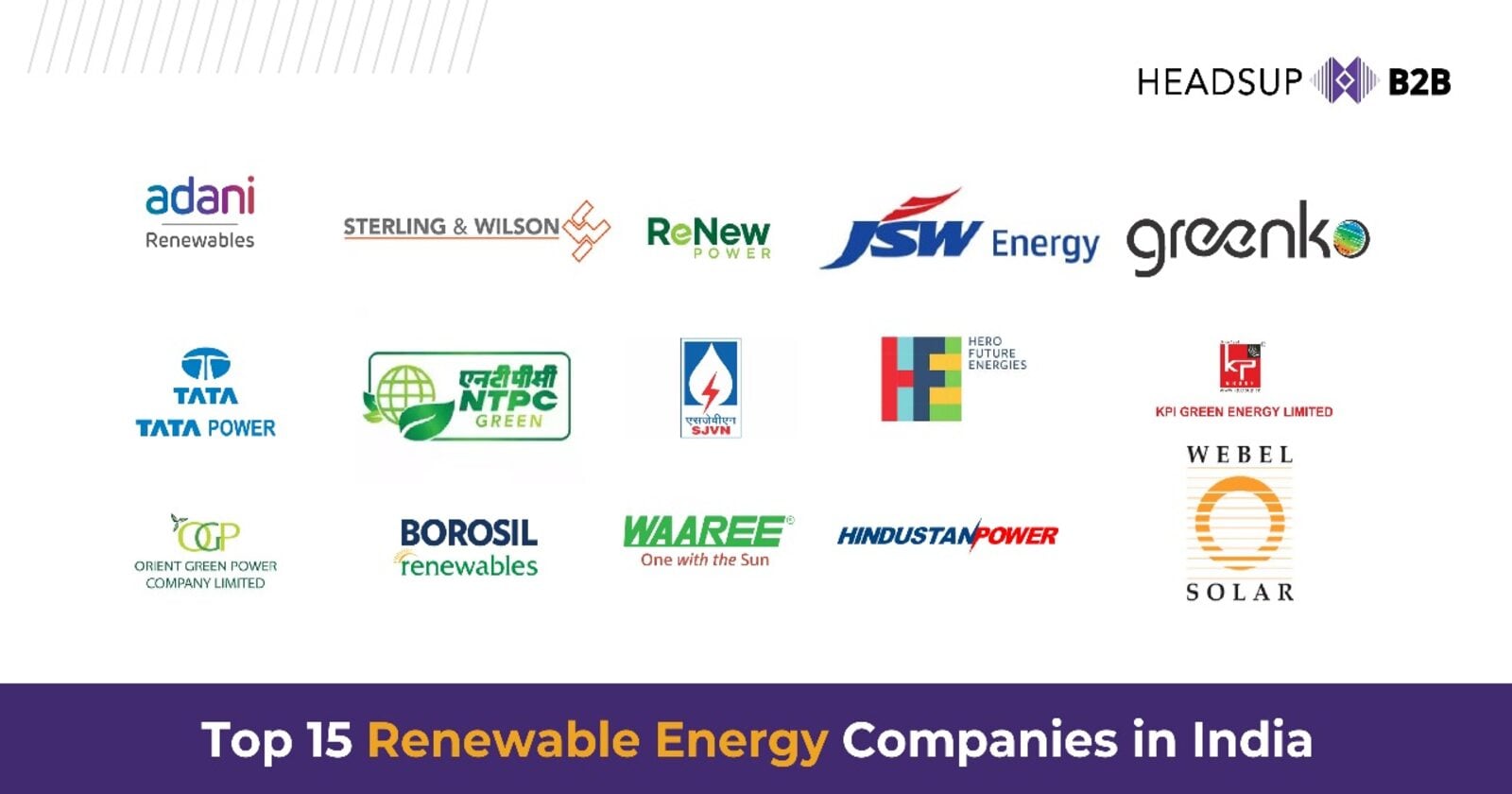
    Top 15 Renewable Energy Companies in India

    1. Adani Green Energy Limited

    Adani Green Energy Ltd (AGEL) is India’s largest renewable energy company with a portfolio of 20,434 MW. The company operates in solar power, wind power, hybrid renewable energy, and energy storage solutions, with a presence in 7 Indian states. AGEL aims to reach a 50 GW renewable energy portfolio, supported by a long-term power purchase agreement with the government for 25 years. The company is also committed to sustainable growth, with water-positive plants having a capacity of 200 MW. AGEL is credited with commissioning the world’s largest Wind Solar Hybrid Power Cluster in Jaisalmer, Rajasthan, with a capacity of 2140 MW.

    2. Sterling & Wilson

    Sterling & Wilson is a global leader in renewable energy solutions, with a presence in 28 countries, including India, the United States, Africa, and Latin America. The company has successfully executed 268 projects worldwide, ranging from 1 MWp to 1177 MWp. A notable project is the 1000 MWhH standalone BESS project in Rajasthan, which is scheduled for completion by 2025.

    3. ReNew Power

    ReNew Power is India’s leading decarbonization company with a portfolio of 15.6 GW of renewable energy, including 4.7 GW of wind energy (10% of India’s total wind capacity). The company has mitigated 16 million tons of carbon emissions in the last two years and has a presence in 9 Indian states. ReNew’s commissioned capacity stands at approximately 10.1 GW, lighting up 14 million homes and comprising 1% of India’s electricity demand. ReNew is also spearheading a Round-the-Clock (RTC) renewable energy project in Rajasthan, Karnataka, and Maharashtra.

    4. JSW Energy

    JSW Energy has a generation portfolio of 10 GW, with 61% of its capacity coming from renewable sources. The company aims to grow to 20 GW by 2030, with operations in several states, including Andhra Pradesh, Maharashtra, and Karnataka. JSW’s portfolio includes 675 MW of solar power, 675 MW of wind energy, and 1391 MW of hydropower. The company has already commissioned India’s largest standalone wind project with a capacity of 810 MW and has adopted green technologies at its Vijaynagar plant, including a reed bed-based sewage treatment system.

    5. Greenko Group

    Founded in 2006, Greenko operates with a mission to digitize, decarbonize, and decentralize India’s energy sector. With a renewable energy portfolio of 7.5 GW across solar, wind, and hydropower, Greenko is present in 15 Indian states. The company has commissioned two integrated renewable energy storage projects, including the Saundatti Integrated Renewable Energy Storage Project, a 2.66 GW project with 1.26 GW of pumped storage, 1.0 GW of solar, and 0.4 GW of wind energy.

    6 Tata Power Renewable Energy Limited

    Tata Power Renewable Energy Ltd (TPREL), a subsidiary of Tata Power, was established in 2007. The company has a portfolio of over 12.8 GW of renewable energy, including 2 GW of rooftop solar systems and more than 100,000 solar water pumps. TPREL’s wind energy portfolio stands at 1,030 MW, and it operates in several Indian states, including Maharashtra, Gujarat, and Tamil Nadu. The company’s Dholera solar facility in Gujarat is India’s largest solar tracker system, with a capacity of 300 MW, and the Kayamkulam floating solar project in Kerala is India’s largest with a capacity of 101.6 MWp.

    7. NTPC Renewable Energy Limited

    NTPC Renewable Energy Ltd (NTPCREL), established in 2020, has a portfolio of 4048 MW in solar, wind, and hybrid projects. The company aims to achieve a total installed capacity of 60 GW by 2032. NTPCREL has a presence in several states, including Rajasthan, Gujarat, Tamil Nadu, and Uttar Pradesh, and is implementing projects under the Indian government’s Ultra Mega Renewable Energy Power Park scheme.

    8. SJVN Green Energy

    SJVN Green Energy, a subsidiary of Satluj Jal Vidyut Nigam Ltd. (SJVN), has a total capacity of 2,466.50 MW, including 1,972 MW of hydropower, 97.6 MW of wind, and 156.9 MW of solar. The company’s largest project is the 90 MW Omkareshwar Floating Solar Project in Madhya Pradesh, which is North and Central India’s largest solar floating project.

    9. Hero Future Energy

    Hero Future Energies (HFE), established in 2012, has a global portfolio of 6 GW of renewable energy assets across India, the UK, Bangladesh, Ukraine, and Vietnam. The company operates in 7 Indian states, including Rajasthan, Maharashtra, and Tamil Nadu. HFE commissioned India’s first Wind Solar hybrid project (87 MW) at Manvi, Karnataka.

    10. KPI Green Energy

    KPI Green Energy, established in 2008, has a presence in Gujarat, Uttarakhand, and Maharashtra. The company offers commercial solutions as a Captive Power Producer (CPP) and Independent Power Producer (IPP) under its ‘Solarism’ brand. The company operates solar plants in Gujarat with a total capacity of 66 KV and 11 KV transmission lines.

    11. Orient Green Power

    Orient Green Power, established in 2006 and headquartered in Chennai, operates a wind power portfolio of 402.3 MW, with plans to expand to 1000 MW. The company is present in Gujarat, Tamil Nadu, Andhra Pradesh, and Karnataka.

    12. Borosil Renewables

    Borosil Renewables, established in 1962 and headquartered in Mumbai, is a global leader in solar glass manufacturing. The company’s state-of-the-art facility in Gujarat has a production capacity of 1000 tons per day, translating to 6.5 GW annually. Notable products include Selene (anti-glare solar glass) and Shakti (high-efficiency solar glass).

    13. Waaree Energies

    Founded in 1990, Waaree Energies is headquartered in Mumbai and has an installed capacity of 12 GW. The company operates at 388 locations across India, with manufacturing facilities in Gujarat, Uttar Pradesh, and Noida. It also has the country’s largest PV Module manufacturing capacity and offers a range of solar products designed for durability and performance.

    14. Hindustan Power Projects

    Founded in 2008, Hindustan Powerprojects has a portfolio of 4 GW in thermal and solar energy. The company has commissioned a 50 MW solar capacity in Punjab and a 30 MW solar farm in the state. Additionally, it operates the Anuppur Thermal Power Plant, with a total capacity of 2,520 MW.

    15. Websol Energy Systems

    Websol Energy Systems, established in 1994 and headquartered in Kolkata, specializes in manufacturing Mono PERC solar cells and modules. With an annual production capacity of 600 MW for solar cells and 550 MW for modules, Websol’s products are designed to maximize energy output and efficiency.

    Conclusion

    India’s renewable energy market is rapidly growing, with key players like Adani Green Energy, ReNew Power, and JSW Energy at the forefront.  We at Headsup B2B can help streamline your renewable solutions sourcing and procurement. Contact us today to know more.

  • The Future of Solar Panels in India

    The Future of Solar Panels in India

    India is emerging as a global leader in renewable energy, particularly solar power. With ambitious targets and supportive government policies, the country is poised to become a hub for solar innovation and adoption. As we move into 2024, several key developments and trends in solar panel technology are set to shape India’s energy landscape. This blog explores these innovations and trends, focusing on their relevance and impact in India.

    Emerging Technologies

    Bifacial Solar Panels

    Bifacial solar panels, which capture sunlight from both sides, are becoming increasingly popular in India. These panels are particularly effective in areas with high reflectivity, such as deserts and snow-covered regions in the Himalayas. By utilizing the reflective properties of these environments, bifacial panels can significantly boost energy production, making them an ideal choice for various parts of India.

    Perovskite Solar Cells

    Perovskite solar cells, known for their high efficiency and low production costs, are another promising technology. Researchers in India are actively exploring the potential of perovskite cells, which can be integrated into building facades and windows, providing a versatile solution for urban environments. As the technology matures, perovskite solar cells could offer a cost-effective alternative to traditional silicon-based panels, helping to drive widespread adoption in India.

    Floating Solar Farms

    Floating solar farms, or floatovoltaics, are gaining traction in India due to their ability to utilize water bodies, such as lakes and reservoirs, for solar installations. This innovative approach addresses land scarcity issues and benefits from the cooling effect of water, which enhances panel efficiency. Notable projects, such as the floating solar plant on the Banasura Sagar Dam in Kerala, highlight the potential of this technology in India.

    Efficiency Improvements

    High-Efficiency Panels

    India is witnessing significant advancements in high-efficiency solar panels. Technologies like heterojunction with intrinsic thin-layer (HIT) cells and tandem cells are achieving record-breaking efficiencies. These high-efficiency panels are particularly beneficial for residential and commercial installations in densely populated urban areas, where space is limited.

    Integration with Smart Technology

    Smart Solar Panels and Home Energy Management

    The integration of solar panels with smart technology is an exciting trend in India. Smart solar panels equipped with sensors and IoT devices can optimize energy production and monitor performance in real-time. Homeowners can use smart home energy management systems to maximize the benefits of solar power, adjusting energy usage based on weather patterns, electricity prices, and personal preferences. Companies like Tata Power Solar are already offering smart solar solutions to Indian consumers.

    Sustainability and Environmental Impact

    Recycling Old Panels

    As solar installations increase, the need for sustainable end-of-life management of solar panels becomes critical. India is developing efficient recycling processes to reclaim valuable materials like silicon, silver, and aluminum from old panels. This approach reduces waste and the environmental footprint of solar technology, making solar power even more eco-friendly.

    Eco-Friendly Production Methods

    Indian manufacturers are adopting eco-friendly production methods to reduce the carbon footprint of solar panel production. Some companies are using renewable energy sources to power their factories, while advances in material science are leading to the development of panels with longer lifespans and lower degradation rates. These efforts align with India’s commitment to sustainability and environmental protection.

    Learn More:How To Choose The Best Solar Panels For Your Home

    Growth Projections

    The Indian solar market is poised for significant growth in 2024. With ambitious targets, such as achieving 450 GW of renewable energy capacity by 2030, solar power is a key component of India’s energy strategy. The cost of solar panels continues to decline, making solar energy more accessible to homeowners, businesses, and communities. The International Solar Alliance (ISA), headquartered in India, is also playing a crucial role in promoting solar energy adoption worldwide.

    Government Incentives

    Government incentives and policies are crucial in promoting solar energy adoption in India. In 2024, several initiatives are expected to boost the solar sector. The Indian government offers various incentives, including tax credits, rebates, and subsidies for solar installations. Programs like the Pradhan Mantri Kisan Urja Suraksha evam Utthaan Mahabhiyan (PM-KUSUM) aim to support farmers in setting up solar pumps and grid-connected solar power plants. These incentives make solar installations more affordable and encourage investment in solar technology.

    Case Studies

    Residential Success Stories

    Indian homeowners are increasingly adopting solar power to reduce energy bills and their carbon footprint. For instance, a family in Gujarat installed bifacial solar panels on their rooftop and saw a 20% increase in energy production compared to traditional panels. Their experience highlights the potential of new technologies to enhance the benefits of solar power in residential settings.

    Commercial and Industrial Applications

    Businesses in India are also leveraging solar technology to achieve sustainability goals and reduce operational costs. A large-scale floating solar farm on the Narmada River is providing clean energy to thousands of households while minimizing land use. Such projects demonstrate the versatility and scalability of solar power solutions in India.

    Conclusion

    The future of solar panels in India is bright, with numerous innovations and trends set to transform the industry in 2024. From bifacial and perovskite solar cells to floating solar farms and smart technology integration, the advancements in solar technology promise increased efficiency, sustainability, and accessibility. As market growth continues and government incentives support adoption, solar energy will play an increasingly vital role in India’s transition to renewable energy.

    Call to Action

    Stay informed about the latest developments in solar technology and consider how solar energy can benefit your home or business. The future of solar panels is here, and now is the time to embrace this clean, sustainable energy source in India.

    FAQs on Solar Panels in India

    1. What are bifacial solar panels, and why are they becoming popular in India?

    Bifacial solar panels can capture sunlight from both sides, increasing energy production. They are ideal for India due to its high reflectivity in certain regions, maximizing solar energy generation.

    2. How might perovskite solar cells impact the Indian solar market?

    Perovskite solar cells offer high efficiency at a lower cost, making them a potential game-changer. They can be integrated into buildings, expanding solar energy applications in India’s urban areas.

    3. What is the significance of floating solar farms in India?

    Floating solar farms utilize water bodies for installation, addressing land scarcity. They also benefit from the cooling effect of water, enhancing panel efficiency. India has immense potential for such projects.

    4. How do government incentives drive the growth of solar energy in India?

    The Indian government offers various incentives like tax credits, subsidies, and programs like PM-KUSUM to make solar power affordable. These initiatives are accelerating solar adoption across the country.

    5. How long does it take to install solar panels?

    The installation time for solar panels typically ranges from one to three days, depending on the system size and complexity of the roof. Factors such as weather conditions and permit approvals can also impact the installation timeline.

  • How To Choose The Best Solar Panels For Home?

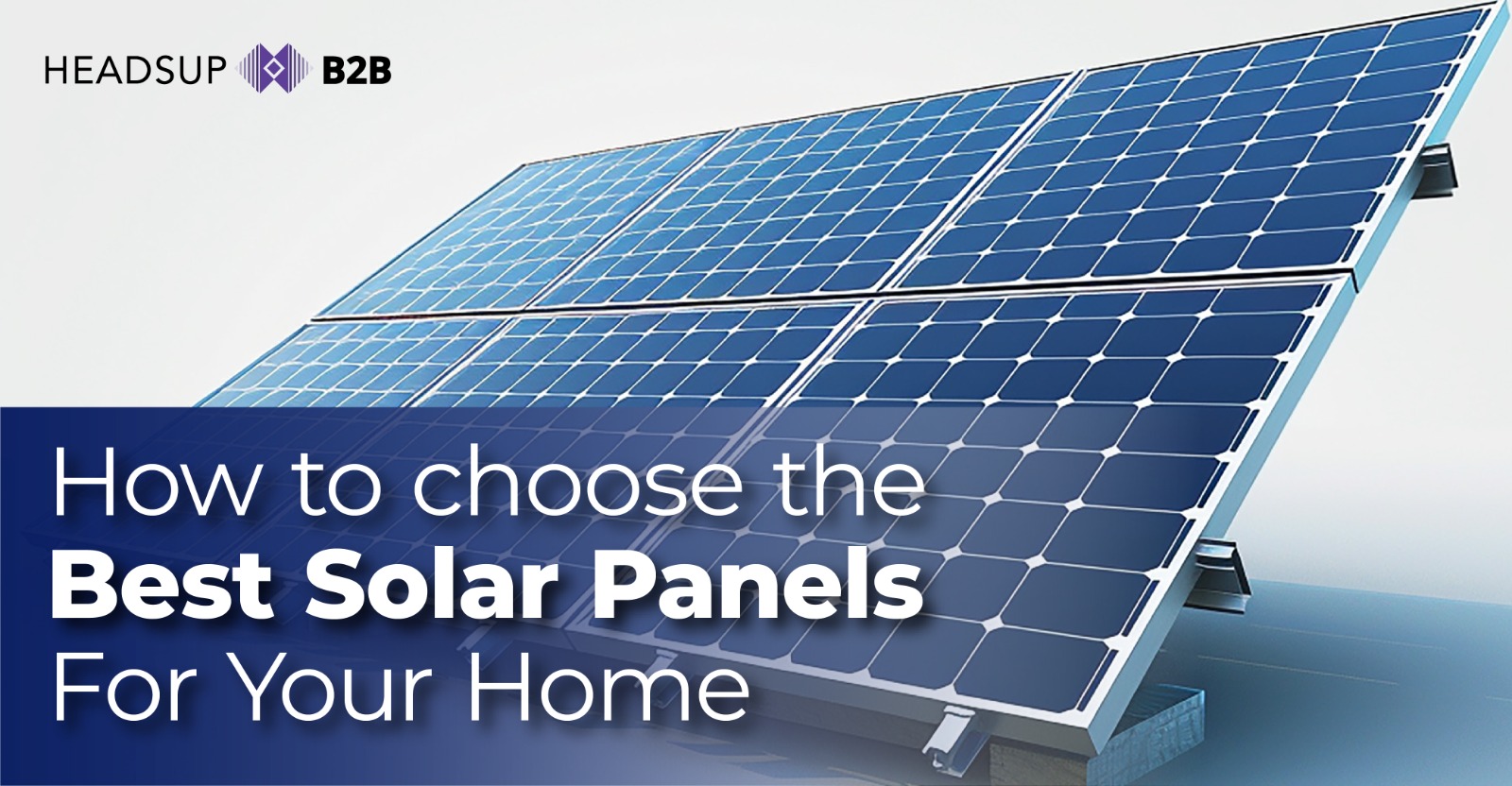
    How To Choose The Best Solar Panels For Home?

    To convert to solar energy is therefore a major decision for homeowners; a decision that has long term payback and environmental implications. However, with so many choices, one may find it daunting to decide on what specific type of solar panels to get for the home. In this guide I will be describing the top solar panel brands, explaining what the efficiency ratings of the solar means, the categories of the solar panels, and some points to consider when purchasing a solar panel. We also describe how solar panels are installed to assist you in making the right choice.

    Best Solar Panels Brands for Home Use

    In terms of selecting the best brands of the solar panels one has to make a selection based on factors such as reputation, performance, warranty, and customer service. Some of the top brands in the market include,

    1. SunPower

    These are some of the known features at SunPower inclusively the high efficiency of the solar panels and the strength of the warranty offered. Their panels are rather sturdy and efficient, which has led them to be the go-to choice for many homeowners.

    2. LG Solar

    LG Solar is among the most trusted solar modules companies renowned for providing their clients with solar panels having greater efficacies. Their panels are stylish, and the company accompanies them with a proper warranty, thus satisfying customers.

    3. Panasonic

    Panasonic is another solar company brand .It has quality solar panels that are efficient and can be relied on. They are durable as their panels’ principal aim is to produce energy irrespective of the climate.

    4. Canadian Solar

    Canadian Solar offers accessible and effective solar panels but not necessarily cheap ones but relatively expensive ones for the given quality. Their panels deliver fairly good performance as they also come with fairly standard warranty packages.

    5. Trina Solar

    The key allowance made in this regard is that Trina Solar is known to offer high quality products in the form of solar panels, along with other state of the art features. There is a variety of panels to choose from depending on the type of project and your pocket.

    Solar Panel Efficiency Rating

    The efficiency rating of a solar panel is without a doubt, one very important factor to consider. It expresses the extent to which the panel can harness the sunlight and turn it into utilizable electricity. More efficiency panels produce more power within a particular area thus are more suitable for homeowners with small roof areas.

    Factors Affecting Efficiency

    • Material: The monocrystalline panels are usually more efficient in energy conversion than polycrystalline, and thin film solar panels.

    • Quality: That is why build quality and the technology used in the course of developing the panels determine the efficiency.

    • Age: The efficiency of these solar panels may decrease as time goes by; therefore, newer planes will execute their functions better.

    Types of Solar Panels

    There are three main types of solar panels available in the market: There are three main types of solar panels available in the market,

    1. Monocrystalline Solar Panels

    They offer the highest conversion rates and are made of a single silicon crystal source. They are also compact and more durable than some of the traditional monetary types. However, they usually are relatively expensive.

    2. Polycrystalline Solar Panels

    Polycrystalline panels are composed of several-crystal formations and are not half as efficient as monocrystalline ones. They are cheaper and have relatively less durability but can provide decent output.

    3. Thin-Film Solar Panels

    Thin-film panels can be easily installed due to the fact that they are light and can be bent somewhat. They possess the lowest efficiency rates, however, they become cheap in case of some uses. It is less sensitive to shading and high temperature compared to their abilities.

    Factors to Consider When Buying Solar Panels

    Therefore, there are several aspects to think of while choosing the solar panels to install on your home.

    1. Efficiency

    As discussed earlier, the efficiency rating of the solar panels is crucial. Higher efficiency panels will generate more electricity, especially if you have limited roof space.

    2. Cost

    Pricing of such a solar panel cannot be fixed and is usually dependent on such factors as the brand, its efficiency level, and kind. The two main requirements that have to be met are cost, which has to be moderate and need to be covered by result, and round the clock durability.

    3. Warranty

    Warranty is an expectation of the manufacturer towards the product they have put in the market. Include warranty of at least 10 years which will cover the performance and the defects of the panels.

    4. Durability

    Pay attention to the sturdiness of the panels, particularly when residing in an environment characterized by storms. Non-corrosive metallic panels for instance will guarantee the device’s performance irrespective of the climate experienced in the area.

    5. Aesthetics

    Another aspect that refers to the aesthetics is the look that panels give to your home. Some of them are explicitly created to match the appearance of your roof and may look better than other kinds of panels.

    6. Installation and Maintenance

    Other factors include ease of installation and also the ease of maintaining the system. Some panels are easier to install and are less demanding in terms of maintenance and overall costs will therefore be lower.

    Installing Solar Panels

    Having decided on the top solar panels to buy for your home, the next question is – how to install these systems. Installation plays a very important role when it comes to the performance and the durability of the solar system.

    1. Hire a Professional

    Even though you may have plans to install the solar units on your own, it is advisable to hire the services of a professional solar installer. They are outfitted with the experience and equipment necessary to put these panels in optimally and securely.

    2. Site Assessment

    The expert on installation will need to inspect the area to establish the most appropriate location of the panels in consideration to the orientation of the roof, shade and tilt angle.

    3. Permits and Paperwork

    All the permits and related paperwork that are needed for the installation will be undertaken by the installer. This involves acquiring county permits, as well as making sure that the system adheres to the locally determined requirements.

    4. Installation Process

    This usually consists of fixing the panels to your roof, connecting the panels to an inverter and the electrical part. The installer will also tie the system into the grid or into the electrical system of the house.

    5. Inspection and Activation

    Subsequently there is normally an inspection which is done to determine whether the system is compliant with safety and performance standards. When approved, your solar system can be switched on and indeed, the value of switching to solar is evident.

    Take the Next Step Towards Solar Energy with HeadsUp B2B

    Choosing the right solar panels is crucial for maximizing your energy savings and reducing your environmental impact. At HeadsUp b2b, we connect you with top-quality raw materials and trusted suppliers to ensure you get the best solar solutions for your needs.

    Ready to find the best solar panels for your home? Visit HeadsUp B2B today to explore our extensive marketplace of raw materials and start your journey towards sustainable energy.

    Contact us now to discover how HeadsUp b2b can help you make the right choice for your solar system needs!

    FAQ’s

    1. What factors should I consider when choosing solar panels for my home?

    When selecting solar panels, prioritize factors like solar panel efficiency rating, types of solar panels (monocrystalline, polycrystalline, or thin-film), and best solar panel brands known for reliability and performance. Additionally, consider your budget, roof space, local climate, and government incentives.

    2. How do I determine the best solar panel efficiency for my home?

    Solar panel efficiency measures how effectively a panel converts sunlight into electricity. Higher efficiency panels generate more power, making them ideal for homes with limited roof space. However, they often come with a higher price tag. Consider your energy needs and available roof area to find the optimal efficiency level for your home.

    3. What is the difference between monocrystalline, polycrystalline, and thin-film solar panels?

    • Monocrystalline solar panels offer the highest efficiency but are generally more expensive.

    • Polycrystalline solar panels are less efficient but more affordable.

    • Thin-film solar panels are the most flexible and lightweight but have the lowest efficiency.

    Choose the type that best suits your budget, energy needs, and available roof space.

    4. How much does it cost to install solar panels?

    The cost of installing solar panels varies based on factors such as solar panel efficiency, system size, installation location, and government incentives. It’s essential to obtain quotes from multiple solar installers to compare prices and packages. Consider the long-term savings on electricity bills when evaluating the upfront cost.

    5. How long does it take to install solar panels?

    The installation time for solar panels typically ranges from one to three days, depending on the system size and complexity of the roof. Factors such as weather conditions and permit approvals can also impact the installation timeline.

  • Solar Panel Technology : Harnessing Sunlight for Sustainable Energy

    Solar Panel Technology : Harnessing Sunlight for Sustainable Energy

    Solar panel technology is the most creative and resourceful technique for generating electricity using solar energy. This is not about electricity generation but is a great step towards a sustainable future. In today’s increasing climate crisis, we must go towards renewable energy sources like solar power.

    But this shift is not easy. We need a reliable partner, and that’s where Solar Suppliers and Headsup B2B, an online platform for solar panel procurement, come into play. Headsup B2B connects customers with authentic solar panel suppliers on a vast scale and helps buyers choose the right solar panels according to their needs. The installation of each solar panel is a step towards lowering pollution and promoting a brighter future. So, in this blog, we will cover various aspects of solar panel technology and the role of Headsup B2B in promoting sustainable energy usage.

    About the Solar Panel from the Solar Panel Suppliers

    How It Works?

    Photovoltaic technology is commonly used in solar panels to generate energy. The photovoltaic cells within a solar panel absorb solar radiation when exposed to sunlight. This energy produces electrical charges that travel in reaction to the cell’s internal electrical field, resulting in the flow of electricity. Another technology used in generating energy from solar panels is thermal power; this technique is mostly used in large power plants.

    Types of solar panels

    There are three main types of solar panels, which are:

    Monocrystalline Solar Panels: are long-lasting, occupy less space, and have the highest power output. That naturally implies that they are also costly. Another considerable benefit is their tendency to have somewhat less impact at elevated temperatures than polycrystalline panels.

    Polycrystalline Solar Panels: Polycrystalline solar cells are cheaper to make because silicon fragments are melted and poured into square moulds with little waste. So, they are budget-friendly. But they’re not as efficient as monocrystalline panels and don’t handle heat well. Hence, polycrystalline solar panels are not efficient for high-temperature areas.

    Thin-film Panels: They’re super flexible and versatile, made from materials like copper, indium gallium selenide, cadmium telluride, and amorphous silicon. Instead of bulky silicon, they’re ultra-thin and come in sleek black or blue. Just look for their slim frames, and you’ll spot them easily.

    Advantages of Solar Panel Technology

    Environmental Benefits

    • Solar panels produce clean, renewable energy, reducing our reliance on fossil fuels and cutting down harmful emissions.

    • Helps in lowering pollution and saving biodiversity and natural habitats

    • Water conservation: Unlike traditional power plants, solar panels don’t require water for cooling, helping to conserve this precious resource.

    Economic Benefits

    • After installation, solar panels can significantly reduce or even eliminate electricity bills, saving households and businesses money in the long run.

    • The solar industry needs human resources for manufacturing, installation, maintenance, etc. Hence, this industry also creates jobs and significantly contributes to the economic growth and stability of a nation.

    • By generating electricity on their own, individuals and communities can become less dependent on external energy sources, increasing resilience and autonomy.

    Social Benefits

    • Solar panel technology provides electricity in remote areas and significantly improves the quality of life of people living in remote areas.

    • By reducing air and water pollution, it ensures a better and healthier life.

    Headsup B2B Promotes Solar Technology by Bridging the Gap Between Solar Panel Suppliers and Clients

    Easy Procurement Process

    By connecting potential buyers with authentic solar suppliers through online platforms, we have revolutionised the procurement process. The easy and authentic availability of solar panels makes the process easier, and people take an interest in switching to solar energy. Our team has made this process as convenient as online shopping for clothes and groceries.

    An Innovative Platform for Solar Panel Suppliers

    With its online platform, Headsup B2B has provided solar panel suppliers with invaluable support. We have offered them a centralised marketplace to showcase their product and reach a wide range of customers. With our online platform, solar suppliers can increase their sales and promote the adoption of solar panel technology.

    Expert’s Guidance

    Headsup B2B provides expert guidance to its customers for choosing the right and authentic solar panels. Our professionals are always ready to address your queries and help you find the right solar panel. So, visit Headsup B2B to place your order and contribute to a sustainable future.